Pressure Sensors
Products (9)
LPS22HBTR - MEMS Pressure Sensor, 260-1260 hPa | STMicroelectronics
The STMicroelectronics LPS22HBTR is a MEMS capacitive absolute pressure sensor with a digital I2C/SPI interface, offering a measurement range of 260 to 1260 hPa (absolute) with high accuracy and low power consumption. It is housed in a compact 2.0 x 2.0 x 0.7 mm HLGA package, making it suitable for space-constrained portable and wearable devices. A pressure sensor is a device that measures the force exerted by a fluid (liquid or gas) per unit area, converting this physical quantity into an electrical signal. The LPS22HBTR is a MEMS (Micro-Electro-Mechanical Systems) capacitive pressure sensor, which uses a thin diaphragm that deflects under pressure, changing the capacitance between the diaphragm and a fixed electrode. This change is then converted into a digital output via an integrated signal conditioner. Pressure sensors are a subset of environmental sensors, which also include temperature, humidity, and gas sensors, and are essential components in IoT, automotive, and industrial systems. Key features of the LPS22HBTR include an absolute pressure range of 260 to 1260 hPa, a resolution of 0.01 hPa (8 Pa), and an accuracy of ±0.1 hPa (typical) at 25°C. The device operates from a supply voltage of 1.7V to 3.6V, with a current consumption of 12 µA at 1 Hz output data rate (ODR) and 1 µA in power-down mode. It supports both I2C (up to 400 kHz) and SPI (up to 10 MHz) interfaces, and includes an integrated 24-bit ADC, a 128-level FIFO, and an interrupt output for data-ready and pressure threshold events. The LPS22HBTR is built using ST's proven MEMS technology, which ensures high reliability and long-term stability. The device includes a temperature sensor for compensation, and its output is factory-calibrated, eliminating the need for user calibration. The HLGA package is designed for surface-mount assembly and is RoHS and halogen-free compliant. Typical applications include barometric altimeters in drones and smartphones, weather stations, GPS dead-reckoning for navigation, and indoor navigation systems. Its low power consumption and small footprint make it ideal for battery-powered IoT devices and wearables. When designing with the LPS22HBTR, ensure proper PCB layout with a small pressure port opening to the environment, and avoid covering the sensing element with solder mask or conformal coating. The device's I2C address is 0x5C (7-bit) or 0xB8 (8-bit), and it can be configured via its registers for different ODRs and interrupt modes.
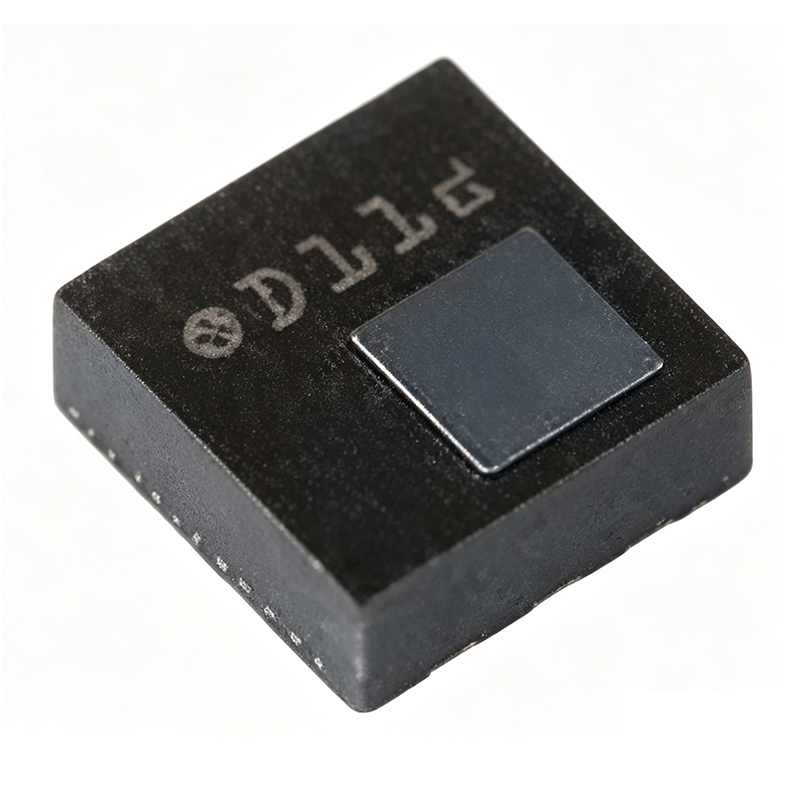
LPS22HH - MEMS Pressure Sensor, 260-1260 hPa | STMicroelectronics
The STMicroelectronics LPS22HH is a MEMS capacitive absolute pressure sensor with a digital I2C and SPI interface, offering a measurement range of 260 to 1260 hPa. It is housed in a compact 2.0 x 2.0 x 0.7 mm HLGA package, making it suitable for space-constrained applications. A pressure sensor is a device that measures the force exerted by a fluid (liquid or gas) per unit area, converting it into an electrical signal. The LPS22HH is an absolute pressure sensor, meaning it measures pressure relative to a perfect vacuum. It belongs to the family of MEMS (Micro-Electro-Mechanical Systems) sensors, which integrate mechanical and electrical components on a microscopic scale. In the broader hierarchy, it is a pressure sensor -> MEMS sensor -> sensor -> electronic component, commonly used in environmental monitoring and altitude sensing. Key features include an absolute pressure range of 260 to 1260 hPa, a resolution of 0.02 hPa (RMS), and an accuracy of ±0.1 hPa (typical) at 25°C. The sensor operates from a supply voltage of 1.7V to 3.6V, with a low power consumption of 12 µA at 1 Hz output data rate. It supports output data rates from 1 Hz to 200 Hz, and includes an integrated temperature sensor with ±0.5°C accuracy. The device is RoHS compliant and operates over a temperature range of -40°C to +85°C. The LPS22HH uses a capacitive sensing element with a precision analog front-end and a 24-bit sigma-delta ADC, providing high-resolution digital output. The sensor includes a FIFO buffer (up to 100 samples) to reduce host processor load, and supports interrupt generation for data-ready and threshold events. The I2C address is 0x5C (default) or 0x5D (alternate), selectable via the SA0 pin. Typical applications include barometric altimeters in drones and wearables, weather stations, and indoor navigation systems. Its low power and small size make it ideal for battery-powered IoT devices. The sensor is also used in smartphone and smartwatch for elevation tracking and stair climbing detection. When designing with the LPS22HH, ensure proper PCB layout with a small vent hole to expose the sensing element to ambient pressure. Avoid placing the sensor near heat sources to minimize temperature-induced errors. Use the built-in FIFO to reduce I2C/SPI traffic and power consumption in low-power applications.
LPS22HII - MEMS Nano Pressure Sensor, 260-1260 hPa | STMicroelectronics
The STMicroelectronics LPS22HII is an ultra-compact piezoresistive absolute pressure sensor functioning as a digital output barometer. It measures pressure in the range of 260 to 1260 hPa with an absolute accuracy of 0.5 hPa, making it suitable for altimetry and weather station applications. The sensor is housed in a 10-pin LGA package (2.0 x 2.0 x 0.7 mm) and communicates via I2C or SPI interfaces. A pressure sensor is a device that converts applied pressure into an electrical signal. The LPS22HII is a MEMS (Micro-Electro-Mechanical Systems) pressure sensor, which uses a thin silicon membrane that deflects under pressure, changing the piezoresistive elements' resistance. This change is converted into a digital output via an integrated ADC. Pressure sensors are a subset of environmental sensors, which also include temperature, humidity, and gas sensors. In the sensor hierarchy, the LPS22HII is a barometric pressure sensor, a type of absolute pressure sensor, and a MEMS sensor. Key features include a 24-bit pressure data output, an embedded temperature sensor, and a 16-bit temperature output. The sensor supports data rates from 1 Hz to 75 Hz, with a typical current consumption of 12 uA at 1 Hz output data rate. It operates from a 1.7V to 3.6V supply voltage, making it suitable for battery-powered devices. The LPS22HII also includes a FIFO buffer, interrupt pins, and a pressure threshold detection feature. The LPS22HII uses a MEMS capacitive sensing element with a signal conditioning ASIC, providing high accuracy and low power consumption. The sensor has a pressure noise of 0.0075 hPa RMS, enabling precise measurements. It is designed for portable devices, with a small footprint and low height, and is compatible with lead-free soldering processes. Typical applications include altimeters in drones and smartphones, weather station barometers, and GPS dead-reckoning for navigation. The sensor's low power and small size make it ideal for wearable devices and IoT nodes. In a drone, the LPS22HII provides altitude data for flight stabilization and landing. When designing with the LPS22HII, ensure proper PCB layout with a pressure port opening for accurate readings. The sensor should be placed away from heat sources to minimize temperature-induced errors. Use the FIFO to reduce host processor wake-ups and save power.
LPS25HBTR - MEMS Pressure Sensor, 260-1260 hPa | STMicroelectronics
The STMicroelectronics LPS25HBTR is a piezoresistive absolute pressure sensor with a digital I2C/SPI interface, designed for high-resolution measurement of barometric pressure and temperature. It operates over a pressure range of 260 to 1260 hPa (absolute) and a temperature range of -40°C to +85°C, making it suitable for a wide variety of environmental and industrial applications. The sensor is housed in a compact 2.0 x 2.0 x 0.7 mm LGA-8 package, enabling integration into space-constrained designs. A MEMS pressure sensor is a micro-electromechanical system that converts applied pressure into an electrical signal. The LPS25HBTR uses a piezoresistive sensing element whose resistance changes with mechanical stress induced by pressure. This change is converted into a digital output via an internal analog-to-digital converter (ADC) and signal conditioning circuitry. The sensor belongs to the broader category of environmental sensors, which also includes temperature, humidity, and gas sensors, and is a key component in IoT, weather monitoring, and altitude sensing systems. Key features of the LPS25HBTR include an absolute pressure range of 260 to 1260 hPa, a resolution of 0.01 hPa (equivalent to approximately 8 cm of altitude change), and a typical accuracy of ±0.1 hPa over the full range. The device supports both I2C (up to 400 kHz) and SPI (up to 10 MHz) interfaces, with a selectable address for I2C. It also includes an embedded 24-bit ADC, a 32-level FIFO buffer, and an interrupt output for data-ready and threshold detection. The supply voltage ranges from 1.7V to 3.6V, with a low current consumption of 4 µA in normal mode and 1 µA in low-power mode. The LPS25HBTR integrates a temperature sensor with an accuracy of ±0.5°C, which can be used for temperature compensation of the pressure reading or as a standalone temperature measurement. The device features a pressure resolution of 0.01 hPa and a temperature resolution of 0.01°C. The FIFO buffer allows the host processor to remain in low-power mode while the sensor collects data, reducing overall system power consumption. The interrupt pin can be configured to trigger on pressure thresholds or data-ready events, enabling event-driven operation. Typical applications include barometric pressure sensing for weather stations, altitude measurement in drones and smartphones, indoor navigation, and industrial process control. The sensor's high resolution and low power make it ideal for battery-powered IoT devices. In a drone application, the LPS25HBTR provides altitude data with an accuracy of ±0.1 hPa, which translates to approximately ±0.8 meters, enabling stable flight control. When designing with the LPS25HBTR, ensure proper PCB layout with a small vent hole or port to expose the sensing element to ambient pressure. Avoid placing the sensor near heat sources, as temperature gradients can affect pressure readings. Use a low-pass filter on the power supply to reduce noise, and follow the recommended layout in the datasheet for optimal performance.
LPS27HHW - MEMS Pressure Sensor, 260-1260 hPa | STMicroelectronics
The STMicroelectronics LPS27HHW is a high-resolution MEMS pressure sensor with an absolute pressure range of 260 to 1260 hPa and an embedded temperature sensor. It communicates via I2C or SPI and is housed in a compact 2.0 x 2.0 x 0.7 mm LGA package, making it suitable for portable and space-constrained applications. A MEMS pressure sensor is a micro-electromechanical system that measures absolute or gauge pressure by detecting the deflection of a thin silicon membrane. The LPS27HHW belongs to the category of barometric pressure sensors, which are used to measure atmospheric pressure and altitude. In the broader system hierarchy, it is a sensor component within the larger category of environmental sensors, which also include temperature, humidity, and gas sensors. These sensors are essential in applications such as weather stations, drones, and smartphones for altitude and navigation. Key features of the LPS27HHW include a pressure sensing range of 260 to 1260 hPa, an absolute pressure accuracy of ±0.1 hPa, and a temperature accuracy of ±0.5 °C. The device supports both I2C and SPI interfaces, with I2C addresses 0x5C and 0x5D selectable via the SA0 pin. It operates from a supply voltage of 1.7 V to 3.6 V, with a low power consumption of 4 µA at 1 Hz output data rate. The sensor also features a 24-bit pressure output and a 16-bit temperature output, providing high resolution for precise measurements. The LPS27HHW is built on ST's proven MEMS technology, which ensures high reliability and long-term stability. The device includes an internal signal conditioning chain, an analog-to-digital converter, and a digital interface, all integrated into a single chip. The sensor's low noise and high resolution make it ideal for applications requiring accurate pressure and altitude measurements, such as drone altitude hold, smartphone barometer, and weather station monitoring. Typical applications include drone altitude control, where the sensor provides precise altitude data for stable flight; smartphone barometer for indoor navigation and weather forecasting; and industrial pressure monitoring for HVAC systems. The sensor's small footprint and low power consumption make it suitable for battery-powered devices. When designing with the LPS27HHW, ensure proper PCB layout with a small vent hole to expose the pressure port to the environment. Avoid placing the sensor near heat sources or in direct airflow to minimize measurement errors. The I2C pull-up resistors should be sized appropriately for the bus speed and capacitance.
LPS33HW - MEMS Pressure Sensor, 260-1260 hPa | STMicroelectronics
The STMicroelectronics LPS33HW is a high-resolution MEMS pressure sensor with an absolute pressure range of 260 to 1260 hPa and an embedded temperature sensor. It is housed in a compact 2.0 x 2.0 x 0.76 mm ceramic LGA package (CCLGA-10L) and communicates via I2C or SPI interfaces. The device operates from a 1.7V to 3.6V supply and features a 24-bit pressure output, achieving a typical RMS pressure noise of 0.008 hPa (at 1 Hz output data rate). A MEMS pressure sensor is a micro-electromechanical system that measures absolute or gauge pressure by detecting the deflection of a thin silicon diaphragm. The LPS33HW belongs to the family of barometric pressure sensors, which are essential in altimetry, weather monitoring, and indoor navigation. In the broader system hierarchy, it is a sensor component within the category of environmental sensors, feeding data to microcontrollers for processing and decision-making. Key features include a pressure sensing range of 260 to 1260 hPa, a resolution of 0.008 hPa, and an embedded temperature sensor with an accuracy of ±0.5°C. The device supports both I2C (up to 400 kHz) and SPI (up to 10 MHz) interfaces, and includes a 128-level FIFO buffer to reduce host processor load. It also features an interrupt pin for data-ready and pressure threshold events, and a low-power mode with a current consumption of 3 µA at 1 Hz output data rate. The LPS33HW is built on ST's proven MEMS technology, which ensures high stability and low drift over temperature and time. The ceramic LGA package provides excellent thermal and mechanical robustness, making it suitable for harsh environments. The device includes an internal temperature compensation algorithm, which maintains accuracy across the full operating temperature range of -40°C to +85°C. Typical applications include barometric altimeters in drones and wearables, weather station modules, indoor navigation and floor detection in smartphones, and industrial pressure monitoring. Its low power consumption and small footprint make it ideal for battery-powered IoT devices. When designing with the LPS33HW, ensure proper PCB layout with a small vent hole to expose the pressure port to ambient air, and avoid covering the port with solder mask or conformal coating. Decouple the supply pins with a 100 nF capacitor placed close to the device.
LPS33HWTR - MEMS Pressure Sensor, 260-1260 hPa | STMicroelectronics
The STMicroelectronics LPS33HWTR is a high-resolution MEMS pressure sensor with an absolute pressure range of 260 to 1260 hPa, designed for barometric and altimetry applications. It integrates a sensing element and an I2C/SPI interface in a compact 3 mm x 3 mm x 1.7 mm LGA package, enabling precise atmospheric pressure measurement with a typical accuracy of ±0.1 hPa. A MEMS pressure sensor is a micro-electromechanical system that converts applied pressure into an electrical signal, typically through a deformable diaphragm whose deflection is measured capacitively or piezoresistively. In the system hierarchy, a MEMS pressure sensor is a type of pressure sensor, which falls under the broader category of sensors, and ultimately within the domain of microelectronics and IoT devices. The LPS33HWTR specifically uses a capacitive sensing element with a signal-conditioning ASIC, providing digital output via I2C or SPI. Key features include a 24-bit resolution, an output data rate (ODR) from 1 Hz to 75 Hz, and an embedded temperature sensor. The device operates from a 1.7V to 3.6V supply, with a low power consumption of 4 µA at 1 Hz ODR. It also features a FIFO buffer, interrupt pins for data-ready and pressure threshold detection, and a built-in pressure and temperature compensation. The LGA package is designed for surface-mount assembly, with a footprint compatible with standard reflow soldering. Technically, the LPS33HWTR employs a MEMS capacitive pressure cell that changes capacitance with applied pressure. The ASIC converts this capacitance change into a digital pressure value using a 24-bit ADC, with internal compensation for temperature and supply variations. The device supports both I2C (up to 400 kHz) and SPI (up to 10 MHz) interfaces, allowing flexible integration with microcontrollers. The FIFO buffer can store up to 32 samples, reducing host processor load. Typical applications include barometers for weather stations, altimeters for drones and wearables, and pressure monitoring in industrial and medical devices. Its high accuracy and low power make it suitable for battery-powered IoT devices, where it can be used for altitude tracking or environmental monitoring. The device also finds use in smartphone and smartwatch applications for indoor navigation and activity tracking. When designing with the LPS33HWTR, ensure proper PCB layout with a small vent hole for pressure access, and avoid covering the sensing port with solder mask. The device requires a decoupling capacitor (100 nF) close to the VDD pin, and the I2C/SPI lines should be kept short to minimize noise. For best accuracy, calibrate the sensor at a known pressure and temperature, and consider the effect of altitude on pressure readings.

MPXH6101A6T1 - 15 to 115 kPa Absolute Pressure Sensor | NXP
The NXP MPXH6101A6T1 is an integrated silicon pressure sensor that provides a highly accurate analog output voltage proportional to applied absolute pressure. It is designed for a wide range of applications requiring precise pressure measurement, including automotive, industrial, and medical systems. The sensor operates over a pressure range of 15 to 115 kPa (2.18 to 16.68 psi) and is available in a small SSOP-8 package, making it suitable for space-constrained designs. A pressure sensor is a device that converts applied pressure into an electrical signal. The MPXH6101A6T1 is an absolute pressure sensor, meaning it measures pressure relative to a perfect vacuum. This type of sensor is essential in applications such as barometric pressure sensing, altitude measurement, and engine manifold pressure monitoring. In the broader system hierarchy, a pressure sensor falls under the category of sensors, which are transducers that convert physical quantities into electrical signals for processing by microcontrollers or other electronic systems. Key features of the MPXH6101A6T1 include a supply voltage range of 4.75 to 5.25 V, a sensitivity of 45.9 mV/kPa, and a maximum output voltage of 4.8 V. The sensor provides a linear analog output, simplifying interface with analog-to-digital converters (ADCs). It also features a temperature range of -40°C to +125°C, making it suitable for harsh environments. The device is RoHS compliant and lead-free, meeting modern environmental standards. The MPXH6101A6T1 utilizes a piezoresistive sensing element with on-chip signal conditioning, providing a calibrated and temperature-compensated output. This integration reduces the need for external components and simplifies system design. The sensor's accuracy and stability are enhanced by its internal temperature compensation, ensuring reliable performance across its operating temperature range. Typical applications include automotive engine control, industrial process control, medical monitoring equipment, and consumer electronics such as altimeters and weather stations. The sensor's absolute pressure measurement capability makes it ideal for applications where reference to vacuum is required. When designing with this sensor, ensure a stable power supply and proper decoupling to minimize noise. The output should be connected to a high-impedance input to avoid loading effects. Calibration may be required for specific applications to achieve optimal accuracy.
MPXH6101A6U - 15 to 115 kPa Absolute Pressure Sensor | NXP
The NXP MPXH6101A6U is an integrated silicon pressure sensor designed for absolute pressure measurement in the range of 15 kPa to 115 kPa. It provides a high-level analog output voltage that is ratiometric to the supply voltage, simplifying interface to microcontrollers and ADCs. The sensor is housed in a small outline package (SSOP-8) with a port for pressure connection, making it suitable for board-level mounting in space-constrained applications. A pressure sensor is a device that converts applied pressure into an electrical signal. The MPXH6101A6U is an absolute pressure sensor, meaning it measures pressure relative to a perfect vacuum. This type of sensor is essential in applications such as barometric pressure sensing, altimetry, and engine manifold pressure monitoring. In the system hierarchy, a pressure sensor is a type of transducer, which falls under the broader category of sensors, which are critical components in electronic systems for monitoring and control. Key features of the MPXH6101A6U include a supply voltage range of 4.75 V to 5.25 V, a full-scale output span of 4.7 V (typical), and a sensitivity of 45 mV/kPa. The sensor offers a maximum error of ±2.5% over the temperature range of 0°C to 85°C, ensuring reliable performance in typical operating environments. The device also features a response time of 1 ms, enabling real-time pressure monitoring. The MPXH6101A6U utilizes a piezoresistive sensing element with on-chip signal conditioning, providing a temperature-compensated and calibrated output. This integration reduces the need for external compensation circuitry, simplifying design and improving accuracy. The ratiometric output ensures that the output voltage scales with the supply voltage, which is beneficial in battery-powered systems where supply voltage may vary. Typical applications include barometric pressure sensing for weather stations, altimeters, and engine control units (ECUs) in automotive systems. The sensor's absolute pressure measurement capability makes it ideal for altitude detection and manifold absolute pressure (MAP) sensing. Its small package and low power consumption also make it suitable for portable and handheld devices. When designing with the MPXH6101A6U, ensure that the supply voltage is within the specified range and that the output is buffered if driving a low-impedance load. The sensor's output is ratiometric, so a stable reference voltage is recommended for accurate measurements. Proper PCB layout, including decoupling capacitors near the supply pins, is essential to minimize noise and ensure stable operation.