Proximity Sensors
Products (5)

LDC3114-Q1 - 4-Ch Inductive Touch Sensor 16-TSSOP | TI
The Texas Instruments LDC3114-Q1 is a 4-channel hybrid inductive touch and inductance-to-digital converter supplied in a 16-pin TSSOP (PW) package measuring 5.00 mm x 4.40 mm. It converts changes in inductance caused by conductive target movement into digital data, enabling contactless button, slider, and proximity sensing without mechanical wear. An inductance-to-digital converter (LDC) is a specialized sensor interface IC that measures the resonant frequency shift of an LC tank driven by a conductive target. Within the sensor signal chain hierarchy, it sits between the raw coil sensor and the host MCU, functioning as both an excitation source and a digitizer. LDCs belong to the broader family of capacitive/inductive position and touch sensing interfaces used across automotive and industrial human-machine interfaces. Key features include four well-matched sensing channels that support differential and ratiometric measurements, allowing compensation of environmental and aging effects such as temperature drift and mechanical drift. The device communicates through an I2C interface for simple configuration, and an ultra-low power mode is specifically intended for power on/off buttons and position sensors in battery-powered applications. The device is AEC-Q1 qualified, making it suitable for automotive in-cabin and body electronics designs. Technically, the LDC3114-Q1 drives external coils directly and reports proximity or touch state via I2C registers, offloading threshold computation from the host processor. The well-matched channel structure improves multi-button uniformity, while the single-ended sensing method simplifies sensor PCB layout compared to differential architectures. Typical applications include automotive touch buttons on steering wheels and center consoles, contactless rotary/position sensing in knobs and dials, and industrial control panels where sealed, mechanical-free interfaces improve reliability in harsh environments. Design consideration: keep the LC tank components close to the device and follow the TI sensor PCB layout guidelines to minimize parasitic capacitance; the single-ended architecture is more EMI-sensitive than differential predecessors such as the LDC1662, so shielding and ground plane practices matter.
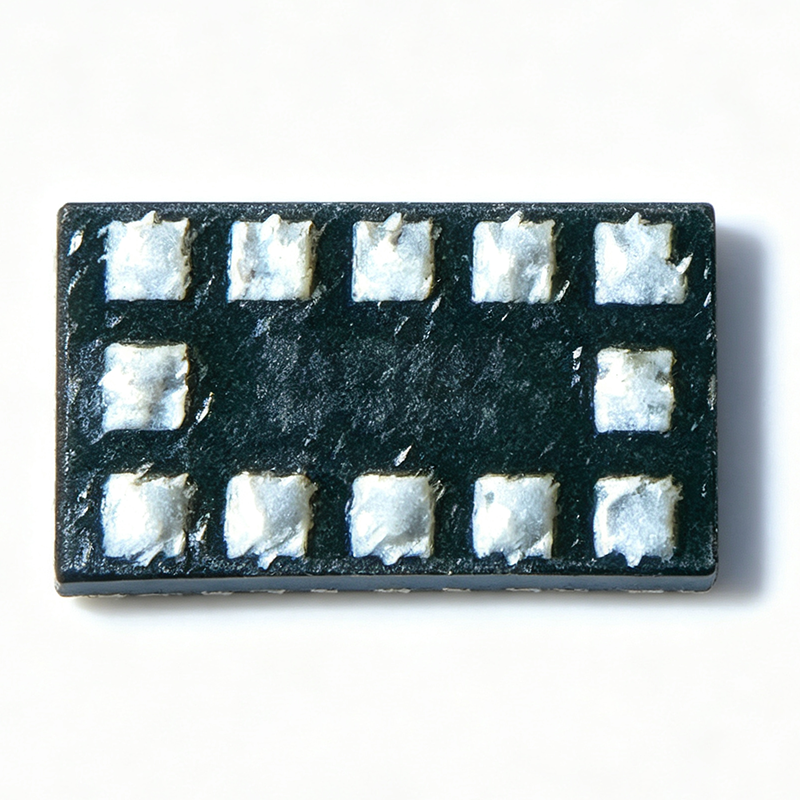
VL53L0CXV0DH/1 - Time-of-Flight Ranging Sensor | STMicroelectronics
The VL53L0CXV0DH/1 is a Time-of-Flight (ToF) laser-ranging sensor module from STMicroelectronics, designed for accurate distance measurement up to 2 meters. It integrates a 940nm VCSEL (Vertical-Cavity Surface-Emitting Laser), a single-photon avalanche diode (SPAD) array, and a microcontroller in a compact optical module. The device communicates via I2C interface and operates from a 2.8V supply, making it ideal for battery-powered applications. A Time-of-Flight sensor measures distance by emitting a light pulse and measuring the time it takes for the reflected light to return. The VL53L0C uses a VCSEL to emit infrared light and a SPAD array to detect the reflection, calculating distance with millimeter-level accuracy. This technology is superior to infrared proximity sensors because it provides absolute distance measurement rather than just presence detection, and it is less affected by ambient light and target color. Key features include a measurement range of 30mm to 2000mm, an accuracy of ±3% at typical conditions, and a fast measurement time of less than 30ms. The module operates from a 2.8V supply with a typical power consumption of 20mW during active ranging. It includes an I2C interface with a configurable address, an interrupt output for ranging completion, and a built-in VCSEL driver. The device is housed in a 4.4mm x 2.4mm x 1.0mm optical module with an integrated lens, providing a field of view of 25 degrees. The VL53L0C uses STMicroelectronics' FlightSense technology, which combines a VCSEL, SPAD array, and advanced algorithms to achieve high accuracy and robustness. The module includes an on-chip microcontroller that handles ranging calculations, calibration, and ambient light rejection. The I2C interface supports standard and fast modes up to 400kHz, and the device can be programmed for different ranging modes, including single-shot and continuous. Typical applications include smartphone proximity detection, robotics obstacle avoidance, drone landing assistance, and consumer electronics such as automatic faucets and vacuum cleaners. The compact size and low power consumption make it suitable for portable and battery-operated devices. When designing with the VL53L0C, ensure a clean power supply with adequate decoupling, and place the module with a clear field of view. The device requires a cover glass with high infrared transmittance, and the I2C lines should be pulled up with appropriate resistors. Calibration is performed at the factory, but additional calibration may be needed for specific cover glass or system integration.
VL53L1CBV0FY/1 - Long Range Time-of-Flight Sensor | STMicroelectronics
The VL53L1CBV0FY/1 is a state-of-the-art Time-of-Flight (ToF) ranging sensor with enhanced performance, manufactured by STMicroelectronics. It integrates a complete ToF system in a compact optical module, enabling accurate distance measurement up to 4 meters. The sensor operates at a supply voltage of 2.8V and communicates via I2C interface, making it ideal for a wide range of proximity and ranging applications. A Time-of-Flight (ToF) sensor measures distance by emitting a light signal and calculating the time it takes for the light to reflect back from an object. This technology is distinct from infrared (IR) proximity sensors, which only detect presence, and from ultrasonic sensors, which use sound waves. ToF sensors are part of the broader category of optical sensors and are widely used in robotics, consumer electronics, and industrial automation for precise distance measurement. Key features of the VL53L1CBV0FY/1 include a long ranging distance of up to 4 meters, a fast ranging frequency of up to 50 Hz, and a field of view (FOV) of 27 degrees. The sensor is housed in an optical module package, which integrates the emitter, receiver, and optics in a single component. It operates over a temperature range of -30°C to +85°C, ensuring reliable performance in various environments. The VL53L1CBV0FY/1 uses STMicroelectronics' patented ToF technology, which employs single-photon avalanche diodes (SPADs) to detect reflected light. This architecture enables high accuracy and immunity to ambient light, making it suitable for outdoor applications. The sensor also features a programmable region of interest (ROI), allowing users to optimize the field of view for specific applications. Typical applications include smartphone proximity detection, robotics obstacle avoidance, drone landing assistance, and industrial safety systems. The sensor's long range and fast ranging frequency make it ideal for applications requiring real-time distance measurement, such as autonomous navigation and collision avoidance. When designing with the VL53L1CBV0FY/1, it is important to consider the optical interface. The sensor requires a clear line of sight to the target, and the cover glass or window must be transparent to infrared light. Additionally, proper power supply decoupling and PCB layout are critical to minimize noise and ensure accurate measurements.
VL53L3CXV0DH/1 - Time-of-Flight Ranging Sensor | STMicroelectronics
The VL53L3CXV0DH/1 is a Time-of-Flight (ToF) ranging sensor from STMicroelectronics, designed for high-accuracy distance measurement in a compact optical module. It integrates a single-photon avalanche diode (SPAD) array, a VCSEL light source, and a low-power microcontroller in a 4.4 x 2.4 x 1.0 mm optical LGA package. The sensor provides absolute distance measurement up to 300 cm with millimeter-level accuracy, making it suitable for a wide range of proximity, gesture, and ranging applications. A Time-of-Flight (ToF) sensor measures distance by emitting a light pulse and calculating the time it takes for the reflected light to return. The VL53L3CXV0DH/1 uses a VCSEL (Vertical-Cavity Surface-Emitting Laser) to emit infrared light and a SPAD array to detect the reflected photons. This technology enables fast, accurate, and reliable distance measurement even in challenging lighting conditions. ToF sensors are part of the broader category of optical sensors, which also includes ambient light sensors, proximity sensors, and image sensors. In a system hierarchy, the VL53L3CXV0DH/1 sits at the sensor layer, providing raw distance data to a host processor via an I2C interface. Key features of the VL53L3CXV0DH/1 include a ranging distance of up to 300 cm, a fast ranging frequency of up to 50 Hz, and a field of view (FOV) of 27 degrees. The sensor operates from a 2.8V supply voltage and communicates via I2C, with an interrupt output for event-driven operation. It also features an on-chip histogram processing algorithm that improves robustness against ambient light and multi-object detection. The device is RoHS compliant and operates over a temperature range of -30°C to +85°C. The VL53L3CXV0DH/1 uses a histogram-based ranging architecture that enables multi-object detection and improved accuracy in cluttered environments. The integrated VCSEL emits at 940 nm, which is invisible to the human eye and safe for consumer applications. The sensor's low power consumption (typically 20 mA during ranging) and small form factor make it ideal for battery-powered devices. The I2C interface supports standard and fast modes, allowing easy integration with microcontrollers. Typical applications include smartphone camera autofocus, robotics obstacle avoidance, drone landing assistance, smart home presence detection, and industrial safety systems. The sensor's ability to measure absolute distance, rather than just proximity, enables advanced features such as gesture recognition and 3D mapping. In robotics, the VL53L3CXV0DH/1 can be used for collision avoidance and navigation, providing accurate distance data to the control system. When designing with the VL53L3CXV0DH/1, ensure proper optical alignment and a clear line of sight to the target. The sensor requires a small aperture in the enclosure to allow the VCSEL and SPAD to operate correctly. Additionally, the I2C address can be configured via a single pin, allowing multiple sensors to be used on the same bus. For optimal performance, place the sensor away from other infrared sources and avoid covering the optical window with materials that absorb infrared light.
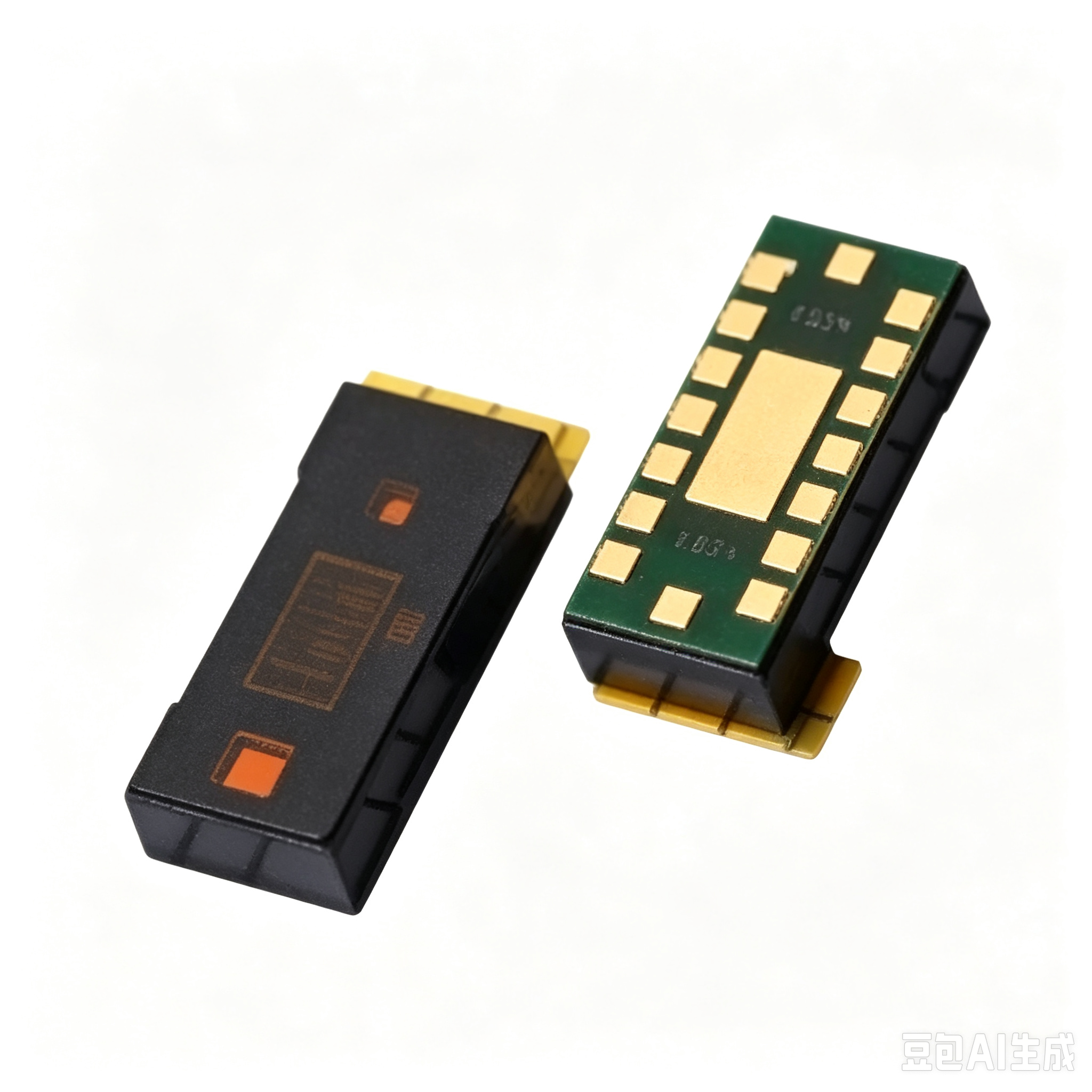
VL53L5CXV0GC/1 - 8x8 Multi-Zone Time-of-Flight Sensor | STMicroelectronics
The STMicroelectronics VL53L5CXV0GC/1 is a state-of-the-art Time-of-Flight (ToF) ranging sensor with an 8x8 multi-zone capability, enabling simultaneous measurement of distances across 64 independent zones. It integrates a single-photon avalanche diode (SPAD) array, a low-power infrared laser, and advanced optics in a compact, reflowable module. The sensor operates at 940 nm wavelength, providing accurate ranging from 1 cm to 400 cm in typical conditions, with a field of view (FoV) of 61 degrees diagonal. It communicates via I2C (up to 1 MHz) or SPI interfaces, and includes an interrupt output for event-driven host communication. A Time-of-Flight (ToF) sensor is a type of optical sensor that measures distance by calculating the time it takes for emitted light to reflect off an object and return to the sensor. Unlike infrared proximity sensors that only detect presence, ToF sensors provide absolute distance measurements, making them essential for applications requiring precise depth sensing. In the broader system hierarchy, a ToF sensor is a type of optical sensor, which falls under the category of sensors, which are components of electronic systems that perceive the physical world. The VL53L5CXV0GC/1 is a direct ToF sensor, meaning it measures the round-trip time of light pulses directly, as opposed to indirect ToF methods that use phase-shift measurements. Key features of the VL53L5CXV0GC/1 include its 8x8 multi-zone ranging, which allows for depth mapping and object detection across a wide area. It offers a maximum ranging frequency of 60 Hz, enabling real-time depth sensing for gesture recognition and SLAM applications. The sensor has a low power consumption of 1.5 mA in continuous operation, making it suitable for battery-powered devices. It also features an on-chip microcontroller that handles ranging algorithms, reducing host processing load. The module is housed in a 6.4 mm x 3.0 mm x 1.5 mm optical module package, which is reflowable and compatible with standard SMT assembly. Technically, the VL53L5CXV0GC/1 uses a SPAD array to detect individual photons, achieving high sensitivity even in low-light conditions. The integrated laser driver emits short infrared pulses, and the time-of-flight is measured with picosecond resolution. The sensor includes a histogram-based algorithm that distinguishes multiple targets and suppresses crosstalk, improving accuracy in complex scenes. The device operates from a 2.8 V supply voltage, with I2C and SPI interfaces for flexible integration. It also includes a programmable GPIO for interrupt generation, which can be configured for various events such as new data ready or threshold crossing. Typical applications include robotics for obstacle avoidance and navigation, smart home devices for presence detection and gesture control, and consumer electronics for camera autofocus assistance. In robotics, the multi-zone capability allows the sensor to map the environment in real-time, enabling collision avoidance. In smart home devices, it can detect human presence for energy-saving automation. In camera systems, it provides fast and accurate autofocus even in low-light conditions. When designing with this sensor, ensure proper optical alignment and avoid covering the module with materials that are opaque to 940 nm light. The sensor requires a clean power supply with adequate decoupling, and the I2C address can be configured via a pin. For best performance, calibrate the sensor in the final product environment to account for cover glass and other optical elements.