Microcontrollers
Products (319)
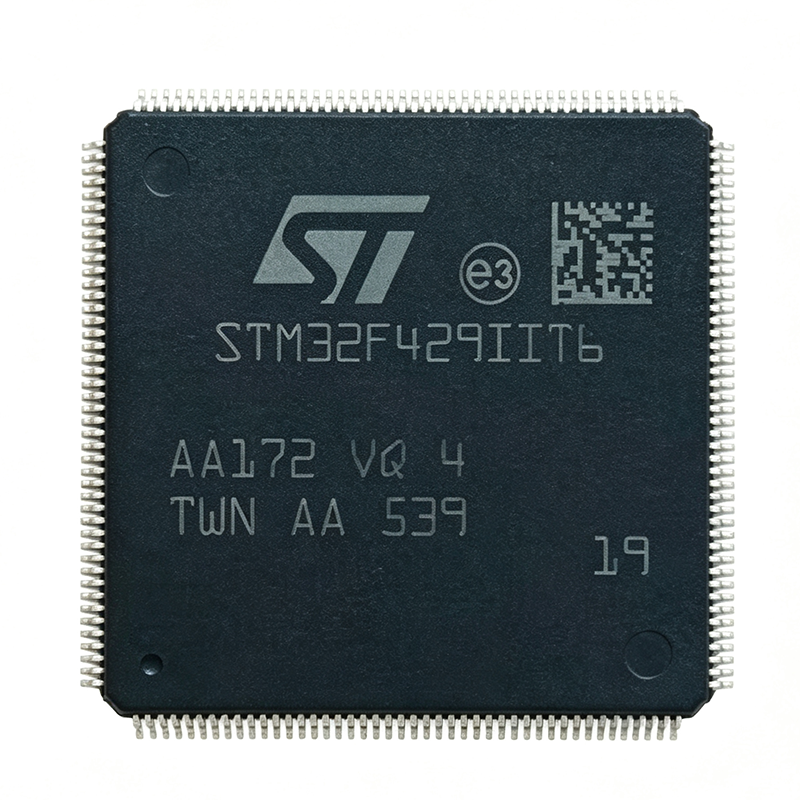
STM32F429IIT6 - 180MHz ARM Cortex-M4 MCU with 2MB Flash | STMicroelectronics
The STM32F429IIT6 is a high-performance 32-bit microcontroller from STMicroelectronics, featuring an ARM Cortex-M4 core with floating-point unit (FPU) running at up to 180 MHz. It integrates 2 MB of Flash memory and 256 KB of SRAM, making it suitable for complex applications requiring substantial code and data storage. The device is housed in a 176-pin LQFP package (LQFP176) and operates over a supply voltage range of 1.8V to 3.6V. A microcontroller (MCU) is a compact integrated circuit designed to govern a specific operation in an embedded system. It contains a processor core, memory, and programmable input/output peripherals. The STM32F429IIT6 belongs to the STM32F4 series, which is part of the broader STM32 family of 32-bit Flash microcontrollers based on the ARM Cortex-M processor. These MCUs are widely used in industrial control, consumer electronics, and Internet of Things (IoT) devices due to their balance of performance, power efficiency, and peripheral integration. Key features of the STM32F429IIT6 include a rich set of peripherals: multiple 12-bit ADCs, DACs, timers, USARTs, SPIs, I2Cs, USB OTG, CAN, and an LCD-TFT controller. It also supports external memory interfaces (FSMC) for expanding memory beyond the on-chip resources. The device includes a cryptographic acceleration cell and a true random number generator, enhancing security for applications requiring data protection. With a comprehensive set of development tools and middleware from STMicroelectronics, the STM32F429IIT6 accelerates time-to-market for embedded designs. Technically, the STM32F429IIT6 leverages the ARM Cortex-M4 core with DSP instructions and a single-precision FPU, enabling efficient execution of complex algorithms such as digital signal processing and motor control. The memory architecture includes an 8-KB instruction cache and a 4-KB data cache to optimize performance when accessing external memory. The device supports a wide range of clock sources, including internal RC oscillators, external crystals, and PLLs, allowing designers to balance performance and power consumption. Typical applications include industrial automation, motor drives, medical devices, audio processing, and human-machine interfaces (HMI) with graphical displays. The integrated LCD-TFT controller simplifies the design of color displays, while the advanced timer peripherals provide precise PWM generation for motor control. The device's low-power modes, including Sleep, Stop, and Standby, enable battery-powered applications to extend operational life. When designing with the STM32F429IIT6, ensure proper decoupling of the power supply pins with 100 nF capacitors placed close to each VDD pin. The VDDA analog supply should be filtered with a ferrite bead and a 1 uF capacitor to reduce noise for ADC accuracy. Additionally, the BOOT0 pin configuration must be set correctly to select the boot source, and the NRST pin should have an external pull-up resistor and a capacitor for reliable reset operation.
STM32F429NGH6 - 180MHz ARM Cortex-M4 MCU with 1MB Flash | STMicroelectronics
The STM32F429NGH6 is a high-performance 32-bit microcontroller from STMicroelectronics, based on the ARM Cortex-M4 core with floating-point unit (FPU) running at up to 180 MHz. It integrates 1 MB of Flash memory and 256 KB of SRAM, making it suitable for complex applications requiring substantial code and data storage. The device is housed in a 176-pin BGA package (TFBGA176) with a 14x14 mm footprint, offering a compact solution for space-constrained designs. What is a microcontroller? A microcontroller (MCU) is a compact integrated circuit designed to govern a specific operation in an embedded system. It contains a processor core, memory (Flash and SRAM), and programmable input/output peripherals on a single chip. In the system hierarchy, the STM32F429NGH6 is a high-end MCU, positioned above basic 8-bit and 16-bit microcontrollers, and it competes with other 32-bit ARM Cortex-M based MCUs. Its role is to execute application firmware, interface with sensors and actuators, and manage communication protocols, serving as the 'brain' of embedded systems. Key features include a 180 MHz ARM Cortex-M4 core with FPU, 1 MB Flash, 256 KB SRAM, and a comprehensive set of peripherals: multiple 12-bit ADCs, DACs, timers, USARTs, SPIs, I2Cs, USB OTG, CAN, and an LCD-TFT controller. The device also supports external memory interfaces (FMC) for SDRAM, NOR, and NAND Flash, and includes a cryptographic acceleration unit for secure applications. These features enable advanced user interfaces, real-time control, and connectivity. Technically, the STM32F429NGH6 leverages the ARM Cortex-M4 architecture with DSP instructions and a single-precision FPU, providing efficient signal processing capabilities. The 180 MHz clock speed, combined with a 256 KB SRAM, allows for complex algorithms and multitasking. The device operates from 1.7V to 3.6V, with a wide temperature range of -40°C to +85°C, and includes power-saving modes for low-power applications. Typical applications include industrial control systems, motor drives, medical devices, consumer electronics, and IoT gateways. The LCD-TFT controller and rich connectivity make it ideal for human-machine interfaces (HMIs) and smart appliances. The cryptographic unit supports secure communication in IoT and payment terminals. When designing with this MCU, ensure adequate decoupling on all power pins and follow the layout guidelines in the datasheet for the BGA package. The 176-pin BGA requires careful PCB design for routing and thermal management. Use the STM32CubeMX tool for pin configuration and code generation to accelerate development.
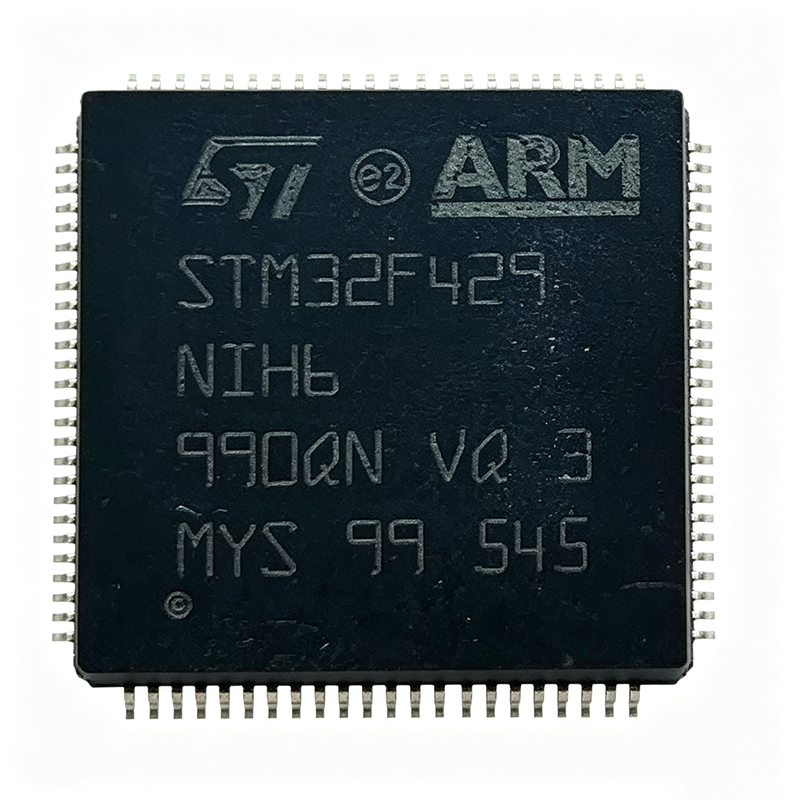
STM32F429NIH6 - 180MHz ARM Cortex-M4 MCU, 2MB Flash | STMicroelectronics
The STMicroelectronics STM32F429NIH6 is a high-performance ARM Cortex-M4 based microcontroller with floating-point unit (FPU) operating at up to 180 MHz. It features 2 MB of Flash memory and 256 KB of SRAM, making it suitable for complex applications requiring substantial code and data storage. The device is housed in a 216-pin BGA package (TFBGA216) with a 13x13 mm footprint, offering extensive I/O and connectivity options. What is a microcontroller? A microcontroller (MCU) is a compact integrated circuit designed to govern a specific operation in an embedded system. It integrates a processor core, memory (Flash and SRAM), and programmable input/output peripherals on a single chip. Microcontrollers are the backbone of embedded systems, ranging from simple household appliances to complex industrial automation. The STM32F429NIH6 belongs to the STM32F4 series, which is part of the broader STM32 family of 32-bit ARM Cortex-M microcontrollers. This hierarchy places it within the ARM Cortex-M4 category, known for its DSP instructions and FPU, enabling efficient signal processing and mathematical computations. Key features of the STM32F429NIH6 include a 180 MHz ARM Cortex-M4 core with FPU, 2 MB of dual-bank Flash memory, 256 KB of SRAM, and a comprehensive set of peripherals. It integrates a TFT-LCD controller, a camera interface, a cryptographic/hash processor, and a true random number generator (TRNG). The device supports a wide range of communication interfaces including USB OTG HS/FS, Ethernet MAC, 4x USART, 4x UART, 6x SPI, 3x I2C, 2x CAN, and 2x SDIO. Additionally, it features three 12-bit ADCs, two 12-bit DACs, and multiple timers, making it highly versatile for various applications. From a technical depth perspective, the STM32F429NIH6 leverages the ARM Cortex-M4 core with a single-precision FPU and DSP instructions, enabling efficient execution of complex algorithms. The dual-bank Flash architecture allows simultaneous read-while-write operations, facilitating firmware updates without halting the system. The device also includes an ART Accelerator (Adaptive Real-Time memory accelerator) that optimizes Flash access to achieve zero-wait-state execution at 180 MHz, maximizing performance. The TFT-LCD controller supports up to 24-bit parallel RGB interfaces, enabling direct connection to graphical displays without external controllers. Typical applications include high-end industrial control systems, medical devices, consumer electronics, and IoT gateways. The STM32F429NIH6 is particularly well-suited for applications requiring rich graphical user interfaces, such as smart home control panels, point-of-sale terminals, and human-machine interfaces (HMIs). Its Ethernet MAC and USB OTG support enable network connectivity and high-speed data transfer, making it ideal for industrial automation and communication gateways. When designing with this device, ensure adequate decoupling on all power supply pins and a proper ground plane for the BGA package. The 216-pin TFBGA package requires careful PCB layout to manage thermal dissipation and signal integrity. Additionally, the device supports multiple power modes, including Sleep, Stop, and Standby, allowing designers to optimize power consumption for battery-powered applications.
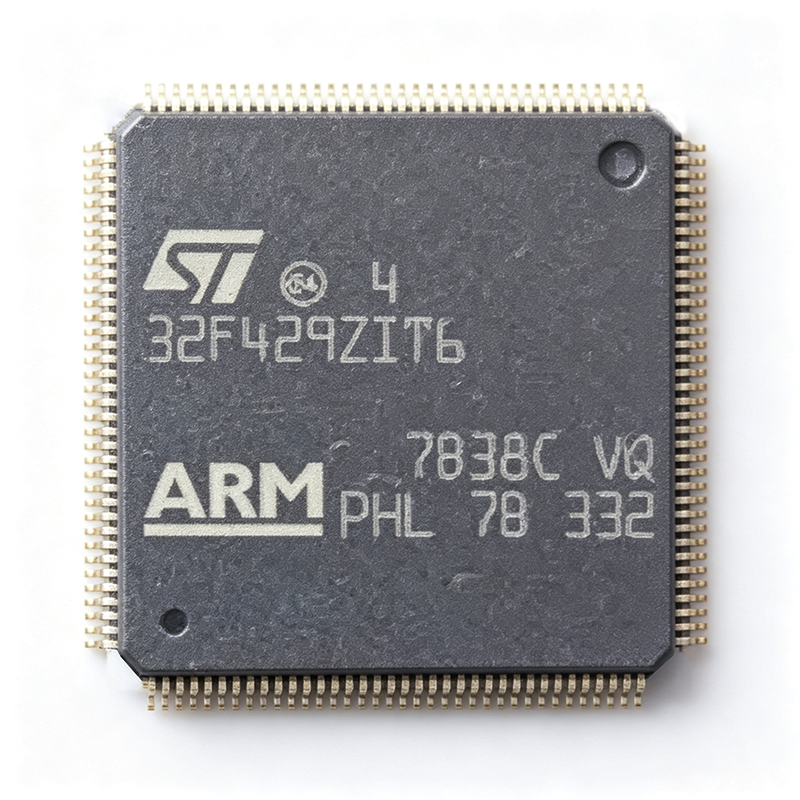
STM32F429ZIT6 - 2MB Flash ARM Cortex-M4 MCU | STMicroelectronics
The STM32F429ZIT6 is a high-performance 32-bit microcontroller from STMicroelectronics based on the ARM Cortex-M4 core with floating-point unit (FPU). It operates at up to 180 MHz and provides 2 MB of flash memory and 256 KB of SRAM, making it suitable for complex applications requiring substantial code and data storage. The device is housed in a 144-pin LQFP package (LQFP144) and supports a wide supply voltage range of 1.8V to 3.6V. Data verified as of 2026-08-05. What is a microcontroller? A microcontroller (MCU) is a compact integrated circuit designed to govern a specific operation in an embedded system. It integrates a processor core, memory (flash and SRAM), and programmable input/output peripherals on a single chip. The STM32F429ZIT6 belongs to the STM32F4 series, which is part of the broader STM32 family of 32-bit ARM Cortex-M microcontrollers. This hierarchy places it within the embedded processing domain, where it serves as the central control unit for a wide range of electronic products. Key features include a 180 MHz ARM Cortex-M4 core with FPU, 2 MB of dual-bank flash memory, 256 KB of SRAM, and a comprehensive set of peripherals: multiple 12-bit ADCs, DACs, timers, USARTs, SPIs, I2Cs, USB OTG, Ethernet MAC, and a TFT-LCD controller. The device also includes a cryptographic acceleration unit and a true random number generator (RNG), enhancing security for connected applications. The LQFP144 package provides 114 I/O pins, offering extensive connectivity options. Technically, the STM32F429ZIT6 leverages the ARM Cortex-M4 architecture with DSP instructions and a single-precision FPU, enabling efficient signal processing and mathematical computations. The dual-bank flash allows simultaneous read-while-write operations, which is critical for over-the-air (OTA) firmware updates. The device supports a wide range of clock sources, including an external crystal oscillator up to 26 MHz and an internal 16 MHz RC oscillator, with a PLL for system clock generation up to 180 MHz. Typical applications include industrial control systems, motor drives, medical devices, consumer electronics, and IoT gateways. The rich peripheral set and high processing power make it ideal for applications requiring real-time control, connectivity, and user interfaces. For instance, in industrial automation, the STM32F429ZIT6 can manage multiple sensors and actuators while communicating over Ethernet or CAN. When designing with this device, ensure proper decoupling of the power supply pins with 100 nF capacitors placed close to each VDD pin, and a 4.7 uF bulk capacitor. The VDDA analog supply should be filtered with a ferrite bead to reduce noise. Also, consider the thermal dissipation: the LQFP144 package has a thermal resistance of 40 C/W, so adequate PCB copper area is needed for high-current applications. This page synthesizes distributor pricing, drop-in alternatives, and practical design notes not found in the STMicroelectronics datasheet, providing a comprehensive resource for engineers evaluating the STM32F429ZIT6.
STM32F437IIH6 - 180MHz ARM Cortex-M4F MCU with 2MB Flash | STMicroelectronics
The STMicroelectronics STM32F437IIH6 is a high-performance ARM Cortex-M4F based microcontroller with floating-point unit (FPU) running at up to 180 MHz. It integrates 2 MB of Flash memory and 256 KB of SRAM, along with a rich set of peripherals including a Chrom-ART Accelerator, a TFT-LCD controller, a camera interface, and cryptographic/hash hardware accelerators. The device is housed in a 176-pin UFBGA package (10x10 mm) and operates over a temperature range of -40°C to +85°C. An ARM Cortex-M4F microcontroller is a 32-bit processor core designed for embedded applications requiring a balance of performance, power efficiency, and advanced digital signal processing (DSP) capabilities. The 'F' suffix denotes the presence of a hardware floating-point unit, which accelerates single-precision math operations. In the system hierarchy, the STM32F437IIH6 sits at the application processor level, often serving as the main controller in industrial, consumer, and medical devices, interfacing with sensors, actuators, displays, and communication interfaces. Key features of the STM32F437IIH6 include a 180 MHz CPU with 225 DMIPS/2.14 CoreMark performance, 2 MB of dual-bank Flash with read-while-write support, 256 KB of SRAM, and a Chrom-ART Accelerator for 2D graphics. It also offers a TFT-LCD controller supporting up to XGA resolution, a camera interface, and hardware acceleration for AES, DES, 3DES, and SHA-1/SHA-2. The device includes a comprehensive set of communication interfaces: 4 USARTs, 4 UARTs, 6 SPIs, 3 I2Cs, 2 CANs, 1 SDIO, 1 USB 2.0 OTG HS/FS, and 1 Ethernet MAC. Technically, the STM32F437IIH6 is built on a 90nm process and features an adaptive real-time memory accelerator (ART Accelerator) that enables zero-wait-state execution from Flash. The dual-bank Flash architecture allows firmware updates without halting the system. The device supports a wide supply voltage range of 1.8V to 3.6V and includes multiple low-power modes (Sleep, Stop, Standby) with typical power consumption as low as 2.4 µA in Standby mode. The integrated 12-bit ADC (up to 3 MSPS) and 12-bit DAC (2 channels) provide analog interface capability. Typical applications include industrial control systems, motor drives, medical monitoring devices, high-end consumer electronics, and IoT gateways. The combination of high CPU performance, large memory, and rich connectivity makes it suitable for applications requiring real-time control and complex user interfaces. For example, in a motor control system, the FPU accelerates PID loops, while the advanced timers generate precise PWM signals. When designing with this device, pay attention to power supply decoupling: place a 100 nF capacitor close to each VDD pin and a 4.7 µF capacitor at the main supply. The VBAT pin should be connected to a backup battery for RTC and backup registers. For high-speed interfaces like Ethernet and USB, follow the layout guidelines in the STM32F4 reference manual (RM0090) to ensure signal integrity.
STM32F437VIT6 - 2MB Flash, 180MHz ARM Cortex-M4 MCU | STMicroelectronics
The STMicroelectronics STM32F437VIT6 is a high-performance ARM Cortex-M4 32-bit microcontroller with floating-point unit (FPU), operating at up to 180 MHz. It features 2 MB of Flash memory and 256 KB of SRAM, making it suitable for complex applications requiring substantial code and data storage. The device is housed in a 100-pin LQFP package (LQFP100) with a 14x14 mm body and 0.5 mm pitch, offering a compact footprint for space-constrained designs. What is an ARM Cortex-M4 microcontroller? It is a 32-bit processor core designed for embedded systems, combining digital signal processing (DSP) instructions and a single-precision FPU for efficient handling of mathematical operations. The Cortex-M4 is part of the ARM Cortex-M family, which includes the M0, M0+, M3, M4, and M7 cores, each targeting different performance and power trade-offs. In the system hierarchy, a microcontroller integrates the processor core, memory, and peripherals on a single chip, enabling standalone operation in applications ranging from industrial control to consumer electronics. Key features of the STM32F437VIT6 include a 180 MHz CPU with 225 DMIPS/1.25 DMIPS/MHz performance, a Chrom-ART Accelerator for enhanced graphical user interface (GUI) rendering, and a TFT LCD controller supporting up to XGA resolution. It also integrates a cryptographic/hash processor for AES, DES, and SHA-1/SHA-2 algorithms, a true random number generator (TRNG), and a camera interface. The device provides extensive connectivity with USB 2.0 OTG HS/FS, Ethernet MAC, CAN 2.0B, SPI, I2C, USART, and SDIO interfaces. Technically, the STM32F437VIT6 is built on a 90 nm process technology, offering a balance of performance and power efficiency. It operates from a 1.8V to 3.6V power supply and includes multiple low-power modes (Sleep, Stop, Standby) to minimize energy consumption. The device supports external memory interfaces for SDRAM, SRAM, and NOR/NAND Flash, expanding its data storage capabilities beyond the internal 2 MB Flash. Typical applications include industrial automation (PLC, motor control), medical devices (patient monitoring, diagnostic equipment), consumer electronics (smart home hubs, wearables), and IoT gateways. The combination of high performance, rich peripherals, and security features makes it a versatile choice for advanced embedded systems. When designing with this MCU, ensure adequate decoupling on all power supply pins and follow the recommended layout for the 100-pin LQFP package. The internal LDO requires a 1.2V bypass capacitor, and the VBAT pin should be connected to a backup battery for RTC operation. Pay attention to the ADC reference voltage (VDDA) for accurate analog measurements.
STM32F437ZIT6 - 2MB Flash, 180MHz ARM Cortex-M4 MCU | STMicroelectronics
The STMicroelectronics STM32F437ZIT6 is a high-performance ARM Cortex-M4 32-bit microcontroller with FPU, operating at up to 180 MHz. It features 2 MB of Flash memory and 256 KB of SRAM, making it suitable for complex applications requiring substantial code and data storage. The device is housed in a 144-pin LQFP package (LQFP144) with a 20x20 mm body and 0.5 mm pitch, providing ample I/O for peripheral-rich designs. What is an ARM Cortex-M4 microcontroller? It is a 32-bit processor core designed for embedded systems, offering a balance of performance, power efficiency, and rich peripheral integration. The Cortex-M4 includes a floating-point unit (FPU) and DSP instructions, enabling efficient handling of mathematical and signal-processing tasks. In the system hierarchy, a microcontroller (MCU) integrates a processor core, memory, and programmable peripherals on a single chip, serving as the 'brain' of embedded systems. The STM32F4 series sits within the broader STM32 family, which spans from low-power Cortex-M0 to high-performance Cortex-M7 devices, and is widely used in industrial, consumer, and automotive applications. Key features of the STM32F437ZIT6 include a 180 MHz CPU with 225 DMIPS/1.25 DMIPS/MHz, a Chrom-ART Accelerator for 2D graphics, a TFT-LCD controller, a camera interface, and a true random number generator. It also integrates multiple communication interfaces: 4 USARTs, 2 UARTs, 6 SPIs, 3 I2Cs, 2 CANs, 1 SDIO, 1 USB 2.0 OTG FS/HS, and 1 Ethernet MAC. The device supports up to 168 MHz for the ADC, with three 12-bit ADCs, two DACs, and multiple timers including advanced-control timers for motor control. Technically, the STM32F437ZIT6 is built on a 90 nm process technology, offering a good balance of speed and power consumption. It operates from 1.8V to 3.6V supply, with a wide temperature range of -40°C to +85°C (T suffix). The device includes a power-on reset, brown-out reset, and a programmable voltage detector, ensuring reliable operation. The memory architecture supports external memory interfaces via FSMC (Flexible Static Memory Controller) for SRAM, PSRAM, NOR, and NAND Flash, expanding storage beyond the internal 2 MB. Typical applications include industrial control systems, motor drives, medical devices, consumer electronics, and IoT gateways. The combination of high CPU performance, rich connectivity, and graphics capabilities makes it ideal for human-machine interfaces (HMIs), PLCs, and advanced robotics. For example, in an industrial HMI, the TFT-LCD controller and Chrom-ART accelerator enable smooth graphical rendering, while the Ethernet MAC and CAN interfaces facilitate industrial networking. When designing with this device, ensure adequate decoupling on all power pins and a proper ground plane. The 144-pin LQFP package requires careful PCB layout for thermal management and signal integrity, especially for high-speed interfaces like Ethernet and USB. Use the internal voltage regulator for core logic, and consider external memory if the application requires more than 2 MB of code or 256 KB of data.

STM32F446RET6 - 512KB Flash, 180MHz ARM Cortex-M4 MCU | STMicroelectronics
The STM32F446RET6 is a high-performance ARM Cortex-M4 32-bit microcontroller from STMicroelectronics, featuring a floating-point unit (FPU) running at up to 180 MHz. It integrates 512 KB of Flash memory and 128 KB of SRAM, along with a rich set of peripherals including multiple ADCs, DACs, timers, communication interfaces, and a camera interface. The device is housed in a 64-pin LQFP package (LQFP64) and operates over a supply voltage range of 1.7V to 3.6V. Data verified as of 2026-08-05. What is a microcontroller? A microcontroller (MCU) is a compact integrated circuit designed to govern a specific operation in an embedded system. It contains a processor core, memory (Flash and SRAM), and programmable input/output peripherals on a single chip. The STM32F446RET6 belongs to the STM32F4 series, which is part of the broader STM32 family of 32-bit ARM Cortex-M microcontrollers. This hierarchy places it within the ARM Cortex-M4 category, known for DSP instructions and FPU, making it suitable for signal processing and control applications. Key features include a 180 MHz ARM Cortex-M4 core with FPU, 512 KB Flash, 128 KB SRAM, and a comprehensive set of peripherals: 3x 12-bit ADCs, 2x 12-bit DACs, 12x 16-bit timers, 2x 32-bit timers, and multiple communication interfaces (SPI, I2C, USART, CAN, USB OTG, SDIO). The device also includes a true random number generator (RNG), a camera interface (DCMI), and a cryptographic acceleration cell. These features enable complex real-time control and digital signal processing tasks. Technically, the STM32F446RET6 is built on a 90nm process technology, offering a balance of performance and power efficiency. It supports a wide range of clock sources, including an external crystal, internal RC oscillators, and a PLL for frequency multiplication. The device includes a memory protection unit (MPU) and a nested vectored interrupt controller (NVIC) for efficient interrupt handling. The LQFP64 package provides 51 GPIO pins, with many pins multiplexed to support alternate functions. Typical applications include motor control, industrial automation, consumer electronics, IoT devices, and audio processing. The high clock speed and FPU make it ideal for real-time control loops and audio algorithms. The rich peripheral set supports connectivity to sensors, displays, and communication networks. When designing with this device, ensure adequate decoupling capacitors on the power supply pins and a proper crystal layout for the HSE oscillator. The device supports multiple low-power modes, which can be leveraged to optimize battery life in portable applications. This page synthesizes distributor pricing, drop-in alternatives, and practical design notes not found in the ST datasheet, providing a comprehensive resource for engineers evaluating the STM32F446RET6.
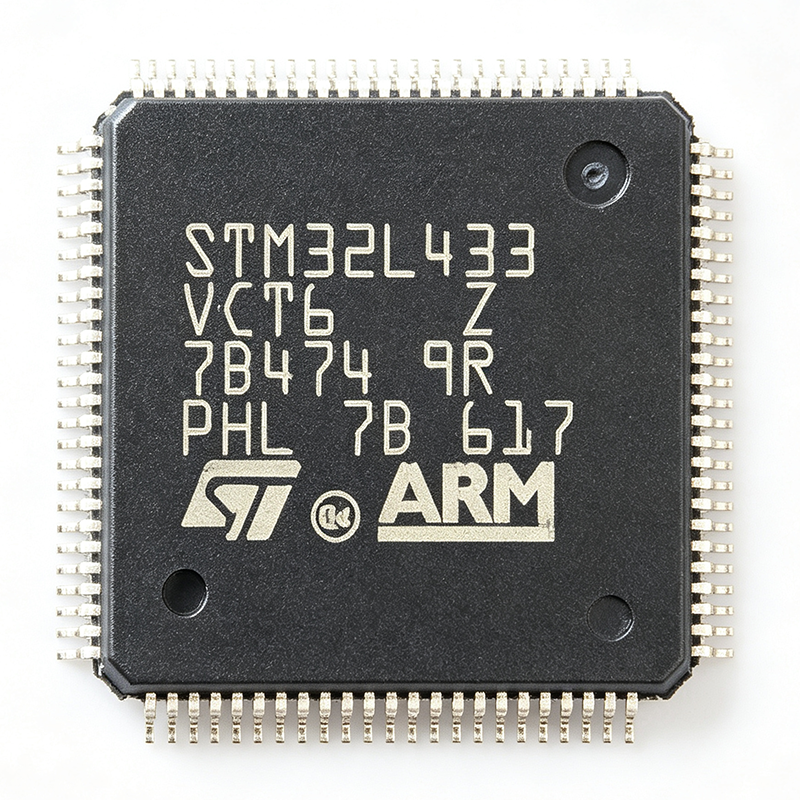
STM32F446VCT6 - 180MHz Cortex-M4 MCU, 256KB Flash | STMicroelectronics
The STM32F446VCT6 is a high-performance 32-bit microcontroller from STMicroelectronics, based on the Arm® Cortex®-M4 core with DSP and FPU instructions. It operates at a maximum frequency of 180 MHz, delivering 225 DMIPS/1.25 DMIPS/MHz, and is housed in a 100-pin LQFP (14x14 mm) package. The device features 256 KB of Flash memory and 128 KB of SRAM, making it suitable for a wide range of embedded applications. A microcontroller (MCU) is a compact integrated circuit designed to govern a specific operation in an embedded system. It contains a processor core, memory, and programmable input/output peripherals. The STM32F446VCT6 belongs to the STM32F4 series, which is part of the broader STM32 family of 32-bit microcontrollers. This family is known for its balance of performance, power efficiency, and rich peripheral integration, positioning it as a leading choice in the microcontroller market. Key features of the STM32F446VCT6 include a 180 MHz Arm Cortex-M4 core with floating-point unit (FPU), 256 KB Flash, 128 KB SRAM, and a comprehensive set of peripherals. It supports multiple communication interfaces such as USART, SPI, I2C, CAN, USB OTG, and SDIO. The device also includes advanced analog peripherals like 12-bit ADCs and DACs, timers, and a true random number generator (RNG). These features enable complex real-time control and signal processing tasks. Technically, the STM32F446VCT6 leverages the ARM Cortex-M4 architecture with DSP instructions and a single-precision FPU, allowing efficient execution of digital signal processing algorithms. The device operates from a 2.0V to 3.6V power supply and includes multiple power-saving modes, such as Sleep, Stop, and Standby, to optimize energy consumption. The 100-pin LQFP package provides a compact footprint while offering sufficient I/O pins for diverse applications. Typical applications include industrial control systems, motor drives, consumer electronics, IoT devices, and audio processing. The high clock speed and FPU make it ideal for applications requiring real-time computation, such as motor control with field-oriented control (FOC) algorithms or audio effects processing. The rich peripheral set also supports connectivity in smart home and industrial automation scenarios. When designing with this device, ensure proper decoupling of the power supply pins with 100 nF capacitors placed close to each VDD pin. Additionally, consider the thermal characteristics of the LQFP-100 package; for high-current I/O toggling, adequate PCB copper area is recommended to dissipate heat effectively.
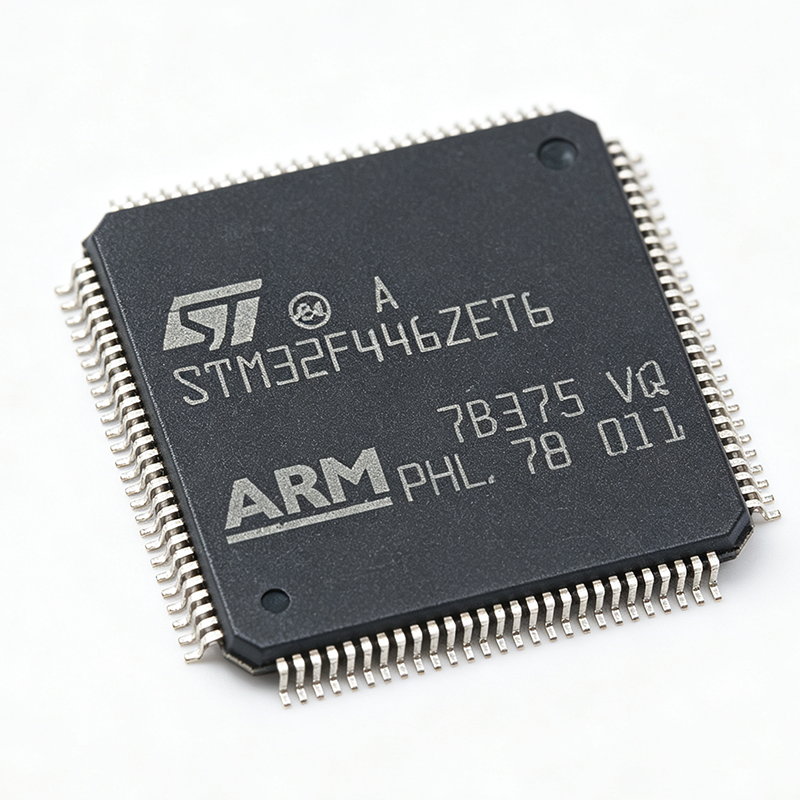
STM32F446ZET6 - 180MHz ARM Cortex-M4F MCU | STMicroelectronics
The STMicroelectronics STM32F446ZET6 is a high-performance 32-bit microcontroller based on the ARM Cortex-M4F core with floating-point unit (FPU), operating at up to 180 MHz. It is part of the STM32F4 series, offering a rich set of peripherals and connectivity options. The device is housed in a 144-pin LQFP package (LQFP144) and provides 512 KB of flash memory and 128 KB of SRAM, making it suitable for a wide range of applications including motor control, industrial automation, and consumer electronics. What is a microcontroller? A microcontroller (MCU) is a compact integrated circuit designed to govern a specific operation in an embedded system. It integrates a processor core, memory (flash and SRAM), and programmable input/output peripherals on a single chip. Microcontrollers are the backbone of embedded systems, enabling control, monitoring, and communication in devices ranging from automotive engine control units to smart home sensors. The STM32F446ZET6 is a high-end MCU within the STM32 family, positioned above entry-level Cortex-M0/M3 parts and offering superior performance and peripheral integration. Key features of the STM32F446ZET6 include a 180 MHz ARM Cortex-M4F core with FPU, 512 KB flash memory, 128 KB SRAM, and a comprehensive set of peripherals: multiple 12-bit ADCs, DACs, timers, USARTs, SPIs, I2Cs, USB OTG, CAN, and an FMC (Flexible Memory Controller) for external memory expansion. The device supports a wide supply voltage range of 1.8V to 3.6V and operates over a temperature range of -40°C to +85°C. It also features a true random number generator (RNG), a cryptographic acceleration cell, and a real-time clock (RTC). The STM32F446ZET6 is built on ST's advanced 90nm process technology, delivering a balance of performance and power efficiency. The Cortex-M4F core with FPU accelerates mathematical computations, making it ideal for DSP and control algorithms. The device includes a memory protection unit (MPU) and a nested vectored interrupt controller (NVIC) for robust real-time operation. The FMC supports external SDRAM, NOR, and NAND flash, enabling large data buffers and code expansion. Typical applications include motor control (e.g., field-oriented control of brushless DC motors), industrial automation (PLCs, robotics), medical devices (patient monitors, infusion pumps), and consumer electronics (smart appliances, audio systems). The rich connectivity options (USB, CAN, UART, SPI, I2C) make it a versatile choice for IoT gateways and human-machine interfaces (HMI). When designing with the STM32F446ZET6, ensure proper decoupling of the power supply pins with 100nF capacitors placed close to each VDD pin, and a 4.7uF bulk capacitor. The VDDA pin should be filtered with a ferrite bead and capacitor to reduce analog noise. The device supports multiple low-power modes (Sleep, Stop, Standby) to optimize battery life in portable applications.
STM32F469AGH6 - 2MB Flash ARM Cortex-M4F MCU | STMicroelectronics
The STMicroelectronics STM32F469AGH6 is a high-performance ARM Cortex-M4F based microcontroller with DSP and FPU instructions, operating at up to 180 MHz. It features 2 MB of Flash memory and 384 KB of SRAM, making it suitable for complex applications requiring substantial code and data storage. The device is housed in a 169-ball TFBGA package (7x7 mm) with a 0.5 mm pitch, offering a compact footprint for space-constrained designs. What is an ARM Cortex-M4F microcontroller? It is a 32-bit processor core designed for embedded systems, combining the ARM Cortex-M4 core with a hardware floating-point unit (FPU) that accelerates single-precision floating-point arithmetic. This makes it ideal for digital signal processing (DSP) tasks, such as audio processing, motor control, and sensor fusion. The Cortex-M4F sits within the broader hierarchy of microcontrollers -> embedded processors -> integrated circuits, and is widely used in industrial, consumer, and IoT applications due to its balance of performance, power efficiency, and peripheral integration. Key features of the STM32F469AGH6 include a Chrom-ART Accelerator for enhanced graphical user interface (GUI) performance, a TFT-LCD controller supporting up to 1024x768 resolution, and a true random number generator (TRNG) for security applications. It also integrates a camera interface, multiple communication interfaces (USART, SPI, I2C, CAN, USB OTG, Ethernet MAC), and advanced analog peripherals including three 12-bit ADCs, two DACs, and operational amplifiers. The device supports a wide supply voltage range of 1.7V to 3.6V and operates over a temperature range of -40°C to +85°C. Technically, the STM32F469AGH6 is built on STMicroelectronics' advanced 90nm process technology, enabling high integration and low power consumption. It features a memory protection unit (MPU) for enhanced reliability, and supports external memory interfaces for SDRAM, SRAM, and NOR/NAND Flash. The Chrom-ART Accelerator offloads 2D graphics operations from the CPU, improving GUI responsiveness while reducing power consumption. The device also includes a flexible power management scheme with multiple low-power modes (Sleep, Stop, Standby) to optimize energy efficiency in battery-powered applications. Typical applications include high-end consumer electronics (smartwatches, fitness trackers), industrial control systems (PLCs, motor drives), medical devices (patient monitors, infusion pumps), and IoT gateways. The TFT-LCD controller and Chrom-ART Accelerator make it particularly well-suited for graphical user interfaces in smart home displays and point-of-sale terminals. The Ethernet MAC and USB OTG support enable connectivity in networked embedded systems. When designing with this device, ensure adequate decoupling of the power supply pins with 100nF ceramic capacitors placed close to each VDD pin, and a 4.7uF bulk capacitor on the main supply. The TFBGA package requires careful PCB layout with via-in-pad techniques for thermal management and signal integrity. Refer to the STM32F469 datasheet (DocID028350) for detailed pinout and electrical characteristics.
STM32F469NIH6 - 2MB Flash, 180MHz ARM Cortex-M4F MCU | STMicroelectronics
The STMicroelectronics STM32F469NIH6 is a high-performance ARM Cortex-M4F based microcontroller with DSP and FPU instructions, operating at up to 180 MHz. It features 2 MB of Flash memory and 384 KB of SRAM, making it suitable for complex applications requiring substantial code and data storage. The device is housed in a 216-ball TFBGA package (NIH6) with a 13x13 mm footprint and 0.8 mm ball pitch, offering a compact solution for space-constrained designs. A microcontroller (MCU) is a compact integrated circuit designed to govern a specific operation in an embedded system. It contains a processor core, memory (Flash and SRAM), and programmable input/output peripherals. The STM32F469NIH6 belongs to the STM32F4 series, which is part of the broader STM32 family of 32-bit ARM Cortex-M microcontrollers. This family is widely used in industrial, consumer, and IoT applications due to its balance of performance, power efficiency, and peripheral integration. Key features include a Chrom-ART Accelerator for enhanced graphics performance, a TFT LCD controller supporting up to XGA resolution, and a MIPI DSI host controller for display interfaces. The device also integrates a camera interface, cryptographic acceleration (AES, DES, 3DES, SHA-1, MD5), and a true random number generator (TRNG). With 168 MHz maximum CPU frequency (180 MHz for some variants), the STM32F469NIH6 delivers 225 DMIPS and 608 CoreMark score, providing ample processing headroom for real-time control and signal processing. The STM32F469NIH6 is built on a 90 nm process technology, offering a good balance between performance and power consumption. It supports a wide supply voltage range of 1.7V to 3.6V, with multiple low-power modes including Sleep, Stop, and Standby. The device includes a comprehensive set of communication interfaces: 4x USART, 4x SPI, 3x I2C, 2x CAN, 1x SDIO, 1x USB 2.0 OTG FS/HS, and 2x SAI. It also features 3x 12-bit ADCs, 2x DACs, and multiple timers, making it versatile for mixed-signal applications. Typical applications include high-end consumer electronics, industrial control systems, medical devices, and smart home hubs. The graphics capabilities make it ideal for GUI-based applications such as smart appliances, point-of-sale terminals, and human-machine interfaces (HMIs). The cryptographic features enable secure communication in IoT devices and payment terminals. When designing with this device, ensure proper decoupling of the power supply pins with 100 nF capacitors placed close to each VDD pin. The TFBGA package requires careful PCB layout to route all 216 balls; consider using a 4-layer or more board with a solid ground plane. For optimal performance, use the internal 16 MHz HSI oscillator or an external crystal for the HSE to achieve accurate timing.
STM32F479BGT6 - 32-bit ARM Cortex-M4F MCU, 2MB Flash, 180MHz | STMicroelectronics
The STMicroelectronics STM32F479BGT6 is a high-performance 32-bit microcontroller based on the ARM Cortex-M4F core with floating-point unit (FPU), operating at up to 180 MHz. It integrates 2 MB of flash memory and 384 KB of SRAM, making it suitable for complex applications requiring substantial code and data storage. The device is housed in a 208-pin LQFP package (LQFP208) with a 28x28 mm body, offering extensive I/O and connectivity options. A microcontroller (MCU) is a compact integrated circuit designed to govern a specific operation in an embedded system. It contains a processor core, memory, and programmable input/output peripherals. The STM32F479BGT6 belongs to the STM32F4 series, which is part of the broader STM32 family of 32-bit flash microcontrollers. These devices are based on the ARM Cortex-M processor architecture, providing a balance of performance, power efficiency, and rich peripheral integration for applications ranging from industrial control to consumer electronics. Key features of the STM32F479BGT6 include a 180 MHz ARM Cortex-M4F core with DSP instructions and a single-precision FPU, 2 MB of dual-bank flash memory, 384 KB of SRAM, and a flexible memory controller (FMC) supporting external memory. It offers a comprehensive set of peripherals: multiple 12-bit ADCs, DACs, timers, communication interfaces (USART, SPI, I2C, CAN, USB OTG, Ethernet MAC), and a camera interface. The device also includes a cryptographic acceleration unit and a true random number generator (TRNG) for security applications. The STM32F479BGT6 leverages ST's advanced 90nm process technology, enabling high clock speeds with low power consumption. The ART Accelerator™ allows zero-wait-state execution from flash memory, maximizing performance. The device supports a wide operating voltage range (1.7V to 3.6V) and temperature range (-40°C to +85°C), making it robust for industrial environments. Typical applications include industrial automation, motor control, medical devices, consumer electronics, IoT gateways, and audio processing. The rich connectivity and high-speed ADC make it ideal for data acquisition systems and real-time control loops. When designing with this MCU, ensure proper decoupling of the power supply pins and a stable clock source. The device supports multiple low-power modes, which can be leveraged to optimize energy consumption in battery-powered applications. Careful PCB layout is essential to minimize noise and ensure reliable operation at 180 MHz.
STM32F479NIH6 - 180MHz ARM Cortex-M4F MCU with TFT-LCD & Crypto | STMicroelectronics
The STMicroelectronics STM32F479NIH6 is a high-performance ARM Cortex-M4F based microcontroller with DSP and FPU instructions, operating at up to 180 MHz. It is housed in a 216-ball TFBGA package (NIH) and provides a rich set of peripherals including a TFT-LCD controller, hardware cryptographic accelerator, and a camera interface. The device integrates up to 2 MB of Flash memory and 384 KB of SRAM, making it suitable for advanced embedded applications requiring high processing power and graphics capabilities. An ARM Cortex-M4F microcontroller is a 32-bit processor core designed for embedded systems that require efficient digital signal processing (DSP) and floating-point arithmetic. The 'F' suffix indicates the presence of a hardware floating-point unit (FPU), which accelerates mathematical operations. In the STM32F4 series, the Cortex-M4F core is complemented by a rich set of peripherals, making it a popular choice for industrial control, consumer electronics, and IoT devices. The STM32F479NIH6 sits at the top of the STM32F4 family, offering the highest performance and memory capacity. Key features include a 180 MHz CPU with 225 DMIPS/1.25 DMIPS/MHz, a Chrom-ART Accelerator for 2D graphics, a TFT-LCD controller supporting up to XGA resolution, and a hardware cryptographic processor supporting AES, DES, 3DES, and hash functions. The device also includes a true random number generator (TRNG), a camera interface, and multiple communication interfaces including Ethernet, USB OTG HS/FS, CAN, SPI, I2C, USART, and SDIO. The operating voltage range is 1.7V to 3.6V, and the temperature range is -40°C to +85°C (industrial grade). The STM32F479NIH6 is built on ST's advanced 90nm process technology, balancing performance and power consumption. The Cortex-M4F core with FPU enables efficient execution of complex algorithms, while the Chrom-ART Accelerator offloads 2D graphics operations from the CPU, improving overall system performance. The hardware cryptographic accelerator provides secure data encryption without burdening the CPU, making it ideal for secure communication applications. Typical applications include high-end human-machine interfaces (HMI), industrial automation, medical devices, smart home gateways, and IoT edge nodes. The TFT-LCD controller and graphics accelerator make it particularly well-suited for graphical user interfaces, while the cryptographic features enable secure data transmission in connected devices. When designing with this device, ensure adequate decoupling on all power supply pins and follow the recommended layout guidelines in the datasheet for the TFBGA package. The device supports multiple low-power modes, allowing designers to optimize power consumption for battery-powered applications.

STM32F722RET6 - 216MHz ARM Cortex-M7 MCU | STMicroelectronics
The STMicroelectronics STM32F722RET6 is a high-performance 32-bit microcontroller based on the ARM Cortex-M7 core, operating at up to 216 MHz. It features 512 KB of flash memory and 256 KB of SRAM, making it suitable for demanding applications such as motor control, industrial automation, and advanced IoT devices. The device is housed in a 64-pin LQFP package (LQFP64) with a 10x10 mm body and 0.5 mm pitch, offering a compact footprint for space-constrained designs. What is a microcontroller? A microcontroller (MCU) is a compact integrated circuit designed to govern a specific operation in an embedded system. It integrates a processor core, memory (flash and SRAM), and programmable input/output peripherals on a single chip. Microcontrollers are the backbone of embedded systems, ranging from simple 8-bit devices to high-performance 32-bit and 64-bit cores. The STM32F722RET6 belongs to the STM32F7 series, which is part of the broader STM32 family of 32-bit ARM Cortex-M microcontrollers. This hierarchy places it within the embedded processing domain, specifically as a high-performance MCU for real-time control and signal processing. Key features of the STM32F722RET6 include a 216 MHz Cortex-M7 core with double-precision floating-point unit (FPU), 512 KB flash, 256 KB SRAM, and a comprehensive set of peripherals. It supports a wide range of communication interfaces including USART, SPI, I2C, CAN, USB OTG HS/FS, and Ethernet MAC. The device also includes advanced analog peripherals such as 12-bit ADCs, DACs, and comparators, along with a camera interface and a true random number generator (TRNG). These features enable high-speed data processing and connectivity in complex embedded systems. From a technical depth perspective, the STM32F722RET6 leverages the ARM Cortex-M7 architecture with a 6-stage pipeline and a branch prediction unit, delivering 7 CoreMark/MHz performance. The inclusion of a double-precision FPU accelerates mathematical computations, making it ideal for audio processing, motor control algorithms, and digital signal processing. The device also features an instruction cache and data cache to optimize memory access, reducing latency and improving overall system throughput. Typical applications include industrial motor control, robotics, advanced human-machine interfaces (HMI), audio processing, and high-end IoT gateways. The combination of high clock speed, ample memory, and rich peripherals allows designers to implement complex algorithms and connectivity stacks without external components. For instance, in motor control, the 216 MHz core can execute field-oriented control (FOC) algorithms with high precision, while the integrated timers and ADCs provide accurate feedback. When designing with this device, ensure proper power supply decoupling with 100 nF capacitors close to each VDD pin and a 4.7 uF bulk capacitor. The device supports a supply voltage range of 1.7V to 3.6V, and the internal regulator requires a 1 uF capacitor on VCAP pins. Pay attention to the boot configuration pins to select the correct boot source, and use the internal or external oscillator as per the application requirements.
STM32F722ZET6 - 512KB Flash, 216MHz ARM Cortex-M7 MCU | STMicroelectronics
The STMicroelectronics STM32F722ZET6 is a high-performance ARM Cortex-M7 based microcontroller with a maximum clock speed of 216 MHz, delivering 462 DMIPS and 1082 CoreMark. It features 512 KB of flash memory and 256 KB of SRAM, making it suitable for complex embedded applications requiring substantial processing power and memory. The device is housed in a 144-pin LQFP package (LQFP144) with a 20x20 mm body, offering a rich set of peripherals including multiple USARTs, SPIs, I2Cs, ADCs, DACs, timers, and advanced connectivity options like USB OTG HS/FS, Ethernet MAC, and camera interface. An ARM Cortex-M7 microcontroller is a high-performance 32-bit processor core designed for embedded systems that demand intensive computation, such as digital signal processing, motor control, and graphical user interfaces. The Cortex-M7 core features a 6-stage pipeline, branch prediction, and optional double-precision floating-point unit (FPU), enabling efficient execution of complex algorithms. In the system hierarchy, the STM32F722ZET6 sits at the application processor level, interfacing with memory, peripherals, and external devices to control and process data in real-time. Key features of the STM32F722ZET6 include a 216 MHz CPU with a single-precision FPU, 512 KB flash, 256 KB SRAM, and a comprehensive set of peripherals. It supports a wide supply voltage range of 1.7V to 3.6V, operates over a temperature range of -40°C to +85°C, and includes advanced security features such as a true random number generator (TRNG) and a cryptographic acceleration cell. The device also features a Chrom-ART Accelerator for enhanced graphical performance, making it ideal for human-machine interface (HMI) applications. Technically, the STM32F722ZET6 is built on a 90nm process technology, offering a balance between performance and power consumption. It includes a memory protection unit (MPU) for enhanced reliability, a direct memory access (DMA) controller with up to 16 channels, and a flexible memory controller (FMC) supporting external memory interfaces. The device also integrates a 12-bit ADC with up to 24 channels, two 12-bit DACs, and multiple 16-bit and 32-bit timers, providing precise analog and timing control. Typical applications include industrial control systems, motor drives, advanced human-machine interfaces, IoT gateways, audio processing, and high-end consumer electronics. The combination of high clock speed, ample memory, and rich peripherals makes it a versatile choice for designers requiring a powerful MCU in a compact package. When designing with the STM32F722ZET6, ensure proper decoupling of the power supply pins with 100nF capacitors placed close to each VDD pin, and a 4.7uF bulk capacitor on the main supply. The device supports multiple low-power modes, including Sleep, Stop, and Standby, which can be leveraged to optimize energy consumption in battery-powered applications.
STM32F723ZET6 - 512KB Flash, 216MHz ARM Cortex-M7 MCU | STMicroelectronics
The STMicroelectronics STM32F723ZET6 is a high-performance ARM Cortex-M7 based microcontroller with a maximum clock speed of 216 MHz, delivering 462 DMIPS and 1082 CoreMark. It features 512 KB of Flash memory and 256 KB of SRAM, making it suitable for complex embedded applications requiring substantial code and data storage. The device is housed in a 144-pin LQFP package (LQFP144) with a 20x20 mm body, providing ample I/O for peripheral-rich designs. What is a microcontroller? A microcontroller (MCU) is a compact integrated circuit designed to govern a specific operation in an embedded system. It integrates a processor core, memory (Flash and SRAM), and programmable input/output peripherals on a single chip. Microcontrollers are the backbone of embedded systems, ranging from simple 8-bit devices in household appliances to advanced 32-bit and 64-bit cores in automotive, industrial, and IoT applications. The STM32F723ZET6 belongs to the STM32F7 series, which is part of the broader STM32 family of 32-bit ARM Cortex-M microcontrollers, positioned between the mainstream STM32F4 series and the high-performance STM32H7 series. Key features of the STM32F723ZET6 include a 216 MHz Cortex-M7 core with double-precision floating-point unit (FPU), a Chrom-ART Accelerator for enhanced graphics, and a TFT-LCD controller supporting up to XGA resolution. It also integrates a hardware cryptographic accelerator (AES, DES, 3DES, SHA-1, SHA-256, MD5), a true random number generator (TRNG), and a camera interface. The device supports a wide range of communication interfaces including Ethernet MAC, USB OTG HS/FS, CAN, SPI, I2C, UART, and SDMMC, making it highly versatile for connectivity-centric applications. Technically, the STM32F723ZET6 is built on a 40nm process technology, offering a balance of performance and power efficiency. It operates from a 1.7V to 3.6V power supply and features multiple low-power modes (Sleep, Stop, Standby) to optimize energy consumption. The device includes a 12-bit ADC with up to 24 channels, a 12-bit DAC, and advanced timers for precise motor control and waveform generation. The Chrom-ART Accelerator offloads the CPU for 2D graphics operations, enabling smooth GUI rendering without burdening the core. Typical applications include industrial control systems, human-machine interfaces (HMIs), medical devices, smart home gateways, and audio processing. The combination of high clock speed, rich peripherals, and graphics acceleration makes it ideal for applications requiring real-time processing and rich user interfaces. For instance, in an HMI application, the TFT-LCD controller and Chrom-ART Accelerator enable smooth rendering of graphical elements, while the Ethernet MAC provides connectivity for remote monitoring. When designing with this device, ensure proper decoupling of the power supply pins with 100nF capacitors placed close to each VDD pin, and a 4.7uF bulk capacitor. The VDDA pin must be connected to a clean analog supply, and the VCAP pins require external capacitors as specified in the datasheet. For high-speed interfaces like Ethernet and USB, follow the layout guidelines in the STM32F7 hardware development application note (AN4666) to maintain signal integrity.

STM32F730R8T6 - 32-bit ARM Cortex-M7 MCU 64-pin LQFP | STMicroelectronics
The STMicroelectronics STM32F730R8T6 is a high-performance 32-bit microcontroller based on the ARM Cortex-M7 core, operating at up to 216 MHz. It is housed in a 64-pin LQFP package and provides 64 KB of Flash memory and 256 KB of SRAM. This device is part of the STM32F7 series, designed for applications requiring advanced processing power, rich connectivity, and real-time performance. A microcontroller (MCU) is a compact integrated circuit designed to govern a specific operation in an embedded system. It contains a processor core, memory, and programmable input/output peripherals on a single chip. The STM32F730R8T6 belongs to the STM32F7 family, which is positioned as a high-performance MCU line within the broader STM32 ecosystem. The Cortex-M7 core is a high-performance 32-bit processor that supports DSP instructions and a floating-point unit (FPU), making it suitable for digital signal processing and control applications. Key features of the STM32F730R8T6 include a 216 MHz Cortex-M7 core with double-precision FPU, 64 KB Flash, 256 KB SRAM, and a comprehensive set of peripherals. It supports a wide range of communication interfaces including USART, SPI, I2C, USB OTG HS/FS, CAN, and SDMMC. The device also includes advanced analog peripherals such as 12-bit ADCs and DACs, as well as timers, PWM channels, and a cryptographic acceleration unit. The operating voltage range is 1.7V to 3.6V, and the temperature range is -40°C to +85°C. The STM32F730R8T6 is built on STMicroelectronics' advanced 90nm process technology, offering a balance of performance and power efficiency. The Cortex-M7 core with FPU and DSP instructions enables efficient execution of complex algorithms, while the ART Accelerator™ ensures zero-wait-state execution from Flash memory. The device also features a memory protection unit (MPU), a direct memory access (DMA) controller, and a flexible clock tree with multiple PLLs. Typical applications include industrial control, motor drives, IoT gateways, audio processing, and consumer electronics. The rich connectivity and high processing power make it suitable for applications requiring real-time control and communication. For example, in industrial automation, the STM32F730R8T6 can handle complex control loops and communicate over multiple protocols simultaneously. When designing with this device, ensure proper decoupling of the power supply pins and a stable clock source. The internal RC oscillator can be used for basic operation, but an external crystal is recommended for applications requiring precise timing. The device supports various low-power modes, which can be leveraged to optimize energy consumption in battery-powered applications.
STM32F733VET6 - 32-bit ARM Cortex-M7 MCU 512KB Flash | STMicroelectronics
The STMicroelectronics STM32F733VET6 is a high-performance 32-bit microcontroller based on the ARM Cortex-M7 core, operating at up to 216 MHz. It features 512 KB of Flash memory and 256 KB of SRAM, making it suitable for demanding applications such as industrial control, motor drives, and advanced human-machine interfaces. The device is housed in a 100-pin LQFP package (LQFP100) with a 14x14 mm body and 0.5 mm pitch, providing a compact yet powerful solution for embedded systems. What is a microcontroller? A microcontroller (MCU) is a compact integrated circuit designed to govern a specific operation in an embedded system. It integrates a processor core, memory (Flash and SRAM), and programmable input/output peripherals on a single chip. In the system hierarchy, a microcontroller is a type of embedded processor, which falls under the broader category of integrated circuits. The STM32F733VET6 is part of the STM32F7 series, which is known for its high performance and advanced connectivity, positioning it as a top-tier MCU for complex applications. Key features of the STM32F733VET6 include a floating-point unit (FPU) for single-precision arithmetic, a memory protection unit (MPU), and a rich set of peripherals such as multiple USARTs, SPIs, I2Cs, CAN, USB OTG, and Ethernet MAC. It also includes advanced analog peripherals like 12-bit ADCs and DACs, as well as timers with PWM generation capabilities. The device supports a wide supply voltage range of 1.7V to 3.6V and operates over a temperature range of -40°C to +85°C, making it suitable for industrial environments. Technically, the STM32F733VET6 leverages the ARM Cortex-M7 architecture with a 6-stage pipeline and branch prediction, delivering 462 DMIPS at 216 MHz. It includes a hardware cryptographic accelerator for AES, DES, and hash algorithms, enhancing security for IoT applications. The device also features a Chrom-ART Accelerator for 2D graphics, which offloads the CPU for graphical user interfaces. With its high clock speed and rich peripherals, the STM32F733VET6 excels in real-time control and signal processing tasks. Typical applications include industrial automation, motor control, medical devices, and high-end consumer electronics. For instance, in motor control, the advanced timers and ADC synchronization enable precise field-oriented control (FOC) of brushless DC motors. In medical devices, the high processing power supports complex algorithms for patient monitoring. The device's connectivity options also make it ideal for IoT gateways and smart home hubs. When designing with the STM32F733VET6, ensure proper decoupling of the power supply with 100 nF capacitors close to each VDD pin and a 4.7 uF bulk capacitor. The VDDA pin should be filtered with a ferrite bead and capacitor to reduce analog noise. Additionally, the BOOT0 pin configuration must be set correctly for desired boot mode, and the NRST pin should have a 100 nF capacitor to ground for reliable reset.
STM32F745VET6 - 32-bit ARM Cortex-M7 MCU, 512KB Flash | STMicroelectronics
The STMicroelectronics STM32F745VET6 is a high-performance 32-bit microcontroller based on the ARM Cortex-M7 core, operating at up to 216 MHz. It features 512 KB of Flash memory and 320 KB of SRAM, making it suitable for complex embedded applications requiring significant processing power and memory. The device is housed in a 100-pin LQFP package (LQFP100) with a 14x14 mm body and 0.5 mm pitch, providing a compact yet accessible footprint for PCB design. What is a microcontroller? A microcontroller (MCU) is a compact integrated circuit designed to govern a specific operation in an embedded system. It integrates a processor core, memory (Flash and SRAM), and programmable input/output peripherals on a single chip. Microcontrollers are the backbone of modern embedded systems, ranging from simple household appliances to complex industrial automation and automotive control units. The STM32F745VET6 belongs to the STM32F7 series, which is part of the broader STM32 family of 32-bit Flash microcontrollers based on ARM Cortex-M cores. This hierarchy places it within the ARM Cortex-M7 category, known for its high performance and DSP capabilities. Key features of the STM32F745VET6 include a 216 MHz Cortex-M7 core with double-precision floating-point unit (FPU), a comprehensive set of communication interfaces (USART, SPI, I2C, CAN, USB OTG, Ethernet MAC), advanced analog peripherals (3x 12-bit ADCs, 2x DACs), and a flexible memory controller supporting external SRAM, PSRAM, NOR, and NAND Flash. The device also includes a Chrom-ART Accelerator for enhanced graphical user interface performance, a cryptographic acceleration unit (AES, DES, 3DES, SHA-1, SHA-256, MD5), and a true random number generator (TRNG). These features make it ideal for applications requiring high-speed data processing, connectivity, and security. Technically, the STM32F745VET6 is built on a 90 nm process technology, offering a balance between performance and power consumption. It supports a wide operating voltage range of 1.7V to 3.6V and an extended temperature range of -40°C to +85°C (industrial grade). The device includes a power-on reset (POR), power-down reset (PDR), and a brownout detector (BOD) for reliable power management. The Cortex-M7 core with FPU and DSP instructions enables efficient execution of complex algorithms, such as digital signal processing and motor control. Typical applications include industrial control systems, motor drives, IoT gateways, audio processing, and high-end consumer electronics. The rich peripheral set and high clock speed make it suitable for real-time control and data acquisition. For instance, in an industrial PLC, the STM32F745VET6 can handle multiple communication protocols simultaneously while executing control loops at high frequency. When designing with this device, ensure proper decoupling of the power supply pins with 100 nF capacitors placed close to each VDD pin. The VDDA pin should be connected to a clean analog supply, and the VREF+ pin should be decoupled with a 1 uF capacitor. Also, consider the thermal performance of the LQFP100 package; for high-power applications, provide adequate copper pour on the PCB to dissipate heat.
STM32F745ZGT6 - 32-bit ARM Cortex-M7 MCU, 1MB Flash, 216MHz | STMicroelectronics
The STM32F745ZGT6 is a high-performance 32-bit microcontroller from STMicroelectronics, based on the ARM Cortex-M7 core with a floating-point unit (FPU) and DSP instructions. It operates at a maximum frequency of 216 MHz, delivering 462 DMIPS and 2.14 CoreMark/MHz performance. The device integrates 1 MB of flash memory and 320 KB of SRAM, making it suitable for complex real-time applications. A microcontroller (MCU) is a compact integrated circuit designed to govern a specific operation in an embedded system. It contains a processor core, memory, and programmable input/output peripherals. The STM32F745ZGT6 belongs to the STM32F7 series, which is part of the broader STM32 family of 32-bit ARM Cortex-M microcontrollers. This family is widely used in industrial, consumer, and automotive applications due to its balance of performance, power efficiency, and peripheral integration. Key features include a Chrom-ART Accelerator for 2D graphics, a TFT LCD controller, a camera interface, and a true random number generator (TRNG). It also provides a wide range of communication interfaces: 4x USART, 4x UART, 6x SPI, 4x I2C, 2x CAN, 1x SDMMC, 1x USB 2.0 OTG HS/FS, 1x Ethernet MAC, and 2x SAI. The device supports up to 168 GPIO pins and includes multiple 12-bit ADCs, DACs, timers, and a DMA controller. The STM32F745ZGT6 is built on a 90nm process technology, offering a good balance between performance and power consumption. It features a power supply range of 1.7V to 3.6V and operates over a temperature range of -40°C to +85°C. The device includes a flexible memory controller (FMC) for external memory expansion, supporting SDRAM, NOR, and NAND flash. Typical applications include industrial control systems, motor drives, power inverters, medical devices, and high-end consumer electronics such as smart home hubs and audio equipment. Its high performance and rich peripheral set make it ideal for applications requiring real-time processing and connectivity. When designing with this MCU, ensure proper decoupling of the power supply pins and follow the recommended PCB layout guidelines in the datasheet. The device supports various low-power modes, including Sleep, Stop, and Standby, which can be leveraged to optimize energy consumption in battery-powered applications.
STM32F746BET6 - 216MHz Cortex-M7 MCU, 512KB Flash | STMicroelectronics
The STM32F746BET6 is a high-performance 32-bit microcontroller from STMicroelectronics, built around the ARM Cortex-M7 core with a floating-point unit (FPU) and DSP instructions. It operates at a maximum clock frequency of 216 MHz and integrates 512 KB of flash memory and 256 KB of SRAM. The device is housed in a 208-pin LQFP package (28x28 mm) and supports a supply voltage range of 1.8V to 3.6V, making it suitable for a wide range of embedded applications. A microcontroller (MCU) is a compact integrated circuit designed to govern a specific operation in an embedded system. It contains a processor core, memory, and programmable input/output peripherals on a single chip. The STM32F7 series represents the high-performance tier of STMicroelectronics' STM32 family, positioned above the mainstream F4 series and the low-power L4 series. Within the STM32F7 family, the STM32F746 is a flagship model offering a rich set of connectivity and multimedia features, including a TFT-LCD controller, a camera interface, and an Ethernet MAC. Key features of the STM32F746BET6 include the 216 MHz Cortex-M7 core with double-precision FPU, a Chrom-ART Accelerator for 2D graphics, an L1 cache (I-Cache and D-Cache), and support for external SDRAM. The device also integrates a comprehensive set of peripherals: multiple USARTs, SPIs, I2Cs, a USB 2.0 OTG HS/FS, an Ethernet MAC, a camera interface, and a 12-bit ADC with up to 24 channels. The TFT-LCD controller supports up to XGA resolution, enabling rich graphical user interfaces. From a technical architecture perspective, the Cortex-M7 core is a 6-stage, dual-issue pipeline processor that delivers 2.14 CoreMark/MHz, significantly outperforming the Cortex-M4. The Chrom-ART Accelerator offloads 2D graphics operations from the CPU, freeing processing power for application tasks. The L1 cache reduces latency for frequently accessed code and data, improving overall system performance. The device also includes a memory protection unit (MPU) and a Nested Vectored Interrupt Controller (NVIC) for efficient interrupt handling. Typical applications for the STM32F746BET6 include industrial control systems, motor drives, home automation, smart appliances, audio processing, and human-machine interfaces (HMIs). Its combination of high CPU performance, rich connectivity, and graphics capabilities makes it ideal for applications requiring real-time control and advanced user interfaces. For example, in an industrial HMI, the TFT controller and Chrom-ART Accelerator enable smooth rendering of complex dashboards, while the Ethernet MAC provides connectivity to factory networks. When designing with this device, ensure adequate decoupling of the power supply pins with 100nF and 4.7uF capacitors placed close to the VDD pins. The VDDA pin must be connected to a clean analog supply, and the VCAP pins require a 2.2uF capacitor for the internal voltage regulator. For high-speed interfaces like Ethernet and USB, follow the layout guidelines in the STM32F7 hardware development application note (AN4666) to ensure signal integrity.
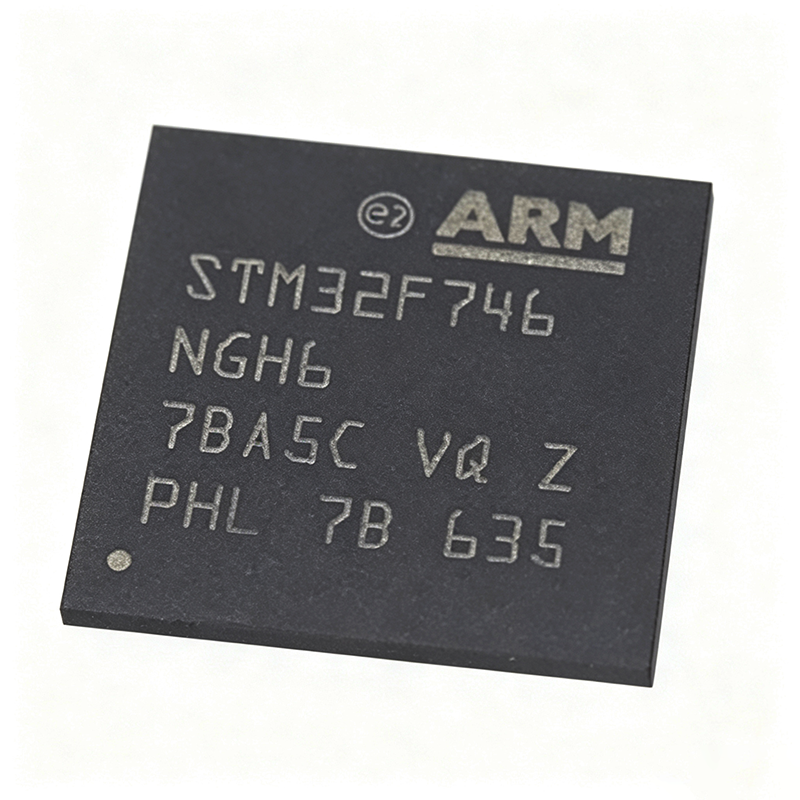
STM32F746NGH6 - 32-bit ARM Cortex-M7 MCU, 1MB Flash | STMicroelectronics
The STM32F746NGH6 is a high-performance 32-bit microcontroller from STMicroelectronics based on the ARM Cortex-M7 core, operating at up to 216 MHz. It integrates 1 MB of Flash memory and 320 KB of SRAM, along with a rich set of peripherals including TFT-LCD controller, JPEG codec, Ethernet MAC, camera interface, and multiple communication interfaces. The device is housed in a 216-ball TFBGA package (H6 suffix) with a 13x13 mm footprint, offering a compact solution for advanced embedded applications. What is a microcontroller? A microcontroller (MCU) is a compact integrated circuit designed to govern a specific operation in an embedded system. It contains a processor core, memory (Flash and SRAM), and programmable input/output peripherals on a single chip. Microcontrollers are the backbone of modern electronics, found in automotive systems, industrial controls, consumer electronics, and IoT devices. The STM32F746NGH6 belongs to the STM32F7 series, which is part of the broader STM32 family of 32-bit ARM Cortex-M based MCUs, positioned as a high-performance option within the STM32 portfolio. Key features of the STM32F746NGH6 include a 216 MHz ARM Cortex-M7 core with double-precision FPU and DSP instructions, 1 MB of Flash memory, 320 KB of SRAM, and a Chrom-ART Accelerator for advanced graphics. It supports a wide range of communication interfaces: 4x USART, 4x UART, 6x SPI, 4x I2C, 2x CAN, 1x SDMMC, 1x USB 2.0 OTG HS/FS, 1x Ethernet MAC, and 1x camera interface. The device also features a TFT-LCD controller supporting up to XGA resolution, a JPEG codec, and a true random number generator (TRNG). Technically, the STM32F746NGH6 is built on a 40nm process technology, enabling high clock speeds with low power consumption. It includes a memory protection unit (MPU), a cache (I-Cache and D-Cache) to optimize performance, and a power management unit with multiple low-power modes. The device supports a supply voltage range of 1.7V to 3.6V and operates over a temperature range of -40°C to +85°C (H6 suffix indicates industrial temperature grade). Typical applications include high-end consumer electronics, industrial automation, motor control, medical devices, and IoT gateways. The combination of high processing power, rich connectivity, and advanced graphics capabilities makes it ideal for human-machine interfaces (HMI), audio processing, and real-time control systems. When designing with this MCU, ensure proper decoupling of the power supply pins and follow the layout guidelines in the datasheet for the TFBGA package. The device requires a 25 MHz crystal for the HSE oscillator and supports an internal 16 MHz HSI oscillator for cost-sensitive designs.
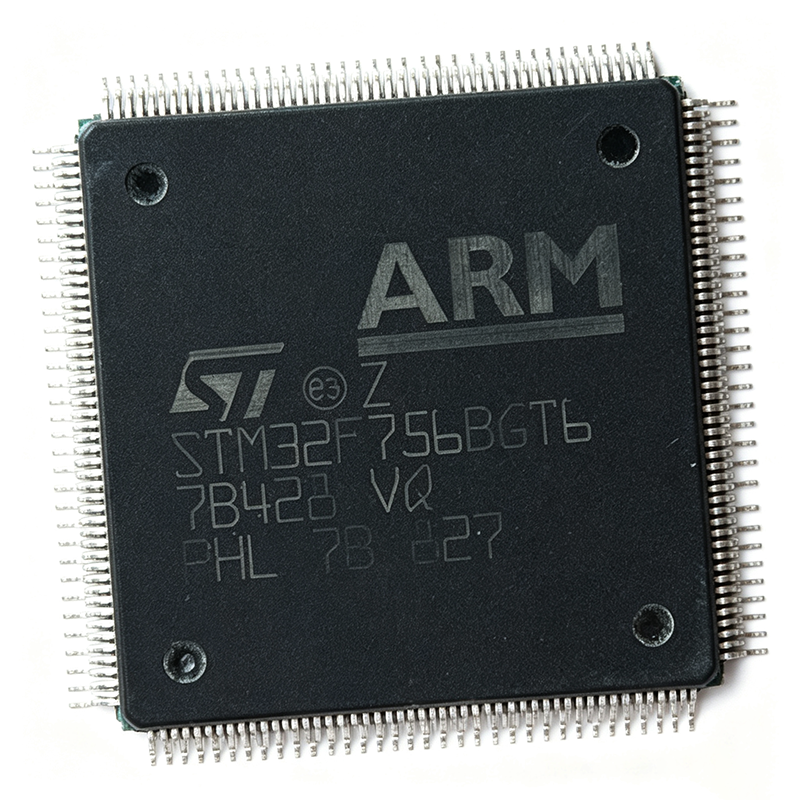
STM32F756BGT6 - 216MHz Cortex-M7 MCU, 1MB Flash | STMicroelectronics
The STM32F756BGT6 is a high-performance 32-bit microcontroller from STMicroelectronics, based on the Arm® Cortex®-M7 core with DSP and FPU instructions. It operates at up to 216 MHz, providing exceptional computational throughput for demanding embedded applications. The device integrates 1 Mbyte of Flash memory and 320 Kbytes of SRAM, along with a comprehensive set of peripherals including multiple communication interfaces, analog-to-digital converters, and advanced motor control timers. Housed in a 208-pin LQFP package (28x28 mm), it offers extensive I/O capabilities for complex system integration. A microcontroller (MCU) is a compact integrated circuit designed to govern a specific operation in an embedded system. It contains a processor core, memory, and programmable input/output peripherals on a single chip. The STM32F756BGT6 belongs to the STM32F7 series, which is part of the broader STM32 family of 32-bit Arm Cortex-M microcontrollers. This family is widely used in industrial control, consumer electronics, and IoT devices due to its balance of performance, power efficiency, and peripheral richness. The Cortex-M7 core is a high-performance member of the Cortex-M family, featuring a six-stage superscalar pipeline and optional double-precision floating-point unit, making it suitable for applications requiring significant digital signal processing. Key features of the STM32F756BGT6 include a 216 MHz CPU with 2.14 CoreMark/MHz, a Chrom-ART Accelerator for 2D graphics, a hardware cryptographic processor supporting AES, 3DES, and RSA, and a true random number generator. It also provides a camera interface, an LCD-TFT controller, and a wide range of communication peripherals including Ethernet, USB OTG HS/FS, CAN, SPI, I2C, USART, and SAI. The device supports a supply voltage range of 1.8V to 3.6V and operates over a temperature range of -40°C to +85°C. From a technical architecture perspective, the STM32F756BGT6 integrates an advanced memory protection unit (MPU), a direct memory access (DMA) controller with up to 16 streams, and a flexible static memory controller (FMC) for external memory expansion. The device also features a 12-bit ADC with up to 24 channels, a 12-bit DAC, and multiple 16-bit and 32-bit timers. The inclusion of a true random number generator and cryptographic acceleration makes it suitable for secure communication applications. Typical applications for the STM32F756BGT6 include industrial automation and control systems, motor drives, power conversion, medical devices, and high-end consumer electronics such as smart home hubs and audio equipment. Its high processing power and rich peripheral set enable complex real-time control and signal processing tasks. When designing with this device, careful attention should be paid to power supply decoupling, with a 100nF capacitor placed close to each power pin and a 4.7uF bulk capacitor on the main supply. The LQFP-208 package requires proper thermal management, and the exposed pad should be connected to ground with adequate vias for heat dissipation.