Motion Sensors
Products (23)
ADIS16545 - Tactical Grade 6-DOF IMU | Analog Devices
The ADIS16545 is a tactical grade, six degrees of freedom (6-DOF) inertial measurement unit (IMU) from Analog Devices, integrating a tri-axis gyroscope and tri-axis accelerometer in a compact aluminum package. It provides accurate, multiaxis inertial sensing for industrial systems, offering a simple, cost-effective alternative to discrete designs. The device features a standard SPI output interface and operates over a wide temperature range, making it suitable for demanding applications. An inertial measurement unit (IMU) is an electronic device that measures and reports a body's specific force and angular rate using a combination of accelerometers and gyroscopes. IMUs are essential components in navigation, stabilization, and motion control systems, providing the raw data needed for attitude estimation and dead reckoning. The ADIS16545 belongs to the category of inertial sensors, which are part of the broader sensor family used in industrial, aerospace, and robotics applications. Key features of the ADIS16545 include a native sample rate defined in the specifications, a 6-DOF measurement capability, and a robust aluminum package measuring approximately 47 mm × 44 mm × 14 mm. The device includes a standard connector interface for easy integration. It is designed for tactical grade performance, offering high accuracy and stability for precision applications. Technically, the ADIS16545 processes inertial sensor data at a rate of fSM when using the internal sample clock, as shown in the signal chain diagram in the datasheet. The device integrates MEMS sensors with signal conditioning and digital processing, providing calibrated outputs over SPI. The package is designed for industrial environments, with a rugged aluminum housing that protects the internal sensors. Typical applications include platform stabilization, navigation systems, robotics, and industrial automation. The ADIS16545 is particularly suited for systems requiring precise motion sensing with minimal integration effort. Its SPI interface simplifies connection to microcontrollers and DSPs, and the factory calibration reduces the need for user calibration. When designing with the ADIS16545, consider the native sample rate and the signal chain processing rate to ensure the output data rate meets your system requirements. The device's aluminum package provides good thermal performance, but proper mounting and vibration isolation are recommended for optimal accuracy.
ADIS16547 - Tactical Grade 6-DOF IMU | Analog Devices
The ADIS16547 is a complete inertial system from Analog Devices that integrates a triaxis gyroscope and a triaxis accelerometer into a single module. It is designed for tactical-grade applications requiring high accuracy and stability. The device is factory calibrated for sensitivity, bias, and alignment, ensuring consistent performance across units. The ADIS16547 is housed in an aluminum package measuring approximately 47 mm × 44 mm × 14 mm and includes a standard connector interface for easy integration. An inertial measurement unit (IMU) is a device that measures angular rate and linear acceleration using gyroscopes and accelerometers. IMUs are essential components in navigation, stabilization, and motion control systems. The ADIS16547 provides six degrees of freedom (6-DOF) sensing, combining three axes of gyroscopic data with three axes of acceleration data. This enables precise tracking of an object's orientation and movement in three-dimensional space. Key features of the ADIS16547 include its tactical-grade performance, which offers low noise and high bias stability. The device operates over a wide temperature range and provides a digital SPI interface for communication with microcontrollers or processors. The factory calibration eliminates the need for user-level calibration, reducing development time and complexity. The aluminum package provides robust mechanical protection and thermal management. The ADIS16547 uses a signal chain that processes data at a rate of fSM when using the internal sample clock. This architecture optimizes dynamic performance and ensures accurate measurement of fast-changing motion. The device supports multiple sample rates and filter options, allowing designers to tailor the output to their specific application requirements. The SPI interface enables high-speed data transfer and configuration of the device's registers. Typical applications for the ADIS16547 include industrial automation, robotics, unmanned aerial vehicles (UAVs), platform stabilization, and navigation systems. Its tactical-grade performance makes it suitable for applications where precision and reliability are critical. The device's compact form factor and standard connector simplify integration into existing designs. When designing with the ADIS16547, it is important to consider the power supply requirements and ensure proper decoupling. The device should be mounted securely to minimize mechanical stress, which can affect sensor accuracy. Additionally, the SPI interface should be configured correctly to achieve the desired data rate and filtering.
ADXL357BEZ - Low Noise 3-Axis MEMS Accelerometer | Analog Devices
The ADXL357BEZ is a low noise density, low 0 g offset drift, low power, 3-axis MEMS accelerometer from Analog Devices with selectable measurement ranges of ±10g, ±20g, and ±40g. It features a digital output via SPI or I2C interface and is housed in a 14-terminal CLCC package measuring 6mm x 6mm. The device operates over a bandwidth of 1 Hz to 1 kHz and is designed for high-performance industrial and instrumentation applications. An accelerometer is a sensor that measures proper acceleration, which is the rate of change of velocity of a body in its own instantaneous rest frame. MEMS (Micro-Electro-Mechanical Systems) accelerometers are micro-machined devices that integrate mechanical sensing elements with electronic circuitry on a single chip. They are widely used in motion sensing, vibration monitoring, and inertial navigation systems. The ADXL357BEZ belongs to the category of digital-output accelerometers, which convert the sensed acceleration into a digital signal for direct interfacing with microcontrollers or digital signal processors. Key features of the ADXL357BEZ include ultra-low noise density of 80 µg/√Hz, low 0 g offset drift of less than 0.75 mg over temperature, and low power consumption of 200 µA at 3.3 V. The device supports both SPI and I2C digital interfaces, allowing flexible integration into various system architectures. It also includes an integrated temperature sensor and a 32-level FIFO buffer to reduce host processor loading. The ADXL357BEZ utilizes a capacitive sensing element with a high-resolution sigma-delta ADC, providing excellent linearity and stability. The device is factory-calibrated for sensitivity and offset, minimizing the need for user calibration. Its low noise and low drift characteristics make it suitable for precision applications such as structural health monitoring, platform stabilization, and seismic sensing. Typical applications include industrial vibration monitoring, inertial measurement units (IMUs), robotics, and aerospace navigation systems. The device's wide measurement range and high bandwidth enable it to capture both low-frequency tilt and high-frequency vibration signals. Its low power consumption makes it ideal for battery-powered wireless sensor nodes. When designing with the ADXL357BEZ, ensure proper power supply decoupling with a 0.1 µF capacitor close to the VDD pin and a 1 µF capacitor on the VDD I/O pin. The device requires a supply voltage between 2.25 V and 3.6 V, and the digital interface voltage can be set independently via the VDD I/O pin. Careful PCB layout with a solid ground plane is recommended to minimize noise coupling.

ADXRS453BEZ - ±300°/s Digital Gyroscope | Analog Devices
The ADXRS453BEZ is a high-performance, digital-output angular rate sensor (gyroscope) from Analog Devices, designed for industrial, instrumentation, and stabilization applications in high-vibration environments. It features an advanced differential quad-sensor design that rejects linear acceleration, enabling accurate rate sensing even under shock and vibration. The device measures angular rates up to ±300°/s with a bandwidth of 77.5 Hz and communicates via a 4-wire SPI interface. It operates from a single 3.3 V to 5 V supply and is available in a 16-lead plastic cavity SOIC (SOIC_CAV) package, which is surface-mount compatible. A gyroscope is a sensor that measures angular velocity (rate of rotation) around one or more axes. The ADXRS453 is a single-axis (yaw) gyroscope, detecting rotation around the vertical axis. It belongs to the family of MEMS (Micro-Electro-Mechanical Systems) gyroscopes, which use vibrating mechanical elements to sense Coriolis forces. In the hierarchy of motion sensors, gyroscopes are a subset of inertial sensors, which also include accelerometers and magnetometers. The ADXRS453's digital output simplifies integration with microcontrollers and DSPs, eliminating the need for external analog-to-digital converters. Key features include ultra-high vibration rejection of 0.01°/s/g, excellent null offset stability of 16°/hr, and a wide operating voltage range. The device also offers an internal temperature sensor and a self-test function, which are critical for safety-critical applications. The SPI interface supports daisy-chaining and multiple device configurations, making it suitable for multi-axis systems. The SOIC_CAV package provides a robust, hermetically sealed enclosure that protects the MEMS element from environmental stress. Technically, the ADXRS453 uses a differential quad-sensor architecture that cancels common-mode linear acceleration, resulting in superior vibration immunity compared to single-mass designs. The digital output is a 16-bit word representing angular rate, with a scale factor of 80 LSB/°/s. The device includes an internal voltage regulator, ensuring stable operation across the supply range. The SPI interface operates at clock frequencies up to 2 MHz, allowing high-speed data acquisition. Typical applications include platform stabilization for cameras and antennas, inertial measurement units (IMUs) for robotics and UAVs, industrial machinery monitoring, and medical instrumentation such as surgical tools. The ADXRS453's high vibration rejection makes it ideal for mounting near engines or motors where vibration is prevalent. When designing with the ADXRS453, ensure proper PCB layout with a solid ground plane and decoupling capacitors close to the supply pins. The SPI lines should be kept short and shielded to minimize noise. The device's self-test feature should be exercised during system startup to verify functionality.
ADXRS453BRGZ - ±300°/s SPI Gyroscope | Analog Devices
The ADXRS453BRGZ is a high-performance, single-axis MEMS angular rate sensor (gyroscope) from Analog Devices, designed for precision yaw-rate sensing in demanding industrial, instrumentation, and stabilization applications. It measures angular rate around the Z-axis (yaw) with a full-scale range of ±300°/s and provides digital output via an SPI interface. The device is housed in a 16-pin SOIC-CAV package, operates over a temperature range of -40°C to +105°C, and requires a supply voltage between 3.15V and 5.25V. A MEMS gyroscope is a micro-electromechanical system that measures angular velocity using the Coriolis effect. Unlike traditional mechanical gyroscopes, MEMS gyroscopes are compact, low-power, and highly reliable, making them ideal for integration into electronic systems. The ADXRS453 belongs to the family of angular rate sensors, which are essential components in inertial measurement units (IMUs), motion control systems, and stabilization platforms. Its advanced differential quad sensor design rejects linear acceleration, ensuring accurate rate sensing even in high-vibration environments. Key features of the ADXRS453BRGZ include a digital SPI output with 16-bit resolution, a bandwidth of 77.5Hz, and a -3dB bandwidth of 775Hz. The device offers excellent bias stability and low noise, making it suitable for precision applications. It also includes an internal temperature sensor and self-test capability, enhancing system reliability. The SOIC-16 package is compact and surface-mountable, facilitating PCB integration. Technically, the ADXRS453 uses a vibrating MEMS structure that responds to angular rate through Coriolis acceleration. The differential quad sensor design cancels common-mode linear accelerations, providing robust performance in harsh environments. The SPI interface allows direct digital readout of angular rate, simplifying system design and eliminating the need for external ADC. The device's low power consumption (6mA typical) and wide supply range make it versatile for battery-powered and industrial systems. Typical applications include platform stabilization, inertial navigation, robotics, and industrial automation. In platform stabilization, the ADXRS453 provides real-time rate feedback to control motors and gimbals, ensuring precise orientation. In inertial navigation, it is used alongside accelerometers to track position and orientation. Its high vibration immunity makes it ideal for industrial machinery monitoring and automotive stability systems. When designing with the ADXRS453BRGZ, ensure proper decoupling of the power supply and careful PCB layout to minimize noise. The SPI interface should be isolated from high-current traces to prevent interference. Additionally, consider the device's bandwidth and noise characteristics when designing the control loop to achieve optimal performance.
AIS2IH - 3-Axis Accelerometer, 2g/4g/8g/16g | STMicroelectronics
The STMicroelectronics AIS2IH is a high-performance, low-power 3-axis linear accelerometer designed for automotive and industrial applications. It features a full-scale range of ±2g, ±4g, ±8g, and ±16g, selectable via the I2C/SPI interface, and is packaged in a compact 12-pin LGA (2x2 mm) package. The device operates from a 1.71V to 3.6V supply voltage and includes an integrated temperature sensor, making it suitable for a wide range of motion-sensing and vibration-monitoring applications. An accelerometer is a sensor that measures proper acceleration (the rate of change of velocity) along one or more axes. The AIS2IH is a MEMS (Micro-Electro-Mechanical Systems) capacitive accelerometer, which detects changes in capacitance caused by the displacement of a proof mass under acceleration. It belongs to the broader category of inertial sensors, which also includes gyroscopes and magnetometers. In a typical system hierarchy, the accelerometer is a key component of an inertial measurement unit (IMU), which is used in applications such as vehicle stability control, industrial vibration monitoring, and tilt sensing. Key features of the AIS2IH include a selectable full-scale range of ±2g/±4g/±8g/±16g, a low noise density of 90 µg/√Hz, and a wide operating temperature range of -40°C to +105°C. The device supports both I2C and SPI digital interfaces, with a maximum SPI clock frequency of 10 MHz and I2C clock frequency of 400 kHz. It also features a 32-level FIFO buffer, an embedded temperature sensor, and a programmable interrupt generator for motion detection, free-fall detection, and 6D orientation detection. The AIS2IH is built using ST's advanced MEMS process, which ensures high reliability and long-term stability. The device includes a self-test capability that allows the user to verify the functionality of the sensing element and the signal chain. The low power consumption, typically 180 µA in normal mode and 1.6 µA in power-down mode, makes it ideal for battery-powered applications. The device also supports a wide range of output data rates from 1 Hz to 1000 Hz, allowing the user to trade off power consumption against measurement resolution. Typical applications include automotive airbag systems, electronic stability control, industrial vibration monitoring, and tilt sensing for leveling equipment. The AIS2IH is also suitable for IoT devices that require motion detection and activity monitoring. Its small footprint and low power consumption make it easy to integrate into space-constrained designs. When designing with the AIS2IH, it is important to ensure proper PCB layout to minimize mechanical stress on the sensor. The device should be placed away from high-frequency switching components and vibration sources. Additionally, the I2C/SPI interface lines should be kept short and properly terminated to avoid signal integrity issues.
ASM330LHH - 6-Axis Inertial Measurement Unit | STMicroelectronics
The ASM330LHH is a high-performance 6-axis inertial measurement unit (IMU) from STMicroelectronics, combining a 3-axis accelerometer and a 3-axis gyroscope in a single compact LGA-14 package. It is designed for automotive and industrial applications requiring precise motion sensing, featuring a full-scale range of ±2/±4/±8/±16 g for acceleration and ±125/±250/±500/±1000/±2000 dps for angular rate. The device operates from a 1.71V to 3.6V supply voltage and communicates via I2C or SPI interfaces, with a programmable data rate up to 6.66 kHz for the accelerometer and gyroscope. An inertial measurement unit (IMU) is a sensor that measures linear acceleration and angular velocity using accelerometers and gyroscopes. IMUs are essential in motion tracking, navigation, and stabilization systems, providing the raw data needed for orientation estimation and dead reckoning. The ASM330LHH integrates both sensing elements with a dedicated signal processing chain, enabling high-accuracy measurements in a small footprint. As a 6-axis IMU, it belongs to the broader category of motion sensors, which are critical components in automotive safety systems, industrial robotics, and IoT devices. Key features of the ASM330LHH include a low noise density of 90 µg/√Hz for the accelerometer and 4 mdps/√Hz for the gyroscope, ensuring high-resolution measurements. It also offers an embedded temperature sensor, a 2 KB FIFO buffer for data batching, and advanced power management with a low-power mode consuming only 0.9 mA. The device is AEC-Q100 qualified, making it suitable for automotive applications, and supports a wide operating temperature range of -40°C to +105°C. The LGA-14 package measures 2.5 mm x 3.0 mm, enabling compact PCB designs. Technically, the ASM330LHH uses a MEMS (Micro-Electro-Mechanical Systems) capacitive sensing element for both acceleration and angular rate, with a 16-bit digital output. The device includes an internal voltage regulator, eliminating the need for external regulation, and features a self-test capability for functional safety. The SPI interface supports data rates up to 10 MHz, while I2C operates up to 400 kHz. The FIFO buffer can be configured to store up to 2 KB of data, reducing host processor load. The device also supports interrupt generation for data-ready, FIFO threshold, and motion detection events. Typical applications include automotive electronic stability control (ESC), inertial navigation systems, industrial robotics, and platform stabilization. The ASM330LHH's high shock tolerance of 10000 g and robust design make it ideal for harsh environments. In automotive ESC, the IMU provides real-time yaw rate and lateral acceleration data, enabling precise vehicle dynamics control. In industrial robotics, it enables accurate motion feedback for precise positioning and vibration monitoring. When designing with the ASM330LHH, ensure proper decoupling with a 100 nF capacitor on the power supply pins and place the device close to the mechanical center of rotation for accurate angular rate measurements. The SPI interface should be used for high-speed data streaming, while I2C is suitable for lower data rates. The device's power-down mode reduces current consumption to 1 µA, making it suitable for battery-powered applications.
ICM-42688-P - 6-Axis MEMS IMU with 2KB FIFO | TDK InvenSense
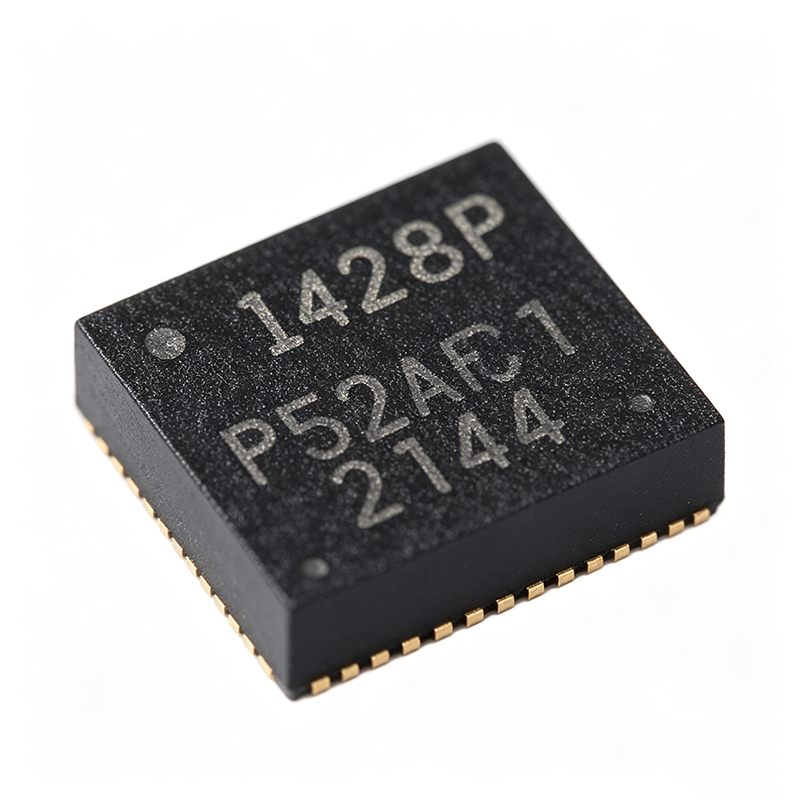
The TDK InvenSense ICM-42688-P is a high-precision 6-axis MEMS MotionTracking device that integrates a 3-axis gyroscope and a 3-axis accelerometer in a compact 2.5 x 3.0 x 0.91 mm 14-pin LGA package. It supports I3C, I2C, and SPI serial interfaces, features a 2 kB FIFO, and offers ultralow-power wake-on-motion support to minimize system power consumption. The device is designed for a wide range of motion sensing applications, including drones, robotics, AR/VR, and industrial monitoring. An IMU (Inertial Measurement Unit) is a sensor that measures angular rate and linear acceleration using gyroscopes and accelerometers. The ICM-42688-P combines these into a single package, providing high accuracy and low noise for motion tracking. IMUs are essential in applications requiring orientation and movement detection, such as flight controllers, wearable devices, and navigation systems. The ICM-42688-P is part of the broader category of motion sensors, which includes accelerometers, gyroscopes, and magnetometers, and is a key component in the sensor fusion hierarchy. Key features include a gyroscope noise density of 2.8 mdps/√Hz, an accelerometer noise density of 70 µg/√Hz, and a programmable output data rate up to 32 kHz for the gyroscope and 32 kHz for the accelerometer. The device offers a 2 kB FIFO to reduce bus traffic and system power consumption, and supports a wide supply voltage range of 1.71 V to 3.6 V. It also includes programmable interrupts and a digital motion processor (DMP) for advanced motion processing. The ICM-42688-P utilizes advanced MEMS technology with a low-power architecture, achieving a typical current consumption of 0.9 mA in low-noise mode and 0.45 mA in low-power mode. The device features a temperature range of -40°C to +85°C and is RoHS compliant. Its small footprint and low power make it ideal for battery-powered and space-constrained designs. Typical applications include drone flight controllers, where the ICM-42688-P provides the low noise and high output rate required for stable flight; robotics, for precise motion control and orientation sensing; and AR/VR headsets, for accurate head tracking. The device is also used in industrial monitoring and wearable health devices. When designing with the ICM-42688-P, ensure proper PCB layout with adequate decoupling capacitors on the power supply pins and careful routing of the I2C/SPI lines to minimize noise. The device supports both I2C and SPI, allowing flexibility in system integration.
LIS2DE12TR - 3-Axis MEMS Accelerometer, 2g/4g/8g/16g | STMicroelectronics
The STMicroelectronics LIS2DE12TR is a low-power, 3-axis linear accelerometer with a digital I2C/SPI serial interface, designed for a wide range of motion-sensing applications. It features user-selectable full-scale ranges of ±2g, ±4g, ±8g, and ±16g, and supports output data rates from 1 Hz to 5.3 kHz. The device operates from a 1.71V to 3.6V supply and is available in a compact 12-lead LGA package (2x2x1 mm), making it ideal for space-constrained portable and wearable designs. An accelerometer is a sensor that measures proper acceleration (the rate of change of velocity) of a body in its own instantaneous rest frame. In the context of MEMS (Micro-Electro-Mechanical Systems), accelerometers typically use capacitive sensing elements to detect changes in capacitance caused by the displacement of a proof mass under acceleration. The LIS2DE12TR belongs to the category of motion sensors, which are a subset of sensors used in electronic systems to detect movement, orientation, and vibration. Motion sensors play a critical role in applications ranging from consumer electronics (smartphones, wearables) to industrial monitoring and automotive safety systems. Key features of the LIS2DE12TR include an ultra-low-power consumption of 2 µA in low-power mode at 10 Hz ODR, a 16-bit data output, and an embedded first-in, first-out (FIFO) buffer that reduces host processor load. The device also integrates a programmable interrupt generator for motion detection, free-fall detection, and 6D/4D orientation detection, enabling always-on functionality with minimal power draw. The I2C and SPI interfaces provide flexibility for system integration, and the device is RoHS compliant and halogen-free. From a technical perspective, the LIS2DE12TR uses a capacitive sensing element with a dedicated ASIC (Application-Specific Integrated Circuit) for signal conditioning and digital conversion. The device includes a self-test capability that allows verification of the sensing element and electronics, and it operates over a temperature range of -40°C to +85°C. The LGA package is designed for surface-mount assembly and is compatible with standard reflow soldering processes, with a moisture sensitivity level (MSL) of 1. Typical applications include motion-activated user interfaces, orientation detection in portable devices, vibration monitoring in industrial equipment, and activity tracking in wearables. The low power consumption and small footprint make it particularly suitable for battery-powered IoT devices and smart home sensors. When designing with the LIS2DE12TR, ensure proper decoupling of the power supply with a 100 nF capacitor placed close to the VDD pin, and route the I2C/SPI lines with appropriate pull-up resistors. The interrupt pins can be configured to wake the host processor only when motion is detected, significantly extending battery life in always-on applications.
LIS2DH12TR - 3-Axis Accelerometer, ±2/±4/±8/±16g | STMicroelectronics
The STMicroelectronics LIS2DH12TR is a 3-axis linear accelerometer with a digital I2C/SPI serial interface, offering user-selectable full-scale ranges of ±2g, ±4g, ±8g, and ±16g. It is housed in a compact 12-lead LGA package (2x2x1 mm) and operates from a 1.71V to 3.6V supply, making it ideal for battery-powered and space-constrained applications. Data verified as of 2026-08-05. An accelerometer is a sensor that measures proper acceleration (g-force) along one or more axes. The LIS2DH12 is a MEMS (Micro-Electro-Mechanical Systems) capacitive accelerometer, which detects changes in capacitance caused by the displacement of a proof mass under acceleration. In the system hierarchy, it is a motion sensor -> inertial sensor -> MEMS sensor -> sensor, and it is commonly used in motion-activated functions, orientation detection, and vibration monitoring. Key features include a wide full-scale range selection, a 16-bit data output, an embedded 32-level FIFO buffer, and a built-in high-pass filter. The device supports multiple operating modes (normal, low-power, and high-resolution) with output data rates from 1 Hz to 5.3 kHz. It also includes a self-test capability and an interrupt generator for motion detection, enabling low-power always-on applications. The LIS2DH12 uses a capacitive sensing element and a dedicated IC interface, achieving low noise (220 µg/√Hz in high-resolution mode) and low power consumption (as low as 2 µA in low-power mode at 1 Hz ODR). The digital output simplifies system integration, eliminating the need for external ADCs. The device is AEC-Q100 qualified for automotive applications, ensuring reliability in harsh environments. Typical applications include mobile devices for screen rotation and step counting, industrial vibration monitoring, and automotive anti-theft systems. Its low power and small footprint make it suitable for wearable devices and IoT sensors. In a smartphone, the LIS2DH12 detects orientation to switch between portrait and landscape modes, and it can count steps by analyzing acceleration patterns. When designing with this device, ensure proper decoupling of the power supply with a 100 nF capacitor close to the VDD pin. The I2C address is selectable via the SA0 pin, allowing multiple devices on the same bus. For battery-powered designs, use the low-power mode to extend battery life, and configure the FIFO to reduce host processor wake-ups. This page synthesizes distributor pricing, drop-in alternatives, and practical design notes not found in the ST datasheet, providing a comprehensive resource for engineers evaluating the LIS2DH12TR.
LIS2HH12TR - 3-Axis Accelerometer, ±2/±4/±8g | STMicroelectronics
The STMicroelectronics LIS2HH12TR is a high-performance 3-axis linear accelerometer with digital I2C/SPI output, designed for a wide range of motion-sensing applications. It features user-selectable full-scale ranges of ±2g, ±4g, and ±8g, with a resolution of 16-bit data output. The device operates from a 1.71V to 3.6V supply voltage and is available in a compact 12-lead LGA package (2x2x1 mm), making it ideal for space-constrained designs. An accelerometer is a sensor that measures proper acceleration, which is the rate of change of velocity per unit time. In the context of motion sensing, accelerometers detect linear acceleration along one or more axes, enabling applications such as orientation detection, vibration monitoring, and free-fall detection. The LIS2HH12TR is a MEMS (Micro-Electro-Mechanical Systems) capacitive accelerometer, which uses microscopic mechanical structures to sense acceleration-induced capacitance changes. As a member of the accelerometer family, it falls under the broader category of inertial sensors, which also includes gyroscopes and magnetometers. In a typical system hierarchy, the LIS2HH12TR serves as a motion sensor within the sensor subsystem, feeding data to a microcontroller or application processor via I2C or SPI. Key features of the LIS2HH12TR include a low power consumption of 180 µA in normal mode, a wide supply voltage range of 1.71V to 3.6V, and a high-resolution 16-bit output. The device also integrates a 32-level FIFO buffer, which reduces host processor load by storing acceleration data for batch retrieval. Additionally, it includes an embedded temperature sensor and supports a wide operating temperature range of -40°C to +85°C. The LIS2HH12TR is RoHS compliant and halogen-free, meeting modern environmental standards. Technically, the LIS2HH12TR utilizes a capacitive sensing element with a dedicated ASIC for signal conditioning and digital conversion. The device offers a noise density of 220 µg/√Hz, ensuring accurate measurements in low-vibration environments. It supports both I2C (up to 400 kHz) and SPI (up to 10 MHz) interfaces, providing flexibility in system integration. The built-in self-test feature allows for functional verification during production, enhancing reliability. The device also includes programmable interrupt generators for motion detection, enabling event-driven wake-up and sleep modes. Typical applications include portable and wearable devices, IoT nodes, industrial condition monitoring, and automotive anti-theft systems. In portable devices, the LIS2HH12TR enables screen rotation and step counting, while in industrial settings, it monitors machinery vibration for predictive maintenance. Its low power consumption makes it suitable for battery-powered IoT sensors that require long operational life. When designing with the LIS2HH12TR, ensure proper decoupling of the power supply with a 100 nF capacitor placed close to the VDD pin. The I2C address is selectable via the SA0 pin, allowing multiple devices on the same bus. For optimal performance, avoid mechanical stress on the LGA package during PCB assembly, and follow the recommended land pattern provided in the datasheet.
LIS2MDLTR - 3-Axis Digital Magnetometer | STMicroelectronics | IoT & Navigation
The STMicroelectronics LIS2MDLTR is a 3-axis digital magnetometer that measures magnetic field strength with high resolution and low power consumption. It operates from a 1.71V to 3.6V supply voltage and communicates via I2C or SPI interfaces, making it suitable for a wide range of consumer, industrial, and IoT applications. The device is housed in a compact 12-pin LGA package (2.0 x 2.0 x 0.7 mm), enabling space-constrained designs. A magnetometer is a sensor that measures the strength and direction of magnetic fields. In the context of electronic systems, a 3-axis magnetometer detects the Earth's magnetic field to determine orientation relative to magnetic north, functioning as an electronic compass. It is often combined with accelerometers and gyroscopes in inertial measurement units (IMUs) to provide full orientation tracking. The LIS2MDLTR belongs to the category of magnetic field sensors, which are part of the broader sensor family used in navigation, robotics, and consumer electronics. Key features of the LIS2MDLTR include a wide magnetic field range of ±50 gauss, a selectable output data rate from 10 Hz to 100 Hz, and a 16-bit resolution that provides fine granularity for precise heading calculations. The device also features an embedded temperature sensor, a programmable interrupt generator, and a self-test capability. Its low power consumption, with a typical current draw of 0.6 mA in normal mode and 1 µA in power-down mode, extends battery life in portable devices. The LIS2MDLTR uses a magneto-resistive sensing element that changes resistance in response to magnetic fields, processed by an integrated analog-to-digital converter (ADC) and digital signal processing chain. The device includes a FIFO buffer to store measurement data, reducing host processor wake-up frequency. The I2C interface supports up to 400 kHz, while the SPI interface operates up to 10 MHz, providing flexibility for various system architectures. Typical applications include smartphone compasses, navigation systems, augmented reality devices, and industrial position sensing. In a smartphone, the LIS2MDLTR provides heading information for map orientation and location-based services. In industrial settings, it can detect the presence and orientation of magnetic components in automated assembly lines. The device's small footprint and low power make it ideal for wearable devices and IoT nodes. When designing with the LIS2MDLTR, ensure proper PCB layout to minimize magnetic interference from nearby traces and components. Place the sensor away from ferrous materials and current-carrying conductors. The device supports both I2C and SPI, so select the interface that best fits the system's communication architecture. Calibration is recommended to compensate for hard-iron and soft-iron effects in the final product.

LIS3DHTR - 3-Axis Ultra-Low-Power Accelerometer | STMicroelectronics
The LIS3DHTR is an ultra-low-power, high-performance three-axis linear accelerometer from STMicroelectronics, part of the 'nano' family. It features a digital I2C/SPI serial interface and is available in a compact 16-lead LGA package (3x3 mm). The device supports selectable full-scale ranges of ±2g, ±4g, ±8g, and ±16g, with output data rates from 0.5 Hz to 625 Hz. It operates over a supply voltage range of 1.71V to 3.6V and a temperature range of -40°C to +85°C. An accelerometer is a sensor that measures proper acceleration, which is the rate of change of velocity per unit time. In the context of MEMS (Micro-Electro-Mechanical Systems), accelerometers are used to detect motion, tilt, vibration, and shock. The LIS3DHTR belongs to the category of digital-output accelerometers, which integrate sensing elements with signal conditioning and an analog-to-digital converter, providing digital data directly to a host microcontroller. This makes it a key component in motion-sensing systems, from consumer electronics to industrial monitoring. Key features of the LIS3DHTR include an ultra-low-power consumption of 2 µA in low-power mode, a 32-level FIFO buffer to reduce host processor intervention, and an embedded temperature sensor. It also offers motion detection, free-fall detection, and 6D/4D orientation detection. The device supports both I2C and SPI interfaces, with a wide range of programmable interrupt outputs for event-driven applications. Technically, the LIS3DHTR uses a capacitive sensing element with a dedicated ASIC for signal processing. It provides 16-bit data output, with a resolution of 1 mg per LSB at ±2g range. The device includes a self-test capability and is factory-calibrated. Its low power consumption and small footprint make it ideal for battery-powered portable devices. Typical applications include mobile phones, wearable devices, gaming controllers, and IoT sensors. In these applications, the LIS3DHTR enables features such as screen rotation, step counting, gesture recognition, and fall detection. Its high resolution and low noise ensure accurate motion tracking. When designing with the LIS3DHTR, ensure proper decoupling of the power supply with a 100 nF capacitor close to the VDD pin. The I2C address is selectable via the SA0 pin, allowing multiple devices on the same bus. For optimal performance, place the sensor away from high-frequency noise sources and follow the layout guidelines in the datasheet.
LIS3MDLTR - 3-Axis Digital Magnetometer | STMicroelectronics
The LIS3MDLTR is a 3-axis digital magnetometer from STMicroelectronics, designed for high-resolution magnetic field sensing in a compact 12-pin LGA package. It measures magnetic fields with a full-scale range selectable from ±4 gauss to ±16 gauss, and offers a resolution of up to 0.14 mG/LSB in the ±4 gauss range. The device communicates via both I2C and SPI interfaces, making it versatile for integration into a wide range of systems. A magnetometer is a sensor that measures the strength and direction of magnetic fields. In the context of consumer electronics and IoT, magnetometers are often used as electronic compasses to determine orientation relative to Earth's magnetic field. They are part of the broader category of motion and orientation sensors, which also includes accelerometers and gyroscopes. The LIS3MDLTR specifically provides a digital output, simplifying interface with microcontrollers and eliminating the need for external analog-to-digital converters. Key features of the LIS3MDLTR include a wide supply voltage range of 1.9V to 3.6V, low power consumption with a typical current of 0.45 mA in high-resolution mode, and a selectable output data rate from 0.625 Hz to 1000 Hz. The device also includes an embedded temperature sensor, a programmable interrupt generator, and a self-test capability. These features enable precise magnetic field measurement while maintaining low power for battery-operated devices. The LIS3MDLTR uses a MEMS (Micro-Electro-Mechanical Systems) technology with a magneto-resistive sensing element, providing high sensitivity and stability. The device includes a signal conditioning chain with an ADC, a digital filter, and a FIFO buffer to reduce host processor load. The I2C address is 0x1E (default) and can be configured via the SA0 pin. The SPI interface supports both 3-wire and 4-wire modes, offering flexibility in system design. Typical applications include electronic compasses in smartphones and wearables, navigation systems, magnetic field mapping, and industrial position sensing. The LIS3MDLTR is also used in augmented reality (AR) and virtual reality (VR) headsets for head tracking, and in robotics for orientation detection. Its low power and small footprint make it ideal for portable and space-constrained designs. When designing with the LIS3MDLTR, ensure proper PCB layout to minimize magnetic interference from nearby traces and components. Place the sensor away from ferrous materials and high-current paths. Use decoupling capacitors on the power supply pins and follow the recommended layout in the datasheet for optimal performance.
LSM303AGRTR - 3D Accelerometer & Magnetometer | STMicroelectronics
The STMicroelectronics LSM303AGRTR is an ultra-low-power, high-performance 3-axis accelerometer and 3-axis magnetometer combined into a single system-in-package. It is designed for consumer and industrial motion sensing applications, offering a digital output via I2C and SPI interfaces. The device operates from a 1.71V to 3.6V supply voltage and features a wide measurement range for both acceleration (±2g, ±4g, ±8g, ±16g) and magnetic field (±50 gauss). The LSM303AGRTR is housed in a compact 2mm x 2mm x 1mm LGA-12 package, making it ideal for space-constrained designs. An accelerometer is a sensor that measures proper acceleration, which is the rate of change of velocity of a body in its own instantaneous rest frame. In the context of motion sensing, accelerometers are used to detect tilt, vibration, and shock. A magnetometer measures the strength and direction of magnetic fields, commonly used for compass applications and detecting magnetic anomalies. The LSM303AGRTR combines both sensors in one package, enabling applications such as orientation detection, navigation, and gesture recognition. This integration reduces board space and simplifies design compared to using separate accelerometer and magnetometer components. Key features of the LSM303AGRTR include a 16-bit resolution for both accelerometer and magnetometer, a programmable interrupt system, and a built-in temperature sensor. The accelerometer offers selectable full-scale ranges of ±2g, ±4g, ±8g, and ±16g, while the magnetometer provides a range of ±50 gauss. The device supports both I2C and SPI communication, with I2C addresses 0x19 and 0x1E for the accelerometer and magnetometer respectively. The LSM303AGRTR also features a FIFO buffer for data storage, reducing host processor load, and an embedded self-test capability for functional verification. The LSM303AGRTR is fabricated using a proprietary micromachining process that integrates the sensing elements and signal conditioning circuitry on a single chip. The accelerometer uses a capacitive sensing principle, while the magnetometer uses a magneto-resistive principle. The device includes a 16-bit ADC for each channel, ensuring high-resolution measurements. The low power consumption, with typical current draw of 180 µA in normal mode and 2 µA in power-down mode, makes it suitable for battery-powered applications. The device also includes a smart power management system that automatically switches between power modes based on data rate and activity. Typical applications for the LSM303AGRTR include mobile phones and tablets for screen rotation and gaming, wearable devices for step counting and activity tracking, and IoT devices for motion-based control. It is also used in robotics for orientation and navigation, and in industrial equipment for vibration monitoring. The combination of accelerometer and magnetometer enables accurate heading and tilt compensation in compass applications, which is critical for navigation systems. When designing with the LSM303AGRTR, it is important to consider the placement of the sensor to avoid magnetic interference from nearby components such as speakers or motors. The device should be placed away from ferromagnetic materials and high-current traces. Additionally, proper decoupling capacitors (100 nF) should be placed close to the VDD and VDD_IO pins to ensure stable operation. The I2C pull-up resistors should be sized appropriately for the bus capacitance and speed.

LSM303DTR - 3D Accelerometer + Magnetometer | STMicroelectronics
The LSM303DTR is a system-in-package featuring a 3D digital linear acceleration sensor and a 3D digital magnetic sensor, manufactured by STMicroelectronics. It combines a 3-axis accelerometer and a 3-axis magnetometer in a single LGA-16 (3x3x1mm) package, providing a complete 6-axis motion sensing solution. The device communicates via I2C or SPI interfaces, with a wide supply voltage range of 2.16V to 3.6V, making it suitable for battery-powered portable applications. A 3D accelerometer is a sensor that measures linear acceleration along three perpendicular axes (X, Y, Z), typically used to detect motion, tilt, and vibration. A 3D magnetometer measures the strength and direction of the magnetic field, functioning as an electronic compass. When combined, they form an inertial measurement unit (IMU) capable of providing orientation and heading information. The LSM303DTR integrates both sensors in a single package, reducing board space and simplifying design compared to discrete solutions. Key features include a full-scale acceleration range selectable from ±2g to ±16g, and a magnetic field full-scale range from ±2 gauss to ±12 gauss. The accelerometer offers a 16-bit data output with a noise density of 220 µg/√Hz, while the magnetometer provides 16-bit resolution with a sensitivity of 0.080 µT/LSB at ±4 gauss range. The device supports output data rates from 3.125 Hz to 1600 Hz for the accelerometer and 0.625 Hz to 100 Hz for the magnetometer, with an embedded FIFO buffer to reduce host processor load. The LSM303DTR utilizes a MEMS (Micro-Electro-Mechanical Systems) capacitive sensing element for the accelerometer and a Hall-effect or magneto-resistive sensing element for the magnetometer. The integrated signal conditioning, ADC, and digital interface eliminate the need for external components, simplifying PCB design. The device operates over a temperature range of -40°C to +85°C, making it suitable for industrial and consumer applications. Typical applications include orientation and motion sensing in smartphones, tablets, gaming controllers, and wearable devices. It is also used in robotics for tilt compensation, in navigation systems for dead reckoning, and in industrial equipment for vibration monitoring. The low power consumption, with a typical current of 2 mA in normal mode, extends battery life in portable devices. When designing with the LSM303DTR, ensure proper decoupling with a 100 nF capacitor on the power supply pins and place the sensor away from magnetic interference sources such as speakers and motors. The I2C address is 0x1E (7-bit) and can be configured via the SA0 pin. For optimal performance, follow the layout guidelines in the datasheet to minimize mechanical stress on the package.
LSM6DS3HTR - 3D Accelerometer & 3D Gyroscope iNEMO IMU | STMicroelectronics
The LSM6DS3HTR is a high-performance 3D digital accelerometer and 3D digital gyroscope system-in-package (SiP) from STMicroelectronics, designed for consumer and industrial motion sensing applications. It integrates a 3-axis accelerometer and a 3-axis gyroscope in a single 2.5 mm x 3 mm x 0.83 mm LGA-14 package, offering a compact solution for space-constrained designs. The device features a full-scale acceleration range of ±2/±4/±8/±16 g and an angular rate range of ±125/±245/±500/±1000/±2000 dps, with a 16-bit data output for both sensors. It operates from a 1.71 V to 3.6 V supply voltage and includes an advanced digital motion engine (DMP) for low-power motion processing. An inertial measurement unit (IMU) is a device that combines accelerometers and gyroscopes to measure linear acceleration and angular velocity, enabling orientation and motion tracking. IMUs are fundamental components in motion sensing systems, providing data for applications such as gesture recognition, dead reckoning, and stabilization. The LSM6DS3HTR belongs to the category of motion sensors, which are part of the broader sensor family used in IoT, wearable, and automotive systems. Its integration of both sensors in one package reduces board space and simplifies design compared to discrete solutions. Key features of the LSM6DS3HTR include a low power consumption of 0.9 mA in normal mode and 0.45 mA in low-power mode, making it suitable for battery-powered devices. It offers a 4 KB FIFO buffer to store sensor data, reducing host processor wake-up time. The device supports I2C and SPI interfaces, with a maximum I2C clock of 400 kHz and SPI clock of 10 MHz. It also includes an embedded temperature sensor, programmable interrupts, and a 6D orientation detection feature. The LGA-14 package is lead-free and RoHS compliant, with an operating temperature range of -40°C to +85°C. Technically, the LSM6DS3HTR uses a MEMS (Micro-Electro-Mechanical Systems) capacitive sensing element for both accelerometer and gyroscope, with a dedicated ASIC for signal conditioning and digital output. The device features a 16-bit ADC for each channel, providing high resolution and low noise. The embedded DMP offloads motion processing from the host, enabling features like step counting and tilt detection without host intervention. The device also includes a programmable finite state machine (FSM) for advanced motion recognition, such as activity classification. Typical applications include wearable devices (fitness trackers, smartwatches), smartphones for screen rotation and gaming, IoT nodes for motion-based wake-up, and industrial equipment for vibration monitoring. Its low power and small size make it ideal for battery-operated devices, while the high resolution and wide range support precise motion tracking in robotics and drones. When designing with the LSM6DS3HTR, ensure proper decoupling of the power supply with a 100 nF capacitor close to the VDD pin, and route the I2C/SPI lines with minimal parasitic capacitance. The device's interrupt pins can be configured to wake the host only when motion is detected, saving power. For optimal performance, place the sensor away from high-frequency noise sources and follow the layout guidelines in the datasheet.
LSM6DS3TR - 3D Accelerometer & Gyroscope | STMicroelectronics
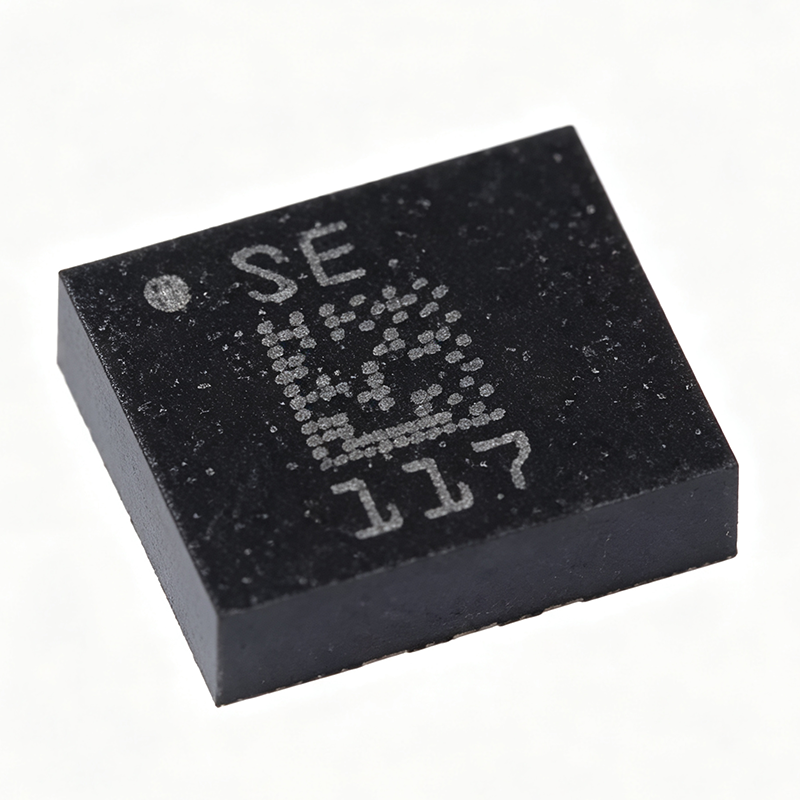
The LSM6DS3TR is a system-in-package featuring a 3D digital accelerometer and a 3D digital gyroscope from STMicroelectronics, designed for high-performance motion sensing in consumer and industrial applications. It operates from a 1.71V to 3.6V supply voltage and communicates via I2C or SPI interfaces, with a selectable full-scale range of ±2/±4/±8/±16 g for acceleration and ±125/±245/±500/±1000/±2000 dps for angular rate. The device is housed in a compact 14-lead LGA package (2.5 x 3.0 x 0.83 mm), enabling space-constrained designs. Data verified as of 2026-08-05. An inertial measurement unit (IMU) is a sensor that combines an accelerometer and a gyroscope to measure linear acceleration and angular velocity, respectively. The LSM6DS3TR integrates both sensors in a single package, providing a complete motion-sensing solution. In the system hierarchy, an IMU is a type of motion sensor, which falls under the broader category of sensors, and ultimately within the domain of microelectromechanical systems (MEMS). This integration reduces board space, simplifies design, and improves reliability compared to discrete solutions. Key features include a 16-bit data output for both accelerometer and gyroscope, an embedded 9kB FIFO for data buffering, and advanced motion detection functions such as free-fall, wake-up, single/double-tap, and 6D/4D orientation detection. The device also features a programmable interrupt generator, an embedded temperature sensor, and a low-power mode with a typical current consumption of 0.9 mA in normal mode and 1.25 mA in high-performance mode. The LSM6DS3TR supports a wide operating temperature range of -40°C to +85°C, making it suitable for harsh environments. Technically, the LSM6DS3TR utilizes a MEMS capacitive sensing element for both acceleration and angular rate, with a dedicated ASIC for signal conditioning and digital conversion. The device includes a smart FIFO that can be configured to store up to 9kB of data, reducing host processor load. The I2C address is 0x6A (default) or 0x6B (alternate), selectable via the SA0 pin. The SPI interface supports up to 10 MHz clock frequency. The device is compliant with RoHS and REACH directives, and it is halogen-free. Typical applications include motion-activated user interfaces, gaming and virtual reality systems, industrial automation, robotics, and IoT devices. The LSM6DS3TR is particularly suited for battery-powered devices due to its low power consumption and flexible power modes. In a smartphone, it enables screen rotation and step counting; in industrial equipment, it provides vibration monitoring and tilt sensing. When designing with the LSM6DS3TR, ensure proper decoupling of the power supply with a 100nF capacitor close to the VDD pin, and route the I2C/SPI lines with appropriate pull-up resistors. The device's interrupt pins can be configured to wake the host processor only when motion is detected, optimizing system power. This page synthesizes distributor pricing, drop-in alternatives, and practical design notes not found in the ST datasheet.
LSM6DS3TR-C - 3D Accelerometer & 3D Gyroscope | STMicroelectronics
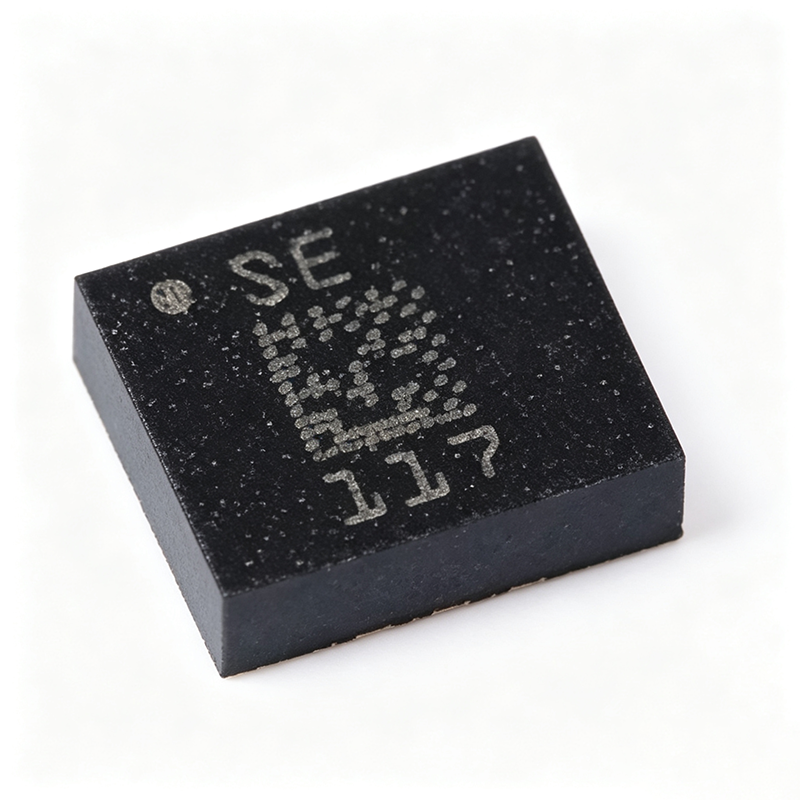
The LSM6DS3TR-C is a high-performance 3D digital accelerometer and 3D digital gyroscope system-in-package (SiP) from STMicroelectronics, designed for consumer and industrial motion sensing applications. It features a full-scale acceleration range of ±2/±4/±8/±16 g and an angular rate range of ±125/±245/±500/±1000/±2000 dps, with a 16-bit data output for both sensors. The device operates from a 1.71V to 3.6V supply voltage and communicates via I2C or SPI interfaces, making it highly versatile for embedded systems. Data verified as of 2026-08-05. What is an inertial measurement unit (IMU)? An IMU is a sensor module that combines an accelerometer and a gyroscope to measure linear acceleration and angular velocity, respectively. The LSM6DS3TR-C is a 6-axis IMU, which is a subset of motion sensors used in a wide range of applications from smartphones to robotics. In the sensor hierarchy, an IMU falls under the category of motion sensors, which are part of the broader sensor family. This device integrates both sensors in a single package, reducing board space and simplifying design compared to discrete solutions. Key features of the LSM6DS3TR-C include an ultra-low power consumption of 0.9 mA in normal mode, a 16-bit resolution, and an embedded FIFO buffer of 8 KB that allows data batching to reduce host processor load. The device also features a programmable interrupt generator for motion detection, step detection, and tilt functions, enabling always-on applications with minimal power. The LGA-14L package (2.5 x 3.0 x 0.83 mm) is compact and suitable for space-constrained designs. Technically, the LSM6DS3TR-C uses a micro-machined silicon structure with capacitive sensing for both acceleration and angular rate. It includes a dedicated internal processing engine for advanced features like pedometer and step counter, which are hardware-accelerated to offload the host MCU. The device supports a wide operating temperature range of -40°C to +85°C, making it suitable for industrial environments. The SPI and I2C interfaces allow flexible integration with various microcontrollers. Typical applications include motion-activated user interfaces, gaming and virtual reality input devices, optical image stabilization (OIS) in cameras, and industrial vibration monitoring. The low power consumption and high resolution make it ideal for battery-powered IoT devices, where long battery life is critical. In smartphones, it enables screen rotation and step counting, while in industrial settings, it can detect machine vibration anomalies. When designing with the LSM6DS3TR-C, ensure proper decoupling of the power supply with a 100 nF capacitor close to the VDD pin, and route the I2C/SPI lines with minimal trace length to avoid signal integrity issues. The device's interrupt pins can be configured to wake the system from sleep, enabling power-efficient always-on sensing. This page synthesizes distributor pricing, drop-in alternatives, and practical design notes not found in the ST datasheet, providing a comprehensive resource for engineers evaluating the LSM6DS3TR-C for their motion sensing needs.
LSM6DSLTR - 3D Accelerometer & 3D Gyroscope iNEMO | STMicroelectronics
The LSM6DSLTR is a high-performance 3D digital accelerometer and 3D digital gyroscope system-in-package (SiP) from STMicroelectronics, designed for low-power and high-accuracy motion sensing applications. It integrates a 3-axis accelerometer and a 3-axis gyroscope in a single LGA-14L package, providing a compact solution for consumer, industrial, and IoT devices. The device features a full-scale acceleration range of ±2/±4/±8/±16 g and an angular rate range of ±125/±245/±500/±1000/±2000 dps, with a selectable output data rate (ODR) from 1.6 Hz to 6.66 kHz. The LSM6DSLTR operates from a 1.71V to 3.6V supply voltage and includes an advanced digital motion engine (DME) for always-on features such as step counting, tilt detection, and motion/tilt interrupts. An inertial measurement unit (IMU) is a device that combines accelerometers and gyroscopes to measure linear acceleration and angular velocity. The LSM6DSLTR is a 6-axis IMU, which is a subset of motion sensors used in a wide range of applications from smartphones to industrial robotics. IMUs are essential for orientation tracking, gesture recognition, and navigation systems. The LSM6DSLTR belongs to the iNEMO family of STMicroelectronics, which integrates multiple sensors and processing capabilities into a single package, enabling advanced motion sensing with minimal power consumption. Key features of the LSM6DSLTR include a low power consumption of 0.4 mA in normal mode and 0.9 mA in high-performance mode, making it ideal for battery-powered devices. It also features a 16-bit data output for both accelerometer and gyroscope, an embedded temperature sensor, and a programmable interrupt generator. The device supports I2C and SPI interfaces, allowing flexible integration with microcontrollers. The LSM6DSLTR is AEC-Q100 qualified, making it suitable for automotive applications, and is RoHS compliant. The LSM6DSLTR utilizes a micro-machined silicon structure with capacitive sensing elements, providing high stability and low noise. The device includes a 2 KB FIFO buffer that can store data to reduce host processor load, and it supports advanced features such as sensor fusion, pedometer, and significant motion detection. The device is designed to operate over a temperature range of -40°C to +85°C, ensuring reliable performance in harsh environments. Typical applications include wearable devices, smartphones, gaming controllers, industrial vibration monitoring, and automotive navigation systems. The LSM6DSLTR is particularly suited for applications requiring low power consumption and high accuracy, such as fitness trackers and smartwatches, where continuous motion tracking is essential. When designing with the LSM6DSLTR, ensure proper decoupling of the power supply with a 100 nF capacitor close to the VDD pin, and route the I2C/SPI lines with appropriate pull-up resistors. The device's interrupt pins can be configured to wake the system on motion, reducing overall power consumption in always-on applications.
LSM9DS1TR - 3D Accelerometer, Gyroscope, Magnetometer | STMicroelectronics
The LSM9DS1TR is a system-in-package featuring a 3D digital linear acceleration sensor, a 3D digital angular rate sensor, and a 3D digital magnetic sensor. It combines a 3-axis accelerometer, 3-axis gyroscope, and 3-axis magnetometer into a single LGA-28 package, providing a complete 9-axis inertial measurement unit (IMU) solution. The device operates from a 1.9V to 3.6V supply voltage and communicates via I2C or SPI interfaces, making it suitable for a wide range of motion sensing applications. An inertial measurement unit (IMU) is an electronic device that measures and reports a body's specific force, angular rate, and sometimes the magnetic field surrounding the body, using a combination of accelerometers, gyroscopes, and magnetometers. IMUs are essential components in navigation systems, robotics, and motion tracking, where they provide the raw data needed to determine orientation and movement. The LSM9DS1TR integrates all three sensor types into one compact package, reducing board space and simplifying design compared to discrete solutions. Key features of the LSM9DS1TR include a user-selectable full-scale acceleration range of ±2g/±4g/±8g/±16g, a gyroscope full-scale range of ±245/±500/±2000 dps, and a magnetic field full-scale range of ±4/±8/±12/±16 gauss. The device offers 16-bit data output for all sensors, with an accelerometer output data rate (ODR) up to 952 Hz, gyroscope ODR up to 952 Hz, and magnetometer ODR up to 80 Hz. It also features an embedded FIFO buffer, two programmable interrupt generators, and a wake-up function for low-power operation. The LSM9DS1TR utilizes MEMS (Micro-Electro-Mechanical Systems) technology, with a capacitive sensing element for the accelerometer and gyroscope, and a Hall-effect or magneto-resistive element for the magnetometer. The device includes a dedicated internal voltage regulator, ensuring stable operation across the supply range. The sensor data is processed by a 16-bit analog-to-digital converter (ADC) for each channel, providing high-resolution measurements. The embedded FIFO reduces host processor load by storing data during burst events, and the interrupt generators can be configured to trigger on motion, orientation, or magnetic field changes. Typical applications include motion tracking in smartphones and wearables, gesture recognition, gaming controllers, robotics, drone stabilization, and navigation systems. The LSM9DS1TR is also used in augmented reality (AR) and virtual reality (VR) headsets for head tracking, and in industrial equipment for vibration monitoring and tilt sensing. Its low power consumption and small footprint make it ideal for battery-powered portable devices. When designing with the LSM9DS1TR, ensure proper decoupling of the power supply with a 100nF capacitor close to the VDD pin and a 10uF capacitor for bulk storage. The I2C address can be configured via the SDO/SA0 pin, allowing multiple devices on the same bus. For optimal performance, place the sensor away from high-frequency noise sources and follow the layout guidelines in the datasheet.
MP23ABS1TR - MEMS Microphone with Digital Output | STMicroelectronics
The MP23ABS1TR is a compact, low-power MEMS microphone from STMicroelectronics, featuring a digital PDM (Pulse Density Modulation) output. It is designed for high-performance audio capture in portable and consumer electronics, offering a signal-to-noise ratio (SNR) of 63 dB and a sensitivity of -26 dBFS. The device operates from a supply voltage of 1.6V to 3.6V, with a current consumption of 650 µA, making it suitable for battery-powered applications. A MEMS microphone is a micro-electromechanical system that converts acoustic pressure waves into electrical signals. Unlike traditional electret condenser microphones, MEMS microphones are manufactured using semiconductor fabrication techniques, enabling smaller footprints, higher consistency, and better temperature stability. The MP23ABS1TR belongs to the category of digital-output MEMS microphones, which integrate an analog-to-digital converter (ADC) and output a PDM stream, simplifying interface with digital signal processors (DSPs) and application processors. Key features of the MP23ABS1TR include a wide frequency response from 100 Hz to 10 kHz, a low current consumption of 650 µA, and a compact 3.5 mm x 2.65 mm x 0.98 mm package (LGA-4). The device also features a high PSRR (Power Supply Rejection Ratio) of 70 dB, ensuring minimal interference from power supply noise. The PDM output supports a clock frequency range of 1.2 MHz to 3.6 MHz, allowing flexible integration with various audio codecs and processors. The MP23ABS1TR is built on STMicroelectronics' advanced MEMS process, which ensures high reliability and performance consistency. The device includes a built-in low-noise amplifier and a sigma-delta modulator, providing a high-resolution digital output. The package is designed for reflow soldering, with a moisture sensitivity level (MSL) of 1, enabling robust manufacturing. Typical applications include smartphones, tablets, smart speakers, hearing aids, and IoT devices. In smartphones, the MP23ABS1TR is used for voice capture, noise cancellation, and beamforming. In smart speakers, it enables far-field voice recognition. The device's low power consumption makes it ideal for always-on voice trigger applications. When designing with the MP23ABS1TR, ensure proper acoustic port placement and PCB layout to minimize noise coupling. The PDM clock and data lines should be routed with controlled impedance and kept away from high-frequency digital signals. A decoupling capacitor of 100 nF should be placed close to the VDD pin to filter power supply noise.
MP23DB02HP - MEMS Digital Microphone, PDM Output | STMicroelectronics
The MP23DB02HP is a compact, low-power MEMS digital microphone from STMicroelectronics, featuring a PDM (Pulse Density Modulation) output interface. It is designed for high-performance audio capture in portable and embedded applications, delivering a signal-to-noise ratio (SNR) of 64 dB and a sensitivity of -26 dBFS. The microphone operates from a supply voltage of 1.6V to 3.6V, with a current consumption of only 0.9 mA, making it ideal for battery-powered devices. The package is a 4x3x1.08 mm MEMS package with a bottom port, ensuring easy integration into space-constrained designs. A MEMS microphone is a micro-electromechanical system that converts acoustic pressure waves into electrical signals. Unlike traditional electret condenser microphones (ECMs), MEMS microphones are manufactured using semiconductor fabrication techniques, offering higher consistency, smaller size, and better temperature stability. The MP23DB02HP belongs to the category of digital microphones, which integrate an analog-to-digital converter (ADC) and output a PDM stream, simplifying the interface to digital signal processors (DSPs) or microcontrollers. This digital output eliminates the need for external analog front-end components, reducing system complexity and improving noise immunity. Key features of the MP23DB02HP include a 64 dB SNR, which ensures clear audio capture with low background noise, and a wide frequency response from 20 Hz to 20 kHz, covering the full audible range. The PDM output supports a clock frequency range of 1.2 MHz to 3.6 MHz, allowing flexible interfacing with various audio codecs and processors. The microphone also features a selectable power mode (low-power and high-performance) via the L/R pin, enabling designers to trade off power consumption against performance. Additionally, the device has a high PSRR (power supply rejection ratio) of 80 dB, minimizing the impact of power supply noise on audio quality. Technically, the MP23DB02HP uses a capacitive sensing element with a dedicated ASIC that includes a preamplifier, ADC, and PDM interface. The MEMS membrane is designed to be highly sensitive while maintaining robustness against mechanical shock and vibration. The device is AEC-Q100 qualified, making it suitable for automotive applications such as in-cabin voice control and hands-free calling. The bottom port configuration allows for a sealed acoustic chamber, which can be optimized for specific frequency response characteristics. Typical applications include smartphones, smart speakers, hearing aids, and IoT devices where voice interaction and audio recording are essential. The low power consumption and small footprint make it particularly suitable for wearable devices and TWS earbuds. In automotive, it can be used for voice commands and noise cancellation in the cabin. When designing with the MP23DB02HP, ensure that the PDM clock is provided within the specified range and that the L/R pin is correctly configured to select the desired channel. Proper PCB layout with a dedicated ground plane and decoupling capacitor (100 nF) near the VDD pin is recommended to achieve optimal performance. The acoustic port should be protected from dust and moisture using a mesh or foam cover.