Analog Devices

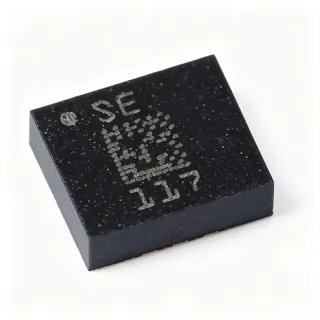
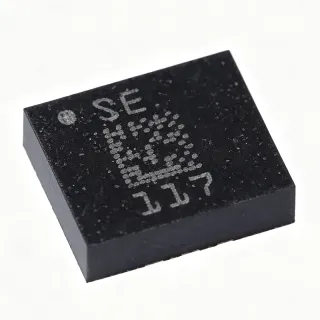
ADXL357BEZ - Low Noise 3-Axis MEMS Accelerometer | Analog Devices

MPN: ADXL357BEZ ✓ Active
In Stock Ships in 1-3 business days
2.25 V to 3.6 V Vdss 200 µA (typical at 3.3 V) Id 14-CLCC (6x6 mm) Package
From $42 USD / Unit
MOQ: 1 |
Price updated: 2026-08-21
Volume Pricing
Qty Unit Price Extended
1 $55.6 $55.60
10 $52 $520.00
100 $48.5 $4,850.00
500 $45 $22,500.00
1,000 $42 $42,000.00
ℹ️ All prices are in USD

Drop-in alternatives for ADXL357BEZ — same package, pin-to-pin compatible. Different-package parts requiring PCB rework are excluded.

Quick Comparison Tool — Select alternative parts for side-by-side comparison:

ADXL357BEZ-RL

✅ Drop-In
📦 14-CLCC (6x6 mm)
Same device, tape-and-reel packaging variant

📋 Reference alternative (not in catalog)

ADXL355BEZ

✅ Drop-In
📦 14-CLCC (6x6 mm)
Lower measurement ranges (±2g, ±4g, ±8g), same package and pinout

📋 Reference alternative (not in catalog)

ADXL356BEZ

✅ Drop-In
📦 14-CLCC (6x6 mm)
Analog output instead of digital, same package and pinout

📋 Reference alternative (not in catalog)

ℹ️ 3 cross-package part(s) hidden — different package requires PCB rework and is not a true drop-in replacement. Contact us if you need cross-package suggestions.

ADXL357BEZ Maximum Ratings & Electrical Characteristics

Measurement Range ±10g, ±20g, ±40g (selectable)
Output Type Digital (SPI/I2C)
Bandwidth 1 Hz to 1 kHz
Noise Density 80 µg/√Hz
0 g Offset Drift ±0.75 mg over temperature
Supply Voltage 2.25 V to 3.6 V
Interface Voltage 1.8 V to 3.6 V (VDD I/O)
Current Consumption 200 µA (typical at 3.3 V)
Temperature Sensor Integrated
FIFO Buffer 32-level
Package 14-CLCC (6x6 mm)
Operating Temperature -40°C to +125°C
Mounting Type Surface Mount
RoHS Status Compliant
Sensitivity 16384 LSB/g (at ±10g range)

ADXL357BEZ Pin Configuration

Electronic Component Package Diagram Default generic electronic component package diagram 1 2 3 Package
Pin 1 VDD — Power supply (2.25V to 3.6V)
Pin 2 GND — Ground
Pin 3 SCL/SCLK — I2C clock or SPI clock
Pin 4 SDA/SDI — I2C data or SPI data in
Pin 5 CS — Chip select (active low)
Pin 6 INT1 — Interrupt 1 output
Pin 7 INT2 — Interrupt 2 output
Pin 8 VDD I/O — Digital interface supply (1.8V to 3.6V)
Pin 9 SDO/ADR0 — SPI data out or I2C address bit 0
Pin 10 NC — No connect
Pin 11 NC — No connect
Pin 12 NC — No connect
Pin 13 NC — No connect
Pin 14 NC — No connect

Safe Operating Area (SOA) & Thermal Characteristics

Safe Operating Area Chart Default safe operating area chart for ADXL357BEZ Drain-to-Source Voltage (Vds) Drain Current (Id)

No official SOA curve available for this component. Always operate within absolute maximum ratings specified in the datasheet. Ensure adequate cooling and derate as needed.

Typical Applications

ADXL357BEZ is suitable for 6 applications: Industrial Vibration Monitoring, Inertial Measurement Units (IMUs), Structural Health Monitoring, Robotics and Motion Control, Aerospace and UAV Navigation, Seismic Sensing.

🏭

Industrial Vibration Monitoring

The ADXL357BEZ's low noise density of 80 µg/√Hz and wide bandwidth up to 1 kHz make it ideal for detecting machinery vibrations. Its selectable ranges of ±10g, ±20g, and ±40g allow it to capture both subtle and high-amplitude vibrations. The digital SPI/I2C interface simplifies integration with industrial controllers, and the low power consumption of 200 µA enables battery-powered wireless sensor nodes for continuous monitoring.

✈️

Inertial Measurement Units (IMUs)

In IMUs, the ADXL357BEZ provides precise acceleration data with low 0 g offset drift of ±0.75 mg over temperature, ensuring stable measurements over time. Its low noise density of 80 µg/√Hz enhances the signal-to-noise ratio for accurate velocity and position estimation. The device's SPI interface allows high-speed data transfer to a fusion processor, and its small 6x6 mm CLCC package saves board space in compact IMU designs.

🏗️

Structural Health Monitoring

The ADXL357BEZ is well-suited for structural health monitoring due to its low noise and low drift characteristics. It can detect micro-vibrations and tilts in bridges, buildings, and other infrastructure. The device's wide temperature range of -40°C to +125°C ensures reliable operation in harsh outdoor environments. Its digital output simplifies data logging, and the 32-level FIFO buffer reduces host processor intervention, making it ideal for long-term monitoring systems.

🤖

Robotics and Motion Control

In robotics, the ADXL357BEZ provides accurate acceleration feedback for motion control and stabilization. Its selectable ranges allow it to handle both gentle movements and high-impact shocks. The low power consumption of 200 µA is beneficial for battery-powered robots, and the SPI interface enables real-time data streaming to the robot's controller. The device's small package and surface-mount design facilitate integration into compact robotic joints.

✈️

Aerospace and UAV Navigation

The ADXL357BEZ is used in UAVs and aerospace systems for attitude and heading reference. Its low noise density and low drift ensure accurate acceleration measurements for navigation algorithms. The device's wide temperature range and robust CLCC package make it suitable for harsh aerospace environments. The digital interface allows direct connection to flight controllers, and the low power consumption extends flight time in battery-powered UAVs.

🌍

Seismic Sensing

The ADXL357BEZ's ultra-low noise density of 80 µg/√Hz makes it suitable for seismic sensing applications, where detecting tiny ground movements is critical. Its low 0 g offset drift ensures long-term stability for continuous monitoring. The device's wide bandwidth up to 1 kHz allows it to capture both low-frequency seismic waves and higher-frequency vibrations. The digital output simplifies data acquisition in seismic sensor networks.

What is the measurement range of ADXL357BEZ?
The ADXL357BEZ supports selectable measurement ranges of ±10g, ±20g, and ±40g. According to the Analog Devices ADXL357 datasheet (Rev. D), the range is set via the RANGE bits in the FILTER_CTL register. The default range is ±10g, which provides the highest resolution of 16384 LSB/g.
What is the price of ADXL357BEZ?
The ADXL357BEZ has a 1ku list price starting from $55.60 as of 2026-08-22, according to Analog Devices' product page. Actual pricing may vary by distributor and quantity. For example, DigiKey lists it at $55.60 for single-unit purchases, with volume discounts available at higher quantities.
Where can I buy ADXL357BEZ online?
The ADXL357BEZ is available from authorized distributors such as DigiKey, Mouser, and Octopart. As of 2026-08-22, DigiKey lists it as 'ships today' with stock available. You can also purchase directly from Analog Devices' website or request samples. Check distributor websites for real-time inventory and pricing.
What is the lead time for ADXL357BEZ?
The typical lead time for ADXL357BEZ is 4-6 weeks from authorized distributors, but it may vary based on stock levels and order quantity. As of 2026-08-22, DigiKey indicates it is in stock and ships immediately. For larger quantities, lead times may extend; contact distributors for current lead time information.
Is ADXL357BEZ in stock?
Yes, as of 2026-08-22, the ADXL357BEZ is in stock at major distributors like DigiKey and Mouser. DigiKey's product page states 'ships today' for orders placed before the cutoff time. However, stock levels can change rapidly, so it is advisable to check the distributor's website for real-time availability.
ADXL357BEZ vs ADXL356BEZ - which is better for vibration monitoring?
The ADXL357BEZ is a digital-output accelerometer, while the ADXL356BEZ is an analog-output version. For vibration monitoring, the ADXL357BEZ is often preferred because its digital interface simplifies data acquisition and reduces noise susceptibility. Both have similar noise density (80 µg/√Hz) and measurement ranges, but the ADXL357BEZ offers SPI/I2C output, making it easier to interface with microcontrollers.
What is the difference between ADXL357BEZ and ADXL357BCPZ?
The ADXL357BEZ and ADXL357BCPZ are both part of the ADXL357 family, but they differ in package and temperature grade. The ADXL357BEZ is in a 14-CLCC package with an extended temperature range of -40°C to +125°C, while the ADXL357BCPZ is in a 14-LGA package with a standard temperature range of -40°C to +105°C. They are pin-compatible but not drop-in replacements due to package differences.
When should I choose ADXL357BEZ over ADXL355BEZ?
Choose the ADXL357BEZ when you need higher measurement ranges (±10g, ±20g, ±40g) compared to the ADXL355BEZ, which offers ±2.048g, ±4.096g, and ±8.192g. The ADXL357BEZ is better suited for applications with high shock or vibration levels, while the ADXL355BEZ provides higher resolution for low-g applications like tilt sensing. Both have similar noise performance.
What is the best drop-in replacement for ADXL357BEZ?
The ADXL357BCPZ is a pin-compatible alternative in a different package (LGA vs CLCC), so it is not a true drop-in. The ADXL357BEZ-RL is a tape-and-reel packaging variant of the same device and is a direct drop-in. For cross-brand alternatives, the Bosch BMI160 or ST LIS2DW12 are functionally similar but not pin-compatible, so they require PCB redesign.
Can ADXL357BEZ replace ADXL355BEZ?
Yes, the ADXL357BEZ can replace the ADXL355BEZ in many applications, but it is not a direct drop-in due to different measurement ranges and package options. The ADXL357BEZ offers higher g ranges (±10g, ±20g, ±40g) compared to the ADXL355BEZ (±2g, ±4g, ±8g). If your application requires higher shock tolerance, the ADXL357BEZ is a suitable replacement, but you may need to adjust the configuration registers.
Where can I download the ADXL357BEZ datasheet PDF?
The ADXL357BEZ datasheet is available for download from the Analog Devices website at https://www.analog.com/media/en/technical-documentation/data-sheets/adxl357.pdf. It is also available on distributor sites like DigiKey and Mouser, as well as on datasheet aggregators like alldatasheet.com. The datasheet is 52 pages and includes full specifications, pinout, and application information.
Where can I find the ADXL357BEZ pinout?
The ADXL357BEZ pinout is detailed in the ADXL357 datasheet (Rev. D) on pages 10-11. The 14-pin CLCC package includes pins for VDD, VDD I/O, GND, SCL/SCLK, SDA/SDI, CS, INT1, INT2, and others. The pinout is also available on distributor product pages and in the datasheet PDF from Analog Devices.
What are the key specifications of ADXL357BEZ that engineers should know?
The ADXL357BEZ is a low noise, low drift, low power 3-axis MEMS accelerometer with selectable ranges of ±10g, ±20g, and ±40g. It features a noise density of 80 µg/√Hz, 0 g offset drift of ±0.75 mg over temperature, and current consumption of 200 µA at 3.3 V. It operates from 2.25 V to 3.6 V, supports SPI/I2C interfaces, and is available in a 14-CLCC package. These specs make it ideal for precision vibration monitoring and inertial measurement.
Hey Google, what can replace ADXL357BEZ?
The ADXL357BEZ can be replaced by the ADXL357BCPZ, which is a pin-compatible variant in a different package (LGA vs CLCC). For a direct drop-in, the ADXL357BEZ-RL is the same device in tape-and-reel packaging. Cross-brand alternatives like the Bosch BMI160 or ST LIS2DW12 are functionally similar but not pin-compatible, requiring PCB redesign.
Is ADXL357BEZ the same as ADXL357BCPZ?
No, the ADXL357BEZ and ADXL357BCPZ are not the same. They share the same sensing element and features, but differ in package type: the BEZ is in a 14-CLCC package, while the BCPZ is in a 14-LGA package. They are pin-compatible but have different thermal and mechanical properties. The BEZ has a wider temperature range (-40°C to +125°C) compared to the BCPZ (-40°C to +105°C).
What is the best Bosch equivalent for ADXL357BEZ?
The Bosch BMI160 is a 6-axis IMU that includes a 3-axis accelerometer and gyroscope, but it is not a direct drop-in replacement for the ADXL357BEZ due to different package and pinout. For a 3-axis accelerometer-only equivalent, the Bosch BMA400 is a low-power option, but it has lower measurement ranges (±2g to ±16g) and different interface. Neither is pin-compatible, so PCB redesign is required.

Engineering reference data for ADXL357BEZ — comparison, design guidance, and compliance information.

Selection Guide

Choose the ADXL357BEZ when you need a digital-output accelerometer with selectable ranges up to ±40g and low noise for industrial vibration monitoring, IMUs, or structural health monitoring. If you require lower noise (25 µg/√Hz) and can accept lower ranges (±8g), the ADXL355BEZ is a better choice for precision tilt sensing. For analog output applications, the ADXL356BEZ is suitable but requires an external ADC. The ADXL357BCPZ offers the same features in an LGA package, which may be preferred for space-constrained designs. For high-volume production, the ADXL357BEZ-RL is the tape-and-reel version of the same device.

Comparison with Alternatives

Parameter This Product ADXL357BCPZ ADXL357BEZ-RL ADXL355BEZ ADXL356BEZ
Package 14-CLCC (6x6 mm) 14-LGA (6x6 mm) 14-CLCC (6x6 mm) 14-CLCC (6x6 mm) 14-CLCC (6x6 mm)
Brand Analog Devices Analog Devices Analog Devices Analog Devices Analog Devices
Measurement Range ±10g, ±20g, ±40g ±10g, ±20g, ±40g ±10g, ±20g, ±40g ±2g, ±4g, ±8g ±10g, ±20g, ±40g
Output Type Digital (SPI/I2C) Digital (SPI/I2C) Digital (SPI/I2C) Digital (SPI/I2C) Analog
Noise Density 80 µg/√Hz 80 µg/√Hz 80 µg/√Hz 25 µg/√Hz 80 µg/√Hz
0 g Offset Drift ±0.75 mg ±0.75 mg ±0.75 mg ±0.75 mg ±0.75 mg
Supply Voltage 2.25V to 3.6V 2.25V to 3.6V 2.25V to 3.6V 2.25V to 3.6V 2.25V to 3.6V
Current Consumption 200 µA 200 µA 200 µA 150 µA 200 µA

Key Differentiators

  • Ultra-low noise density of 80 µg/√Hz (vs ADXL355BEZ)
  • Selectable measurement ranges up to ±40g (vs ADXL355BEZ)
  • Digital output with SPI/I2C interface (vs ADXL356BEZ)

Design Notes

The ADXL357BEZ requires a clean power supply. Place a 0.1 µF ceramic capacitor as close as possible to the VDD pin and a 1 µF capacitor on the VDD I/O pin. The supply voltage should be between 2.25V and 3.6V, and the digital interface voltage can be set independently via VDD I/O (1.8V to 3.6V). Avoid sharing the supply with high-current digital circuits to prevent noise coupling.

For optimal performance, use a solid ground plane under the device and minimize trace lengths to the microcontroller. The CLCC package has an exposed pad that should be soldered to the ground plane for thermal and mechanical stability. Ensure that the SPI/I2C lines are properly terminated and shielded if routed near high-frequency signals.

Do not exceed the absolute maximum ratings of 3.6V on VDD or VDD I/O. When using SPI, ensure the CS pin is properly pulled high when not in use. The device has an internal FIFO; configure it correctly to avoid data loss. Also, note that the ADXL357BEZ is sensitive to mechanical stress, so avoid mounting it near flexing PCB areas.

Compliance Information

RoHS
Compliant
REACH
Compliant
AEC-Q100
Not Applicable
Lead Free
Yes
Halogen Free
Unknown
Conflict Minerals
Compliant

RoHS compliant per Analog Devices product page. Not AEC-Q100 qualified; for automotive, consider ADXL357BCCZ-RL7.
Quick Quote RFQ
Fill in complete details — our sales team will respond within 24 hours
Part Number Manufacturer Package QTY Target Price Extended
Total: $0.00 USD
Quote submitted!

We will respond to your email within 24 hours

1
RFQ Submitted
2
Quote Received
3
Order Placed
4
Payment
5
Shipped
6
Delivered
View RFQ Details