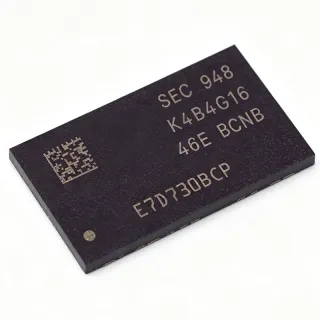
EPC16UC88NT - 16-Mbit FPGA Configuration PROM | Altera
MPN: EPC16UC88NT ✓ Active| Qty | Unit Price | Extended |
|---|---|---|
| 1 | $0 | $0.00 |
| 10 | $0 | $0.00 |
| 100 | $0 | $0.00 |
| 500 | $0 | $0.00 |
| 1,000 | $0 | $0.00 |
EPC16UC88NT Overview
A configuration PROM is a nonvolatile semiconductor memory used to store the bitstream that configures an SRAM-based FPGA whenever the system powers up, reinitializes, or requires new configuration data. Because SRAM-based logic devices lose programmed configuration when power is removed, the PROM provides persistent storage and transfers the configuration image during initialization. It is part of the broader system chain of nonvolatile memory, FPGA configuration interface, power sequencing, and programmable logic.
The EPC16UC88 family is described by verified source material as an Enhanced Configuration Device with 16-Mbit Flash memory. Configuration data supports FPGA families including ACEX 1K, APEX 20K, APEX II, Arria GX, Cyclone, Cyclone II, FLEX 10K, FLEX 6000, Mercury, Stratix, Stratix GX, Stratix II, and Stratix II GX. The stored configuration is loaded into the target SRAM-based device through the FPGA configuration interface, allowing the host system to restore its programmed logic state without an external programming source.
The EPC16UC88N distributor listing specifically describes an in-system programmable configuration PROM for FPGAs, with 16 Mbit memory and an 88-UBGA package measuring 11 mm by 8 mm. The target ordering code EPC16UC88NT is associated with the same EPC16UC88 configuration-device family, but the supplied verification does not establish every package-level suffix, temperature-grade, or pinout difference for the NT variant. The EPC16UC88 datasheet is a 36-page document in the provided AllDatasheet result, but the target ordering code should be checked against the applicable manufacturer ordering information before substitution.
Typical applications include configuring legacy Altera FPGA development boards, industrial control systems using SRAM-based FPGAs, communications equipment requiring repeatable power-up configuration, and test systems that retain FPGA bitstreams outside the target device. The nonvolatile configuration function is especially useful when the FPGA must initialize into a known state after power cycling or when configuration data must be updated without replacing the target programmable device.
When designing with EPC16UC88NT, verify the exact ball map, supported target FPGA family, configuration voltage, programming interface, and suffix-specific temperature information from the applicable manufacturer documentation. The verified data does not provide electrical ratings, timing values, absolute maximum limits, or a verified NT-specific pinout. Do not infer those values from the EPC16UC88 family name alone.
This page combines the verified product description, package information, supported FPGA-family context, and purchasing sources. It also distinguishes confirmed facts from fields requiring manufacturer-document verification, helping engineers avoid treating a family-level specification as a target-suffix guarantee.
Drop-in alternatives for EPC16UC88NT — same package, pin-to-pin compatible. Different-package parts requiring PCB rework are excluded.
Variants in this series
Same-series models that are drop-in compatible with EPC16UC88NT (same form factor and footprint) — differing in Package.
Quick Comparison Tool — Select alternative parts for side-by-side comparison:
No drop-in alternatives available for this product.
Request AlternativesEPC16UC88NT Maximum Ratings & Electrical Characteristics
| Device Type | Enhanced configuration device |
| Memory Capacity | 16 Mbit |
| Memory Technology | Flash memory |
| Primary Function | Configuration storage for SRAM-based FPGA devices |
| Programming Type | In-system programmable configuration PROM |
| Package | 88-UBGA |
| Package Dimensions | 11 mm by 8 mm |
| Configuration Device Family | EPC4, EPC8, EPC16 |
| Supported FPGA Family | ACEX 1K |
| Supported FPGA Family | APEX 20K |
| Supported FPGA Family | APEX II |
| Supported FPGA Family | Cyclone |
| Supported FPGA Family | Cyclone II |
| Supported FPGA Family | Stratix |
| Supported FPGA Family | Stratix II |
| Configuration Data Reload | Required after power-up, system initialization, or new configuration data request |
| Configuration Data Source | Nonvolatile external configuration memory |
| Target Device Technology | SRAM-based FPGA |
| Datasheet Source Page Count | 36 pages |
EPC16UC88NT 11 mm by 8 mm Pin Configuration Guide
Pin configuration for EPC16UC88NT (11 mm by 8 mm package). This digital IC includes GPIO, communication interfaces (UART, SPI, I2C), and power pins. Refer to the manufacturer datasheet for alternate pin functions and configuration options. Essential for embedded system design and PCB layout.

No detailed pinout data available for EPC16UC88NT.
Refer to the datasheet for full pin configuration.
Typical Applications
EPC16UC88NT is suitable for 6 applications: Legacy Altera FPGA Development Systems, Industrial FPGA Control Platforms, Communications Equipment with SRAM FPGAs, FPGA Test and Measurement Equipment, Embedded Systems Requiring Power-Up Configuration, Legacy Programmable Logic Retrofit.
Legacy Altera FPGA Development Systems
EPC16UC88NT is relevant to development systems that use supported SRAM-based Altera FPGA families and require a nonvolatile source for the configuration bitstream. The verified EPC16UC88 family description identifies 16-Mbit Flash memory and support for families including ACEX 1K, APEX 20K, APEX II, Cyclone, Cyclone II, and Stratix. In this application, the configuration device stores the image that reloads after power-up or reinitialization. The exact NT-specific ball map, operating limits, and supported configuration mode must be confirmed from the manufacturer documentation before board release.
Recommended
Industrial FPGA Control Platforms
EPC16UC88NT can be considered for industrial control platforms where an SRAM-based FPGA must initialize into a known operating state after power cycling. The configuration-device function is useful when a persistent bitstream must remain outside the FPGA and be transferred through the configuration interface during system initialization. The verified 16-Mbit capacity applies at the family level, while target-suffix voltage, temperature, and timing limits are [DATA_NEEDED: target-suffix electrical and environmental limits]. Engineers should validate industrial temperature behavior, decoupling, configuration timing, and the exact 88-UBGA ball assignments before deployment.
Recommended
Communications Equipment with SRAM FPGAs
EPC16UC88NT is suited by function to communications equipment that uses supported SRAM-based FPGA families for protocol processing, interface bridging, or programmable control. The verified source lists compatibility context for Altera families including Cyclone, Cyclone II, Arria GX, Stratix, Stratix GX, Stratix II, and Stratix II GX. A nonvolatile configuration source allows the FPGA logic to be restored after a system reset or power interruption. The selected FPGA, configuration mode, interface voltage, and NT-specific timing details must be checked against the applicable documentation; no verified high-speed timing value is supplied here.
Recommended
FPGA Test and Measurement Equipment
EPC16UC88NT can serve the configuration-storage role in test and measurement equipment where repeatable FPGA startup and controlled logic loading are required. The 16-Mbit family capacity provides a nonvolatile location for the target bitstream, while the configuration device reloads the SRAM-based FPGA when the system initializes. This is valuable for automated test fixtures, programmable instrumentation, and bench systems that need a known state after each power cycle. The supplied data does not verify programming interface speed, operating temperature, or target-suffix pinout, so those items require manufacturer-document review before schematic and layout sign-off.
Recommended
Embedded Systems Requiring Power-Up Configuration
EPC16UC88NT addresses the persistent-configuration problem in embedded systems built around supported SRAM-based Altera FPGAs. The configuration data can be stored in the nonvolatile configuration device and supplied when the system powers up, reinitializes, or requests a new configuration image. This architecture separates long-term bitstream storage from volatile FPGA configuration memory and can simplify field replacement or controlled reconfiguration. Use the verified 16-Mbit family capacity as context, but verify the NT ordering-code limits, 88-UBGA interface, FPGA configuration mode, and programming procedure before selecting the device.
Recommended
Legacy Programmable Logic Retrofit
EPC16UC88NT may be relevant to legacy programmable-logic designs that require an external nonvolatile configuration source for a supported SRAM-based FPGA. The verified family material lists multiple Altera FPGA generations, including FLEX 10K, FLEX 6000, Mercury, ACEX 1K, APEX 20K, and Stratix families. In a retrofit, the main engineering tasks are confirming FPGA-family support, matching the configuration interface, validating the 88-UBGA ball map, and preserving the board's reset and power-up sequence. The supplied evidence does not establish an NT-specific drop-in replacement or a complete pinout, so the target should be treated as requiring verification.
Recommended
Recommended Products Summary
Engineering reference data for EPC16UC88NT — comparison, design guidance, and compliance information.
Selection Guide
Comparison with Alternatives
| Parameter | This Product |
|---|---|
| Brand | Altera |
| Package | 88-UBGA, 11 mm by 8 mm |
| Memory Capacity | 16 Mbit |
| — | Flash memory |
| Device Function | In-system programmable configuration PROM for SRAM-based FPGAs |
| Configuration Device Family | EPC16 |
| Supported FPGA Family | ACEX 1K, APEX 20K, APEX II, Cyclone, Cyclone II, Stratix, among others |
Key Differentiators
- 16-Mbit nonvolatile configuration capacity (vs EPC16UC88N)
- 88-UBGA package context (vs EPC16UC88N)
- Broad legacy Altera FPGA-family support context (vs EPC16UC88)
Design Notes
Confirm the EPC16UC88NT supply voltage, current consumption, power-up behavior, and decoupling requirements from the applicable manufacturer datasheet before schematic release. The supplied evidence confirms 16-Mbit Flash memory and 88-UBGA packaging, but it does not provide verified voltage or current ratings. Use local decoupling appropriate to the FPGA configuration interface and place the capacitors near the associated power and ground balls. Do not use the placeholder 0.00 tier values as a power or cost estimate.
Use the exact 88-UBGA ball map for EPC16UC88NT and cross-check it against the selected FPGA configuration schematic. The verified family references identify the 88-UBGA package and list supported FPGA families, but the supplied data does not provide a complete NT-specific ball assignment. Confirm every configuration, clock, control, power, ground, and no-connect ball before routing. Preserve the manufacturer-recommended escape pattern and verify the package dimensions of 11 mm by 8 mm against the PCB footprint.
Do not assume that EPC16UC88NT and EPC16UC88N are interchangeable solely because both are associated with the EPC16 family. The verified DigiKey listing describes EPC16UC88N as a 16-Mbit in-system programmable configuration PROM in 88-UBGA, but the NT suffix-specific details are absent. Treat ordering-code, temperature, package, electrical, and shipping differences as unverified until the manufacturer ordering table is reviewed. This avoids an incorrect procurement substitution or an electrically incompatible board design.
Compliance Information
Compliance and qualification attributes were not stated in the supplied verified web data. No RoHS, REACH, lead-free, halogen-free, AEC-Q100, or conflict-minerals claim is inferred.