Memory ICs
Subcategories
Products (183)
AS4C256M16D3L-12BCN - 4Gbit DDR3L SDRAM 800MHz | Alliance Memory
The AS4C256M16D3L-12BCN is a 4Gbit DDR3L SDRAM organized as 256M x 16, operating at 1.35V with a maximum clock frequency of 800MHz (data rate 1600Mbps). It is housed in a 96-ball FBGA package (9x13mm) and is RoHS compliant and halogen-free. This memory IC is designed for high-performance computing, networking, and industrial applications requiring low power consumption and high bandwidth. DDR3L (Double Data Rate 3 Low Voltage) is a type of synchronous dynamic random-access memory (SDRAM) that operates at a reduced supply voltage of 1.35V, compared to standard DDR3's 1.5V. This lower voltage reduces power consumption by up to 20% while maintaining similar performance, making it ideal for power-sensitive applications such as laptops, embedded systems, and networking equipment. DDR3L is part of the DDR SDRAM family, which includes DDR, DDR2, DDR3, and DDR4, each offering increased speed and lower power. Key features include a parallel interface with a 16-bit data bus, 800MHz clock speed, and a CAS latency of 20ns. The device supports JEDEC clock jitter specifications, ensuring reliable operation in high-speed systems. The 96-ball FBGA package provides excellent thermal and electrical performance, with a compact footprint suitable for space-constrained designs. The AS4C256M16D3L-12BCN utilizes advanced CMOS technology to achieve high density and low power consumption. It supports various burst lengths and programmable CAS latency, allowing flexibility in system design. The device also includes on-die termination (ODT) and dynamic ODT for improved signal integrity, reducing the need for external termination resistors. Typical applications include networking equipment (routers, switches), industrial automation, embedded computing, and consumer electronics such as set-top boxes and smart TVs. Its low voltage and high bandwidth make it suitable for DDR3L-based systems requiring 4Gbit density. When designing with this memory, ensure proper decoupling capacitors near the power pins and follow the layout guidelines in the datasheet to minimize signal integrity issues. The device requires a 1.35V supply and a separate VDDQ, which should be regulated accurately.
AS4C256M16D3L-12BCNTR - 4Gbit DDR3L SDRAM 96-FBGA | Alliance Memory
The AS4C256M16D3L-12BCNTR is a 4Gbit DDR3L SDRAM organized as 256M x 16, operating at 1.35V with a maximum clock frequency of 800 MHz (data rate 1600 Mbps/pin). It is housed in a 96-ball FBGA package (9x13mm) and is designed for commercial temperature range (0°C to +95°C). This memory IC is a drop-in replacement for standard DDR3L components, offering high-speed double-data-rate transfer for applications requiring large, low-power memory. DDR3L (Double Data Rate 3 Low Voltage) SDRAM is a type of synchronous dynamic random-access memory that operates at a reduced supply voltage of 1.35V, compared to standard DDR3's 1.5V, reducing power consumption by up to 20% while maintaining similar performance. It is part of the DDR3 memory family, which uses double-data-rate signaling to transfer data on both edges of the clock, achieving high bandwidth. DDR3L is widely used in mobile devices, embedded systems, and networking equipment where power efficiency is critical. Key features include a parallel interface with 16-bit data bus, 800 MHz clock speed, 20 ns access time, and support for 1.283V to 1.45V supply voltage. The device is RoHS compliant and lead-free, meeting environmental standards. The 96-FBGA package with 9x13mm dimensions provides a compact footprint suitable for space-constrained PCB designs. Technically, the AS4C256M16D3L-12BCNTR utilizes advanced DRAM process technology to achieve high density and low power. It supports burst lengths of 8 and 4, on-die termination (ODT), and programmable CAS latency. The device includes auto-refresh and self-refresh modes for power saving. The 1.35V operation reduces I/O power, making it ideal for battery-powered applications. Typical applications include servers, workstations, networking equipment, and embedded systems requiring high-capacity, low-power memory. The 4Gbit density and 16-bit organization make it suitable for memory expansion in industrial PCs, routers, and test equipment. When designing with this component, ensure proper decoupling capacitors near the power pins and follow the layout guidelines in the datasheet to minimize signal integrity issues. The device requires a stable 1.35V supply and reference voltage (VREF) for reliable operation.
AS4C256M16D3LC-12BIN - 4Gb DDR3L SDRAM 96-FBGA | Alliance Memory
The AS4C256M16D3LC-12BIN is a 4Gb DDR3L SDRAM organized as 256M x 16 bits, operating at 1.35V with a data rate of 800 MHz (DDR3L-1600). It comes in a 96-ball FBGA package (7.5x13.5mm) and is designed for industrial temperature range (-40°C to +95°C). This memory IC is a drop-in replacement for standard DDR3L modules, offering high-speed data transfer and low power consumption. DDR3L SDRAM is a type of dynamic random-access memory that operates at a lower voltage (1.35V) compared to standard DDR3 (1.5V), reducing power consumption by about 20% while maintaining similar performance. It is part of the DDR3 family, which uses double data rate architecture to transfer data on both edges of the clock, achieving high bandwidth. DDR3L is commonly used in embedded systems, networking equipment, and industrial applications where power efficiency and reliability are critical. Key features include an 8-bank architecture, programmable CAS latency, burst lengths of 8 and 4, on-die termination (ODT), and a 20ns row cycle time. The device supports auto-refresh and self-refresh modes, and includes a temperature sensor for thermal management. The 96-ball FBGA package provides a compact footprint suitable for space-constrained designs. Technically, the AS4C256M16D3LC-12BIN uses a high-speed CMOS process and features a 16-bit data bus, achieving data rates up to 1600 Mbps per pin. It operates from a single 1.35V supply, with an I/O voltage of 1.35V, and is compatible with JEDEC DDR3L standards. The device includes programmable read and write latencies, and supports DLL (Delay-Locked Loop) for precise timing. Typical applications include embedded computing, industrial PCs, networking routers, and automotive infotainment systems. Its low voltage and industrial temperature range make it ideal for harsh environments. The device is also suitable for high-reliability systems requiring long-term availability. When designing with this memory, ensure proper decoupling capacitors near the power pins and follow the layout guidelines in the datasheet to minimize signal integrity issues. The device requires a stable 1.35V supply and careful termination of the data and address lines.
AS4C256M8D3LB-12BIN - 2Gbit DDR3L SDRAM 78-FBGA | Alliance Memory
The AS4C256M8D3LB-12BIN is a 2Gbit DDR3L SDRAM organized as 256M x 8 bits, operating at a clock frequency of 800 MHz (DDR3L-1600) with a CAS latency of 11 and a tRCD/tRP of 13.75 ns. It is housed in a 78-ball FBGA package (8x10.5 mm) and operates from a 1.35V supply, with a voltage range of 1.283V to 1.45V. This device is designed for low-power applications, offering a significant reduction in power consumption compared to standard DDR3. DDR3L (Double Data Rate 3 Low Voltage) is a type of synchronous dynamic random-access memory (SDRAM) that operates at a lower voltage (1.35V) than standard DDR3 (1.5V), reducing power consumption by up to 20% while maintaining similar performance. It is part of the memory hierarchy in computing systems, serving as the main system memory in laptops, embedded systems, and networking equipment. DDR3L is backward compatible with DDR3 slots in many cases, making it a popular choice for upgrades and new designs. Key features include a parallel interface with a data rate of 1600 MT/s, a burst length of 8, and on-die termination (ODT) for improved signal integrity. The device supports auto-refresh and self-refresh modes, with a typical refresh period of 7.8 us at 85°C. It also features programmable CAS latency, additive latency, and write latency, allowing flexibility in system timing. The 78-FBGA package is optimized for space-constrained designs, with a compact footprint of 8x10.5 mm. Technically, the AS4C256M8D3LB-12BIN uses a 2Gbit DRAM cell array with a 8n-prefetch architecture, enabling high-speed data transfer. The device includes a DLL (Delay-Locked Loop) for precise clock alignment and supports dynamic ODT for improved signal quality. It is fabricated using a advanced CMOS process, ensuring low leakage and high reliability. The operating temperature range is 0°C to +95°C (case temperature), making it suitable for commercial and industrial applications. Typical applications include embedded systems, networking equipment (routers, switches), industrial computing, and consumer electronics such as set-top boxes and smart TVs. Its low voltage and high density make it ideal for battery-powered devices and energy-efficient designs. The device is also used in automotive infotainment systems where reliability and temperature range are critical. When designing with this memory, ensure proper decoupling capacitors are placed near the VDD and VDDQ pins to minimize noise. The VREFCA and VREFDQ pins should be bypassed with 0.1uF capacitors. Also, follow the JEDEC DDR3L layout guidelines for signal integrity, especially for high-speed signals. The device supports a 1.35V supply, so ensure the power supply is stable and within the specified range.
AS4C512M16D4-75BCN - 8Gb DDR4 SDRAM 512Mx16 | Alliance Memory
The AS4C512M16D4-75BCN is an 8 Gigabit (8Gb) DDR4 SDRAM organized as 512M words by 16 bits, manufactured by Alliance Memory, Inc. It operates at a clock frequency of 1.333 GHz (DDR4-2666) with a data rate of 2666 MT/s, and is housed in a 96-ball FBGA package measuring 7.5mm x 13mm. This memory IC is designed for high-speed, high-density applications requiring parallel interface and low power consumption. DDR4 SDRAM (Double Data Rate 4 Synchronous Dynamic Random-Access Memory) is a type of volatile memory that transfers data on both the rising and falling edges of the clock signal, effectively doubling the data rate. It uses an 8n prefetch architecture to achieve high bandwidth, and operates at a lower voltage (1.2V) compared to previous generations, reducing power consumption. DDR4 is the industry standard for main memory in servers, desktops, and embedded systems, offering improved speed and density over DDR3. Key features of the AS4C512M16D4-75BCN include a 1.2V power supply, 18ns CAS latency (CL), and a 96-ball FBGA package with a 7.5x13mm footprint. The device supports commercial temperature range (0°C to +95°C) and is available in tray packaging. It is pin-compatible with other standard DDR4 devices, making it a drop-in replacement for many applications. Technically, the AS4C512M16D4-75BCN is internally configured as sixteen banks, utilizing the 8n prefetch architecture to deliver high-speed data transfer. The device features programmable CAS latency, burst length, and on-die termination (ODT) for signal integrity. It also supports auto-refresh and self-refresh modes for power saving, and includes a temperature sensor for thermal management. Typical applications include servers, networking equipment, industrial computing, and embedded systems where high memory density and bandwidth are required. The 512Mx16 organization is ideal for systems needing a wide data bus, such as graphics cards, network processors, and high-performance microcontrollers. When designing with this device, ensure proper decoupling capacitors are placed near the power pins to minimize noise. The 1.2V supply must be stable and within the specified range to guarantee reliable operation. Also, follow the PCB layout guidelines in the datasheet to maintain signal integrity at 2666 MT/s.
AS4C512M16D4-75BCNTR - 8Gb DDR4 SDRAM 512Mx16 | Alliance Memory
The AS4C512M16D4-75BCNTR is a high-performance 8Gbit DDR4 SDRAM component from Alliance Memory, organized as 512M x 16. It operates at a clock frequency of 1.333 GHz (DDR4-2666) with an access time of 18 ns and a write cycle time of 15 ns. The device is supplied in a 96-ball FBGA package (7.5x13 mm) and is designed for commercial temperature range (0°C to 95°C case temperature). It requires a 1.2V power supply (VDD) with a range of 1.14V to 1.26V, and uses a parallel memory interface. DDR4 SDRAM (Double Data Rate 4 Synchronous Dynamic Random-Access Memory) is a type of volatile memory that transfers data on both edges of the clock signal, doubling the data rate compared to DDR3. It uses an 8n prefetch architecture to achieve high-speed operation, and internally configured as sixteen banks. DDR4 operates at lower voltages (1.2V) compared to DDR3 (1.5V), reducing power consumption. It is a key component in computing systems, servers, and networking equipment, where high bandwidth and capacity are essential. Key features include a density of 8Gbit, a data rate of 2666 Mbps per pin, and a CAS latency of 18 ns. The device supports on-die termination (ODT), programmable read and write latencies, and auto-refresh and self-refresh modes. It is RoHS compliant and lead-free, making it suitable for environmentally conscious designs. The 96-ball FBGA package provides a compact footprint for space-constrained applications. The AS4C512M16D4-75BCNTR uses a 20nm-class DRAM process technology, offering a balance of performance and power efficiency. The 8n prefetch architecture enables high-speed data transfer, while the 1.2V supply reduces power consumption compared to previous generations. The device includes a temperature sensor for thermal management and supports a pseudo-differential DQS for improved signal integrity. Typical applications include servers, networking equipment, industrial computing, and high-performance embedded systems. The high density and speed make it ideal for memory-intensive applications such as data centers, cloud computing, and AI accelerators. The commercial temperature range suits standard enterprise environments. When designing with this device, ensure proper decoupling capacitors near the power pins and follow the layout guidelines in the datasheet to maintain signal integrity at 2666 Mbps. The device requires a stable 1.2V supply and careful routing of the high-speed data and address buses.
AS4C512M16D4-75BIN - 8Gbit DDR4 SDRAM 512Mx16 | Alliance Memory
The AS4C512M16D4-75BIN is an 8Gbit DDR4 SDRAM organized as 512M x 16, operating at a clock frequency of 1.333 GHz (DDR4-2666) with an access time of 18 ns and a write cycle time of 15 ns. It is supplied in a 96-ball FBGA package (7.5x13 mm) and operates from a 1.2V power supply, making it suitable for high-bandwidth memory applications in industrial temperature ranges (-40°C to +95°C). DDR4 SDRAM (Double Data Rate 4 Synchronous Dynamic Random-Access Memory) is a type of volatile memory that transfers data on both edges of the clock signal, doubling the data rate compared to single-data-rate SDRAM. It is the fourth generation of DDR memory, offering higher speed and lower power consumption than its predecessors. DDR4 operates at 1.2V, reducing power by 20% compared to DDR3L, and supports higher densities, making it ideal for servers, networking, and embedded systems. Key features include auto self-refresh, auto precharge, asynchronous reset, output enable, CRC (Cyclic Redundancy Check) function, data mask, write leveling, dynamic on-chip termination (ODT), and ZQ calibration. These features enhance signal integrity and reliability in high-speed systems. The device supports industrial temperature range, ensuring operation in harsh environments. The AS4C512M16D4-75BIN uses a 20nm-class process technology, enabling high density with low power. It features a pseudo-open-drain (POD) interface, which is standard for DDR4, and supports burst lengths of 8 and 4 with burst chop. The memory is organized in 16 banks (4 bank groups), providing high concurrency and reduced latency. Typical applications include networking equipment (routers, switches), industrial computing, embedded systems, and high-performance computing. Its high density and speed make it suitable for buffering and data-intensive tasks. The industrial temperature rating allows use in outdoor and automotive (non-AEC) environments. When designing with this device, ensure proper decoupling with 0.1uF and 1uF capacitors near the power pins, and follow the layout guidelines for DDR4 routing to maintain signal integrity. The ZQ pin requires a 240-ohm resistor to ground for calibration.
AS4C512M16D4A-62BCN - 8Gb DDR4 SDRAM 512Mx16 | Alliance Memory
The AS4C512M16D4A-62BCN is an 8Gb DDR4 SDRAM organized as 512M x 16 bits, operating at 1.2V with a data rate of 1600MHz (3200Mbps). It is housed in a 96-ball FBGA package (7.5x13mm) and is JEDEC standard compliant. This memory IC is designed for high-performance computing, networking, and industrial applications requiring high density and fast data transfer. DDR4 SDRAM (Double Data Rate 4 Synchronous Dynamic Random-Access Memory) is a type of volatile memory that transfers data on both edges of the clock, doubling the data rate compared to DDR3. It operates at lower voltages (1.2V) for improved power efficiency and features higher density and faster speeds. DDR4 is a key component in modern computing systems, servers, and embedded devices, providing the main memory for processors and other digital systems. Key features include a fast clock rate of 1600MHz, 18ns CAS latency, and a 96-ball FBGA package with a 7.5x13mm footprint. The device supports commercial temperature range (0°C to 95°C) and is available in tray packaging. It is fully JEDEC compliant, ensuring compatibility with standard DDR4 memory controllers. Technically, the AS4C512M16D4A-62BCN uses a 16n prefetch architecture, enabling high-speed data transfer. It includes on-die termination (ODT) and programmable read/write latencies for signal integrity. The device also supports auto-refresh and self-refresh modes for power saving. The 1.2V supply reduces power consumption by 20% compared to DDR3L, making it suitable for power-sensitive applications. Typical applications include servers, networking equipment, industrial PCs, and high-end embedded systems. Its high density and speed make it ideal for data-intensive tasks such as real-time analytics, network processing, and industrial automation. The 512M x 16 organization is particularly suited for systems requiring wide data buses. When designing with this component, ensure proper decoupling capacitors near the power pins and follow the layout guidelines in the datasheet to maintain signal integrity at 1600MHz. The device requires a 1.2V supply and a separate VPP voltage of 2.5V for wordline boost.
AS4C512M16D4A-62BCNTR - 8Gb DDR4 SDRAM 512Mx16 | Alliance Memory
The AS4C512M16D4A-62BCNTR is an 8Gb DDR4 SDRAM organized as 512M x 16 bits, operating at 1.2V with a fast clock rate of 1600MHz (DDR4-3200). It is housed in a 96-ball FBGA package (7.5x13mm) and is JEDEC standard compliant, ensuring compatibility with standard DDR4 memory controllers. This device is designed for high-bandwidth, low-power applications, making it ideal for networking, computing, and industrial systems. DDR4 SDRAM (Double Data Rate 4 Synchronous Dynamic Random-Access Memory) is a type of volatile memory that transfers data on both edges of the clock signal, doubling the data rate compared to DDR3. It operates at a lower voltage (1.2V) than DDR3 (1.5V), reducing power consumption. DDR4 is the industry standard for modern computing, offering higher density and speed while maintaining backward compatibility with JEDEC standards. Key features include a 1.2V power supply, 1600MHz clock rate (PC4-3200), 18ns CAS latency, and a 96-ball FBGA package. The device supports on-die termination (ODT), programmable read/write latencies, and auto-refresh and self-refresh modes. It is available in commercial temperature range (0°C to +95°C) and is RoHS compliant. The AS4C512M16D4A-62BCNTR uses a 20nm-class process technology, offering high density and low power. It features a 16n prefetch architecture, which improves bandwidth efficiency. The device includes a temperature sensor for thermal management and supports DLL (Delay-Locked Loop) for precise timing. Typical applications include servers, networking equipment, industrial PCs, and embedded systems requiring high-capacity, high-speed memory. Its 512M x 16 organization is ideal for systems with a 16-bit data bus, such as high-end routers and switches. When designing with this device, ensure proper decoupling capacitors near the power pins and follow the layout guidelines in the datasheet to minimize signal integrity issues. The device requires a 1.2V supply and a separate VPP (2.5V) for wordline boost, which must be generated correctly.
AS4C512M16D4A-62BIN - 8Gb DDR4 SDRAM 512Mx16 | Alliance Memory
The AS4C512M16D4A-62BIN is an 8Gb DDR4 SDRAM organized as 512M x 16 bits, operating at a clock rate of 1600MHz (DDR4-3200) with a data rate of 3.2Gbps per pin. It is housed in a 96-ball FBGA package (7.5x13mm) and operates from a 1.2V supply, compliant with JEDEC standards. This industrial temperature grade device supports a temperature range of -40°C to +95°C, making it suitable for demanding environments. DDR4 SDRAM is a type of synchronous dynamic random-access memory that achieves higher speed and lower power consumption than previous generations. It uses a double data rate interface, transferring data on both edges of the clock, and operates at a lower voltage (1.2V) compared to DDR3 (1.5V). DDR4 is the standard memory technology for modern computing systems, servers, and embedded applications, offering improved bandwidth and efficiency. Key features include a fast clock rate of 1600MHz, burst lengths of 8 and 4 (with burst chop), programmable CAS latency, and on-die termination (ODT) for signal integrity. The device supports auto-refresh and self-refresh modes, and includes a temperature sensor for thermal management. The 96-ball FBGA package provides a compact footprint with excellent thermal and electrical performance. The AS4C512M16D4A-62BIN utilizes advanced DRAM process technology, achieving high density with low power consumption. It features a pseudo-open-drain (POD) interface, which reduces I/O power and improves signal integrity. The device includes a mode register for configuration, and supports various test modes for system validation. Typical applications include networking equipment, industrial computing, automotive infotainment, and embedded systems requiring high-density, high-bandwidth memory. Its industrial temperature range and reliability make it ideal for harsh environments. When designing with this device, ensure proper decoupling and signal integrity practices, including controlled impedance traces and termination. The device requires a stable 1.2V supply and a separate VPP supply of 2.5V for wordline boost.
AS4C512M16D4B-62BCNTR - 8Gb DDR4 SDRAM 512Mx16 | Alliance Memory
The AS4C512M16D4B-62BCNTR is a high-performance 8Gb DDR4 SDRAM organized as 512M x 16 bits, manufactured by Alliance Memory, Inc. It operates at a clock speed of 1600 MHz (DDR4-3200) with a data rate of 3200 MT/s, and is housed in a 96-ball FBGA package (7.5x13 mm). The device uses a 1.2V power supply, with a voltage range of 1.14V to 1.26V, and supports commercial temperature range from 0°C to 95°C. This memory IC is designed for high-bandwidth applications requiring fast data transfer and low power consumption. DDR4 SDRAM (Double Data Rate 4 Synchronous Dynamic Random-Access Memory) is a type of volatile memory that transfers data on both rising and falling edges of the clock signal, effectively doubling the data rate. It is the fourth generation of DDR memory, succeeding DDR3, and offers higher speed, lower voltage, and increased density. DDR4 is a key component in modern computing systems, including servers, desktops, laptops, and embedded systems, where it serves as the main system memory or as a buffer for high-speed data processing. Key features of the AS4C512M16D4B-62BCNTR include a fast clock rate of 1600 MHz, a CAS latency of 19 ns, and a parallel interface. It is JEDEC standard compliant, ensuring compatibility with industry-standard DDR4 memory controllers. The device supports on-die termination (ODT) and posted CAS, which improve signal integrity and reduce bus turnaround time. The 96-ball FBGA package provides a compact footprint suitable for space-constrained designs. The architecture of the AS4C512M16D4B-62BCNTR utilizes an 8n prefetch design, which allows the internal DRAM core to operate at a lower frequency while the I/O interface transfers data at high speed. This architecture reduces power consumption and improves thermal performance. The device also includes auto-refresh and self-refresh modes to maintain data integrity with minimal power draw. Typical applications for this DDR4 SDRAM include servers, networking equipment, industrial computing, and high-performance embedded systems. Its high density and speed make it ideal for applications requiring large memory capacity and fast data throughput, such as data centers, cloud computing, and advanced driver-assistance systems (ADAS). When designing with this component, ensure proper decoupling capacitors are placed near the power pins to minimize noise. The device requires a stable 1.2V supply and careful PCB layout to maintain signal integrity at high speeds. Refer to the datasheet for detailed timing and layout guidelines.
CXDB4ABAM - 2GB LPDDR4X SDRAM 3733Mbps | CXMT
The CXDB4ABAM is a 2GB LPDDR4X SDRAM memory chip manufactured by ChangXin Memory Technologies (CXMT). It operates at a data rate of 3733 Mbps and is housed in a 200-ball FBGA package (15x10x0.8mm). This low-power double data rate memory is designed for mobile, embedded, and consumer applications requiring high bandwidth and low power consumption. LPDDR4X is a type of synchronous dynamic random-access memory (SDRAM) that is part of the LPDDR (Low Power Double Data Rate) family, which is optimized for battery-powered devices. It is a successor to LPDDR4 and offers reduced I/O voltage (0.6V) compared to LPDDR4 (1.1V), resulting in lower power consumption while maintaining similar performance. LPDDR4X is widely used in smartphones, tablets, ultra-thin laptops, and embedded systems where power efficiency is critical. Key features of the CXDB4ABAM include a 2GB density, 3733 Mbps data rate, and support for dual-channel operation. The device uses a 200-ball FBGA package with a 0.8mm ball pitch, enabling compact PCB designs. It is RoHS compliant and supports industrial temperature ranges, making it suitable for a variety of applications. The CXDB4ABAM utilizes advanced DRAM process technology to achieve high speed and low power. It supports various power-saving modes, including idle, self-refresh, and deep power-down, which are essential for extending battery life in portable devices. The memory interface is compatible with standard LPDDR4X controllers, simplifying integration into SoC designs. Typical applications include smartphones, tablets, embedded computing, AI edge devices, and automotive infotainment systems. The high bandwidth and low power make it ideal for applications requiring fast data processing and long battery life. When designing with the CXDB4ABAM, ensure proper decoupling and signal integrity practices are followed. The 0.6V I/O voltage requires careful PCB layout to minimize noise and maintain signal integrity at high data rates.
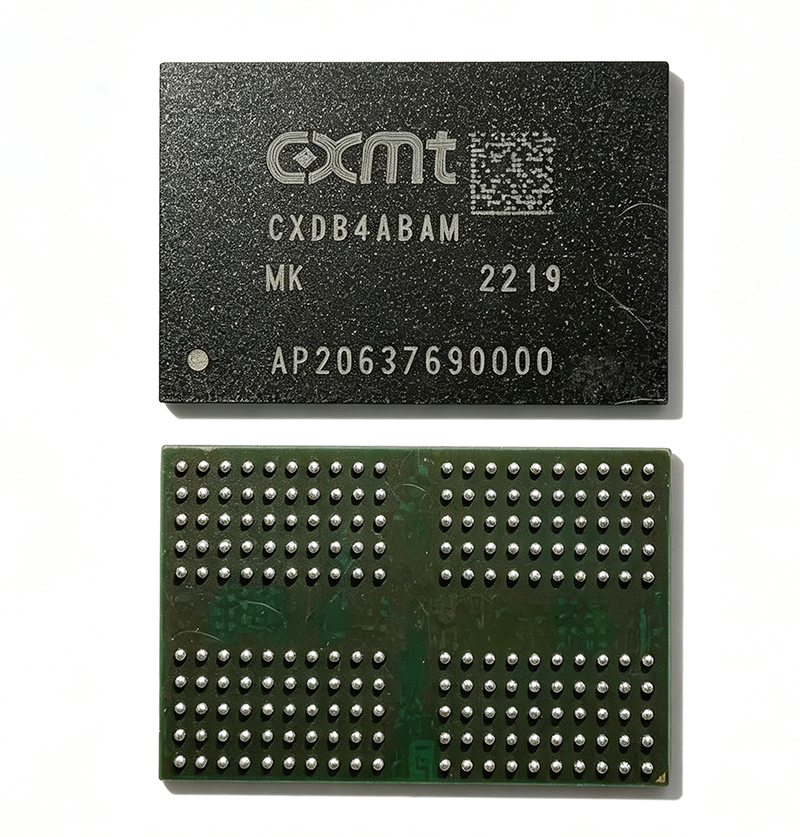
CXDB4ABAM-MK - 8Gb LPDDR4X SDRAM 3733MHz | CXMT
The CXDB4ABAM-MK is a high-performance LPDDR4X SDRAM memory chip manufactured by ChangXin Memory Technologies (CXMT). It operates at a data rate of 3733 MHz, delivering high-speed data transfer for mobile and computing applications. The device is housed in a 200-ball FBGA package (BGA-200, 15x10x0.8 mm), which supports high-density PCB designs with efficient thermal performance. As an LPDDR4X device, it offers low power consumption, making it ideal for battery-powered devices. LPDDR4X (Low Power Double Data Rate 4X) is a type of synchronous dynamic random-access memory (SDRAM) designed for mobile and embedded systems. It is an evolution of LPDDR4, offering higher data rates and lower power consumption through reduced I/O voltage (0.6V). LPDDR4X is part of the broader DRAM memory hierarchy, which includes DDR4, DDR5, and LPDDR5, and is specifically optimized for power-sensitive applications such as smartphones, tablets, and IoT devices. Key features of the CXDB4ABAM-MK include a 3733 MHz data rate, 8Gb density, and support for dual-channel operation. The device operates from a 1.8V VDD1 and 1.1V VDD2 power supply, with a VDDQ of 0.6V for the I/O, reducing power consumption by up to 20% compared to LPDDR4. It supports various operating modes including active, standby, and deep power-down, enabling efficient power management. The package is RoHS compliant, meeting environmental standards. The CXDB4ABAM-MK utilizes advanced process technology to achieve high speed and low power. It features on-die termination (ODT) for improved signal integrity and supports a 16n prefetch architecture, which enhances data throughput. The device includes a temperature-compensated self-refresh (TCSR) mechanism to maintain data integrity across a wide temperature range. The 200-ball FBGA package provides excellent thermal dissipation and is suitable for space-constrained designs. Typical applications include smartphones, tablets, set-top boxes, and IoT devices. In smartphones, the high data rate enables smooth multitasking and immersive VR experiences. In set-top boxes, it supports high-definition video streaming and fast app loading. The low power consumption extends battery life in portable devices. When designing with this device, ensure proper decoupling capacitors are placed near the power pins to minimize noise. The device requires a stable power supply and careful PCB layout to maintain signal integrity at 3733 MHz. Refer to the datasheet for detailed layout guidelines.
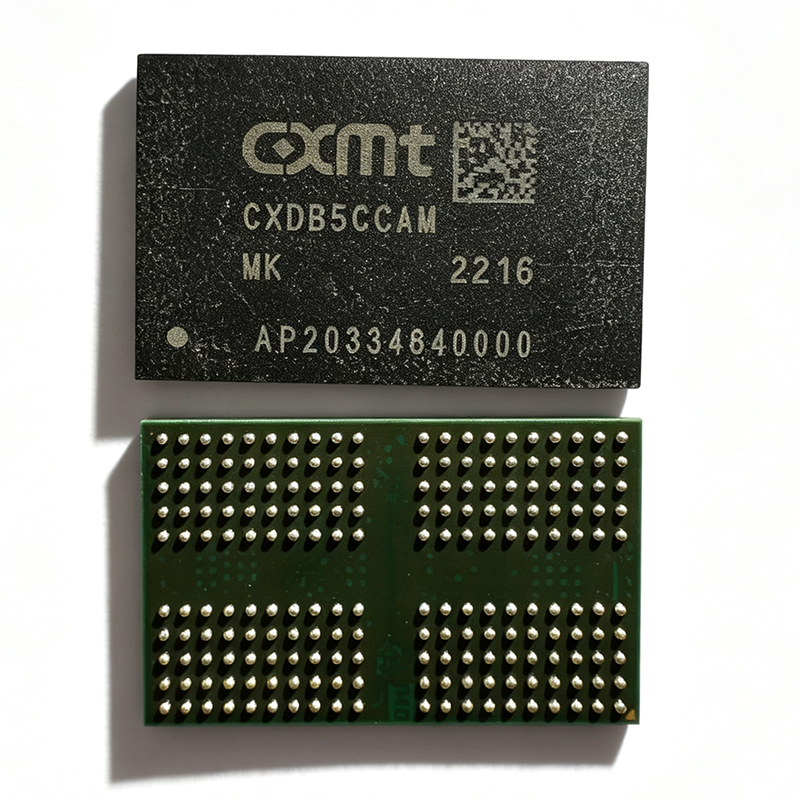
CXDB5CCAM-MK - LPDDR4X SDRAM 8Gb | CXMT | Mobile & AI
The CXDB5CCAM-MK is a high-performance LPDDR4X SDRAM manufactured by ChangXin Memory Technologies (CXMT), designed for mobile, embedded, and AI applications requiring high bandwidth and low power consumption. It features a 200-ball BGA package (BGA200) and operates over a temperature range of -25°C to +85°C, making it suitable for a wide variety of consumer and industrial devices. LPDDR4X (Low Power Double Data Rate 4X) is a type of synchronous dynamic random-access memory (SDRAM) optimized for low power consumption and high data rates, commonly used in smartphones, tablets, and embedded systems. It is part of the LPDDR memory family, which evolved from DDR to provide reduced voltage and power for mobile applications. LPDDR4X operates at a lower I/O voltage (0.6V) compared to LPDDR4 (1.1V), enabling significant power savings while maintaining high bandwidth. Key features of the CXDB5CCAM-MK include support for asynchronous reset, data mask function, and ZQ calibration, which are essential for reliable memory operation. The device is RoHS compliant, ensuring environmental safety. The BGA200 package offers a compact footprint suitable for space-constrained designs, and the -25°C to +85°C operating temperature range supports both commercial and industrial applications. Technically, the CXDB5CCAM-MK is a 8Gb (gigabit) LPDDR4X device, organized as 512M x 16, providing a 16-bit data bus. It supports data rates up to 4266 Mbps, delivering high bandwidth for demanding applications. The memory uses a 1.1V core voltage and 0.6V I/O voltage, reducing power consumption by up to 40% compared to LPDDR4. The device includes on-die ECC and supports deep power-down mode for extended battery life. Typical applications include smartphones, tablets, AI edge devices, and automotive infotainment systems. The CXDB5CCAM-MK is also used in Rockchip RK3588S-based systems, where it provides the necessary memory bandwidth for high-resolution displays and AI processing. Its low power consumption makes it ideal for battery-powered devices. When designing with this memory, ensure proper PCB layout for high-speed signals, including impedance matching and minimal trace lengths. Use the ZQ calibration feature to optimize signal integrity. The device supports a wide range of operating conditions, but careful attention to power supply decoupling is recommended to maintain stable operation.
E3AD8G16A4-HR - 8Gb DDR4 SDRAM 512Mx16 | ELIXIR/NANYA
The E3AD8G16A4-HR is a high-performance DDR4 SDRAM device from ELIXIR/NANYA, organized as 512M x 16 bits, providing 8 Gigabits of memory density. It operates from a 1.2V power supply and is housed in a 96-ball TFBGA package, making it suitable for space-constrained applications requiring high bandwidth and low power consumption. DDR4 SDRAM (Double Data Rate 4 Synchronous Dynamic Random-Access Memory) is a type of volatile memory that transfers data on both edges of the clock signal, effectively doubling the data rate compared to DDR3. It is the industry standard for main memory in servers, desktops, laptops, and embedded systems, offering higher speed, lower voltage, and improved reliability over previous generations. DDR4 modules are essential for applications demanding high memory bandwidth, such as artificial intelligence, big data analytics, and high-performance computing. Key features of the E3AD8G16A4-HR include a data rate of 3200 MT/s (megatransfers per second), a CAS latency of 22, and support for on-die ECC (Error Correction Code) to enhance data integrity. The device also features a programmable read/write preamble, a 10-bit data bus inversion, and a 16n prefetch architecture, which contribute to its high-speed operation and signal integrity. The 1.2V supply voltage reduces power consumption by approximately 20% compared to DDR3L, making it ideal for power-sensitive designs. Technically, the E3AD8G16A4-HR utilizes a 16n prefetch architecture with a 4-bank group design, enabling efficient data access and improved bandwidth utilization. It supports a burst length of 8 and a burst chop of 4, allowing flexible data transfer modes. The device includes a temperature-compensated self-refresh (TCSR) feature that adjusts refresh rates based on operating temperature, optimizing power consumption and reliability. The TFBGA-96 package offers excellent thermal performance and a compact footprint, facilitating high-density PCB layouts. Typical applications for the E3AD8G16A4-HR include high-performance computing systems, networking equipment, industrial automation, and automotive infotainment systems. Its high density and speed make it suitable for use in servers, data centers, and advanced driver-assistance systems (ADAS) where rapid data processing is critical. When designing with this device, ensure proper signal integrity by maintaining controlled impedance traces and minimizing crosstalk. The 1.2V supply should be well-regulated and decoupled with high-frequency capacitors near the power pins. Additionally, follow the JEDEC DDR4 layout guidelines to achieve optimal performance and reliability.
H5AN8G4NCJR-xxC - 8Gb DDR4 SDRAM | SK Hynix
The SK Hynix H5AN8G4NCJR-xxC is an 8Gb CMOS Double Data Rate IV (DDR4) Synchronous DRAM, ideally suited for main memory applications requiring large memory density and high bandwidth. It features fully synchronous operation referenced to both rising and falling edges of the clock, with internally pipelined and 8-bit prefetched data paths to achieve very high bandwidth. The device is available in a FBGA package and is lead-free and halogen-free, compliant with RoHS standards. DDR4 SDRAM is a type of synchronous dynamic random-access memory that doubles the data rate of its predecessor DDR3, operating at higher speeds and lower voltages (typically 1.2V). It is the industry standard for main memory in servers, desktops, laptops, and networking equipment, providing the high bandwidth and density required for modern computing workloads. DDR4 memory is part of the broader DRAM family, which includes DDR3, DDR4, and DDR5, and is essential for system performance in applications ranging from cloud computing to artificial intelligence. Key features of the H5AN8G4NCJR-xxC include a density of 8Gb, a data rate that supports high-speed operation (specific speed grade indicated by the xxC suffix), and a FBGA package that enables compact, high-density board designs. The device operates with a 1.2V power supply, reducing power consumption compared to earlier generations. It also supports on-die termination (ODT) and programmable read/write latencies, allowing system designers to optimize signal integrity and timing. Technically, the H5AN8G4NCJR-xxC uses a CMOS process and features an 8n-prefetch architecture, which allows it to transfer 8 data bits per clock cycle per pin, achieving high bandwidth. The device includes auto-refresh and self-refresh modes for low-power standby, and it supports a burst length of 8 (BL8) for efficient data transfer. The FBGA package provides excellent thermal and electrical performance, with a ball pitch that supports high-speed signaling. Typical applications include servers, data centers, networking equipment, and high-performance computing systems where large memory capacity and high bandwidth are critical. The device is also used in consumer electronics such as high-end desktops and gaming consoles, where DDR4 memory is the standard. Its low power consumption and high reliability make it suitable for enterprise storage and cloud infrastructure. When designing with this device, ensure proper signal integrity by following the manufacturer's layout guidelines, including controlled impedance traces and adequate decoupling. The device requires a stable 1.2V power supply and a reference voltage (VREF) for optimal operation. Consider using the on-die termination feature to match impedance and reduce reflections on the data bus.
H5AN8G6NAFR - 8Gb DDR4 SDRAM 512Mx16 | SK Hynix
The H5AN8G6NAFR is an 8Gb CMOS Double Data Rate IV (DDR4) Synchronous DRAM from SK Hynix, organized as 512M x 16. It operates from a 1.2V supply and is available in a 96-ball FBGA package. This device is designed for main memory applications requiring high density and bandwidth, offering fully synchronous operations referenced to both rising and falling edges of the clock. All addresses and control inputs are latched on the rising edge of CK, and data is transferred on both edges, enabling data rates up to 2400 MT/s. DDR4 SDRAM is the fourth generation of double data rate synchronous dynamic random-access memory, succeeding DDR3. It provides higher module density and lower voltage (1.2V vs 1.5V) while delivering increased bandwidth. DDR4 is a key component in modern computing systems, from servers and desktops to embedded and networking equipment, where it serves as the main system memory. The H5AN8G6NAFR is part of the DDR4 SDRAM family, which includes x4, x8, and x16 configurations, and is essential for high-performance computing. Key features include a 1.2V power supply, 8Gb density, 512M x 16 organization, and a 96-ball FBGA package. It supports data rates up to 2400 MT/s (PC4-19200) and includes features such as auto self-refresh, auto precharge, asynchronous reset, data mask, dynamic on-chip termination (ODT), ZQ calibration, CRC, and write leveling. The device is lead-free and halogen-free, RoHS compliant, and operates over a temperature range of 0°C to +85°C. Technically, the H5AN8G6NAFR uses a high-performance CMOS process and features a pseudo-open-drain interface for compatibility with DDR4 controllers. It incorporates a DLL (Delay-Locked Loop) to align data output with the clock, and supports on-die termination for improved signal integrity. The device also includes a temperature sensor for auto-refresh rate adjustment, enhancing reliability in varying thermal conditions. Typical applications include servers, data centers, networking equipment, and high-end consumer electronics such as gaming PCs and workstations. Its high density and bandwidth make it ideal for memory-intensive tasks like virtualization, big data analytics, and real-time signal processing. The 1.2V operation reduces power consumption, making it suitable for energy-efficient designs. When designing with this device, ensure proper decoupling of the VDD and VDDQ supplies with 0.1uF and 1uF capacitors placed close to the pins. Follow the DDR4 layout guidelines for impedance matching and signal integrity, and use the ZQ calibration resistor (240 ohm) as specified in the datasheet.
H5AN8G6NAFR-UHC - 8Gb DDR4 SDRAM 512Mx16 | SK hynix
The H5AN8G6NAFR-UHC is an 8Gb CMOS Double Data Rate IV (DDR4) Synchronous DRAM from SK hynix, organized as 512M x 16 bits. It operates from a 1.2V supply and is available in a 96-ball FBGA package. This device is designed for main memory applications requiring high density and bandwidth, supporting data rates up to 2400 MT/s (PC4-19200). DDR4 SDRAM is a type of synchronous dynamic random-access memory that transfers data on both rising and falling edges of the clock, doubling the data rate compared to single-data-rate SDRAM. It is the fourth generation of DDR memory, offering higher speed, lower voltage (1.2V vs 1.5V for DDR3), and improved power efficiency. DDR4 is widely used in servers, desktops, laptops, and embedded systems where high memory bandwidth and capacity are critical. Key features include fully synchronous operation referenced to both clock edges, programmable CAS latency, burst lengths of 8 and 4 (with burst chop), on-die termination (ODT) for signal integrity, and ZQ calibration for improved timing. The device supports auto self-refresh, auto precharge, data mask, write leveling, and CRC error detection, enhancing reliability in high-speed systems. It is lead-free and halogen-free, compliant with RoHS. Architecturally, the H5AN8G6NAFR-UHC uses a 20nm-class process technology, enabling high density with low power consumption. The 512M x 16 organization is ideal for memory modules and embedded applications requiring a 16-bit data bus. The FBGA-96 package provides excellent thermal and electrical performance, with a maximum operating temperature of 85°C. Typical applications include DDR4 memory modules (UDIMM, SODIMM, RDIMM), servers, networking equipment, and high-performance computing systems. Its high bandwidth and low latency make it suitable for data-intensive workloads. When designing with this device, ensure proper decoupling capacitors near the power pins and follow the layout guidelines in the datasheet to maintain signal integrity at 2400 MT/s. The device requires a 1.2V VDD and 2.5V VPP supply for wordline boost.
H5AN8G6NCJR-VKC - 8Gb DDR4 SDRAM 2666Mbps | SK Hynix
The SK Hynix H5AN8G6NCJR-VKC is a high-performance 8Gb CMOS Double Data Rate IV (DDR4) Synchronous DRAM, organized as 512M x 16, operating at a data rate of 2666 Mbps (PC4-2133). It is designed for main memory applications requiring large memory density and high bandwidth, such as servers, networking equipment, and high-end computing systems. The device operates from a 1.2V supply (VDD) with a range of 1.14V to 1.26V, and features a 96-ball FBGA package (FBGA-96) for compact, high-density board layouts. DDR4 SDRAM is the fourth generation of double data rate synchronous dynamic random-access memory, succeeding DDR3. It offers higher speed, lower operating voltage (1.2V vs 1.5V for DDR3), and improved signal integrity through on-die termination (ODT) and data bus inversion (DBI). DDR4 is the industry standard for main memory in servers, desktops, laptops, and embedded systems, providing the bandwidth and capacity required for modern computing workloads. Key features include a burst length of 8 (BL8) with burst chop (BC4), programmable CAS latency, write leveling, dynamic on-chip termination (Dynamic ODT), ZQ calibration, and CRC (cyclic redundancy check) for data integrity. The device supports auto self-refresh, auto precharge, asynchronous reset, and data mask functions, ensuring reliable operation in demanding environments. It operates over a temperature range of 0°C to +95°C (TC), making it suitable for commercial and industrial applications. The H5AN8G6NCJR-VKC utilizes advanced CMOS process technology, achieving low power consumption with a typical operating current of 28mA (IDD2N) and 45mA (IDD4R). The 96-ball FBGA package provides excellent thermal and electrical performance, with a ball pitch of 0.8mm, enabling high-speed signal routing. The device is lead-free and halogen-free, complying with RoHS and REACH regulations. Typical applications include server main memory, networking switches and routers, high-performance computing (HPC), and embedded systems requiring high-density, high-bandwidth memory. The 2666 Mbps data rate and 8Gb density make it ideal for memory modules (DIMMs) and system-on-module (SoM) designs. When designing with this device, ensure proper decoupling of the VDD and VDDQ supplies with 0.1uF and 1uF capacitors placed close to the balls. Follow the DDR4 JEDEC standard (JESD79-4) for signal integrity and layout guidelines, including controlled impedance traces and matched lengths for the data, address, and command buses.
H5AN8G6NCJR-xxC - 8Gb DDR4 SDRAM 2666Mbps | SK Hynix
The H5AN8G6NCJR-xxC is an 8Gb CMOS Double Data Rate IV (DDR4) Synchronous DRAM from SK Hynix, designed for main memory applications requiring high storage density and high bandwidth. It operates with fully synchronous timing referenced to both rising and falling edges of the clock, with all address and control inputs latched on the rising edge of CK, while data, data strobe, and write data are synchronized to both edges. This device is part of the H5AN8G4NCJR-xxC, H5AN8G8NCJR-xxC, and H5AN8G6NCJR-xxC family, all sharing the same 8Gb density and DDR4 architecture. DDR4 SDRAM (Double Data Rate Fourth Generation Synchronous Dynamic Random Access Memory) is a type of volatile memory that transfers data on both edges of the clock signal, doubling the data rate compared to single-data-rate SDRAM. It is the industry standard for main memory in servers, desktops, laptops, and high-performance computing systems, offering higher bandwidth and lower power consumption than its predecessor DDR3. DDR4 operates at lower voltages (1.2V typical) and supports higher densities, making it essential for modern computing platforms. Key features of the H5AN8G6NCJR-xxC include a data rate of 2666 Mbps (as indicated by the 'VKC' speed grade), a 1.2V power supply, and a x16 organization (8Gb density organized as 512M x 16). The device supports standard DDR4 features such as on-die termination (ODT), programmable read/write latencies, and burst lengths of 8 and 4 with burst chop. It is available in a 96-ball FBGA package, which is the standard for DDR4 memory components. The H5AN8G6NCJR-xxC utilizes advanced CMOS process technology, enabling high-speed operation with low power consumption. The device includes a temperature-compensated self-refresh (TCSR) feature to reduce power in idle states, and supports a wide operating temperature range from 0°C to 95°C (TC) for standard operation. The memory is organized into 8 banks, providing efficient access patterns for high-bandwidth applications. Typical applications include server main memory, desktop and laptop RAM modules, networking equipment, and high-performance embedded systems. The high density and bandwidth make it suitable for data-intensive workloads such as cloud computing, virtualization, and real-time analytics. The device is also used in memory modules (DIMMs/SO-DIMMs) for consumer and enterprise computing. When designing with this component, ensure proper decoupling capacitors near the power pins and follow the PCB layout guidelines in the datasheet to minimize signal integrity issues. The device requires a stable 1.2V supply and a separate VPP supply of 2.5V for wordline boost. Refer to the SK Hynix datasheet for detailed timing parameters and AC/DC operating conditions.
H5AN8G6NDJR - 8Gb DDR4-3200 SDRAM | SK hynix
The SK hynix H5AN8G6NDJR is a 8Gb CMOS Double Data Rate 4 (DDR4) Synchronous DRAM organized as 512M x 16, operating at 3200 Mbps (DDR4-3200) with a 1.2V supply. It is housed in a 96-ball FBGA package (13mm x 7.5mm) and is designed for high-density, high-bandwidth main memory applications in computing, networking, and industrial systems. DDR4 SDRAM is the fourth generation of double data rate synchronous dynamic random-access memory, succeeding DDR3. It achieves higher speed and lower power consumption through a prefetch of 8n, on-die termination (ODT), and a lower operating voltage of 1.2V compared to DDR3's 1.5V. DDR4 is a key component in the memory hierarchy, sitting between the CPU and storage, and is essential for system performance in servers, PCs, and embedded computing. Key features include auto self-refresh, auto precharge, asynchronous reset, data mask, dynamic on-chip termination (Dynamic ODT), ZQ calibration, CRC (cyclic redundancy check), and write leveling. These features enhance signal integrity, reliability, and power efficiency, making the device suitable for high-speed data transmission and robust operation in demanding environments. The device supports a burst length of 8 and a burst chop of 4, with a CAS latency of 22 cycles at 3200 Mbps. It operates over a temperature range of 0°C to 85°C (TC) and is RoHS compliant. The 96-ball FBGA package with a 0.8mm ball pitch enables compact PCB layouts, while the 1.2V supply reduces power consumption compared to previous generations. Typical applications include main memory for servers, high-performance computing, networking equipment, and industrial control systems. The high density and bandwidth make it ideal for applications requiring large memory capacity and fast data throughput, such as data centers and AI accelerators. When designing with this device, ensure proper decoupling capacitors near the power pins and follow the layout guidelines in the datasheet to maintain signal integrity at 3200 Mbps. The ZQ calibration pin requires a 240-ohm resistor to ground for correct impedance calibration.
H5AN8G6NDJR-UHC - 8Gb DDR4 SDRAM 3200Mbps | SK Hynix
The SK Hynix H5AN8G6NDJR-UHC is an 8Gb CMOS Double Data Rate IV (DDR4) Synchronous DRAM, organized as 512M x 16, ideally suited for main memory applications requiring large memory density and high bandwidth. It operates at a speed grade of 3200Mbps (PC4-25600) and is supplied in a 96-ball FBGA package (13x7.5mm). DDR4 SDRAM is the fourth generation of double data rate synchronous dynamic random-access memory, succeeding DDR3 with higher density, lower operating voltage (1.2V vs 1.5V), and improved signal integrity through on-die termination (ODT) and data bus inversion. As a volatile memory type, it stores data in capacitors that require periodic refreshing, and it transfers data on both edges of the clock signal, doubling throughput. DDR4 is the industry standard for main memory in servers, desktops, laptops, and high-performance embedded systems. Key features include auto self-refresh, auto precharge, asynchronous reset, data mask, dynamic on-chip termination (Dynamic ODT), ZQ calibration, CRC (cyclic redundancy check), and write leveling. These features enhance signal integrity, power efficiency, and reliability in high-speed systems. The device supports a maximum operating temperature of 85°C and is lead-free and halogen-free, compliant with RoHS. Architecturally, the H5AN8G6NDJR-UHC uses a 1x-nm class process technology, achieving high density with low power consumption. The 16-bit I/O configuration (x16) is ideal for applications requiring moderate bus width with high capacity per chip, reducing the number of devices needed on a memory module. The 96-ball FBGA package with a rectangular shape (JESD-30 code R-PBGA-B96) provides excellent thermal and electrical performance. Typical applications include DDR4 memory modules (UDIMM, SODIMM, RDIMM), embedded computing systems, networking equipment, industrial PCs, and high-performance computing platforms. The 3200Mbps speed grade supports demanding workloads such as data analytics, virtualization, and real-time signal processing. When designing with this device, ensure proper VDD (1.2V) and VDDQ decoupling with 0.1uF and 1uF capacitors placed close to the balls. Follow the JEDEC DDR4 layout guidelines for impedance matching and signal integrity, and use the ZQ pin with a 240-ohm resistor to ground for calibration.
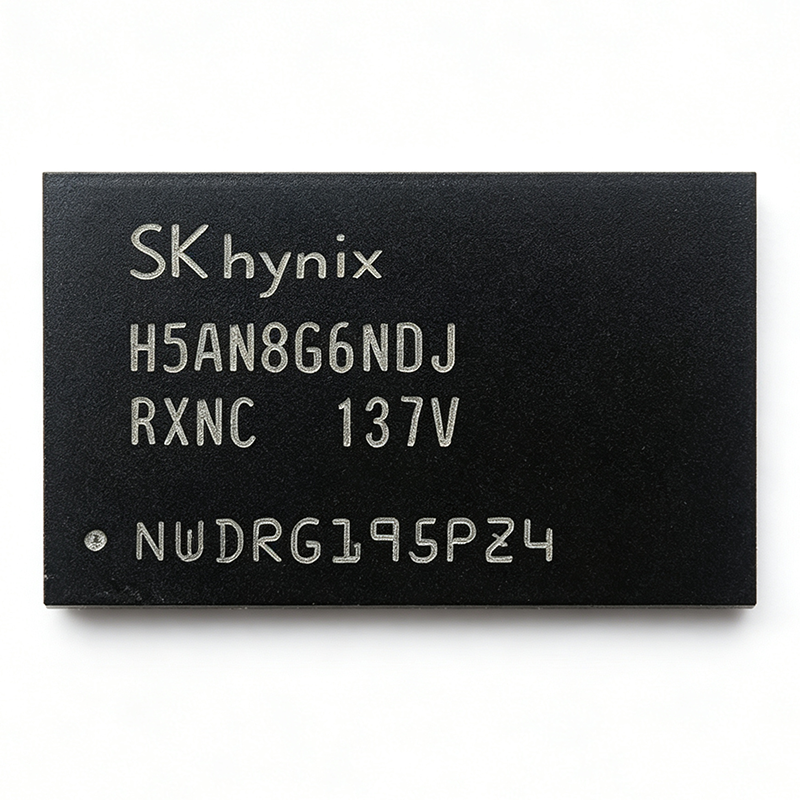
H5AN8G6NDJR-XNC - 8Gb DDR4-3200 x16 DRAM | SK Hynix
The SK Hynix H5AN8G6NDJR-XNC is an 8Gb CMOS Double Data Rate IV (DDR4) Synchronous DRAM organized as 512M x16, operating at a data rate of 3200 Mbps (DDR4-3200). It is housed in a 96-ball FBGA package (13x7.5 mm) and is designed for main memory applications requiring high density and bandwidth. The device supports a supply voltage of 1.2V (VDD) with a maximum of 1.26V, and features auto self-refresh, auto precharge, data mask, dynamic on-chip termination (DTC), ZQ calibration, CRC, write leveling, and asynchronous reset functions. DDR4 SDRAM is a type of volatile random-access memory that transfers data on both edges of the clock, doubling the data rate compared to DDR3. It operates at lower voltages (1.2V) and higher speeds, making it essential for modern computing systems, servers, and embedded applications. As a memory IC, it falls under the hierarchy of DRAM -> SDRAM -> DDR4 -> memory IC -> semiconductor, and is a critical component for data storage and processing. Key features include a 512M x16 organization, 3200 Mbps data rate, 1.2V supply, and a 96-ball FBGA package. The device supports various functions such as auto self-refresh and ZQ calibration, which enhance reliability and signal integrity. The x16 interface allows for high bandwidth per chip, making it suitable for applications requiring wide data paths. Technically, the H5AN8G6NDJR-XNC uses a CMOS process and is fully synchronous, with a differential clock (CK_t/CK_c) and on-die termination for improved signal quality. It supports burst lengths of 8 and 4, and includes a programmable read latency (RL) and write latency (WL) for system optimization. The device also features a temperature-compensated self-refresh (TCSR) to reduce power consumption. Typical applications include laptop and desktop memory upgrades, industrial controllers, networking equipment, and embedded systems. Its high density and speed make it ideal for applications requiring large memory capacity and fast data access, such as AI edge devices and high-performance computing. When designing with this component, ensure proper decoupling capacitors near the VDD and VDDQ pins, and follow the PCB layout guidelines for DDR4 routing to maintain signal integrity. The device is RoHS compliant and lead-free, making it suitable for environmentally conscious designs.
H5AN8G8NDJR - 8Gb DDR4 SDRAM 3200MT/s | SK hynix
The SK hynix H5AN8G8NDJR is an 8Gb CMOS Double Data Rate IV (DDR4) Synchronous DRAM, organized as 1G x 8, operating at a data rate of 3200MT/s (DDR4-3200). It is housed in a 78-ball FBGA package (7.5x11mm) and is designed for main memory applications requiring high density and bandwidth. The device operates from a 1.2V supply (VDD) with a range of 1.14V to 1.26V, and supports a case temperature range of 0°C to +95°C. Key features include auto self-refresh, auto precharge, asynchronous reset, data mask, dynamic on-chip termination (DTC), ZQ calibration, CRC, and write leveling. These features enable robust signal integrity and power efficiency in high-speed systems. DDR4 SDRAM (Double Data Rate Fourth Generation Synchronous Dynamic Random-Access Memory) is a type of volatile memory that transfers data on both rising and falling edges of the clock, doubling the data rate of DDR3. It operates at lower voltages (1.2V vs 1.5V) and offers higher density and speed, making it the standard for modern computing. DDR4 is a key component in the memory hierarchy, sitting between the CPU and storage, and is essential for system performance in PCs, servers, and embedded systems. The H5AN8G8NDJR features a 1G x 8 organization, providing 8Gb of memory in a single chip. It supports data rates up to 3200MT/s, with a CAS latency of 22 (typical) and a tRCD/tRP of 22ns. The device includes on-die ECC (optional) and supports a burst length of 8 and 4 with burst chop. It also features a programmable read latency (RL) and write latency (WL) for system optimization. The FBGA-78 package offers a compact footprint with a 7.5x11mm body, suitable for space-constrained designs. Technically, the H5AN8G8NDJR uses a 20nm-class process technology, enabling high density and low power consumption. It supports a 1.2V supply with a tolerance of ±5%, and includes a VPP supply of 2.5V for wordline boost. The device has a self-refresh current of approximately 30mA (typical) and an active standby current of 60mA. It also features a temperature-compensated self-refresh (TCSR) to reduce power at lower temperatures. The device is RoHS compliant and lead-free. Typical applications include desktop and laptop PCs, servers, networking equipment, and embedded systems. The high bandwidth and low power make it ideal for memory-intensive tasks such as gaming, data analytics, and virtualization. In embedded systems, it provides reliable performance for industrial control and edge computing. When designing with this device, ensure proper decoupling capacitors (0.1uF and 10uF) are placed near the VDD and VDDQ pins. Follow the layout guidelines in the datasheet for signal integrity, especially for the high-speed data and address lines. The ZQ pin requires a 240-ohm resistor to ground for calibration.