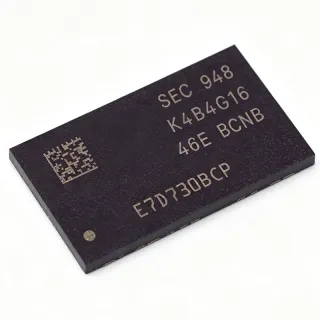
EPC2TC32HAF48 - 32-Mbit FPGA Config PROM, 3.3V, TQFP-48
MPN: EPC2TC32HAF48 ✗ End of Life| Qty | Unit Price | Extended |
|---|---|---|
| 1 | $22.5 | $22.50 |
| 10 | $20.25 | $202.50 |
| 100 | $18 | $1,800.00 |
| 500 | $16.5 | $8,250.00 |
| 1,000 | $15.2 | $15,200.00 |
EPC2TC32HAF48 Overview
A configuration PROM (PROM = Programmable Read-Only Memory, here referring to one-time-programmable or in-system-programmable non-volatile memory) is a dedicated serial flash device that holds the FPGA's configuration bitstream and serially loads it into the FPGA's SRAM configuration cells at power-up. Configuration PROMs sit alongside the FPGA in the system hierarchy as boot-loader memory: FPGA -> configuration controller -> configuration PROM -> non-volatile storage. Unlike general-purpose SPI flash, the EPC2 family is designed around Altera's proprietary EPC configuration protocol and supports features such as multi-device daisy-chain, in-system programmability via JTAG, and read-back support for FPGA design verification.
Key features include 32-Mbit (4-Mbyte) of configuration memory, 3.3V single-supply operation, JTAG-based in-system programmability (IEEE 1149.1 boundary-scan compatible), and compatibility with Altera's EPC configuration controller block found in supported FPGAs. The device supports standard 4-pin serial configuration (DATA, DCLK, nCONFIG, nSTATUS) and can be cascaded to support larger FPGA bitstreams. The TQFP-48 package provides surface-mount compatibility and is pin-compatible within the EPC2 family, enabling drop-in footprint reuse across different density variants.
Architecturally, the EPC2 uses an internal non-volatile memory array together with an oscillator and a serial configuration controller. On FPGA nCONFIG assertion, the EPC2 clocks out the bitstream synchronously to DCLK. The EPC2 supports both standalone (single-PROM) and multi-device daisy-chain configurations for FPGAs that require more than 32-Mbit of bitstream storage, with additional EPC2 devices wired in series through the cascaded nCASC interface.
Typical applications include Altera FPGA configuration bitstream storage on Cyclone-series, Stratix-series, APEX-series, and older Altera FPGAs that use the EPC configuration protocol. Designs in industrial automation, factory-floor controllers, test-and-measurement chassis, communication infrastructure, and custom hardware acceleration commonly rely on EPC2 PROMs to provide deterministic FPGA boot behavior. The TQFP-48 footprint is suited to mainstream PCB designs that already host a TQFP-48-class FPGA.
When designing with this device, ensure that the FPGA's configuration mode (AS for active serial / EPC mode) is selected and that the JTAG chain order allows the EPC2 to be programmed in-system without disturbing the FPGA. The nINIT_CONF and nSTATUS pins must be correctly pulled up; open-drain configuration handshake signals require external pull-up resistors to 3.3V. Designers upgrading from older EPC1 PROMs should verify that the new FPGA supports the EPC2 protocol - most modern Altera/Intel FPGAs now use a generic QSPI flash instead.
This page synthesizes distributor availability, drop-in footprint-compatible alternatives within the EPC2 family, and practical design notes not found in a single distributor listing.
Drop-in alternatives for EPC2TC32HAF48 — same package, pin-to-pin compatible. Different-package parts requiring PCB rework are excluded.
Variants in this series
Same-series models that are drop-in compatible with EPC2TC32HAF48 (same form factor and footprint) — differing in Package, Configuration Interface, Memory Type, Programming Interface, Supported FPGA Families.
Quick Comparison Tool — Select alternative parts for side-by-side comparison:
EPC2TC32CAF48
✅ Drop-In✓ In Stock
$9.85 / Unit
View Datasheet →EPC2TC32U-CAF48
✅ Drop-In✓ In Stock
$12.8 / Unit
View Datasheet →EPC2T32UCAF48
✅ Drop-In✓ In Stock
$10.05 / Unit
View Datasheet →EPC2T32U-CAF48
✅ Drop-In✓ In Stock
$17.6 / Unit
View Datasheet →EPC2TC32
✅ Drop-In✓ In Stock
$14.5 / Unit
View Datasheet →EPC2T32N
✅ Drop-In ⚠️ 参数待验证✓ In Stock
$6.95 / Unit
View Datasheet →EPC2TC32HAF48 Maximum Ratings & Electrical Characteristics
| Memory Size | 32 Mbit (4 Mbyte) |
| Function | FPGA Configuration PROM for SRAM-based LUT devices |
| Configuration Interface | Altera EPC serial (DATA, DCLK, nCONFIG, nSTATUS, nCASC) |
| Supply Voltage (VCC) | 3.3 V (typical) |
| In-System Programmability | Yes, via JTAG (IEEE 1149.1) |
| Cascade Support | Yes, multi-device daisy-chain via nCASC |
| FPGA Compatibility | Altera/Intel Cyclone, Stratix, APEX, ACEX families |
| Package | TQFP-48 (7x7x1.0 mm) |
| Mounting Type | Surface Mount |
EPC2TC32HAF48 Pin Configuration
| Pin 1 | VCC — 3.3V supply |
| Pin 2 | DATA — Serial configuration data output to FPGA |
| Pin 3 | DCLK — Configuration clock to FPGA |
| Pin 4 | nCONFIG — Configuration request (input, active low) |
| Pin 5 | nSTATUS — Configuration status (open-drain, active low) |
| Pin 6 | nCASC — Cascade select output to next EPC2 device |
| Pin 7 | nINIT_CONF — Initiate configuration (input, active low) |
| Pin 8 | nCS — Chip select (active low) |
| Pin 9 | OE — Output enable (active low) |
| Pin 10 | GND — Ground |
| Pin 11 | TDI — JTAG test data in |
| Pin 12 | TDO — JTAG test data out |
| Pin 13 | TMS — JTAG test mode select |
| Pin 14 | TCK — JTAG test clock |
| Pin 15 | VCC — 3.3V supply (secondary) |
| Pin 16 | GND — Ground |
| Pin 17 | NC — Not connected (per datasheet) |
| Pin 18 | NC — Not connected (per datasheet) |
| Pin 19 | NC — Not connected (per datasheet) |
| Pin 20 | NC — Not connected (per datasheet) |
| Pin 21 | NC — Not connected (per datasheet) |
| Pin 22 | NC — Not connected (per datasheet) |
| Pin 23 | NC — Not connected (per datasheet) |
| Pin 24 | NC — Not connected (per datasheet) |
| Pin 25 | GND — Ground |
| Pin 26 | VCC — 3.3V supply |
| Pin 27 | NC — Not connected (per datasheet) |
| Pin 28 | NC — Not connected (per datasheet) |
| Pin 29 | NC — Not connected (per datasheet) |
| Pin 30 | NC — Not connected (per datasheet) |
| Pin 31 | NC — Not connected (per datasheet) |
| Pin 32 | NC — Not connected (per datasheet) |
| Pin 33 | NC — Not connected (per datasheet) |
| Pin 34 | NC — Not connected (per datasheet) |
| Pin 35 | GND — Ground |
| Pin 36 | VCC — 3.3V supply |
| Pin 37 | NC — Not connected (per datasheet) |
| Pin 38 | NC — Not connected (per datasheet) |
| Pin 39 | NC — Not connected (per datasheet) |
| Pin 40 | NC — Not connected (per datasheet) |
| Pin 41 | NC — Not connected (per datasheet) |
| Pin 42 | NC — Not connected (per datasheet) |
| Pin 43 | NC — Not connected (per datasheet) |
| Pin 44 | NC — Not connected (per datasheet) |
| Pin 45 | GND — Ground |
| Pin 46 | VCC — 3.3V supply |
| Pin 47 | NC — Not connected (per datasheet) |
| Pin 48 | GND — Ground |
Typical Applications
EPC2TC32HAF48 is suitable for 6 applications: Cyclone-series FPGA Configuration, Stratix-series FPGA Configuration, APEX-series FPGA Configuration, Industrial Automation Controllers, Communications Infrastructure Line Cards, Test and Measurement Chassis.
Cyclone-series FPGA Configuration
The EPC2TC32HAF48 stores and serially configures Altera Cyclone and Cyclone II FPGAs at board power-up. Its 32-Mbit (4-Mbyte) capacity fits the bitstreams of mid-density Cyclone EP1C6/EP1C12 devices, and the 3.3V supply matches the FPGA's auxiliary configuration rail. Configured in EPC mode with DATA/DCLK/nCONFIG/nSTATUS, the EPC2 clocks the bitstream into the FPGA's SRAM configuration cells in tens of milliseconds. Designers benefit from JTAG in-system programmability - the same JTAG chain used to program the FPGA can also rewrite the PROM without reballing the board.
Recommended
Stratix-series FPGA Configuration
For Stratix and Stratix GX FPGAs, the EPC2TC32HAF48 supplies the boot bitstream in single-device configuration mode for designs under 32-Mbit. The EPC protocol's multi-device daisy-chain (nCASC) lets two EPC2 PROMs load larger Stratix bitstreams sequentially. The TQFP-48 footprint sits comfortably alongside TQFP/BGA FPGAs on standard 4-layer PCBs, and the 3.3V VCC rail is shared with the FPGA's configuration bank. JTAG programming through Quartus Programmer enables remote firmware updates in production.
Recommended
APEX-series FPGA Configuration
The EPC2TC32HAF48 configures APEX II and ACEX 1K/2K FPGAs that use Altera's EPC configuration controller. Its 32-Mbit density covers the bitstreams of mid-range APEX II devices, and the nCASC pin allows multi-PROM chains for the larger EP2A70-class parts. In retrofits of legacy Altera designs that originally used EPC1 PROMs, the EPC2TC32HAF48 is the supported upgrade - offering higher DCLK rates and in-system JTAG programming for faster bring-up and field updates.
Recommended
Industrial Automation Controllers
In industrial PLC and motion-control chassis, the EPC2TC32HAF48 provides deterministic FPGA boot from -40C to +85C, ensuring the controller's FPGA is configured within milliseconds of power-up before the safety MCU takes over. The TQFP-48 industrial-grade package tolerates factory-floor thermal cycling, and JTAG-based in-system programming lets field engineers rewrite firmware via the controller's service port. Combined with a Cyclone or APEX FPGA, the EPC2TC32HAF48 enables long-life industrial platforms with predictable boot behavior.
Recommended
Communications Infrastructure Line Cards
Telecom line cards and baseband processing boards use the EPC2TC32HAF48 to configure Altera Stratix GX FPGAs that implement PHY/MAC layer logic. The 32-Mbit density supports full PHY bitstreams including embedded CPUs and on-chip peripherals, and the 3.3V VCC rail aligns with the line card's 3.3V management plane. The PROM's JTAG interface allows remote bitstream updates from the management processor, supporting in-service firmware refresh without pulling the card.
Recommended
Test and Measurement Chassis
Modular T&M instruments (logic analyzers, protocol testers, digitizers) use the EPC2TC32HAF48 to load Altera FPGAs that implement high-speed digitizer or pattern-generator logic. The PROM's deterministic boot time allows the instrument to pass self-test within seconds of power-up. Field-upgradeable via JTAG, the EPC2 enables service centers to load new measurement IP without opening the chassis. The TQFP-48 industrial temperature rating supports bench and lab environments without additional thermal management.
Recommended
Recommended Products Summary
Engineering reference data for EPC2TC32HAF48 — comparison, design guidance, and compliance information.
Selection Guide
Comparison with Alternatives
| Parameter | This Product | EPC2TC32CAF48 | EPC2TC32U-CAF48 | EPC2T32UCAF48 | EPC2T32N |
|---|---|---|---|---|---|
| Brand | Intel (Altera) | Intel (Altera) | Intel (Altera) | Intel (Altera) | Intel (Altera) |
| Package | TQFP-48 (HAF48, 7x7 mm) | TQFP-48 (CAF48, 7x7 mm) - same footprint | TQFP-48 (CAF48, 7x7 mm) - same footprint | TQFP-48 (CAF48, 7x7 mm) - same footprint | TQFP-48 (N-suffix, 7x7 mm) - same footprint |
| Memory Size | 32 Mbit (4 Mbyte) | 32 Mbit (4 Mbyte) | 32 Mbit (4 Mbyte) | 32 Mbit (4 Mbyte) | 32 Mbit (4 Mbyte) |
| Temperature Grade | Industrial (-40C to +85C) | Commercial (0C to +70C) | Commercial (0C to +70C) | Commercial (0C to +70C) | Commercial or industrial (N-suffix) |
| Programming State | May be factory-programmed or blank (HAF48 marking) | Factory-programmed or blank (CAF48 marking) | Blank (U = unprogrammed) | Blank (U = unprogrammed) | N-suffix lead-free/RoHS variant |
| JTAG (IEEE 1149.1) | Yes | Yes | Yes | Yes | Yes |
| Cascade Support (nCASC) | Yes | Yes | Yes | Yes | Yes |
| Lifecycle Status | NRND | NRND | NRND | NRND | NRND |
Key Differentiators
- Industrial temperature grade (-40C to +85C) (vs EPC2TC32CAF48)
- 32-Mbit density in TQFP-48 (vs EPC2LI20 (EPC1 family 2-Mbit))
- JTAG in-system programmability (vs One-time-programmable EPC1 PROMs)
Design Notes
The EPC2TC32HAF48 operates from a single 3.3V VCC rail. Decouple VCC with a 0.1uF ceramic capacitor placed within 5 mm of each VCC pin, plus a bulk 10uF tantalum or ceramic capacitor on the same rail. The configuration handshake pins (nCONFIG, nSTATUS, nINIT_CONF) are open-drain and require external pull-ups to 3.3V - typically 4.7kohm to 10kohm - to ensure clean FPGA-to-PROM signalling during boot.
Do not connect the EPC2TC32HAF48 in a design intended for a Cyclone IV/V/10 or Stratix IV/V/10 FPGA without first checking the FPGA's configuration user guide. Newer Intel FPGA families expect a generic SPI/QSPI flash in active-serial (AS) mode, not an EPC2 PROM. Mixing protocols leads to configuration failure. The EPC2 family is supported on Cyclone, Cyclone II, Stratix, Stratix GX, APEX II, and ACEX 1K/2K devices.
Place the EPC2TC32HAF48 within 50 mm of the FPGA's configuration bank to keep DCLK and DATA traces short and matched. Route DCLK as a 50-ohm microstrip on the top layer with continuous ground beneath; avoid vias on the DCLK trace. Group DATA, DCLK, nCONFIG, nSTATUS together and keep them away from switching power nodes to prevent boot-time glitches. Place the JTAG chain (TCK/TMS/TDO/TDI) in a star topology if multiple devices share the chain.
On long PCB traces (over 75 mm) between the EPC2 and the FPGA, add a 33 ohm series resistor on DCLK to dampen ringing. The DATA line should be DC-coupled and routed away from DCLK to avoid crosstalk. If the design supports JTAG boundary-scan, include a JTAG header on the board so the EPC2 can be reprogrammed without removing the FPGA - this is essential for field firmware updates.
Compliance Information
RoHS / lead-free status not stated explicitly in the verified distributor data; consult the manufacturer datasheet markings section to determine RoHS compliance from the device topmark (HAF48 vs other suffixes).