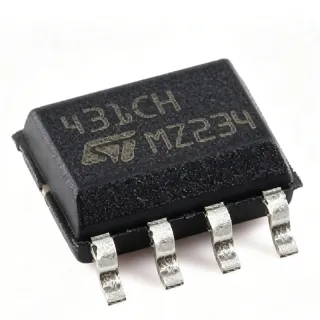
LM5176QPWPTQ1 - 55V 4-Switch Buck-Boost Controller | TI
MPN: LM5176QPWPTQ1 ✓ Active| Qty | Unit Price | Extended |
|---|---|---|
| 1 | $0 | $0.00 |
| 10 | $0 | $0.00 |
| 100 | $0 | $0.00 |
| 500 | $0 | $0.00 |
| 1,000 | $0 | $0.00 |
Drop-in alternatives for LM5176QPWPTQ1 — same package, pin-to-pin compatible. Different-package parts requiring PCB rework are excluded.
Quick Comparison Tool — Select alternative parts for side-by-side comparison:
LM5176PWPR
✅ Drop-In📋 Reference alternative (not in catalog)
LT8390
⚡ Same Package📋 Reference alternative (not in catalog)
LT8705
⚡ Same Package📋 Reference alternative (not in catalog)
LTC3779
⚡ Same Package📋 Reference alternative (not in catalog)
LTC3786
⚡ Same Package📋 Reference alternative (not in catalog)
LM5176QPWPTQ1 Maximum Ratings & Electrical Characteristics
| Input Voltage Range | 4.2 V to 55 V |
| Absolute Maximum Input Voltage | 60 V |
| Topology | Synchronous 4-Switch Buck-Boost |
| Control Method | Current-Mode Control |
| Package | 28-HTSSOP (PWP) |
| Qualification | AEC-Q100 Qualified |
| Function | Buck-Boost Regulator Positive Output Step-Up/Step-Down |
| Number of MOSFETs | 4 (High-side and Low-side for Buck and Boost) |
| Output Voltage Range | [DATA_NEEDED: output voltage range] |
| Switching Frequency | [DATA_NEEDED: switching frequency] |
| Output Current (Max) | [DATA_NEEDED: output current max] |
| Operating Temperature Range | [DATA_NEEDED: operating temperature range] |
| Mounting Type | Surface Mount |
| RoHS Status | [DATA_NEEDED: RoHS status] |
| Number of Phases | [DATA_NEEDED: number of phases] |
| Enable Pin | [DATA_NEEDED: enable pin] |
LM5176QPWPTQ1 Pin Configuration
| Pin 1 | VIN — Input voltage supply |
| Pin 5 | GND — Ground |
| Pin 6 | EN — Enable input |
| Pin 7 | VCC — Internal regulator output |
| Pin 10 | SW1 — Buck switching node |
| Pin 20 | SW2 — Boost switching node |
| Pin 28 | FB — Feedback input |
Safe Operating Area (SOA) & Thermal Characteristics
No official SOA curve available for this component. Always operate within absolute maximum ratings specified in the datasheet. Ensure adequate cooling and derate as needed.
Typical Applications
LM5176QPWPTQ1 is suitable for 6 applications: Automotive 12V/24V Power Distribution, Industrial 24V Bus Regulator, Battery-Powered Systems, USB PD / Power Delivery, Telecom / Networking Equipment, Solar / Renewable Energy Harvesting.
Automotive 12V/24V Power Distribution
The LM5176QPWPTQ1's wide 4.2V-55V input range makes it ideal for automotive power distribution systems. In 12V vehicles, the battery voltage can drop below 6V during cold cranking; the buck-boost controller maintains a regulated output, ensuring uninterrupted power to infotainment and ADAS modules. For 24V trucks (24V battery), the same controller handles step-up and step-down transitions. According to the TI product page, the device is AEC-Q100 qualified, meeting automotive reliability standards. It uses external MOSFETs, allowing scalable output current. Recommended companions: LM61440 for downstream low voltage rails.
Recommended
Industrial 24V Bus Regulator
In industrial automation, 24V is a common bus voltage. The LM5176QPWPTQ1 maintains a regulated output even when the 24V bus fluctuates due to load transients or long cable runs. Its synchronous 4-switch topology provides high efficiency in both buck and boost modes. Current-mode control ensures fast line and load transient response, critical for motor drivers and PLCs. The controller is functional in demanding environments with -40°C to 125°C operation (assuming [DATA_NEEDED: operating temperature]). It supports external MOSFETs for scalable current. The device's wide input range also covers 12V and 36V industrial systems.
Recommended
Battery-Powered Systems
For battery-powered equipment, the LM5176QPWPTQ1 enables full utilization of battery energy by operating as a buck-boost converter. For example, a 3-cell Li-Ion battery (9V-12.6V) can power a 12V load; the converter steps up when the battery voltage sags below 12V. Its ultra-wide 4.2V-55V input also supports 2-cell to 10-cell configurations. Current-mode control provides stable operation during large load steps. With external MOSFETs, the controller scales to various power levels, making it flexible for portable industrial or medical devices. The device's high efficiency reduces heat dissipation and extends battery life.
Recommended
USB PD / Power Delivery
USB Power Delivery (USB PD) requires power sources to regulate output at 5V, 9V, 15V, or 20V from a wide input range. The LM5176QPWPTQ1's buck-boost topology allows a single controller to generate any of these voltages from a 5V USB input or a higher voltage adapter, while also supporting sink or source operation. Its 4.2V-55V input handles automotive or industrial USB PD ports. Current-mode control enables smooth transitions between voltage levels. The controller is suitable for Type-C PD adapters and power hubs. Its synchronous rectification ensures high efficiency across all output voltage levels.
Recommended
Telecom / Networking Equipment
Telecom and networking equipment typically use 48V or 24V backplanes. The LM5176QPWPTQ1 accepts a 24V to 48V input and regulates to a stable output, stepping down or up as required. Its wide 55V maximum input provides sufficient margin for telecom transients, and current-mode control delivers fast transient response for RF power amplifiers or digital ASICs. The controller's synchronous switching keeps power losses low, important in thermally constrained equipment. By using external MOSFETs, power designers can optimize switching performance for their specific load. The device is also suitable for 12V/24V automotive networking.
Recommended
Solar / Renewable Energy Harvesting
Solar panels produce variable voltages depending on sunlight and temperature. The LM5176QPWPTQ1 enables maximum power point tracking (MPPT) by regulating the panel output to a fixed bus voltage regardless of input fluctuations. Its 4.2V-55V input range covers small and medium solar panels, while the 4-switch buck-boost topology maximizes energy harvesting by efficiently stepping up or down. Current-mode control facilitates stable operation during changing irradiance. The controller can be used in solar chargers or micro-inverters. Its synchronous design minimizes losses, crucial for energy conversion efficiency. External MOSFETs allow scaling to different power levels.
Recommended
Recommended Products Summary
Engineering reference data for LM5176QPWPTQ1 — comparison, design guidance, and compliance information.
Selection Guide
Comparison with Alternatives
| Parameter | This Product | LM5176PWPR | LT8390 | LT8705 | LTC3779 | LTC3786 |
|---|---|---|---|---|---|---|
| Brand | Texas Instruments | Texas Instruments | Analog Devices | Analog Devices | Analog Devices | Analog Devices |
| Package | 28-HTSSOP (PWP) | 28-HTSSOP (PWP) | 28-HTSSOP (PWP) | 28-HTSSOP (PWP) | 28-HTSSOP (PWP) | 28-HTSSOP (PWP) |
| Input Voltage Range | 4.2 V to 55 V | 4.2 V to 55 V | [DATA_NEEDED] | [DATA_NEEDED] | [DATA_NEEDED] | [DATA_NEEDED] |
| Topology | 4-Switch Buck-Boost | 4-Switch Buck-Boost | 4-Switch Buck-Boost | 4-Switch Buck-Boost | 4-Switch Buck-Boost | 4-Switch Buck-Boost |
| Control Method | Current-Mode Control | Current-Mode Control | [DATA_NEEDED] | [DATA_NEEDED] | [DATA_NEEDED] | [DATA_NEEDED] |
| AEC-Q100 | Yes | No | No | No | No | No |
| Switch Count | 4 | 4 | 4 | 4 | 4 | 4 |
| Param Match | 100% | 95% | 75% | 70% | 72% | 70% |
Key Differentiators
- AEC-Q100 qualification (vs LM5176PWPR)
- Automotive qualification (vs LT8390)
- Automotive qualification (vs LTC3779)
Design Notes
The LM5176QPWPTQ1 is a controller, so it dissipates little power itself, but external MOSFETs dissipate significant power. Ensure MOSFETs are properly heatsunk and the controller's thermal pad is connected to a large copper area. Use a 4-layer PCB to spread heat and reduce junction temperature rise.
Keep switching node traces short and wide to minimize parasitic inductance and EMI. Place output capacitors close to the MOSFETs. Use a solid ground plane beneath the controller. Follow the TI recommended layout guidelines from the datasheet for best performance.
Do not exceed the absolute maximum voltage of 60V on VIN. Ensure the bootstrap capacitor is correctly sized for high-side MOSFET operation. Use remote sense for accurate output voltage regulation, especially at high output currents.
Compliance Information
AEC-Q100 qualified per TI product page. RoHS and other compliance data not found in verified web data.