Microcontrollers
Products (319)
STM32G431K8T6 - 170MHz Arm Cortex-M4F MCU | STMicroelectronics
The STM32G431K8T6 is a high-performance 32-bit microcontroller from STMicroelectronics, featuring an Arm Cortex-M4F core with FPU and DSP instructions running at up to 170 MHz. It is part of the STM32G4 series, designed for advanced motor control, digital power conversion, and industrial applications. The device integrates a rich set of analog peripherals, including a 12-bit ADC with hardware oversampling, a 12-bit DAC, and high-resolution timers, making it ideal for real-time control loops. A microcontroller (MCU) is a compact integrated circuit designed to govern a specific operation in an embedded system. It contains a processor core, memory (Flash and RAM), and programmable input/output peripherals. The STM32G431K8T6 belongs to the STM32G4 family, which is optimized for mixed-signal control applications. In the hierarchy of embedded systems, it sits above simple 8-bit MCUs but below application processors, offering a balance of performance, power efficiency, and peripheral integration. Key features include a 128 KB Flash memory and 32 KB SRAM, a 170 MHz Cortex-M4F core with FPU, and a comprehensive set of communication interfaces (SPI, I2C, USART, FDCAN). The device also features a 12-bit ADC with up to 5 MSPS, a 12-bit DAC, and advanced timers with dead-time generation for motor control. Its operating voltage range is 1.71V to 3.6V, and it is available in a 32-pin LQFP package (LQFP32). The STM32G431K8T6 is built on a high-performance Arm Cortex-M4F core with a single-precision FPU, enabling efficient execution of complex control algorithms. It includes a memory protection unit (MPU) and a nested vectored interrupt controller (NVIC) for deterministic interrupt handling. The device also supports a wide range of clock sources, including an internal 16 MHz RC oscillator and an external crystal, with a PLL for frequency multiplication. Typical applications include field-oriented control (FOC) of brushless DC motors, digital power supplies (buck, boost, and flyback converters), and industrial automation. Its high-resolution timers and fast ADC make it suitable for power conversion topologies requiring precise PWM generation and current sensing. The device also supports functional safety features, making it suitable for safety-critical applications. When designing with this MCU, ensure proper decoupling of the VDD pins with 100 nF capacitors and a bulk capacitor. The VDDA pin must be connected to a clean analog supply to maintain ADC accuracy. For motor control applications, use the high-resolution timer (HRTIM) for PWM generation and the ADC injected channels for synchronized current sampling.

STM32G441CBT6 - 170MHz ARM Cortex-M4 MCU | STMicroelectronics
The STMicroelectronics STM32G441CBT6 is a high-performance 32-bit microcontroller based on the ARM Cortex-M4 core with FPU, operating at up to 170 MHz. It features 128 KB of flash memory and 32 KB of SRAM, making it suitable for a wide range of embedded applications requiring efficient processing and rich connectivity. A microcontroller (MCU) is a compact integrated circuit designed to govern a specific operation in an embedded system. It contains a processor core, memory, and programmable input/output peripherals on a single chip. The STM32G441CBT6 belongs to the STM32G4 series, which is optimized for mixed-signal applications such as motor control, digital power conversion, and industrial automation. As a member of the STM32 family, it offers a balance of performance, power efficiency, and peripheral integration. Key features of the STM32G441CBT6 include a 170 MHz ARM Cortex-M4 core with FPU, 128 KB flash, 32 KB SRAM, and a rich set of peripherals including multiple 12-bit ADCs, DACs, comparators, op-amps, and advanced timers. It also supports various communication interfaces such as SPI, I2C, USART, and CAN FD, enabling flexible system integration. The device operates from 1.71V to 3.6V supply and is available in a 48-pin LQFP package. The STM32G441CBT6 leverages ST's advanced 90nm process technology, providing high performance with low power consumption. The Cortex-M4 core with FPU accelerates mathematical computations, making it ideal for real-time control loops and signal processing. The device includes a memory protection unit (MPU) and a nested vectored interrupt controller (NVIC) for robust and deterministic interrupt handling. Typical applications include motor control for industrial drives, digital power supplies, battery management systems, and advanced sensing applications. Its high-speed ADC and timer synchronization capabilities make it particularly well-suited for power conversion topologies like LLC resonant converters and PFC stages. The device also supports firmware updates via its bootloader and SWD interface. When designing with the STM32G441CBT6, ensure proper decoupling of the power supply pins with 100nF capacitors placed close to each VDD pin. The VDDA pin should be connected to a clean analog supply, and the VREF+ pin should be bypassed with a 1uF capacitor for accurate ADC conversions. Careful PCB layout is essential to minimize noise and ensure reliable operation at 170 MHz.

STM32G473CBT6 - 170MHz ARM Cortex-M4F MCU with FPU | STMicroelectronics
The STMicroelectronics STM32G473CBT6 is a high-performance 32-bit microcontroller based on the ARM Cortex-M4 core with floating-point unit (FPU), operating at up to 170 MHz. It is part of the STM32G4 series, designed for advanced motor control, digital power conversion, and industrial applications. The device features 128 KB of Flash memory and 32 KB of SRAM, along with a rich set of analog peripherals including multiple 12-bit ADCs, DACs, comparators, and operational amplifiers. What is a microcontroller? A microcontroller (MCU) is a compact integrated circuit designed to govern a specific operation in an embedded system. It contains a processor core, memory (Flash and SRAM), and programmable input/output peripherals on a single chip. Microcontrollers are the brain of countless electronic devices, from automotive engine control units to home appliances and IoT sensors. In the system hierarchy, a microcontroller sits above simple logic ICs but below application processors, offering a balance of performance, power efficiency, and real-time control capabilities. Key features of the STM32G473CBT6 include a 170 MHz ARM Cortex-M4F core with DSP instructions and FPU, 128 KB Flash, 32 KB SRAM, and a comprehensive set of communication interfaces: 3x I2C, 4x USART, 3x SPI, 2x FDCAN, 1x USB 2.0 FS, and 1x SAI. It also integrates advanced analog peripherals: 5x 12-bit ADCs with hardware oversampling, 4x 12-bit DACs, 6x operational amplifiers, 7x comparators, and a 16-bit timer with multiple PWM channels. The device supports a supply voltage range of 1.71V to 3.6V and operates over a temperature range of -40°C to +85°C. The STM32G473CBT6 is built on a high-performance architecture with a nested vectored interrupt controller (NVIC), a memory protection unit (MPU), and a single-cycle multiply-and-accumulate (MAC) unit. It includes a true random number generator (TRNG), a cyclic redundancy check (CRC) unit, and a 128-bit unique device identifier. The device also features a flexible power management with multiple low-power modes (Sleep, Stop, Standby) and a battery backup domain for RTC and 32x32-bit backup registers. Typical applications include field-oriented control (FOC) of brushless DC (BLDC) motors, digital power supplies (buck, boost, flyback), solar inverters, and industrial automation. The high-resolution timers (HRTIM) with 184 ps resolution make it ideal for power conversion topologies requiring precise PWM generation. The multiple ADCs with simultaneous sampling enable accurate current and voltage sensing in motor control loops. When designing with this device, pay attention to the decoupling of the VDDA and VREF+ pins to achieve the specified ADC accuracy. Use the internal voltage regulator with external capacitors as recommended in the datasheet. For motor control applications, ensure proper grounding and use the dedicated PWM outputs with complementary signals and dead-time insertion.

STM32G473RCT6 - 170MHz ARM Cortex-M4F MCU | STMicroelectronics
The STMicroelectronics STM32G473RCT6 is a high-performance 32-bit microcontroller based on the ARM Cortex-M4 core with floating-point unit (FPU), operating at up to 170 MHz. It is part of the STM32G4 series, designed for advanced motor control, industrial, and digital power applications. The device integrates a rich set of analog peripherals, including multiple 12-bit DACs, high-speed comparators, and operational amplifiers, along with advanced timers and communication interfaces. What is a microcontroller? A microcontroller (MCU) is a compact integrated circuit designed to govern a specific operation in an embedded system. It contains a processor core, memory (RAM and flash), and programmable input/output peripherals on a single chip. In the system hierarchy, a microcontroller is a type of embedded processor, which falls under the broader category of integrated circuits. The STM32G473RCT6 is a mid-range MCU in the STM32G4 family, positioned between the value-line STM32G0 and the high-performance STM32H7 series, offering a balance of performance, analog integration, and power efficiency. Key features of the STM32G473RCT6 include a 256 KB flash memory and 128 KB SRAM, a 170 MHz CPU with DSP instructions and FPU, and a comprehensive set of peripherals: 4x 12-bit DACs, 5x 12-bit ADCs with hardware oversampling, 6x ultra-fast comparators, 4x operational amplifiers, and 2x advanced motor-control timers. It also supports a wide range of communication interfaces including SPI, I2C, USART, CAN FD, and USB. The device operates from 1.71V to 3.6V and is available in a 64-pin LQFP package. The STM32G473RCT6 leverages ST's advanced 90nm process technology, enabling high performance with low power consumption. The Cortex-M4 core with FPU accelerates mathematical computations, making it ideal for real-time control loops in motor control and digital power conversion. The device also includes a memory protection unit (MPU), a cyclic redundancy check (CRC) unit, and a true random number generator (TRNG) for enhanced security and reliability. Typical applications include field-oriented control (FOC) of brushless DC (BLDC) motors, digital power supplies (buck, boost, and flyback converters), solar inverters, and industrial automation. The rich analog peripherals allow for single-chip solutions that reduce BOM cost and board space. For example, in a motor control application, the integrated op-amps and comparators can directly interface with current-sensing resistors, eliminating the need for external signal conditioning. When designing with this device, pay attention to the power supply decoupling: place a 100nF capacitor close to each VDD pin and a 4.7uF capacitor at the main power input. The VDDA pin must be connected to a clean analog supply, and the VREF+ pin should be decoupled with a 1uF capacitor to ensure ADC accuracy. Also, configure the clock system properly using the internal HSI16 oscillator or an external crystal for precise timing.

STM32G473RET6 - 170MHz ARM Cortex-M4F MCU with FPU | STMicroelectronics
The STM32G473RET6 is a high-performance 32-bit microcontroller from STMicroelectronics, featuring an ARM Cortex-M4F core with floating-point unit (FPU) running at up to 170 MHz. It is part of the STM32G4 series, designed for advanced motor control, digital power conversion, and industrial applications. The device offers 512 KB of flash memory and 128 KB of SRAM, along with a rich set of analog and digital peripherals. What is a microcontroller? A microcontroller (MCU) is a compact integrated circuit designed to govern a specific operation in an embedded system. It integrates a processor core, memory, and programmable input/output peripherals on a single chip. In the system hierarchy, a microcontroller is a type of embedded processor, which falls under the broader category of integrated circuits (ICs). The STM32G473RET6 is a high-end MCU within the STM32G4 family, which is optimized for mixed-signal control applications. Key features of the STM32G473RET6 include a 170 MHz ARM Cortex-M4F core with DSP instructions and FPU, 512 KB flash, 128 KB SRAM, and a comprehensive set of peripherals: 4x fast 12-bit ADCs (up to 5 Msps), 4x 12-bit DACs, 6x ultra-fast comparators, 3x operational amplifiers, and advanced timers including high-resolution timers (HRTIM) for precise PWM generation. It also supports multiple communication interfaces: 3x I2C, 4x USART, 3x SPI, 2x FDCAN, 1x USB 2.0 FS, and 1x SAI. The device operates from 1.71V to 3.6V supply and is available in the LQFP-64 package. The STM32G473RET6 leverages ST's advanced 90nm process technology, providing a balance of performance and power efficiency. The Cortex-M4F core with FPU accelerates mathematical computations, making it ideal for real-time control loops. The HRTIM module enables high-resolution PWM generation with sub-nanosecond accuracy, essential for digital power conversion and motor control. The device also includes a memory protection unit (MPU), CRC calculation unit, and a true random number generator (TRNG) for enhanced security. Typical applications include field-oriented control (FOC) of brushless DC motors, digital power supplies (buck, boost, flyback), solar inverters, and industrial automation. The rich analog front-end and high-resolution timers make it particularly suited for power conversion and motor control applications where precise timing and accurate analog measurements are critical. When designing with the STM32G473RET6, ensure proper decoupling of the VDD pins with 100nF capacitors placed close to the pins, and a 4.7uF bulk capacitor. The VDDA pin must be connected to a clean analog supply, and VREF+ should be decoupled with a 1uF capacitor. For high-resolution timer applications, use a stable clock source such as the HSE crystal or the PLL to achieve the required timing accuracy.
STM32G474QET6 - 170MHz Cortex-M4 MCU, 512KB Flash | STMicroelectronics
The STM32G474QET6 is a high-performance 32-bit microcontroller from STMicroelectronics, based on the Arm® Cortex®-M4F core with FPU. It operates at up to 170 MHz, delivering 213 DMIPS, and features 512 KB of Flash memory and 128 KB of SRAM. The device is housed in a 128-pin LQFP package (14x14 mm), making it suitable for a wide range of industrial and consumer applications. A microcontroller (MCU) is a compact integrated circuit designed to govern a specific operation in an embedded system. It contains a processor core, memory, and programmable input/output peripherals. The STM32G474 series belongs to the STM32G4 family, which is optimized for mixed-signal control applications, combining a powerful Cortex-M4 core with advanced analog peripherals and a math accelerator. This family sits within the broader STM32 ecosystem, which includes multiple series tailored for different performance, power, and feature requirements. Key features of the STM32G474QET6 include a 170 MHz Arm Cortex-M4F core with FPU, 512 KB Flash, 128 KB SRAM, a 184 ps high-resolution timer with 12 channels, a math accelerator for enhanced DSP performance, and rich analog peripherals including multiple 12-bit ADCs, DACs, and comparators. The device also supports various communication interfaces such as SPI, I2C, USART, CAN, and USB, making it versatile for connectivity. The STM32G474QET6 is built on STMicroelectronics' advanced process technology, enabling high performance with efficient power consumption. The inclusion of a math accelerator (CORDIC and FMAC) offloads complex calculations from the CPU, improving overall system throughput. The high-resolution timer is particularly suited for digital power conversion, motor control, and other time-critical applications. Typical applications include digital power supplies, motor control (e.g., field-oriented control of BLDC motors), industrial automation, and advanced sensing systems. The device's rich analog front-end and high-resolution timer make it ideal for applications requiring precise timing and analog signal processing. When designing with this MCU, ensure proper decoupling of the power supply pins and consider the thermal dissipation of the LQFP-128 package. The device supports multiple low-power modes, which can be leveraged to optimize energy consumption in battery-powered applications.
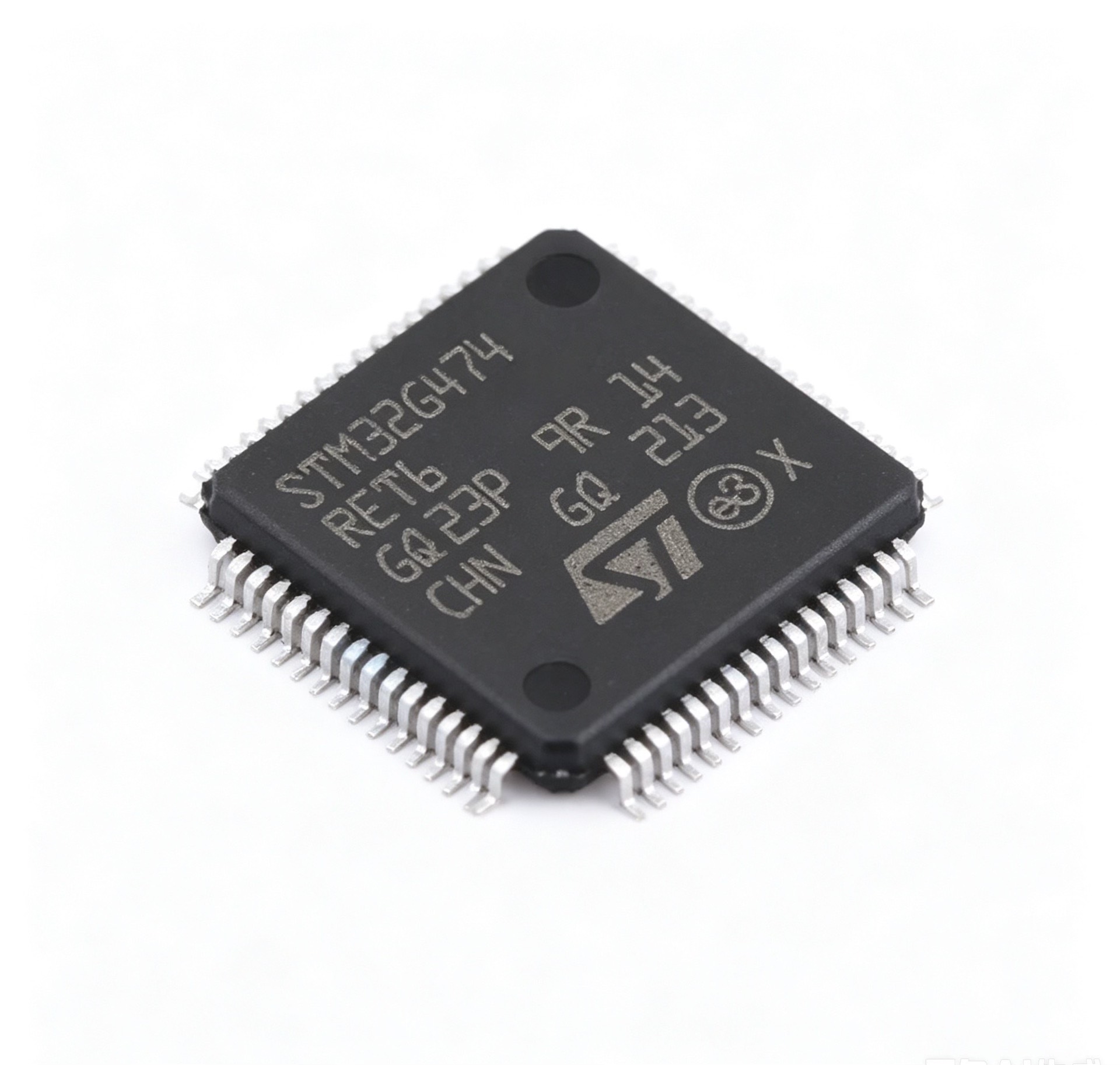
STM32G474RET6 - 170MHz Arm Cortex-M4 MCU | STMicroelectronics
The STMicroelectronics STM32G474RET6 is a high-performance 32-bit microcontroller based on the Arm Cortex-M4 core with FPU, operating at up to 170 MHz. It is part of the STM32G4 series, designed for advanced motor control, digital power conversion, and industrial applications. The device features 512 KB of flash memory and 128 KB of SRAM, along with a rich set of analog peripherals including high-resolution timers, comparators, op-amps, and a 12-bit ADC with hardware oversampling. Data verified as of 2026-08-05. What is a microcontroller? A microcontroller (MCU) is a compact integrated circuit designed to govern a specific operation in an embedded system. It integrates a processor core, memory (flash and SRAM), and programmable input/output peripherals on a single chip. The STM32G474RET6 belongs to the STM32G4 family, which is optimized for mixed-signal control applications, bridging the gap between general-purpose MCUs and digital signal processors (DSPs). This hierarchy places it within the broader category of embedded processors, which are essential for real-time control in industrial, automotive, and consumer electronics. Key features of the STM32G474RET6 include a 170 MHz Arm Cortex-M4 core with FPU and DSP instructions, 512 KB flash, 128 KB SRAM, and a comprehensive set of advanced analog peripherals. It integrates a 12-bit ADC with up to 5 MSPS, 12-bit DACs, high-speed comparators, operational amplifiers, and a high-resolution timer (HRTIM) capable of generating PWM signals with sub-nanosecond resolution. The device also supports multiple communication interfaces including SPI, I2C, USART, CAN FD, and USB, making it highly versatile for system integration. From a technical architecture perspective, the STM32G474RET6 leverages the Arm Cortex-M4 core with a single-precision FPU and DSP instructions, enabling efficient execution of complex control algorithms. The high-resolution timer (HRTIM) provides up to 184 picoseconds of PWM resolution, which is critical for digital power conversion and motor control applications. The device also includes a CORDIC hardware accelerator and a filter math accelerator (FMAC) for trigonometric and filter computations, offloading the CPU for real-time tasks. Typical applications include field-oriented control (FOC) of brushless DC motors, digital power supplies (buck, boost, flyback), solar inverters, and industrial automation. The STM32G474RET6's combination of high-speed ADC, comparators, and HRTIM makes it ideal for these applications, where precise timing and analog signal processing are paramount. When designing with this device, ensure proper decoupling of the power supply pins and careful layout of the high-resolution timer outputs to minimize noise. The device supports a wide operating voltage range of 1.71V to 3.6V, and its low-power modes help optimize energy consumption in battery-powered applications. This page synthesizes distributor pricing, drop-in alternatives, and practical design notes not found in the STMicroelectronics datasheet, providing a comprehensive resource for engineers evaluating the STM32G474RET6.
STM32G474VET6 - 170MHz Arm Cortex-M4F MCU | STMicroelectronics
The STMicroelectronics STM32G474VET6 is a high-performance 32-bit microcontroller based on the Arm Cortex-M4 core with floating-point unit (FPU), operating at up to 170 MHz. It is part of the STM32G4 series, designed for advanced motor control, digital power conversion, and industrial applications. The device integrates a rich set of analog peripherals, including multiple operational amplifiers, comparators, and a 12-bit ADC with hardware oversampling, making it ideal for mixed-signal control loops. What is a microcontroller? A microcontroller (MCU) is a compact integrated circuit containing a processor core, memory, and programmable input/output peripherals on a single chip. It is the brain of embedded systems, executing firmware to control everything from simple LED blinkers to complex motor drives. In the hierarchy of computing devices, a microcontroller falls under embedded processors, which are specialized for real-time control tasks, as opposed to general-purpose CPUs found in personal computers. The STM32G474VET6 exemplifies a modern MCU with its high clock speed, rich analog integration, and advanced timer capabilities. Key features of the STM32G474VET6 include 512 KB of flash memory and 128 KB of SRAM, providing ample space for complex control algorithms. It supports a wide supply voltage range of 1.71V to 3.6V, ensuring compatibility with various power rails. The device includes a comprehensive set of communication interfaces: I2C, SPI, USART, CAN FD, and USB, enabling seamless connectivity in industrial networks. Additionally, it features a 12-bit DAC, multiple 12-bit ADCs with up to 5 MSPS, and a high-resolution timer (HRTIM) capable of generating PWM signals with sub-nanosecond precision, crucial for digital power supplies. The STM32G474VET6 is built on ST's advanced 90nm process technology, balancing performance and power efficiency. The Cortex-M4 core with FPU accelerates mathematical computations, essential for real-time control algorithms like FOC (Field-Oriented Control) for motors. The device also includes a Memory Protection Unit (MPU) and a cryptographic acceleration unit, enhancing security for connected applications. Its rich peripheral set and high-speed timers make it a preferred choice for engineers designing high-performance control systems. Typical applications include field-oriented control of brushless DC motors, digital power conversion (e.g., LLC resonant converters), solar inverters, and industrial automation. The high-resolution timer and fast ADC enable precise current and voltage sensing, critical for closed-loop control. In motor control, the STM32G474VET6 can generate six-step PWM signals with dead-time insertion, reducing external component count. When designing with this MCU, ensure proper decoupling of the power supply pins with 100nF capacitors placed close to each VDD pin. The VDDA pin should be filtered with a ferrite bead and a 1uF capacitor to minimize analog noise. Also, consider the thermal performance: the LQFP100 package has a thermal resistance of 46°C/W, so adequate PCB copper area is recommended for high-current applications.
STM32G484RET6 - 170MHz Arm Cortex-M4 MCU with FPU | STMicroelectronics
The STMicroelectronics STM32G484RET6 is a high-performance 32-bit microcontroller based on the Arm Cortex-M4 core with floating-point unit (FPU), operating at up to 170 MHz. It is part of the STM32G4 series, designed for advanced motor control, digital power conversion, and industrial applications. The device features 512 KB of flash memory and 128 KB of SRAM, along with a rich set of analog and digital peripherals. What is a microcontroller? A microcontroller (MCU) is a compact integrated circuit designed to govern a specific operation in an embedded system. It integrates a processor core, memory, and programmable input/output peripherals on a single chip. In the system hierarchy, an MCU sits above a microprocessor (which lacks integrated memory and peripherals) and below a system-on-chip (SoC) that may include more complex subsystems. The STM32G484RET6 is a mid-range MCU in the STM32 family, balancing performance, power efficiency, and peripheral integration. Key features include a 170 MHz Arm Cortex-M4 core with FPU and DSP instructions, 512 KB flash, 128 KB SRAM, and a comprehensive set of peripherals: three 12-bit ADCs (up to 5 Msps), four comparators, three operational amplifiers, a 12-bit DAC, and advanced timers with dead-time generation for motor control. It also includes a CORDIC hardware accelerator and a FMAC (filter math accelerator) for mathematical processing. The device supports multiple communication interfaces: I2C, SPI, UART, CAN FD, and USB. The STM32G484RET6 is built on ST's advanced 90 nm process technology, offering a balance of performance and power consumption. The core is based on the Armv7E-M architecture, which includes hardware divide and single-cycle multiply-accumulate instructions. The FPU enables efficient floating-point arithmetic, essential for control algorithms. The device also features a memory protection unit (MPU) and a nested vectored interrupt controller (NVIC) for real-time responsiveness. Typical applications include field-oriented control (FOC) of brushless DC motors, digital power supplies (buck, boost, and flyback converters), solar inverters, and industrial automation. The high-resolution timers (HRTIM) with 184 ps resolution are ideal for power conversion topologies. The device also supports USB Power Delivery (PD) for charging applications. When designing with this MCU, ensure proper decoupling of the power supply pins with 100 nF capacitors placed close to each VDD pin. The VDDA analog supply should be filtered with a ferrite bead and a 1 uF capacitor to reduce noise. For motor control applications, use the dedicated timer break inputs for safe shutdown.
STM32G484VET6 - 170MHz Cortex-M4 MCU, 512KB Flash | STMicroelectronics
The STM32G484VET6 is a high-performance 32-bit microcontroller from STMicroelectronics, based on the Arm® Cortex®-M4 core with FPU, operating at up to 170 MHz and delivering 213 DMIPS. It features 512 KB of Flash memory and 128 KB of SRAM, making it suitable for a wide range of real-time control and signal processing applications. The device is housed in a 100-pin LQFP package (14x14 mm), offering a compact footprint for space-constrained designs. A microcontroller (MCU) is a compact integrated circuit designed to govern a specific operation in an embedded system. It contains a processor core, memory, and programmable input/output peripherals. The STM32G4 series is part of the STM32 family, which is a broad portfolio of 32-bit microcontrollers based on Arm Cortex-M cores. These MCUs are widely used in industrial, automotive, and consumer applications due to their performance, low power consumption, and rich peripheral set. Key features of the STM32G484VET6 include a high-resolution timer with 184 ps resolution, a math accelerator for enhanced DSP performance, and an AES hardware encryption engine. The device also integrates a rich analog front-end with multiple 12-bit ADCs, DACs, and comparators, making it ideal for mixed-signal control applications. The 170 MHz clock speed and 213 DMIPS performance enable complex algorithms to run efficiently. The STM32G484VET6 is built on a high-performance Arm Cortex-M4 32-bit RISC core with a floating-point unit (FPU) for single-precision arithmetic. The math accelerator (CORDIC) and FMAC (filter math accelerator) offload intensive computations from the CPU, improving overall system throughput. The device supports a wide operating voltage range and includes multiple power-saving modes to optimize energy consumption. Typical applications include motor control, digital power conversion, industrial automation, and advanced sensing. The high-resolution timer is particularly suited for pulse-width modulation (PWM) generation in power converters and motor drives. The rich analog peripherals enable precise current and voltage sensing, while the math accelerator speeds up control loop calculations. When designing with this MCU, ensure proper decoupling of the power supply pins and a stable clock source. The device supports both internal and external oscillators, and the PLL can be configured to achieve the desired system clock. Careful PCB layout is essential to minimize noise and ensure reliable operation at high frequencies.
STM32G491CET6 - 170MHz ARM Cortex-M4F MCU | STMicroelectronics
The STMicroelectronics STM32G491CET6 is a high-performance 32-bit microcontroller based on the ARM Cortex-M4 core with floating-point unit (FPU), operating at up to 170 MHz. It is part of the STM32G4 series, designed for advanced motor control, digital power conversion, and industrial applications. The device is housed in a 48-pin LQFP package (7x7 mm) and offers a rich set of peripherals including advanced timers, high-resolution timers, analog peripherals, and communication interfaces. What is a microcontroller? A microcontroller (MCU) is a compact integrated circuit designed to govern a specific operation in an embedded system. It contains a processor core, memory (Flash and RAM), and programmable input/output peripherals on a single chip. Microcontrollers are the brains of countless electronic devices, from automotive engine control units to home appliances and IoT sensors. In the system hierarchy, a microcontroller sits between a microprocessor (which requires external memory and peripherals) and a system-on-chip (SoC, which integrates more complex functions like graphics or wireless). The STM32G491CET6 is a mid-range MCU that balances performance, power efficiency, and peripheral integration. Key features of the STM32G491CET6 include a 170 MHz ARM Cortex-M4F core with DSP instructions and FPU, 512 KB of Flash memory, 112 KB of SRAM, and a comprehensive set of peripherals. It features a high-resolution timer (HRTIM) capable of generating PWM signals with sub-nanosecond resolution, essential for digital power conversion. The device also includes a 12-bit ADC with hardware oversampling, multiple 12-bit DACs, comparators, and operational amplifiers, making it suitable for analog-intensive applications. Communication interfaces include SPI, I2C, USART, and CAN FD, providing robust connectivity options. From a technical depth perspective, the STM32G491CET6 leverages the ARM Cortex-M4F architecture with a single-precision FPU and DSP instructions, enabling efficient execution of complex algorithms such as FFT and motor control loops. The high-resolution timer (HRTIM) is a standout feature, offering up to 184 picoseconds resolution, which is critical for high-frequency switching power supplies. The device also integrates a CORDIC hardware accelerator for trigonometric functions and a filter math accelerator (FMAC) for digital filtering, offloading the CPU for real-time control tasks. Typical applications include field-oriented control (FOC) of brushless DC motors, digital power supplies (buck, boost, flyback), solar inverters, and industrial automation. The combination of high-speed ADC, comparators, and HRTIM makes it ideal for closed-loop control systems requiring precise timing and fast response. Additionally, its CAN FD interface supports robust communication in automotive and industrial networks. When designing with the STM32G491CET6, ensure proper decoupling of the power supply pins with 100 nF capacitors placed close to each VDD pin. The VDDA analog supply should be filtered with a ferrite bead and a 1 uF capacitor to minimize noise on analog peripherals. For high-resolution timer applications, use a clean clock source and minimize PCB trace inductance in the power stage.
STM32G4A1RET6 - 170MHz Arm Cortex-M4F MCU | STMicroelectronics
The STMicroelectronics STM32G4A1RET6 is a high-performance 32-bit microcontroller based on the Arm Cortex-M4 core with floating-point unit (FPU), operating at up to 170 MHz. It is part of the STM32G4 series, designed for advanced motor control, industrial automation, and digital power conversion applications. The device is housed in a 64-pin LQFP package (10x10 mm) and offers a rich set of analog and digital peripherals. A microcontroller (MCU) is a compact integrated circuit designed to govern a specific operation in an embedded system. It contains a processor core, memory, and programmable input/output peripherals on a single chip. The STM32G4A1RET6 belongs to the STM32G4 family, which is optimized for mixed-signal applications requiring high-resolution timers, fast ADCs, and advanced analog features. This MCU sits within the broader hierarchy of embedded processors, bridging general-purpose microcontrollers and digital signal processors (DSPs) with its FPU and DSP instructions. Key features include a 170 MHz Arm Cortex-M4F core with DSP instructions and FPU, 512 KB of flash memory, and 96 KB of SRAM. It integrates a 12-bit ADC with hardware oversampling (up to 16-bit resolution), two 12-bit DACs, three fast comparators, and operational amplifiers. The device also includes advanced motor-control timers, a USB Type-C Power Delivery controller, and a CAN-FD interface. These features enable precise real-time control and efficient signal processing in demanding applications. The STM32G4A1RET6 is built on a high-performance architecture with a nested vectored interrupt controller (NVIC) and a memory protection unit (MPU). It supports a wide supply voltage range of 1.71V to 3.6V and operates over a temperature range of -40°C to +85°C. The device includes multiple low-power modes, including Sleep, Stop, and Standby, to optimize energy consumption. Its advanced analog peripherals are designed to work seamlessly with the digital core, reducing external component count and system cost. Typical applications include field-oriented control (FOC) of brushless DC motors, digital power supplies (e.g., LLC converters), solar inverters, and industrial sensors. The high-resolution timers (up to 184 ps resolution) and fast ADCs make it ideal for power conversion loops requiring high bandwidth. The USB Type-C PD controller simplifies implementation of power delivery in consumer and industrial devices. When designing with this MCU, pay attention to the power supply decoupling: place a 100 nF capacitor close to each VDD pin and a 4.7 uF bulk capacitor. For analog performance, use a separate VDDA supply with a ferrite bead to isolate digital noise. The internal reference voltage (VREFINT) can be used for ADC calibration, but for higher accuracy, an external reference is recommended.
STM32H723VET6 - 550MHz Cortex-M7 MCU with FPU | STMicroelectronics
The STM32H723VET6 is a high-performance 32-bit microcontroller from STMicroelectronics, featuring an Arm Cortex-M7 core running at up to 550 MHz. It is part of the STM32H7 series, designed for demanding applications requiring high computational power, advanced connectivity, and rich analog peripherals. The device is housed in a 100-pin LQFP package (LQFP100) with a 14x14 mm body and 0.5 mm pitch, making it suitable for compact PCB designs. What is a microcontroller? A microcontroller (MCU) is a compact integrated circuit designed to govern a specific operation in an embedded system. It integrates a processor core, memory (RAM and flash), and programmable input/output peripherals on a single chip. Microcontrollers are the backbone of embedded systems, ranging from simple household appliances to complex industrial automation. In the system hierarchy, a microcontroller sits between a microprocessor (which requires external memory and peripherals) and a system-on-chip (SoC) that may include more advanced features like graphics or wireless. The STM32H723VET6 belongs to the high-performance MCU category, optimized for real-time control, signal processing, and connectivity. Key features of the STM32H723VET6 include a 550 MHz Arm Cortex-M7 core with double-precision FPU, 1 Mbyte of flash memory, 564 Kbytes of SRAM, and a comprehensive set of peripherals. It supports a wide range of communication interfaces including Ethernet, USB OTG HS/FS, CAN FD, SPI, I2C, UART, and SDMMC. The device also integrates a 16-bit ADC with 3.6 MSPS, a 12-bit DAC, multiple timers, and a cryptographic acceleration unit. These features make it ideal for applications requiring high-speed data processing and secure communication. From a technical depth perspective, the STM32H723VET6 leverages the Arm Cortex-M7 architecture with a 6-stage pipeline and a branch prediction unit, enabling efficient execution of complex algorithms. The inclusion of a double-precision FPU accelerates floating-point operations, which is critical for audio processing, motor control, and industrial analytics. The device also features a memory protection unit (MPU) and a cache controller, enhancing system reliability and performance. The advanced analog peripherals, such as the 16-bit ADC with oversampling, provide high-resolution data acquisition for precision measurement applications. Typical applications for the STM32H723VET6 include industrial control systems, motor drives, power conversion, audio processing, and IoT gateways. Its high clock speed and rich peripheral set make it suitable for real-time control loops and edge computing tasks. The Ethernet and USB interfaces enable seamless connectivity in networked systems, while the CAN FD support is ideal for automotive and industrial communication. When designing with this device, ensure proper decoupling of the power supply pins with 100 nF capacitors placed close to each VDD pin. The VDDA pin should be filtered with a ferrite bead and a 1 uF capacitor to reduce analog noise. Additionally, the VCAP pins require a 2.2 uF capacitor to stabilize the internal voltage regulator. Careful attention to the crystal oscillator layout is essential for reliable clock generation.
STM32H723VGT6 - 550MHz ARM Cortex-M7 MCU | STMicroelectronics
The STMicroelectronics STM32H723VGT6 is a high-performance 32-bit microcontroller based on the ARM Cortex-M7 core, operating at up to 550 MHz. It is part of the STM32H7 series, designed for demanding applications requiring high processing power, advanced connectivity, and rich analog peripherals. The device is housed in a 100-pin LQFP package (LQFP100) and offers 1 Mbyte of Flash memory and 564 Kbytes of SRAM, making it suitable for complex real-time control and signal processing tasks. What is a microcontroller? A microcontroller (MCU) is a compact integrated circuit designed to govern a specific operation in an embedded system. It integrates a processor core, memory (Flash and SRAM), and programmable input/output peripherals on a single chip. Microcontrollers are the brains of countless electronic devices, from automotive engine control units to industrial robots and consumer electronics. The STM32H723VGT6 belongs to the high-performance segment of the microcontroller family, positioned above mid-range MCUs like the STM32F4 series, and is optimized for applications that require intensive computation, such as digital signal processing, motor control, and artificial intelligence at the edge. Key features of the STM32H723VGT6 include a 550 MHz Cortex-M7 core with double-precision floating-point unit (FPU), a Chrom-ART Accelerator for 2D graphics, and a comprehensive set of communication interfaces including Ethernet, USB OTG HS, CAN FD, and multiple UARTs/SPIs/I2Cs. The device also integrates a 16-bit ADC with up to 5 MSPS, a 12-bit DAC, and advanced timers for precise PWM generation. With its high clock speed and rich peripheral set, the STM32H723VGT6 delivers exceptional performance for real-time applications. From a technical architecture perspective, the STM32H723VGT6 features a Harvard architecture with separate instruction and data buses, enabling simultaneous fetch and data access. The Cortex-M7 core includes a 6-stage pipeline, branch prediction, and a memory protection unit (MPU) for enhanced reliability. The device supports external memory interfaces (FMC) for SDRAM, NOR, and NAND Flash, and includes a hardware cryptographic accelerator for AES, DES, and RSA, ensuring secure data communication. The integrated power management allows operation from 1.62V to 3.6V, with multiple low-power modes to optimize energy consumption. Typical applications for the STM32H723VGT6 include industrial automation, motor control, power conversion, medical devices, and high-end consumer electronics. Its high-speed ADC and timers make it ideal for digital power supplies and motor drives, while the Ethernet and USB interfaces enable connectivity in IoT gateways and industrial networking. The device's graphics acceleration supports human-machine interfaces (HMI) with smooth rendering. When designing with the STM32H723VGT6, ensure proper decoupling of the power supply pins with 100nF capacitors placed close to each VDD pin, and a 4.7uF bulk capacitor. The VDDA pin requires a dedicated analog supply with a ferrite bead to reduce noise. For high-speed interfaces like Ethernet and USB, follow the layout guidelines in the datasheet to maintain signal integrity. The device supports in-circuit programming via SWD or JTAG, and the STM32CubeIDE toolchain simplifies development.
STM32H725AEG6 - 550MHz Cortex-M7 MCU with 1MB Flash | STMicroelectronics
The STMicroelectronics STM32H725AEG6 is a high-performance 32-bit microcontroller based on the Arm Cortex-M7 core, operating at up to 550 MHz. It integrates 1 MB of flash memory and 564 KB of SRAM, along with a rich set of peripherals including a TFT-LCD controller, cryptographic acceleration, and high-speed connectivity interfaces. The device is housed in a 144-pin UFBGA package (UFBGA144) with a 10x10 mm footprint, offering a compact solution for advanced embedded applications. A microcontroller (MCU) is a compact integrated circuit designed to govern a specific operation in an embedded system. It contains a processor core, memory, and programmable input/output peripherals on a single chip. MCUs are the brains of countless electronic devices, from automotive engine control units to IoT sensors and industrial automation systems. The STM32H7 series represents the high-performance tier of STMicroelectronics' STM32 family, positioned above the mainstream F4 series and the low-power L4 series, targeting applications that demand maximum processing power and advanced features. Key features of the STM32H725AEG6 include a 550 MHz Arm Cortex-M7 core with double-precision FPU, 1 MB of dual-bank flash memory, 564 KB of SRAM, and a Chrom-ART Accelerator for graphics. It also features a TFT-LCD controller supporting up to XGA resolution, a camera interface, and a cryptographic processor with hardware acceleration for AES, DES, and 3DES. The device supports a wide range of communication interfaces including Ethernet, USB OTG HS/FS, CAN FD, and multiple USART/SPI/I2C ports, making it suitable for complex connectivity requirements. From a technical architecture perspective, the STM32H725AEG6 leverages a 7-stage pipeline with branch prediction and a memory protection unit (MPU) for enhanced real-time performance. The dual-bank flash allows read-while-write operations, enabling firmware updates without halting the system. The device also includes a power management unit with multiple low-power modes, including Sleep, Stop, and Standby, to optimize energy consumption in battery-powered applications. Typical applications include industrial control systems, motor drives, smart home gateways, audio processing, and high-end consumer electronics. The combination of high clock speed, large memory, and rich peripherals makes it ideal for applications requiring real-time processing and complex user interfaces. When designing with this MCU, careful attention must be paid to power supply decoupling and PCB layout to ensure stable operation at 550 MHz. The use of multiple supply pins (VDD, VDDA, VDDUSB) requires proper filtering to minimize noise and maintain signal integrity.
STM32H725VGT6 - 550MHz Cortex-M7 MCU with 1MB Flash | STMicroelectronics
The STMicroelectronics STM32H725VGT6 is a high-performance 32-bit microcontroller based on the Arm Cortex-M7 core, operating at up to 550 MHz. It integrates 1 Mbyte of flash memory and 564 Kbytes of SRAM, along with a rich set of peripherals including a Chrom-ART Accelerator, a JPEG codec, and advanced security features. The device is housed in a 100-pin LQFP package (LQFP100) with a 14x14 mm body and 0.5 mm pitch, making it suitable for space-constrained industrial and consumer applications. What is a microcontroller? A microcontroller (MCU) is a compact integrated circuit designed to govern a specific operation in an embedded system. It contains a processor core, memory (flash and SRAM), and programmable input/output peripherals on a single chip. Microcontrollers are the brain of countless electronic devices, from automotive engine control units to smart home sensors. In the system hierarchy, the STM32H725VGT6 sits at the application processor level, providing the computational power and connectivity for complex tasks such as real-time control, digital signal processing, and human-machine interfaces. Key features of the STM32H725VGT6 include a 550 MHz Cortex-M7 core with double-precision FPU, a Chrom-ART Accelerator for 2D graphics, a hardware JPEG codec, and a comprehensive set of communication interfaces: 6x SPI, 4x I2C, 4x USART, 2x UART, 2x FDCAN, 2x SDMMC, 1x USB OTG FS/HS, 1x Ethernet MAC, and 1x camera interface. It also features a 16-bit ADC with 3.6 MSPS, a 12-bit DAC, and multiple timers including a high-resolution timer. Security is enhanced with a true random number generator (TRNG), a cryptographic accelerator (AES, DES, 3DES, SHA-1, SHA-256), and a secure boot option. The STM32H725VGT6 is built on a high-performance architecture with an L1 cache (32 Kbytes I-cache and 32 Kbytes D-cache) and a memory protection unit (MPU) for enhanced real-time performance. The device supports a wide supply voltage range of 1.62V to 3.6V and operates over a temperature range of -40°C to +85°C (T suffix). It is available in both commercial and industrial temperature grades, with the '6' suffix indicating the -40°C to +85°C range. Typical applications include industrial control systems, motor drives, power conversion, medical devices, audio processing, and IoT gateways. The combination of high clock speed, rich peripherals, and security features makes it ideal for applications requiring both computational power and connectivity. When designing with this device, ensure proper decoupling of the power supply pins with 100 nF capacitors placed close to each VDD pin, and a 4.7 uF bulk capacitor. The VDDA pin must be connected to a clean analog supply, and the VCAP pins require external capacitors as specified in the datasheet. For high-speed interfaces like USB and Ethernet, follow the layout guidelines in the STM32H7 reference manual (RM0433) to ensure signal integrity.
STM32H725ZGT6 - 550MHz Cortex-M7 MCU with 1MB Flash | STMicroelectronics
The STMicroelectronics STM32H725ZGT6 is a high-performance 32-bit microcontroller based on the Arm Cortex-M7 core, operating at up to 550 MHz. It integrates 1 Mbyte of flash memory and 564 Kbytes of SRAM, making it suitable for demanding applications such as industrial control, motor control, and high-end consumer electronics. The device is housed in a 144-pin LQFP package (LQFP144) with a 20x20 mm body, providing ample I/O for complex system integration. A microcontroller (MCU) is a compact integrated circuit designed to govern a specific operation in an embedded system. It contains a processor core, memory, and programmable input/output peripherals on a single chip. The STM32H725ZGT6 belongs to the STM32H7 series, which is part of the broader STM32 family of 32-bit microcontrollers. This family is widely used in embedded systems, ranging from simple sensor nodes to complex industrial automation, due to its balance of performance, power efficiency, and peripheral integration. Key features of the STM32H725ZGT6 include a 550 MHz Arm Cortex-M7 core with double-precision FPU, a Chrom-ART Accelerator for graphics, and a hardware cryptographic accelerator. It supports a wide range of communication interfaces including Ethernet, USB OTG HS/FS, CAN FD, and multiple SPI/I2C/UART. The device also features a 16-bit ADC with 3.6 MSPS, a 12-bit DAC, and advanced timers for precise motor control. With 1 Mbyte of flash and 564 Kbytes of SRAM, it can handle complex firmware and data buffering requirements. The STM32H725ZGT6 is built on a high-performance architecture that includes an L1 cache, a TCM (Tightly Coupled Memory) interface, and a multi-layer AXI bus matrix. This architecture minimizes memory access latency and maximizes throughput, enabling real-time control and high-speed data processing. The device also includes a power management unit with multiple low-power modes, allowing designers to optimize energy consumption for battery-powered applications. Typical applications include industrial PLCs, motor control drives, high-end audio equipment, and IoT gateways. The combination of high clock speed, rich peripherals, and large memory makes it ideal for applications requiring intensive computation and connectivity. For example, in motor control, the advanced timers and high-resolution PWM can generate precise waveforms, while the Ethernet interface enables remote monitoring and diagnostics. When designing with this device, ensure proper decoupling of the power supply pins and a stable clock source. The internal LDO can be used for core voltage, but for high-performance operation, an external SMPS step-down converter is recommended to reduce power dissipation. Also, consider the thermal characteristics of the LQFP144 package; adequate PCB copper area and airflow are necessary for sustained operation at high clock speeds.
STM32H730IBT6 - 550MHz Cortex-M7 MCU with 1MB Flash | STMicroelectronics
The STMicroelectronics STM32H730IBT6 is a high-performance ARM Cortex-M7 based microcontroller operating at up to 550 MHz, delivering 3224 CoreMark points. It integrates 1 MB of flash memory and 564 KB of SRAM in a 176-pin LQFP package, making it suitable for demanding embedded applications requiring real-time processing and advanced connectivity. A microcontroller (MCU) is a compact integrated circuit designed to govern a specific operation in an embedded system. It contains a processor core, memory, and programmable input/output peripherals. The STM32H730IBT6 belongs to the STM32H7 series, which is part of the broader STM32 family of 32-bit ARM Cortex-M microcontrollers. This hierarchy places it within the embedded processing domain, where it serves as the central control unit for applications ranging from industrial automation to consumer electronics. Key features include a 550 MHz Cortex-M7 core with double-precision FPU, a Chrom-ART Accelerator for 2D graphics, and a hardware cryptographic accelerator supporting AES, DES, and HASH algorithms. The device also offers a comprehensive set of communication interfaces including Ethernet, USB OTG HS, multiple SPI, I2C, UART, and CAN FD. Its advanced timer peripherals and 16-bit ADC with oversampling enable precise motor control and high-resolution sensing. The STM32H730IBT6 is built on a high-performance architecture with an L1 cache, a 32-bit multi-AHB bus matrix, and a power-efficient design that includes multiple low-power modes. The Chrom-ART Accelerator offloads graphics rendering from the CPU, while the cryptographic accelerator ensures secure data transfer without burdening the core. This combination of raw processing power and dedicated hardware accelerators makes it ideal for real-time control and edge computing. Typical applications include industrial motor control, robotics, high-end audio processing, and smart home gateways. Its rich peripheral set and high-speed interfaces allow it to handle complex tasks such as real-time audio effects, predictive maintenance, and secure IoT connectivity. The device's 550 MHz clock speed ensures rapid response in time-critical control loops. When designing with this MCU, careful attention must be paid to power supply decoupling and PCB layout to maintain signal integrity at high frequencies. The device supports a wide supply voltage range of 1.62V to 3.6V, and its multiple power domains require proper sequencing. Additionally, the extensive peripheral set demands a well-structured firmware architecture to fully utilize its capabilities.
STM32H730VBT6 - 550MHz Cortex-M7 MCU with 128KB RAM | STMicroelectronics
The STMicroelectronics STM32H730VBT6 is a high-performance 32-bit microcontroller based on the Arm Cortex-M7 core, operating at up to 550 MHz. It is part of the STM32H7 series, designed for applications requiring intensive computation, advanced connectivity, and rich peripheral integration. The device comes in a 100-pin LQFP package (LQFP100) and offers 128 KB of SRAM and 128 KB of flash memory, with an extensive set of peripherals including multiple communication interfaces, timers, ADCs, DACs, and cryptographic acceleration. What is a microcontroller? A microcontroller (MCU) is a compact integrated circuit designed to govern a specific operation in an embedded system. It contains a processor core, memory (RAM and flash), and programmable input/output peripherals on a single chip. Microcontrollers are the brain of countless electronic devices, from automotive engine control units to IoT sensors and industrial automation systems. In the hierarchy of computing devices, a microcontroller sits between a simple logic gate and a full application processor, offering a balance of performance, power efficiency, and cost for dedicated control tasks. Key features of the STM32H730VBT6 include a 550 MHz Arm Cortex-M7 core with double-precision floating-point unit (FPU), 128 KB of SRAM, and 128 KB of flash memory. It supports a wide range of communication interfaces: 6x SPI, 4x I2C, 4x USART, 2x UART, 2x FDCAN, 2x SDMMC, 1x USB 2.0 OTG FS/HS, 1x Ethernet MAC, and 1x camera interface. The device also integrates a 16-bit ADC with 3.6 MSPS, a 12-bit DAC, multiple 16-bit and 32-bit timers, and a true random number generator (TRNG). For security, it includes hardware cryptographic acceleration (AES, DES, 3DES, SHA-1, SHA-256, and CRC). The STM32H730VBT6 is built on a high-performance architecture with an L1 cache (I-Cache and D-Cache) to optimize execution from external memory. It supports external memory interfaces for SDRAM, SRAM, and NOR/NAND flash via FMC (Flexible Memory Controller). The device operates from a 1.62V to 3.6V power supply and features multiple low-power modes (Sleep, Stop, Standby) to optimize energy consumption. The LQFP100 package provides a compact footprint with 100 pins, including multiple GPIOs with alternate functions. Typical applications include industrial control systems, motor control, advanced IoT gateways, audio processing, and high-end consumer electronics. The combination of high clock speed, rich peripherals, and security features makes it suitable for real-time control and edge computing tasks. For example, in motor control, the high-resolution timers and ADC enable precise field-oriented control (FOC) of brushless DC motors. When designing with this device, ensure proper decoupling of the power supply pins with 100nF capacitors close to each VDD pin and a bulk capacitor (e.g., 4.7uF) at the main supply. The VDDA pin must be connected to a clean analog supply, and VREF+ should be decoupled with a 1uF capacitor. For high-speed interfaces like USB and Ethernet, follow the layout guidelines in the datasheet to maintain signal integrity.
STM32H733VGT6 - 550MHz Cortex-M7 MCU with FPU | STMicroelectronics
The STM32H733VGT6 is a high-performance 32-bit microcontroller from STMicroelectronics, featuring an Arm Cortex-M7 core running at up to 550 MHz. It integrates a floating-point unit (FPU), a large 1 Mbyte flash memory, and 564 Kbytes of SRAM, making it suitable for demanding embedded applications that require high computational throughput and real-time processing. A microcontroller (MCU) is a compact integrated circuit designed to govern a specific operation in an embedded system. It contains a processor core, memory, and programmable input/output peripherals on a single chip. The STM32H733VGT6 belongs to the STM32H7 series, which is part of the broader STM32 family of 32-bit microcontrollers based on the Arm Cortex-M architecture. This family is widely used in industrial, consumer, and automotive applications due to its balance of performance, power efficiency, and peripheral integration. Key features of the STM32H733VGT6 include a 550 MHz Cortex-M7 core with double-precision FPU, 1 Mbyte of flash memory, 564 Kbytes of SRAM, and a comprehensive set of peripherals such as multiple 16-bit and 32-bit timers, advanced analog-to-digital converters (ADCs) with 16-bit resolution, digital-to-analog converters (DACs), and a wide range of communication interfaces including USART, SPI, I2C, CAN, USB, and Ethernet. The device also supports external memory interfaces for SDRAM, SRAM, and NOR/NAND flash, enabling large data storage and high-speed data processing. The STM32H733VGT6 is built on a high-performance architecture that includes an L1 cache, a memory protection unit (MPU), and a hardware cryptographic accelerator for AES, DES, and HASH algorithms. This makes it ideal for secure applications such as IoT gateways, industrial control systems, and medical devices. The device operates over a supply voltage range of 1.62V to 3.6V and is available in a 100-pin LQFP package (LQFP100), which provides a compact footprint for space-constrained designs. Typical applications include motor control, power conversion, industrial automation, robotics, audio processing, and high-end consumer electronics. The high clock speed and rich peripheral set allow designers to implement complex algorithms, such as field-oriented control (FOC) for motors, real-time audio effects, and advanced human-machine interfaces (HMI). When designing with the STM32H733VGT6, it is essential to provide adequate decoupling capacitors on all power supply pins and to follow the recommended PCB layout guidelines in the datasheet to ensure stable operation at high frequencies. The device also supports multiple low-power modes, allowing designers to optimize energy consumption for battery-powered applications.
STM32H735RGT6 - 550MHz Cortex-M7 MCU with 1MB Flash | STMicroelectronics
The STMicroelectronics STM32H735RGT6 is a high-performance 32-bit microcontroller based on the Arm Cortex-M7 core, operating at up to 550 MHz. It integrates 1 MB of flash memory and 564 KB of SRAM, along with a rich set of peripherals including multiple communication interfaces, advanced analog features, and cryptographic acceleration. The device is housed in a 64-pin LQFP package (LQFP64) with a 10x10 mm body and 0.5 mm pitch, making it suitable for space-constrained industrial and consumer applications. What is a microcontroller? A microcontroller (MCU) is a compact integrated circuit designed to govern a specific operation in an embedded system. It contains a processor core, memory (flash and SRAM), and programmable input/output peripherals on a single chip. Microcontrollers are the backbone of embedded systems, ranging from simple motor controllers to complex IoT gateways. The STM32H7 series sits at the high-performance end of the STM32 portfolio, positioned above the mainstream STM32F4 and STM32F7 families, offering higher clock speeds, more memory, and advanced security features for demanding applications. Key features of the STM32H735RGT6 include a 550 MHz Arm Cortex-M7 core with double-precision FPU and L1 cache, 1 MB of flash memory, 564 KB of SRAM, and a comprehensive set of peripherals: 5x USART, 4x SPI, 4x I2C, 2x FDCAN, 2x USB (OTG FS/HS), 1x Ethernet MAC, 2x SAI, 2x SDMMC, and a camera interface. It also features a 16-bit ADC with 3.6 MSPS, a 12-bit DAC, and a true random number generator (TRNG). The device supports hardware cryptographic acceleration (AES, DES, 3DES, SHA-1, SHA-256) and a secure boot option, making it suitable for secure IoT applications. Technically, the STM32H735RGT6 is built on a 40nm process technology, enabling high clock speeds with low power consumption. The Cortex-M7 core includes a 6-stage pipeline, branch prediction, and a single-precision and double-precision FPU, delivering 2.14 CoreMark/MHz. The device supports a wide supply voltage range of 1.62V to 3.6V, with separate VDDA for analog peripherals. It operates over a temperature range of -40°C to +85°C (industrial grade). The LQFP64 package provides 54 GPIOs, with many pins multiplexed to support multiple peripheral functions. Typical applications include industrial control systems, motor drives, PLCs, IoT gateways, smart home hubs, audio processing, and high-end consumer electronics. The combination of high performance, rich connectivity, and security features makes it ideal for applications requiring real-time processing and secure communication. When designing with this device, ensure proper decoupling of the power supply pins with 100nF capacitors placed close to each VDD pin, and a 4.7uF bulk capacitor. The VDDA pin must be connected to a clean analog supply, and VREF+ should be decoupled with a 1uF capacitor. For high-speed interfaces like USB and Ethernet, follow the layout guidelines in the datasheet to maintain signal integrity.
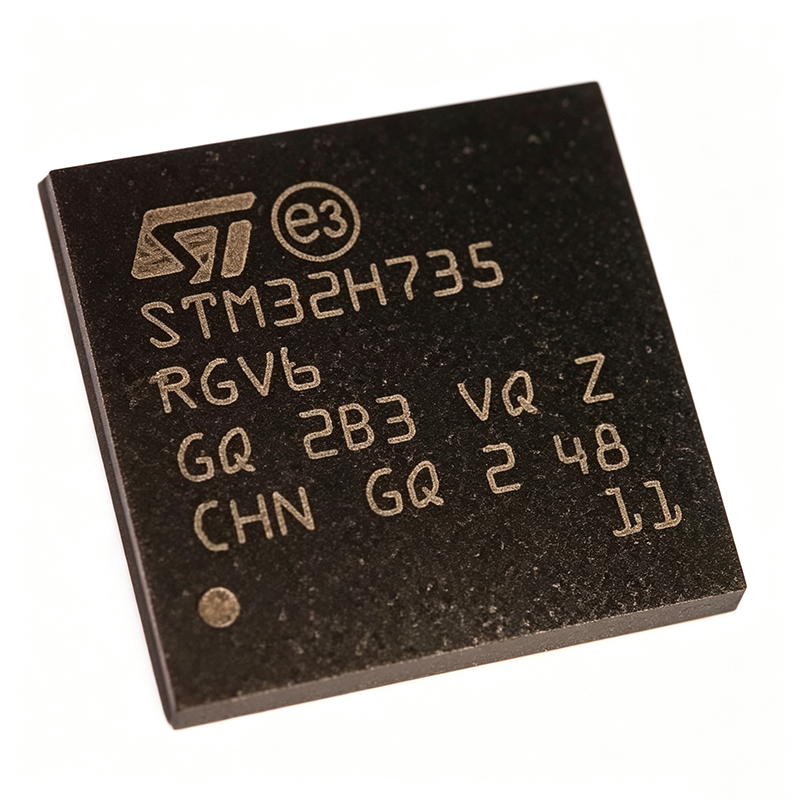
STM32H735RGV6 - 550MHz Cortex-M7 MCU with 1MB Flash | STMicroelectronics
The STMicroelectronics STM32H735RGV6 is a high-performance 32-bit microcontroller based on the Arm Cortex-M7 core, operating at up to 550 MHz. It integrates 1 MB of flash memory and 564 KB of SRAM, making it suitable for demanding applications such as industrial control, motor control, and advanced human-machine interfaces. The device is housed in a 68-pin VFQFPN package (8x8 mm) with an exposed pad, offering a compact footprint for space-constrained designs. What is a microcontroller? A microcontroller (MCU) is a compact integrated circuit designed to govern a specific operation in an embedded system. It contains a processor core, memory (flash and SRAM), and programmable input/output peripherals on a single chip. Microcontrollers are the backbone of embedded systems, ranging from simple 8-bit devices for basic control to high-performance 32-bit cores like the Cortex-M7 for real-time signal processing and complex control algorithms. The STM32H7 series sits at the top of the STM32 portfolio, providing the highest performance for applications that require intensive computation and rich connectivity. Key features of the STM32H735RGV6 include a 550 MHz Cortex-M7 core with double-precision FPU, a Chrom-ART Accelerator for 2D graphics, and a comprehensive set of peripherals: multiple 16-bit and 32-bit timers, 12-bit ADCs with up to 5 MSPS, a true random number generator, and cryptographic acceleration (AES, DES, 3DES, and hash). The device supports a wide supply voltage range of 1.62V to 3.6V and operates over a temperature range of -40°C to +85°C. It also features a rich set of communication interfaces including Ethernet, USB OTG HS, FDCAN, SPI, I2C, UART, and SAI. The STM32H735RGV6 is built on ST's advanced 40nm process technology, enabling high clock speeds with low power consumption. The core is based on the Armv7E-M architecture with a 6-stage pipeline and includes a single-precision and double-precision FPU, DSP instructions, and a memory protection unit (MPU). The device also includes a flexible memory controller (FMC) for external SDRAM, SRAM, and NOR/NAND flash, and a camera interface for image capture. Typical applications include industrial automation (PLC, robotics), motor control (field-oriented control of BLDC motors), medical devices (patient monitors, infusion pumps), and high-end consumer electronics (smart speakers, home automation hubs). The high clock speed and rich peripherals make it ideal for real-time control and signal processing tasks. When designing with this device, ensure adequate decoupling on all power pins and a clean ground plane. The VFQFPN68 package requires careful thermal management; the thermal resistance (theta_JA) is approximately 45°C/W, so consider a heatsink or airflow for high-power applications. Also, use the internal LDO or external SMPS to generate the core voltage (1.2V) for optimal power efficiency.
STM32H742VIT6 - 480MHz Cortex-M7 MCU with 2MB Flash | STMicroelectronics
The STMicroelectronics STM32H742VIT6 is a high-performance 32-bit microcontroller based on the ARM Cortex-M7 core, operating at up to 480 MHz. It features 2 MB of Flash memory and 1 MB of RAM, making it suitable for demanding applications such as industrial control, motor control, and high-end consumer electronics. The device is housed in a 100-pin LQFP package (LQFP100) with a 14x14 mm body and 0.5 mm pitch. A microcontroller (MCU) is a compact integrated circuit designed to govern a specific operation in an embedded system. It contains a processor core, memory, and programmable input/output peripherals. The STM32H742VIT6 belongs to the STM32H7 series, which is part of the broader STM32 family of 32-bit Flash microcontrollers. This family is widely used in embedded systems across automotive, industrial, and consumer domains, offering a balance of performance, power efficiency, and peripheral integration. Key features of the STM32H742VIT6 include a 480 MHz Cortex-M7 core with double-precision FPU, a Chrom-ART Accelerator for graphics, and a comprehensive set of communication interfaces including Ethernet, USB OTG HS/FS, CAN FD, and multiple USART/SPI/I2C. It also integrates advanced analog peripherals such as 3x 16-bit ADCs, 2x 12-bit DACs, and a true random number generator. The device supports a wide supply voltage range of 1.62V to 3.6V and operates over a temperature range of -40°C to +85°C. The STM32H742VIT6 is built on a high-performance architecture with an L1 cache, enabling zero-wait-state execution from Flash. It includes a power management unit with multiple low-power modes, making it suitable for battery-powered applications. The device also features a hardware cryptographic accelerator (AES, DES, 3DES) and a secure boot option, enhancing security for IoT and connectivity applications. Typical applications include industrial automation, motor control, robotics, audio processing, and high-end consumer devices such as smart home hubs and wearable devices. The rich peripheral set and high processing power make it ideal for real-time control and signal processing tasks. When designing with this MCU, careful attention must be paid to power supply decoupling and PCB layout to ensure stable operation at 480 MHz. The device requires a 1.8V supply for the internal logic and a 3.3V supply for I/O, with proper bypass capacitors placed close to the power pins.
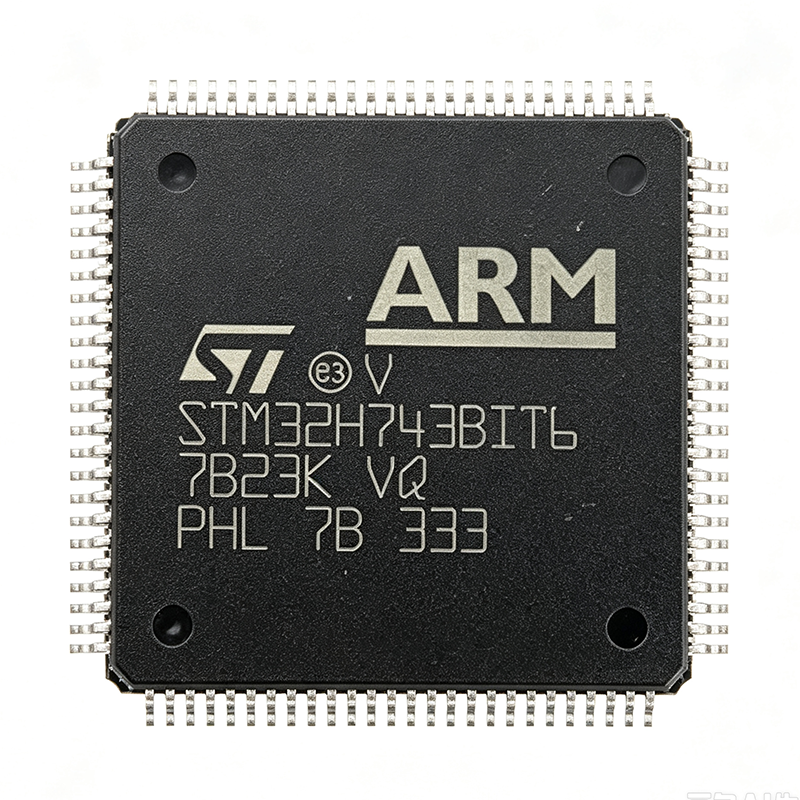
STM32H743BIT6 - 480MHz Cortex-M7 MCU | STMicroelectronics
The STM32H743BIT6 is a high-performance 32-bit microcontroller from STMicroelectronics, featuring an Arm Cortex-M7 core running at up to 480 MHz. It is part of the STM32H7 series, designed for demanding applications requiring high compute performance, rich connectivity, and advanced security. The device is housed in an LQFP-208 package, offering a compact footprint for space-constrained designs. What is a microcontroller? A microcontroller (MCU) is a compact integrated circuit designed to govern a specific operation in an embedded system. It integrates a processor core, memory (RAM and flash), and programmable input/output peripherals on a single chip. Microcontrollers are the brains of countless electronic products, from automotive engine control units to industrial robots and consumer electronics. The STM32H743BIT6 sits at the high end of the MCU spectrum, providing performance comparable to application processors while maintaining the real-time responsiveness and low power consumption expected of embedded devices. Key features of the STM32H743BIT6 include a 480 MHz Arm Cortex-M7 core with double-precision FPU, 2 MB of flash memory, and 1 MB of RAM. It supports a wide range of communication interfaces including Ethernet, USB OTG HS/FS, CAN FD, SPI, I2C, UART, and SDMMC. The device also integrates advanced security features such as a true random number generator (TRNG), cryptographic acceleration, and secure boot. With its high clock speed and large memory, it is ideal for applications like motor control, industrial automation, and high-end audio processing. From a technical architecture perspective, the STM32H743BIT6 leverages a 7-stage pipeline with branch prediction and a memory protection unit (MPU) for enhanced reliability. The Cortex-M7 core includes a double-precision FPU and a DSP instruction set, enabling efficient execution of complex algorithms. The device also features a Chrom-ART Accelerator for 2D graphics, making it suitable for GUI applications. The power management unit provides multiple low-power modes, allowing designers to balance performance and energy consumption. Typical applications include industrial motor control, robotics, power conversion, audio processing, and high-end consumer electronics. The STM32H743BIT6's combination of high clock speed, large memory, and rich peripherals makes it a versatile choice for advanced embedded systems. When designing with this device, ensure proper decoupling of the power supply pins and careful layout of the high-speed interfaces to maintain signal integrity. The device supports a wide supply voltage range of 1.62V to 3.6V, and the internal LDO can be bypassed for direct power supply to the core. This page synthesizes distributor pricing, drop-in alternatives, and practical design notes not found in the ST datasheet.