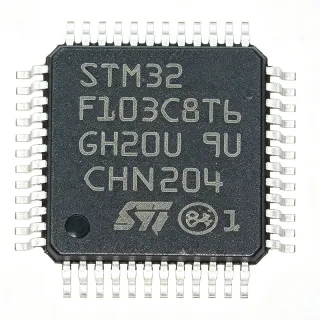
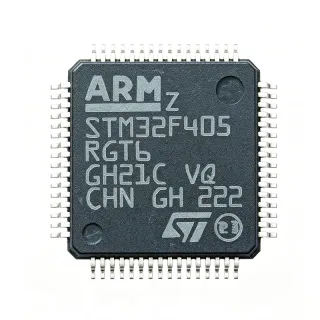
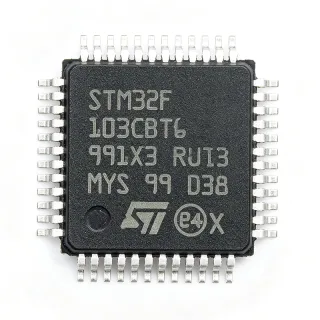
STM8AF6286TCY - 8-bit Automotive MCU, 64KB Flash, 24MHz | STMicroelectronics
MPN: STM8AF6286TCY ✓ Active| Qty | Unit Price | Extended |
|---|---|---|
| 1 | $5.91 | $5.91 |
| 10 | $5.32 | $53.20 |
| 100 | $4.73 | $473.00 |
| 500 | $4.14 | $2,070.00 |
| 1,000 | $3.55 | $3,550.00 |
Drop-in alternatives for STM8AF6286TCY — same package, pin-to-pin compatible. Different-package parts requiring PCB rework are excluded.
Quick Comparison Tool — Select alternative parts for side-by-side comparison:
STM8AF6286TCX
✅ Drop-In📋 Reference alternative (not in catalog)
STM8AF6286TCYTR
✅ Drop-In📋 Reference alternative (not in catalog)
STM8S207K8T6C
✅ Drop-In📋 Reference alternative (not in catalog)
STM8AF6286TCY Maximum Ratings & Electrical Characteristics
| Core | STM8A |
| Max CPU Frequency | 24 MHz |
| Flash Memory | 64 KB |
| RAM | 6 KB |
| EEPROM | 2 KB |
| Supply Voltage | 3.0 V to 5.5 V |
| Operating Temperature | -40°C to +150°C |
| Package | LQFP-32 |
| Number of I/O Pins | 25 |
| ADC Resolution | 10-bit |
| ADC Channels | 10 |
| Timers | Multiple 16-bit |
| Communication Interfaces | 2x UART, 1x SPI, 1x I2C |
| AEC-Q100 Grade | Grade 0 |
| RoHS Compliant | Yes |
STM8AF6286TCY Pin Configuration
| Pin 1 | VDD — Digital power supply |
| Pin 2 | VSS — Digital ground |
| Pin 3 | PA0 — General purpose I/O / ADC input |
| Pin 4 | PA1 — General purpose I/O / ADC input |
| Pin 5 | PA2 — General purpose I/O / ADC input |
| Pin 6 | PA3 — General purpose I/O / ADC input |
| Pin 7 | VSS — Digital ground |
| Pin 8 | VDD — Digital power supply |
| Pin 9 | PB0 — General purpose I/O / SPI SCK |
| Pin 10 | PB1 — General purpose I/O / SPI MISO |
| Pin 11 | PB2 — General purpose I/O / SPI MOSI |
| Pin 12 | PB3 — General purpose I/O / SPI NSS |
| Pin 13 | PB4 — General purpose I/O / I2C SCL |
| Pin 14 | PB5 — General purpose I/O / I2C SDA |
| Pin 15 | VSS — Digital ground |
| Pin 16 | VDD — Digital power supply |
| Pin 17 | PC0 — General purpose I/O / UART1 TX |
| Pin 18 | PC1 — General purpose I/O / UART1 RX |
| Pin 19 | PC2 — General purpose I/O / UART2 TX |
| Pin 20 | PC3 — General purpose I/O / UART2 RX |
| Pin 21 | PC4 — General purpose I/O / ADC input |
| Pin 22 | PC5 — General purpose I/O / ADC input |
| Pin 23 | PC6 — General purpose I/O / ADC input |
| Pin 24 | PC7 — General purpose I/O / ADC input |
| Pin 25 | VSS — Digital ground |
| Pin 26 | VDD — Digital power supply |
| Pin 27 | PD0 — General purpose I/O / Timer input |
| Pin 28 | PD1 — General purpose I/O / Timer output |
| Pin 29 | PD2 — General purpose I/O / Timer input |
| Pin 30 | PD3 — General purpose I/O / Timer output |
| Pin 31 | NRST — Reset (active low) |
| Pin 32 | VDDA — Analog power supply |
Safe Operating Area (SOA) & Thermal Characteristics
No official SOA curve available for this digital IC. Always operate within absolute maximum ratings specified in the datasheet. Ensure adequate cooling and derate as needed.
Typical Applications
STM8AF6286TCY is suitable for 6 applications: Automotive Body Control Module, Automotive Lighting Control, Seat Control Module, Window Lift Control, Sensor Interface, Industrial Control.
Automotive Body Control Module
The STM8AF6286TCY is ideal for automotive body control modules (BCM) due to its 24 MHz CPU, 64 KB Flash, and robust peripherals like UART, SPI, I2C, and 10-bit ADC. Its AEC-Q100 Grade 0 qualification and wide temperature range ensure reliable operation in automotive environments. In a typical BCM, the MCU manages lighting, wipers, and door locks, interfacing with sensors and actuators via its communication interfaces. The integrated EEPROM stores calibration data and fault codes, while low-power modes reduce battery drain when the vehicle is off. The 10-bit ADC reads analog sensors for temperature and position monitoring, and the timers generate PWM signals for motor control. The device's robust ESD protection and wide operating temperature range make it well-suited for harsh automotive environments.
Recommended
Automotive Lighting Control
The STM8AF6286TCY is well-suited for automotive lighting control, including LED and HID headlamps, due to its 24 MHz clock and multiple 16-bit timers that generate precise PWM signals for dimming. The 10-bit ADC monitors current and voltage for fault detection, while the UART interface communicates with the vehicle's CAN or LIN bus. The device's AEC-Q100 Grade 0 qualification ensures reliable operation in the high-temperature environment near headlamps. In a typical lighting control module, the MCU reads switch inputs, adjusts brightness via PWM, and detects open or short circuits. The integrated EEPROM stores calibration data for different lamp types, and the low-power Halt mode reduces current draw when the lights are off. The wide supply voltage range of 3.0V to 5.5V accommodates battery voltage fluctuations during cranking.
Recommended
Seat Control Module
The STM8AF6286TCY is used in seat control modules to manage motorized seat adjustments, heating, and memory functions. Its 24 MHz CPU and multiple timers generate PWM signals for motor speed control, while the 10-bit ADC reads potentiometer positions for seat position feedback. The UART interface communicates with the body control module for centralized control. The device's 64 KB Flash stores seat position profiles, and the EEPROM retains memory settings across power cycles. The AEC-Q100 Grade 0 qualification ensures reliable operation in the automotive environment, and the wide temperature range accommodates the heat generated by seat motors. The low-power modes help reduce battery drain when the seat is not in use.
Recommended
Window Lift Control
The STM8AF6286TCY is ideal for window lift control modules, providing precise motor control via PWM and monitoring current to detect obstructions. Its 10-bit ADC reads current sense resistors to implement anti-pinch functionality, and the timers generate the PWM signals for motor speed. The UART interface allows communication with the body control module for centralized window control. The device's 64 KB Flash stores control algorithms, and the EEPROM stores fault codes. The AEC-Q100 Grade 0 qualification ensures reliable operation in the automotive environment, and the wide temperature range accommodates the heat generated by the motor. The low-power modes reduce battery drain when the window is not in use.
Recommended
Sensor Interface
The STM8AF6286TCY is used to interface with various automotive sensors, such as temperature, pressure, and position sensors. Its 10-bit ADC with 10 channels reads analog sensor outputs, while the SPI and I2C interfaces connect to digital sensors. The UART interface communicates with the ECU for data transmission. The device's 64 KB Flash stores sensor calibration data, and the EEPROM retains calibration across power cycles. The AEC-Q100 Grade 0 qualification ensures reliable operation in the automotive environment, and the wide temperature range accommodates the sensor's location. The low-power modes reduce battery drain when the sensor is not actively monitored.
Recommended
Industrial Control
The STM8AF6286TCY is also suitable for industrial control applications, such as motor control and process automation, due to its robust peripherals and wide operating temperature range. Its 24 MHz CPU and timers generate PWM signals for motor control, while the 10-bit ADC reads analog sensors for process monitoring. The UART, SPI, and I2C interfaces connect to external devices and communication networks. The device's 64 KB Flash stores control algorithms, and the EEPROM stores configuration data. The AEC-Q100 Grade 0 qualification ensures reliability in harsh industrial environments, and the wide supply voltage range accommodates various power supplies. The low-power modes reduce energy consumption in battery-powered industrial devices.
Recommended
Recommended Products Summary
Engineering reference data for STM8AF6286TCY — comparison, design guidance, and compliance information.
Selection Guide
Comparison with Alternatives
| Parameter | This Product | STM8AF6286TAY | STM8AF6286TCX | STM8AF6286TCYTR | STM8S207K8T6C |
|---|---|---|---|---|---|
| Package | LQFP-32 | LQFP-48 | LQFP-32 | LQFP-32 | LQFP-32 |
| Brand | STMicroelectronics | STMicroelectronics | STMicroelectronics | STMicroelectronics | STMicroelectronics |
| Max CPU Frequency | 24 MHz | 24 MHz | 24 MHz | 24 MHz | 24 MHz |
| Flash Memory | 64 KB | 64 KB | 64 KB | 64 KB | 64 KB |
| RAM | 6 KB | 6 KB | 6 KB | 6 KB | 6 KB |
| EEPROM | 2 KB | 2 KB | 2 KB | 2 KB | 2 KB |
| AEC-Q100 Grade | Grade 0 | Grade 0 | Grade 0 | Grade 0 | Not qualified |
| Operating Temperature | -40°C to +150°C | -40°C to +150°C | -40°C to +150°C | -40°C to +150°C | -40°C to +85°C |
Key Differentiators
- AEC-Q100 Grade 0 qualification (vs STM8S207K8T6C)
- Integrated true data EEPROM (vs STM8S207K8T6C)
- Wide operating temperature range (vs STM8AF5286UAY)
Design Notes
Ensure proper decoupling of VDD and VDDA pins with 100nF capacitors placed as close to the pins as possible. Use a 10uF bulk capacitor on the main power rail to handle transient currents. The STM8AF6286TCY operates from 3.0V to 5.5V, so verify the supply voltage is within this range under all load conditions.
For the LQFP-32 package, ensure the exposed pad (if present) is soldered to a ground plane for thermal management. Route high-speed signals (SPI, I2C) away from noisy power traces. Keep analog and digital grounds separate and connect them at a single point to minimize noise.
Do not exceed the absolute maximum ratings for supply voltage (6.5V) or I/O pins. The STM8AF6286TCY has a 10-bit ADC, so ensure the reference voltage is stable for accurate conversions. When using the EEPROM, respect the 300k write/erase cycle limit to avoid premature wear.
Compliance Information
RoHS compliant per ST product page. AEC-Q100 Grade 0 qualified for automotive applications.