ADC/DAC
Products (181)

AD7091R-2BRUZ - 12-Bit 1MSPS SAR ADC | Analog Devices
The AD7091R-2BRUZ from Analog Devices is a 12-bit successive approximation register (SAR) analog-to-digital converter (ADC) that operates from a single 2.7V to 5.25V power supply and achieves a sampling rate of 1 MSPS. It features two single-ended analog input channels, an on-chip 2.5V reference, and a high-speed serial interface (SPI). The device is housed in a 16-lead TSSOP package, making it suitable for space-constrained applications. A SAR ADC is a type of analog-to-digital converter that uses a binary search algorithm to convert an analog input into a digital output. It is known for its high speed, low power consumption, and ease of use, making it ideal for applications such as data acquisition, industrial control, and portable instrumentation. The AD7091R-2 is part of the AD7091R family, which includes 2-, 4-, and 8-channel versions, all sharing the same core architecture and performance characteristics. Key features of the AD7091R-2BRUZ include ultralow power consumption (typically 367 µA at 3V and 1 MSPS), a wide bandwidth track-and-hold amplifier that can handle input frequencies in excess of 1.5 MHz, and an on-chip conversion clock that simplifies system design. The device also includes a channel sequencer that allows preprogrammed selection of channels to be converted sequentially, enhancing flexibility in multi-channel applications. The AD7091R-2BRUZ uses a SAR architecture with an internal reference and a high-speed serial interface that supports data read after conversion, achieving a 1 MSPS throughput rate with a 50 MHz SCLK. The device is designed for low power and high accuracy, with a typical power dissipation of less than 2 mW at 3V, making it suitable for battery-powered and portable applications. Typical applications include battery monitoring, data acquisition systems, industrial process control, and portable instrumentation. The wide input bandwidth and low power consumption make it ideal for applications requiring high-speed, low-power analog-to-digital conversion. When designing with this device, ensure that the analog input voltage does not exceed the supply voltage and that adequate decoupling capacitors are placed near the power supply pins. The SPI interface should be configured for the correct clock polarity and phase to ensure reliable data transfer.
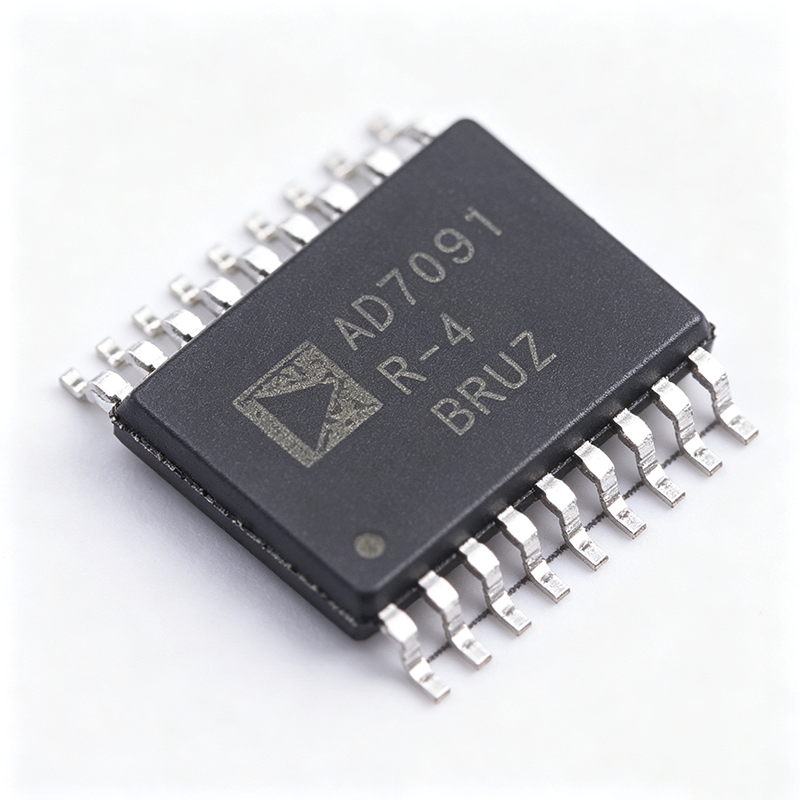
AD7091R-4BRUZ - 4-Ch 12-Bit 1MSPS SAR ADC | Analog Devices
The AD7091R-4BRUZ is a 4-channel, 12-bit, ultralow power, successive approximation (SAR) analog-to-digital converter (ADC) from Analog Devices. It operates from a single 2.7 V to 5.25 V power supply and achieves a sampling rate of 1 MSPS. The device features an on-chip 2.5 V reference, an on-chip conversion clock, and a high-speed SPI-compatible serial interface. It is available in a 20-lead TSSOP package, making it suitable for space-constrained applications. An ADC (analog-to-digital converter) is a device that converts continuous analog signals into discrete digital numbers. The AD7091R-4BRUZ is a SAR ADC, which uses a binary search algorithm to determine the digital output. SAR ADCs are known for their high speed, low power, and ease of use, making them ideal for a wide range of applications. The AD7091R-4BRUZ is part of the AD7091R family, which includes 2-, 4-, and 8-channel versions, all sharing the same core architecture. Key features of the AD7091R-4BRUZ include ultralow power consumption: normal mode draws only 1.4 mW at 1 MSPS, and power-down mode draws 550 nA typical at VDD = 5.25 V and 435 nA at VDD = 3 V. The device also features a programmable ALERT interrupt pin (on 4- and 8-channel models) for monitoring out-of-range conditions. The on-chip 2.5 V reference eliminates the need for an external reference, simplifying design. The AD7091R-4BRUZ uses a flexible power/throughput rate management scheme, allowing the conversion rate to be adjusted to match the system's needs, thereby optimizing power consumption. The SPI interface supports data read after conversion, achieving a 1 MSPS throughput rate. The device also includes a channel sequencer that allows preprogrammed selection of channels to be converted sequentially, reducing microcontroller overhead. Typical applications include battery-powered instrumentation, portable medical devices, industrial process control, and data acquisition systems. The low power consumption and small package make it ideal for portable and battery-operated equipment. When designing with the AD7091R-4BRUZ, ensure that the analog input voltage does not exceed the supply voltage to avoid damage. Use a low-pass filter on the analog inputs to reduce noise and aliasing. The reference voltage is internally generated, but an external reference can be used if higher accuracy is required.

AD7091R-5BRUZ - 12-Bit Ultralow Power ADC | Analog Devices
The AD7091R-5BRUZ is a 12-bit, multichannel, ultralow power, successive approximation analog-to-digital converter (ADC) from Analog Devices. It operates from a single 2.7 V to 5.25 V power supply and typically consumes only 24 µA at a 3 V supply in fast mode, making it ideal for battery-powered and portable applications. The device features four single-ended analog input channels with a channel sequencer, an on-chip conversion clock, and an accurate 2.5 V internal reference. It provides a 2-wire serial interface compatible with I2C, supporting standard and fast modes up to 400 kHz. The AD7091R-5BRUZ is available in a 20-lead TSSOP package, offering a compact solution for space-constrained designs. An analog-to-digital converter (ADC) is a device that converts continuous analog signals into discrete digital numbers, enabling digital systems to process real-world signals. The AD7091R-5BRUZ is a SAR (successive approximation register) ADC, which uses a binary search algorithm to determine the digital output. SAR ADCs are known for their high speed, low power, and ease of use, making them suitable for a wide range of applications including data acquisition, industrial control, and medical instrumentation. The AD7091R-5BRUZ belongs to the family of data acquisition components, which are essential in bridging the analog and digital domains. Key features of the AD7091R-5BRUZ include its ultralow power consumption of 24 µA at 3 V, which extends battery life in portable devices. The on-chip 2.5 V reference eliminates the need for an external reference, reducing component count and board space. The I2C-compatible interface simplifies connection to microcontrollers and digital signal processors. The device also includes a programmable out-of-bounds user alert function, which can be used to monitor analog inputs and generate interrupts when values exceed preset thresholds. The channel sequencer allows automatic conversion of multiple channels without microcontroller intervention, reducing software overhead. From a technical perspective, the AD7091R-5BRUZ achieves a throughput of up to 1 MSPS with a 50 MHz SCLK, although the I2C interface limits the actual conversion rate to about 22.22 kSPS in fast mode. The device operates over a temperature range of -40°C to +125°C, making it suitable for industrial environments. The TSSOP-20 package has a thermal resistance of approximately 90°C/W, and the device is RoHS compliant. The internal reference has a typical accuracy of ±0.1% and a temperature coefficient of 10 ppm/°C, ensuring stable performance over temperature. Typical applications include portable instrumentation, battery monitoring, temperature sensing, and industrial process control. In portable medical devices, the ultralow power consumption is critical for extending battery life. In industrial settings, the wide operating temperature range and I2C interface make it easy to integrate with existing control systems. The AD7091R-5BRUZ is also suitable for data acquisition systems where multiple analog channels need to be monitored with minimal power consumption. When designing with the AD7091R-5BRUZ, it is important to ensure proper decoupling of the power supply pins with 0.1 µF and 10 µF capacitors. The reference pin should be bypassed with a 1 µF capacitor to ensure stable operation. The I2C bus requires pull-up resistors, typically 4.7 kΩ, to VDRIVE. For optimal performance, keep the analog input traces short and shielded from digital noise.

AD7091R-5BRUZ-RL7 - 4-Ch 12-Bit I2C ADC | Analog Devices
The AD7091R-5BRUZ-RL7 is a 12-bit, multichannel, ultralow power, successive approximation analog-to-digital converter (ADC) from Analog Devices. It operates from a single 2.7 V to 5.25 V power supply and typically consumes only 24 µA at a 3 V supply in fast mode. The device provides a 2-wire serial interface compatible with I2C interfaces, making it ideal for space-constrained, battery-powered applications. An ADC (analog-to-digital converter) is a device that converts continuous analog signals into discrete digital numbers. The AD7091R-5 is a SAR (successive approximation register) ADC, which uses a binary search algorithm to determine the digital output. SAR ADCs are known for their high speed, low power, and small size, making them suitable for a wide range of applications from industrial process control to portable medical devices. As a data converter, it sits within the broader category of mixed-signal ICs, bridging the analog and digital domains. Key features include four single-ended analog input channels, an on-chip accurate 2.5 V reference, a channel sequencer for preprogrammed channel selection, and a programmable out-of-bounds user alert function. The device also features an on-chip conversion clock, eliminating the need for an external clock source. The I2C interface supports standard, fast, and high-speed modes, with a maximum throughput of 1 MSPS. The AD7091R-5 uses a low-power architecture that minimizes current consumption, with a typical supply current of 24 µA at 3 V in fast mode. The device includes a power-down mode that reduces current to less than 1 µA, extending battery life in portable applications. The internal reference provides a stable 2.5 V output, and the device can also operate with an external reference if required. Typical applications include battery monitoring, portable instrumentation, medical devices, and industrial process control. The I2C interface simplifies connection to microcontrollers and digital signal processors, while the small 20-lead TSSOP package saves board space. The device is specified over the industrial temperature range of -40°C to +125°C. When designing with this ADC, ensure that the analog input voltage does not exceed the supply voltage to avoid damage. Use a decoupling capacitor on the reference pin to maintain accuracy. The I2C address is set by the ADDR pin, allowing multiple devices on the same bus.
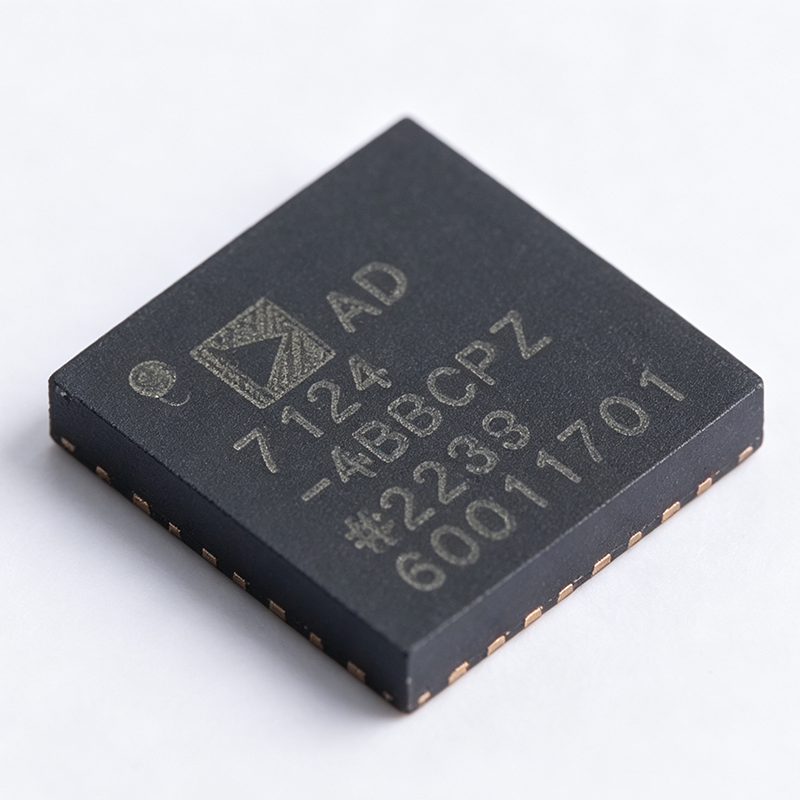
AD7124-4BBCPZ-RL7 - 24-Bit Sigma-Delta ADC | Analog Devices
The AD7124-4BBCPZ-RL7 is a low power, low noise, completely integrated analog front end for high precision measurement applications from Analog Devices. It contains a low noise, 24-bit sigma-delta (Σ-Δ) analog-to-digital converter (ADC) and can be configured to have four differential inputs or seven single-ended or pseudo differential inputs. The device operates from a 2.7 V to 3.6 V analog supply and a 1.8 V to 3.6 V digital supply, with a maximum output data rate of 19.2 kSPS. It is available in a 32-lead LFCSP (5x5 mm) package, making it suitable for space-constrained industrial and instrumentation designs. A sigma-delta ADC is a type of analog-to-digital converter that uses oversampling and noise shaping to achieve high resolution, typically 16 to 24 bits. It is widely used in precision measurement applications where low noise and high accuracy are critical, such as temperature sensing, pressure measurement, and process control. The AD7124-4 belongs to the ADC family, specifically the precision sigma-delta ADC category, which is part of the broader data converter and analog front-end hierarchy. Key features of the AD7124-4BBCPZ-RL7 include a programmable gain amplifier (PGA) with gains from 1 to 128, a precision low drift internal band gap reference, and an external differential reference that can be internally buffered. The device offers three power modes (low, mid, and full) to optimize power consumption versus noise performance, with a typical current consumption of 350 µA in low power mode. It also includes a 50 Hz/60 Hz rejection filter, a 24-bit resolution, and an SPI-compatible serial interface. The AD7124-4 integrates a complete signal chain, including a multiplexer, PGA, sigma-delta modulator, digital filter, and reference, reducing external component count and simplifying design. The device supports both internal and external references, and its digital filter provides programmable output data rates and settling times. The ADC is designed for high precision measurement applications, offering excellent noise performance with a typical RMS noise of 1.5 µV at a gain of 128 and an output data rate of 25 SPS. Typical applications include smart transmitters, process control input modules, temperature and pressure measurement, and low power or battery-operated instrumentation. The AD7124-4 is also suitable for weigh scales, strain gauge sensors, and thermocouple or RTD measurements. Its low power consumption and high resolution make it ideal for portable and remote sensing applications. When designing with the AD7124-4, it is important to provide adequate decoupling on the AVDD and DVDD supplies and to place the reference decoupling capacitor close to the REFIN pins. The device's power mode should be selected based on the required noise performance and power budget, as higher power modes offer lower noise but increased current consumption.
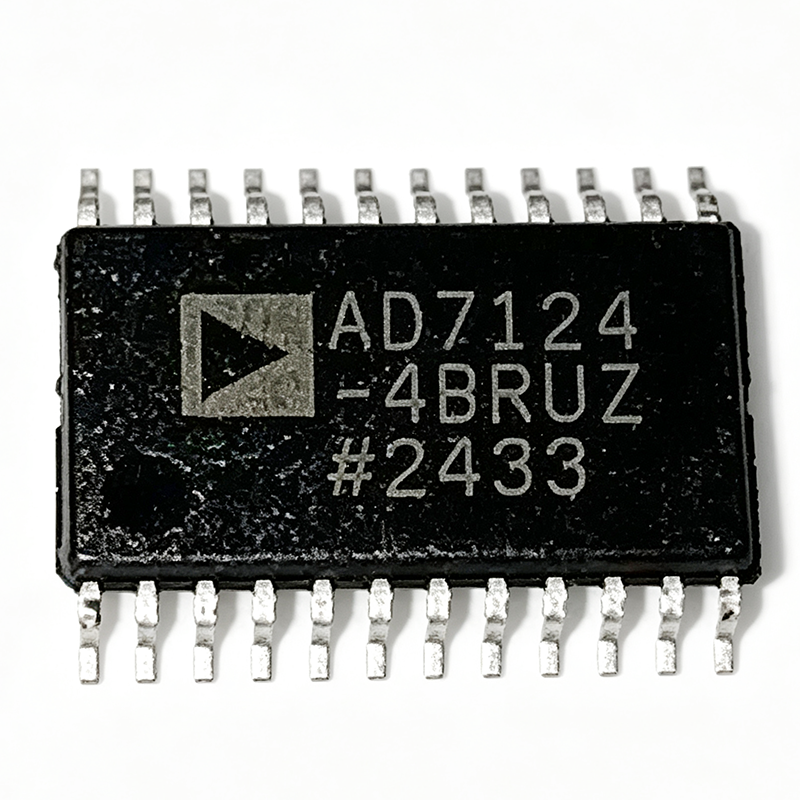
AD7124-4BRUZ - 24-Bit Sigma-Delta ADC | Analog Devices
The AD7124-4BRUZ is a low power, low noise, completely integrated analog front end for high precision measurement applications from Analog Devices. It contains a 24-bit sigma-delta (Σ-Δ) analog-to-digital converter (ADC) with a programmable gain amplifier (PGA) and an internal reference. The device can be configured to have four differential inputs or seven single-ended or pseudo differential inputs, making it highly flexible for various sensor and measurement applications. It is available in a 24-lead TSSOP package, operating over a temperature range of -40°C to +125°C. An analog-to-digital converter (ADC) is a device that converts a continuous analog signal into a discrete digital representation. The AD7124-4 is a sigma-delta ADC, which uses oversampling and noise shaping to achieve high resolution and excellent noise performance. It is part of the precision ADC family, which is essential in applications requiring accurate measurement of physical quantities such as temperature, pressure, and strain. The AD7124-4 integrates key signal chain components, including a PGA, reference, and excitation current sources, reducing external component count and simplifying design. Key features of the AD7124-4BRUZ include a 24-bit resolution, low noise performance, and low power consumption. It offers a maximum output data rate of 19.2 kSPS, with programmable gain from 1 to 128. The device includes an internal band gap reference with low drift, and also accepts an external differential reference. It supports SPI communication, and includes diagnostic functions such as open-circuit detection and overvoltage monitoring. The AD7124-4 is recommended for new designs, with a 1ku list price starting from $6.55. The AD7124-4 uses a sigma-delta architecture with a digital filter, providing high resolution and rejection of out-of-band noise. The PGA allows direct connection of low-level sensors, such as thermocouples and strain gauges, without additional amplification. The device operates from a 2.7V to 3.6V analog supply and a 1.8V to 3.6V digital supply, with a typical current consumption of 1.2 mA in full power mode. The internal reference has a typical drift of 10 ppm/°C, ensuring stable measurements over temperature. Typical applications include temperature measurement with RTDs and thermocouples, pressure measurement with bridge sensors, and industrial process control. The AD7124-4 is also suitable for battery-powered portable instruments due to its low power consumption. Its integrated excitation current sources simplify RTD and thermocouple biasing, while the PGA and reference reduce external component count. When designing with the AD7124-4, ensure proper decoupling of the AVDD and DVDD supplies, and place the reference decoupling capacitor close to the REF pin. The SPI interface should be isolated if the ADC is used in noisy industrial environments. The device supports both internal and external references, and the choice depends on the required accuracy and temperature drift.
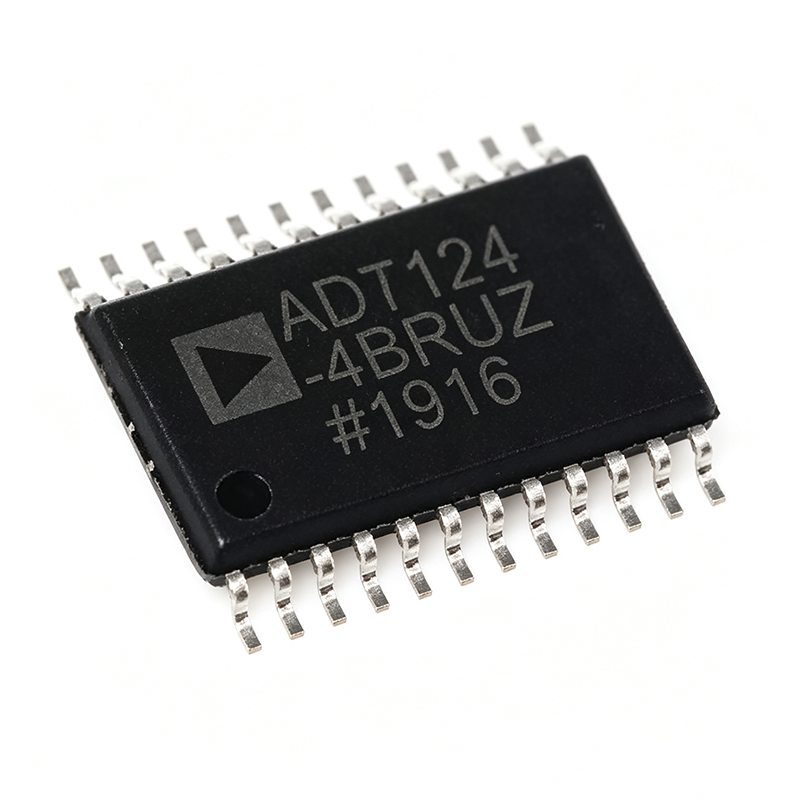
AD7124-4BRUZ-RL - 24-Bit Sigma-Delta ADC | Analog Devices
The AD7124-4BRUZ-RL is a low power, low noise, completely integrated analog front end for high precision measurement applications from Analog Devices. It contains a low noise, 24-bit sigma-delta analog-to-digital converter (ADC) and can be configured to have four differential inputs or seven single-ended or pseudo differential inputs. The device operates from a 2.7V to 3.6V analog supply and a 1.8V to 3.6V digital supply, with a typical current consumption of 1.2 mA in full power mode. It is available in a 24-lead TSSOP package, making it suitable for space-constrained industrial and instrumentation designs. An analog-to-digital converter (ADC) is a system that converts an analog signal, such as a sound picked up by a microphone or light entering a digital camera, into a digital signal. The AD7124-4 is a sigma-delta ADC, which uses oversampling and noise shaping to achieve high resolution and excellent noise performance. It is part of the broader category of data acquisition systems, which are essential in bridging the analog world to digital processing. The AD7124-4 integrates a programmable gain amplifier (PGA), a precision voltage reference, and a temperature sensor, reducing the need for external components and simplifying the signal chain. Key features of the AD7124-4 include a 24-bit resolution, a maximum output data rate of 19.2 kSPS, and a root mean square (RMS) noise of 1.8 uV at a gain of 128 and an output data rate of 25 SPS. The device offers three power modes (full, mid, and low power) to optimize power consumption versus performance, with a current consumption of 1.2 mA, 0.6 mA, and 0.3 mA respectively. It also features a 50 Hz/60 Hz rejection mode, which is critical for industrial applications where power line interference is common. The integrated PGA provides gains from 1 to 128, allowing direct connection to low-level sensors such as thermocouples and strain gauges. The AD7124-4 uses a sigma-delta modulator with a digital filter, providing high resolution and excellent linearity. The device includes a 24-bit register map for configuration and data readback, and it communicates via a serial peripheral interface (SPI) that is compatible with 3-wire or 4-wire operation. The internal reference has a typical drift of 5 ppm/°C, ensuring stable measurements over temperature. The device also includes a burnout current source and a diagnostic function that can detect open or shorted sensor inputs, enhancing system reliability. Typical applications include smart transmitters, process control input modules, low power or battery operated instrumentation, and temperature measurement systems. The AD7124-4 is also suitable for pressure and strain gauge measurements, where its low noise and high gain are essential. The device is recommended for new designs and is available in a tape and reel package (RL suffix) for automated assembly. When designing with the AD7124-4, it is important to provide a clean analog supply and a stable reference. The device requires a 100 nF decoupling capacitor on the AVDD and DVDD pins, and a 1 uF capacitor on the REFOUT pin. The SPI interface should be isolated from noisy digital circuits to maintain the ADC's noise performance. The device also supports a power-down mode, which can be used to conserve power in battery-operated systems.
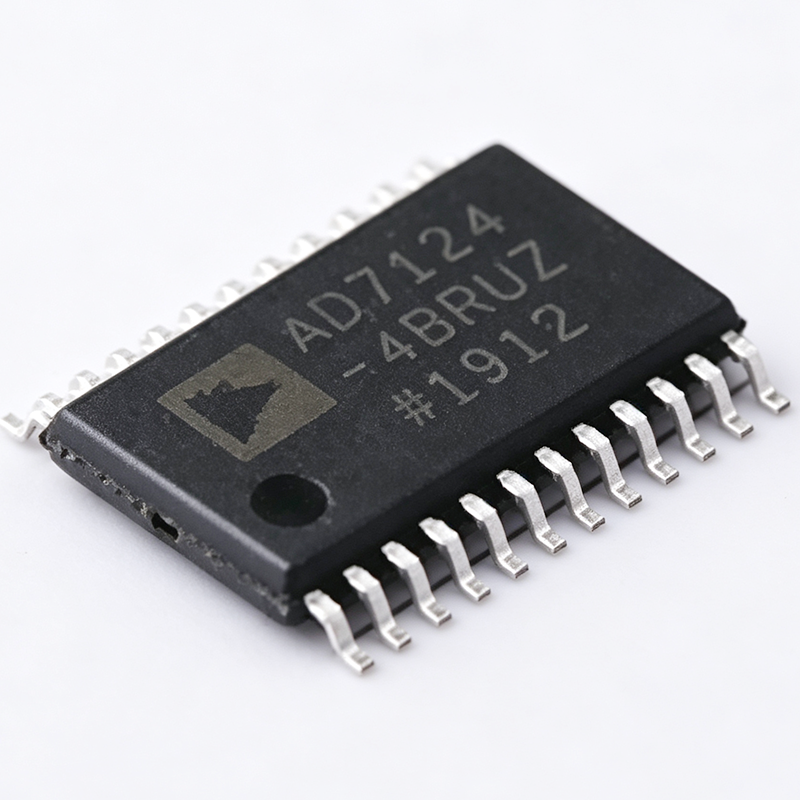
AD7124-4BRUZ-RL7 - 24-Bit Sigma-Delta ADC | Analog Devices
The AD7124-4BRUZ-RL7 is a low power, low noise, completely integrated analog front end for high precision measurement applications from Analog Devices. It contains a low noise, 24-bit sigma-delta analog-to-digital converter (ADC) and can be configured to have 4 differential inputs or 7 single-ended or pseudo differential inputs. The device operates from a 2.7V to 3.6V analog supply and a 1.8V to 3.6V digital supply, with a maximum output data rate of 19.2 kSPS. It includes an integrated programmable gain amplifier (PGA) with gains from 1 to 128, an internal band gap reference, and an external differential reference option. The AD7124-4 is available in a 24-lead TSSOP package, making it suitable for space-constrained designs. An analog-to-digital converter (ADC) is a device that converts continuous analog signals into discrete digital numbers. The sigma-delta ADC architecture uses oversampling and noise shaping to achieve high resolution, making it ideal for precision measurement applications. The AD7124-4 is part of the ADC family, specifically a high-resolution, low-power sigma-delta converter, which is a key component in data acquisition systems, sensor interfaces, and industrial process control. Key features of the AD7124-4BRUZ-RL7 include a 24-bit resolution, low noise performance (RMS noise as low as 1.8 uV at a gain of 128), and low power consumption (typically 1.1 mA in full power mode). The device also offers a 50 Hz/60 Hz rejection mode, a 24-bit sigma-delta modulator, and a flexible SPI interface. The integrated PGA allows direct connection to low-level sensors such as thermocouples, RTDs, and strain gauges, eliminating the need for external amplification. The AD7124-4 uses a sigma-delta modulator with a digital filter, providing excellent noise performance and linearity. The device includes a precision, low noise, low drift internal band gap reference, and also accepts an external differential reference, which can be internally buffered. The ADC supports multiple power modes (full, mid, and low power) to optimize power consumption versus performance. The device is specified over the -40°C to +125°C temperature range, making it suitable for industrial and automotive applications. Typical applications include temperature measurement (thermocouples, RTDs, thermistors), pressure measurement, flow measurement, and industrial process control. The AD7124-4 is also used in battery-powered instrumentation, portable medical devices, and smart transmitters. Its low power consumption and high resolution make it ideal for loop-powered applications. When designing with the AD7124-4, ensure proper decoupling of the AVDD and DVDD supplies with 0.1 uF and 10 uF capacitors. The reference input should be bypassed with a 1 uF capacitor. For best noise performance, use a low-noise external reference if the internal reference is not sufficient. The SPI interface should be isolated if the ADC is used in noisy industrial environments.
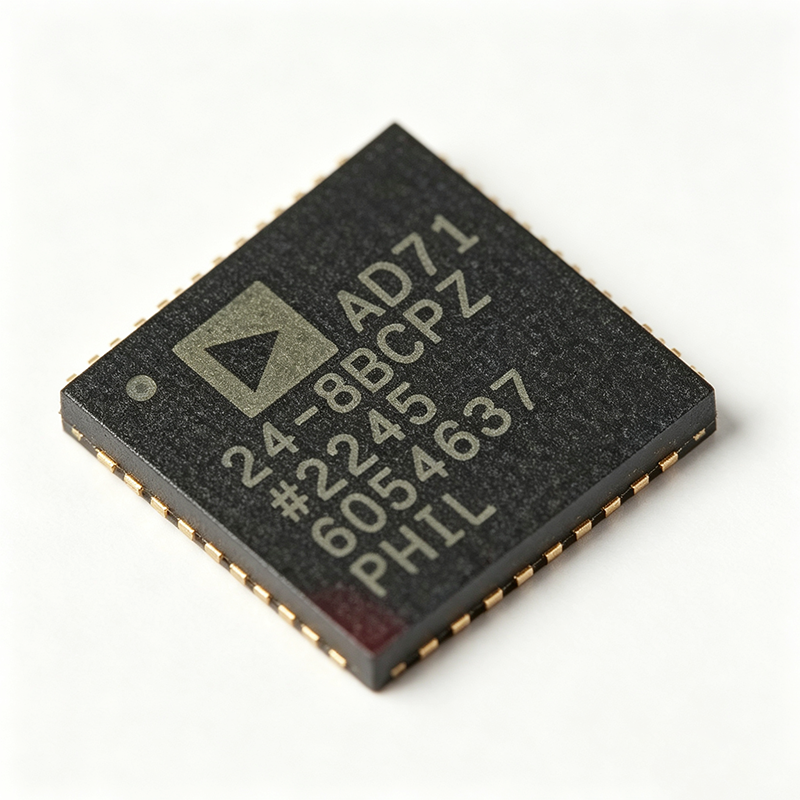
AD7124-8BCPZ - 24-Bit Sigma-Delta ADC | Analog Devices
The AD7124-8BCPZ is a low power, low noise, completely integrated analog front end for high precision measurement applications. This 24-bit sigma-delta ADC includes an integrated PGA, a precision reference, and flexible multiplexing for up to 15 pseudo-differential or 8 fully differential channels. It operates from a 2.7V to 3.6V supply and supports data rates up to 19.2 kSPS. The device is available in a 32-lead LFCSP (5x5 mm) package and communicates via an SPI interface. An analog-to-digital converter (ADC) is a device that converts continuous analog signals into discrete digital numbers. The AD7124-8 is a sigma-delta ADC, which uses oversampling and noise shaping to achieve high resolution and excellent noise performance. It is part of the broader category of data converters, which are essential in mixed-signal systems for bridging the analog and digital domains. The AD7124-8 integrates a programmable gain amplifier (PGA), a precision voltage reference, and a multiplexer, making it a complete analog front end for sensor measurement. Key features include 24-bit resolution, low noise (RMS noise as low as 1.8 µV at 25 SPS), low power consumption (typically 1.2 mA in full power mode), and a programmable output data rate from 1.17 SPS to 19.2 kSPS. The device also offers a choice of internal or external reference, and it supports both fully differential and pseudo-differential input configurations. The integrated PGA provides gains from 1 to 128, allowing direct connection to low-level sensors such as thermocouples and strain gauges. The AD7124-8 uses a sigma-delta modulator with a digital filter, providing excellent linearity and noise performance. The device includes a 24-bit register map for configuration, and it supports multiple power modes (full, mid, and low power) to optimize power consumption versus performance. The SPI interface allows easy integration with microcontrollers and DSPs. The device is specified over the -40°C to +125°C temperature range, making it suitable for industrial applications. Typical applications include temperature measurement (thermocouples, RTDs, thermistors), pressure measurement, and industrial process control. The AD7124-8 is also used in weigh scales, flow meters, and battery monitoring systems. Its low power and high resolution make it ideal for portable and battery-powered instruments. When designing with the AD7124-8, ensure proper decoupling of the AVDD and DVDD supplies, and use a clean analog ground plane. The reference input should be bypassed with a 10 µF capacitor for stability. For best noise performance, use the internal reference and enable the internal PGA with a gain appropriate for the sensor output level.
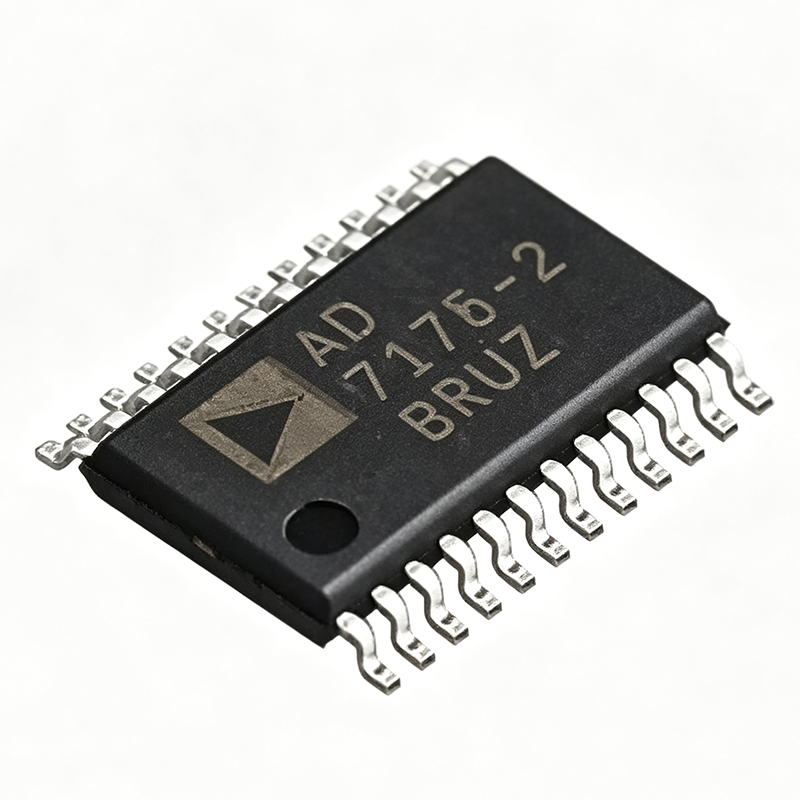
AD7172-2BRUZ-RL7 - 24-Bit Sigma-Delta ADC | Analog Devices
The AD7172-2BRUZ-RL7 is a 24-bit, low-noise, low-power multiplexed sigma-delta analog-to-digital converter (ADC) from Analog Devices, designed for high-precision measurement applications. It features two fully differential or four single-ended input channels, integrated true rail-to-rail input buffers, and a maximum output data rate of 31.25 kSPS. The device operates from a 3V to 5.5V supply and communicates via a serial peripheral interface (SPI). It is housed in a 24-lead TSSOP package, making it suitable for space-constrained industrial and instrumentation designs. An ADC (analog-to-digital converter) is a device that converts continuous analog signals into discrete digital values for processing by digital systems. The AD7172-2 is a sigma-delta ADC, which uses oversampling and noise shaping to achieve high resolution and excellent noise performance. It belongs to the family of precision data converters, which are essential in applications requiring accurate measurement of physical quantities such as temperature, pressure, and strain. The AD7172-2 integrates key analog and digital signal conditioning blocks, allowing users to configure each analog input channel individually via the SPI interface. Key features of the AD7172-2 include a 24-bit resolution, a maximum output data rate of 31.25 kSPS, and integrated true rail-to-rail buffers on both analog and reference inputs. The device offers low noise performance, with a typical RMS noise of [DATA_NEEDED: RMS noise] at the lowest data rate. It also includes a 2 ppm/°C internal reference, an internal oscillator, and a built-in temperature sensor. The ADC supports both differential and single-ended input configurations, providing flexibility for various sensor interfaces. The AD7172-2 utilizes a sigma-delta modulator with a digital filter, achieving high accuracy and linearity. The device includes a programmable gain amplifier (PGA) with gains of 1, 2, 4, 8, 16, 32, 64, and 128, allowing direct connection to low-level sensor outputs. The SPI interface supports both 4-wire and 3-wire modes, and the device can be configured for continuous or single conversion. The integrated buffers simplify the driving of high-impedance inputs, reducing external component requirements. Typical applications for the AD7172-2 include industrial process control, temperature and pressure measurement, weigh scales, and precision instrumentation. Its low power consumption and high resolution make it ideal for battery-powered and portable devices. The device is also suitable for medical monitoring equipment and data acquisition systems. When designing with the AD7172-2, it is important to provide a clean, low-noise power supply and a stable voltage reference. The datasheet recommends using low-noise references such as the ADR445, ADR444, or ADR441. Proper PCB layout, including separate analog and digital ground planes, is essential to achieve the specified performance.

AD7175-2BRUZ-RL7 - 24-Bit 250kSPS Sigma-Delta ADC | Analog Devices
The AD7175-2BRUZ-RL7 is a 24-bit, 250 kSPS sigma-delta analog-to-digital converter (ADC) from Analog Devices, featuring 20 µs settling time and true rail-to-rail buffers. It is housed in a 24-lead TSSOP package and operates from a 2 V to 5.5 V analog supply and a 2 V to 5.5 V I/O supply, with a specified temperature range of -40°C to +105°C. The device supports 2 fully differential or 4 single-ended input channels, configurable per channel, and integrates key analog and digital signal conditioning blocks for flexible system design. A sigma-delta ADC is a type of analog-to-digital converter that uses oversampling and noise shaping to achieve high resolution (up to 24 bits) with excellent linearity and low noise. It is widely used in precision measurement, process control, and medical instrumentation where accurate conversion of slow-varying signals is critical. The AD7175-2 belongs to the ADC family within the data converter category, which is part of the broader analog signal chain in electronic systems. Key features include a maximum output data rate of 250 kSPS, 20 µs settling time for fast channel switching, and true rail-to-rail input buffers that simplify driving high-impedance sources. The device offers a configurable digital filter with 50/60 Hz rejection, ideal for industrial power-line noise suppression. It also provides a fully differential reference input, supporting low-noise references like the ADR445, ADR444, and ADR441. The AD7175-2 integrates a precision sigma-delta modulator and digital filter, achieving excellent noise performance and linearity. The per-channel configuration allows users to optimize gain, filter, and output rate for each input, enhancing flexibility in multi-channel systems. The device includes a SPI interface for communication and supports both internal and external clock options. Typical applications include process control (PLC/DCS modules) for temperature and pressure measurement, medical and scientific multichannel instrumentation, and chromatography. The fast settling time makes it suitable for multiplexed systems requiring rapid channel-to-channel updates. When designing with this ADC, ensure proper decoupling of the analog and digital supplies and use a low-noise reference to achieve specified performance. The SPI interface should be isolated if used in noisy industrial environments.
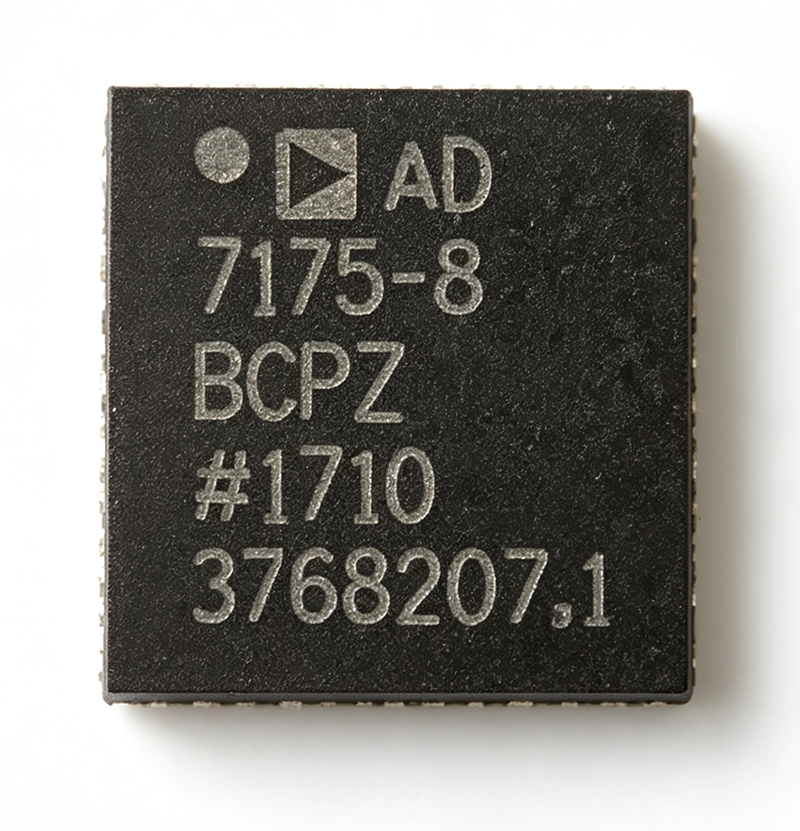
AD7175-8BCPZ-RL7 - 24-Bit Sigma-Delta ADC | Analog Devices
The AD7175-8BCPZ-RL7 is a low noise, fast settling, multiplexed, 8-/16-channel (fully/pseudo differential) sigma-delta analog-to-digital converter (ADC) from Analog Devices. It is designed for low bandwidth inputs and offers a maximum output data rate of 250 kSPS. The device integrates key analog and digital signal conditioning blocks, allowing users to configure an individual setup for each analog input channel in use. Each feature can be user selected on a per-channel basis. Integrated true rail-to-rail buffers on the analog inputs and external reference inputs provide easy-to-drive high impedance inputs. A sigma-delta ADC is a type of analog-to-digital converter that uses oversampling and noise shaping to achieve high resolution. It is part of the ADC family, which falls under data converters, a subset of analog-to-digital conversion in the broader category of mixed-signal ICs. Sigma-delta ADCs are known for their excellent linearity and low noise, making them ideal for precision measurement applications. Key features of the AD7175-8 include 24-bit resolution, 8 differential or 16 single-ended inputs, and a maximum output data rate of 250 kSPS. It operates from a 2.5 V to 5.5 V analog supply and a 2.3 V to 5.5 V digital supply. The device offers a programmable digital filter, allowing trade-offs between output data rate and noise. It also includes a 24-bit sigma-delta modulator, a digital filter, and a serial interface that supports SPI. The AD7175-8 is available in a 40-lead LFCSP-WQ (6x6 mm) package, which is RoHS3 compliant and has an MSL rating of 3 (168 hours). The AD7175-8 uses a high-performance sigma-delta architecture with a digital filter that can be configured for various output data rates and settling times. The device includes a multiplexer that allows up to 16 single-ended or 8 differential inputs. It also features an internal oscillator, eliminating the need for an external clock. The ADC provides a 24-bit output with a noise-free resolution of up to 24 bits at low data rates. The device is specified for operation over the industrial temperature range of -40°C to +105°C. Typical applications for the AD7175-8 include process control, industrial automation, temperature and pressure measurement, and precision data acquisition systems. Its high resolution and low noise make it suitable for applications requiring accurate measurement of slow-changing signals. The device is also used in weigh scales, medical instrumentation, and energy monitoring. When designing with the AD7175-8, it is important to provide adequate decoupling on the power supply pins and to use a clean analog ground plane. The reference inputs should be driven by a low-impedance source to maintain accuracy. The SPI interface should be isolated from noisy digital circuitry to prevent noise coupling into the analog section.
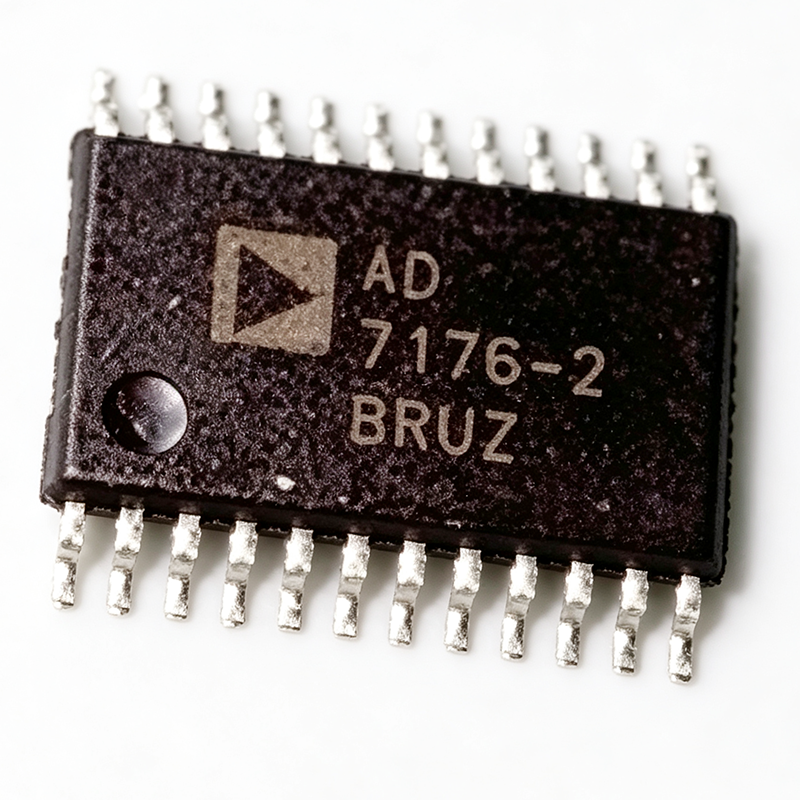
AD7176-2BRUZ - 24-Bit 250kSPS Sigma-Delta ADC | Analog Devices
The AD7176-2BRUZ is a 24-bit, 250 kSPS sigma-delta analog-to-digital converter (ADC) from Analog Devices, featuring a crosspoint multiplexer for 2 fully differential or 4 pseudo-differential inputs. It integrates a 2.5 V low-drift (2 ppm/°C) internal reference and offers a 20 µs settling time, making it ideal for high-resolution, high-speed data acquisition systems. The device operates from a 2.5 V to 5.5 V analog supply and a 2.3 V to 5.5 V digital interface supply, with a specified temperature range of -40°C to +105°C. It is available in a 24-lead TSSOP package (BRUZ suffix). A sigma-delta ADC is a type of analog-to-digital converter that uses oversampling and noise shaping to achieve high resolution (typically 16 to 24 bits) with relatively low cost and power. It is widely used in precision measurement, industrial process control, and medical instrumentation where high accuracy and low noise are critical. The AD7176-2 belongs to the Analog Devices precision ADC family, which includes other high-performance converters like the AD7175-2 and AD7177-2, and is positioned as a fast-settling, multiplexed solution for multi-channel systems. Key features of the AD7176-2BRUZ include a maximum output data rate of 250 kSPS, a 20 µs settling time for full accuracy, and a programmable digital filter with multiple filter options (sinc5 + sinc1, etc.). It offers excellent DC accuracy with an integral nonlinearity (INL) of ±2 ppm of FSR typical, and a noise-free resolution of up to 24 bits at lower data rates. The device also includes a 2.5 V internal reference with 2 ppm/°C drift, a reference buffer, and a temperature sensor. It supports both SPI and QSPI serial interfaces, and includes a GPIO and a crystal oscillator driver. Technically, the AD7176-2 uses a high-performance sigma-delta modulator with a digital filter that can be configured for various settling times and noise performance. The crosspoint multiplexer allows flexible input routing, enabling the measurement of multiple sensors without external muxing. The device also features a 50 Hz/60 Hz rejection mode for power-line noise suppression, and a burnout current source for sensor fault detection. The internal reference can be bypassed for external reference use, and the device supports both unipolar and bipolar input ranges. Typical applications include process control, industrial automation, weigh scales, temperature and pressure measurement, and medical instrumentation. The fast settling time makes it suitable for multiplexed systems where multiple channels need to be scanned quickly. The low noise and high accuracy also make it ideal for precision data acquisition in laboratory and test equipment. When designing with the AD7176-2BRUZ, ensure proper decoupling of the AVDD and DVDD supplies with 10 µF and 0.1 µF capacitors, and use a clean analog ground plane. The reference input should be bypassed with a 10 µF capacitor if using the internal reference. For best performance, keep the analog input traces short and shielded, and avoid routing digital signals near the analog inputs.
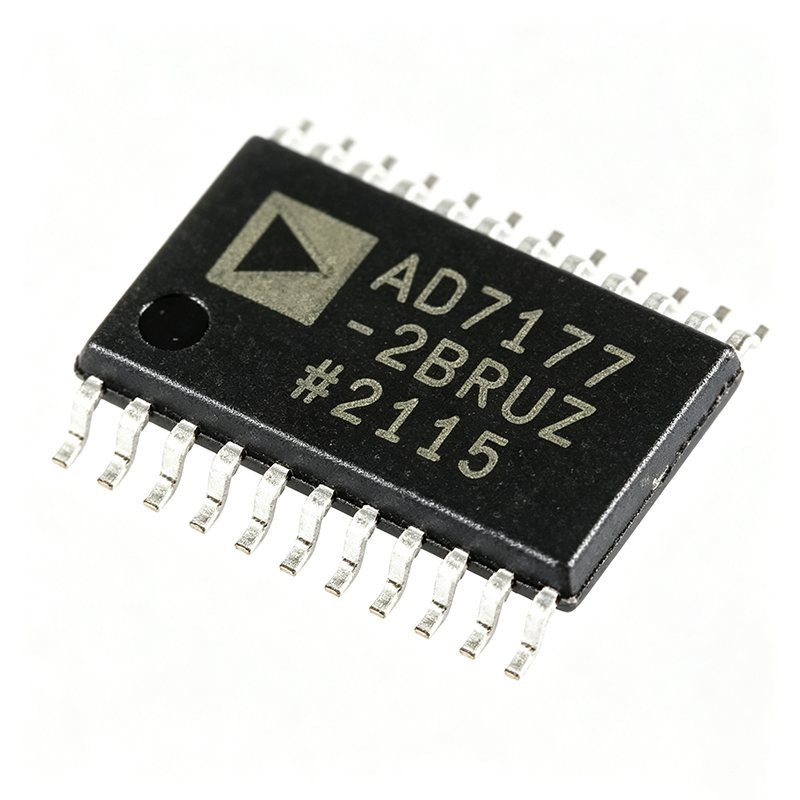
AD7177-2BRUZ - 32-Bit Sigma-Delta ADC | Analog Devices
The AD7177-2BRUZ is a high-performance, 32-bit sigma-delta analog-to-digital converter (ADC) from Analog Devices, designed for precision measurement applications. It features a maximum sampling rate of 10 kSPS, true rail-to-rail input buffers, and a low noise, low drift internal reference voltage source. Housed in a 24-lead TSSOP package, this ADC integrates key analog and digital signal conditioning blocks, allowing users to configure an individual setup for each analog input channel in use. Each feature can be user selected on a per channel basis, providing flexibility for various measurement systems. An ADC (Analog-to-Digital Converter) is a device that converts continuous analog signals into discrete digital numbers, enabling digital processing of real-world signals. The AD7177-2 is a sigma-delta ADC, which uses oversampling and noise shaping to achieve high resolution and excellent noise performance. It belongs to the family of precision ADCs, which are essential in applications requiring accurate measurement of physical quantities such as temperature, pressure, and strain. The AD7177-2 sits in the hierarchy of data converters, from high-speed SAR ADCs to high-resolution sigma-delta ADCs, and is optimized for low-speed, high-accuracy applications. Key features include 32-bit resolution, 10 kSPS output data rate, and true rail-to-rail buffers on both analog inputs and reference inputs, which provide easy-to-drive high impedance inputs. The device also offers a 100 µs settling time, enabling fast channel switching in multiplexed systems. The integrated reference and internal oscillator reduce external component count, simplifying design. The AD7177-2 operates from a 2.5 V to 5.5 V supply and features a flexible digital interface compatible with SPI, making it easy to interface with microcontrollers and DSPs. Technically, the AD7177-2 employs a sigma-delta modulator with a digital filter, achieving high resolution and low noise. The device includes a precision internal reference with low temperature drift, and the input buffers allow direct connection to high-impedance sensors without external conditioning. The per-channel configuration allows different gains, filters, and reference selections for each input, optimizing performance for mixed-signal applications. The device also includes a diagnostic function for continuous monitoring of the analog and digital supplies, ensuring reliable operation. Typical applications include process control, industrial automation, weigh scales, temperature and pressure measurement, and medical instrumentation. The AD7177-2's high resolution and low noise make it ideal for precision data acquisition systems where accuracy is paramount. Its fast settling time enables efficient multiplexing of multiple channels, increasing system throughput. When designing with the AD7177-2, ensure proper decoupling of the AVDD and DVDD supplies and use a clean analog ground plane. The reference inputs should be driven by a low-impedance source to maintain accuracy. The SPI interface should be isolated if the ADC is used in noisy environments to prevent digital noise from coupling into the analog section.
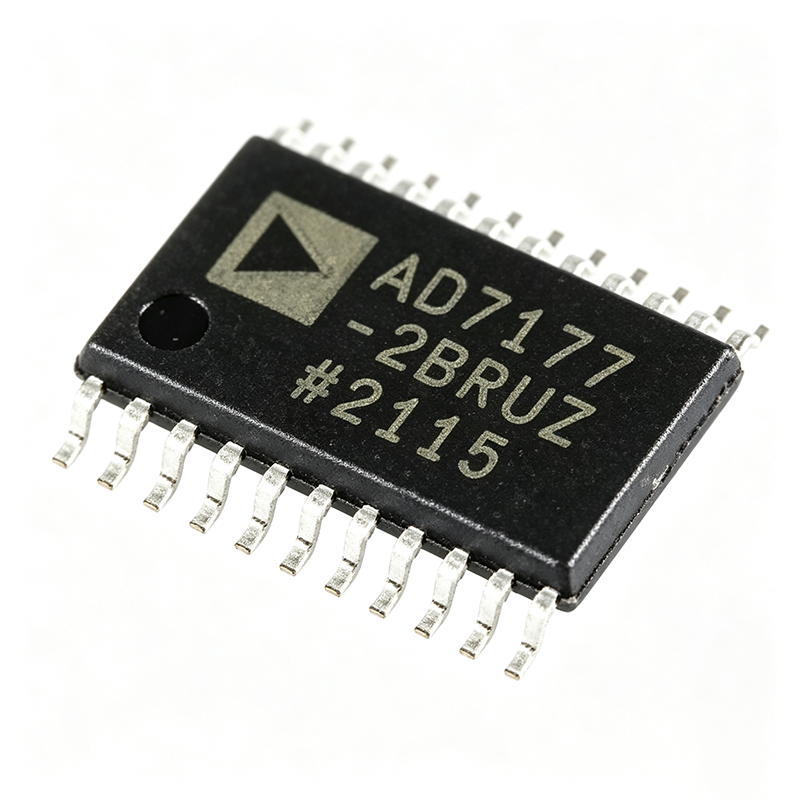
AD7177-2BRUZ-RL7 - 32-Bit Sigma-Delta ADC | Analog Devices
The AD7177-2BRUZ-RL7 is a 32-bit, low noise, fast settling, multiplexed, 2-/4-channel (fully/pseudo differential) sigma-delta analog-to-digital converter (ADC) from Analog Devices. It is designed for low bandwidth inputs and offers a maximum channel scan rate of 10 kSPS (100 µs) for fully settled data. The output data rates range from 5 SPS to 10 kSPS, and it integrates key analog and digital signal conditioning blocks to allow users to configure an individual setup for each analog input channel in use. The device is available in a 24-lead TSSOP package and operates over the industrial temperature range. A sigma-delta ADC is a type of analog-to-digital converter that uses oversampling and noise shaping to achieve high resolution. It is part of the data converter family, which includes successive approximation register (SAR) ADCs and pipeline ADCs. Sigma-delta ADCs are known for their excellent linearity and low noise, making them ideal for precision measurement applications. The AD7177-2 is a high-performance member of this family, offering 32-bit resolution and fast settling, which is particularly useful in multiplexed systems where multiple channels need to be scanned quickly. Key features of the AD7177-2 include integrated true rail-to-rail buffers on the analog inputs and external reference inputs, providing easy-to-drive high impedance inputs. It also offers 85 dB filter rejection of 50 Hz and 60 Hz with 50 ms settling, making it suitable for industrial power line noise environments. The device supports a fully differential reference input applied through the REF+ and REF− pins, and standard low noise, low drift voltage references such as the ADR445, ADR444, and ADR441 are recommended. The AD7177-2 uses a sigma-delta modulator with a digital filter, achieving high resolution and low noise. The device includes a multiplexer, buffer, and programmable gain amplifier (PGA) on-chip, simplifying the signal chain. The digital filter can be configured for various output data rates and settling times, allowing trade-offs between speed and noise performance. The device also features a serial peripheral interface (SPI) for communication with microcontrollers or DSPs. Typical applications include process control, industrial automation, medical instrumentation, and precision measurement systems. The AD7177-2 is particularly well-suited for applications requiring high resolution and fast channel scanning, such as data acquisition systems and weigh scales. Its low noise performance and fast settling make it ideal for multiplexed sensor arrays. When designing with the AD7177-2, it is important to provide a clean, low-noise power supply and a stable reference voltage. The analog and digital supplies should be decoupled with appropriate capacitors, and the reference inputs should be driven by a low-impedance source. The SPI interface should be properly terminated to avoid signal integrity issues.
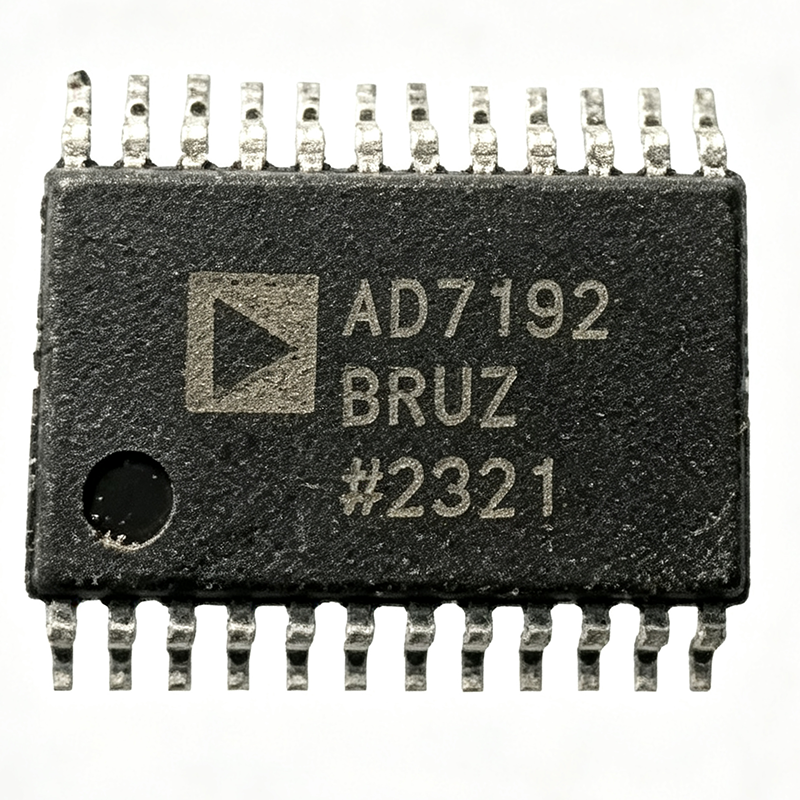
AD7190BRUZ - 24-Bit Sigma-Delta ADC with PGA | Analog Devices
The AD7190BRUZ is a low noise, complete analog front end for high precision measurement applications. It contains a low noise, 24-bit sigma-delta (Σ-Δ) analog-to-digital converter (ADC) with an on-chip low noise gain stage, enabling direct interfacing of small amplitude signals. The device operates from a 4.7 V to 5.25 V analog supply and a 2.7 V to 5.25 V digital supply, with a maximum output data rate of 4.8 kHz. It is available in a 24-lead TSSOP package, suitable for space-constrained designs. A sigma-delta ADC is a type of analog-to-digital converter that uses oversampling and noise shaping to achieve high resolution. It is part of the broader category of data converters, which are essential in mixed-signal systems for bridging the analog and digital domains. The AD7190's architecture provides excellent noise performance, making it ideal for precision measurement applications such as weigh scales, pressure sensors, and temperature measurement. Key features include a programmable gain amplifier (PGA) with gains of 1, 8, 64, and 128, allowing direct connection to low-level sensors. The device offers two differential or four pseudo-differential input channels, a 24-bit resolution, and a maximum output data rate of 4.8 kHz. It also includes an internal clock, a 4-wire SPI interface, and a power-down mode for low-power applications. The AD7190 uses a sigma-delta modulator with a digital filter, providing high-resolution conversion with inherent noise shaping. The on-chip PGA amplifies small signals before conversion, reducing the need for external amplification. The device also features a burnout current source for sensor fault detection and a reference detect function. Typical applications include weigh scales, strain gauge transducers, pressure measurement, temperature measurement, and industrial process control. The AD7190's low noise and high resolution make it suitable for precision instrumentation and data acquisition systems. When designing with the AD7190, ensure proper decoupling of the analog and digital supplies and use a clean reference voltage to achieve optimal performance. The SPI interface allows easy configuration of the device's registers for gain, filter, and channel selection.
AD7190BRUZ-REEL - 24-Bit Sigma-Delta ADC with PGA | Analog Devices
The AD7190BRUZ-REEL is a low noise, complete analog front end for high precision measurement applications. It contains a low noise, 24-bit sigma-delta (Σ-Δ) analog-to-digital converter (ADC) with an on-chip programmable gain amplifier (PGA). The device operates from a 4.75 V to 5.25 V analog supply and a 2.7 V to 5.25 V digital supply, and it is available in a 24-lead TSSOP package. The AD7190BRUZ-REEL is the tape and reel version of the AD7190BRUZ, designed for automated assembly. A sigma-delta ADC is a type of analog-to-digital converter that uses oversampling and noise shaping to achieve high resolution. The AD7190 is a 24-bit sigma-delta ADC, which means it can resolve very small voltage changes, making it ideal for precision measurement applications such as weigh scales, pressure sensors, and temperature measurement. The on-chip PGA allows small amplitude signals to be amplified before conversion, improving the effective resolution for low-level signals. Key features of the AD7190BRUZ-REEL include RMS noise of 4.7 Hz at gain 128, 16 noise-free bits at 2.4 kHz (gain to 22.5 noise-free bits at gain = 1), offset drift of 5 nV/°C, and gain drift of 1 ppm/°C. The device supports 2 differential or 4 pseudo-differential input channels, and it includes an automatic channel sequencer. The output data rate can be varied from 4.7 Hz to 4.8 kHz, and the on-chip 4.92 MHz clock can be used as the clock source or an external clock or crystal can be used. The AD7190BRUZ-REEL features a 3-wire serial SPI interface that is compatible with QSPI, MICROWIRE, and DSP. It includes a Schmitt trigger on SCLK for improved noise immunity. The device is qualified for automotive applications, making it suitable for harsh environments. The low noise and high resolution make it ideal for precision measurement systems. Typical applications include weigh scales, strain gauge transducers, pressure sensors, temperature measurement, and industrial process control. The AD7190BRUZ-REEL is also suitable for medical instrumentation and scientific instruments where high accuracy is required. When designing with the AD7190BRUZ-REEL, it is important to provide a clean analog supply and proper decoupling. The reference input should be bypassed with a capacitor to reduce noise. The SPI interface should be isolated from noisy digital circuits to maintain the high resolution of the ADC.
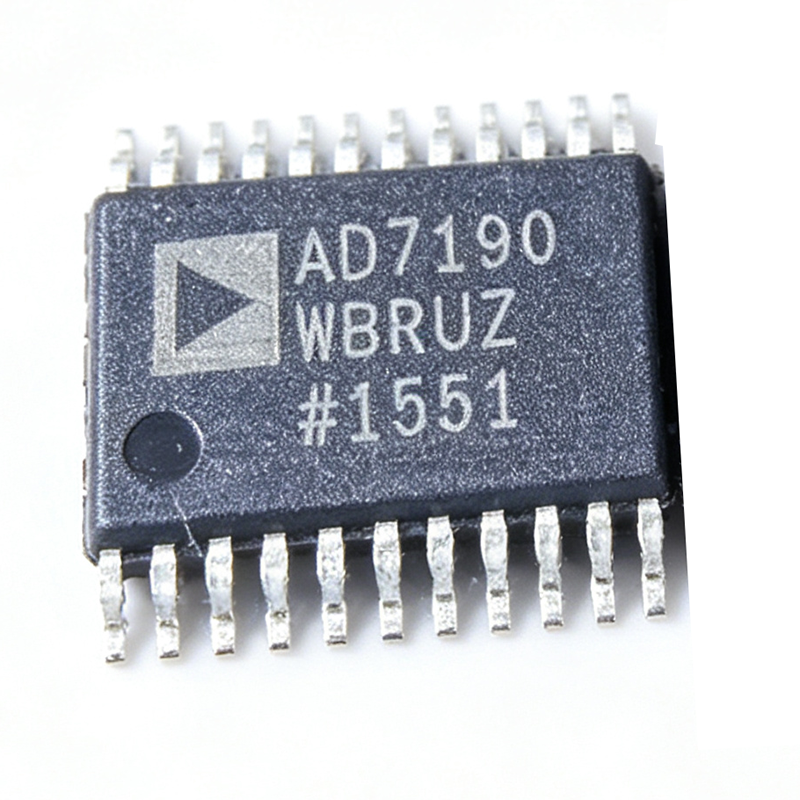
AD7190WBRUZ - 24-Bit Sigma-Delta ADC | Analog Devices
The AD7190WBRUZ is a 24-bit sigma-delta analog-to-digital converter (ADC) from Analog Devices, featuring a complete analog front end for high precision measurement applications. The device provides two differential or four pseudo-differential input channels, a programmable gain amplifier (PGA), and a maximum output data rate of 4.8 kSPS. Housed in a 24-lead TSSOP package, this ADC is designed for low noise, high resolution data acquisition in industrial and instrumentation systems. A sigma-delta ADC is a converter that uses oversampling and noise shaping to achieve very high resolution. Unlike successive-approximation ADCs, sigma-delta converters sample the input many times and apply digital filtering, which moves quantization noise out of the signal band. This makes the AD7190WBRUZ well suited for low-frequency, high-accuracy measurements such as load cells, pressure sensors, temperature transducers, and precision process control loops. As an ADC, the device sits between the analog sensor and the digital processing core in a measurement system, converting tiny analog signals into serial digital words. Key features include 24-bit no-missing-codes performance, a PGA with gain levels suitable for millivolt-level sensor outputs, and a low-noise sigma-delta architecture that minimizes error in precision bridges. The device also offers an internal clock option, simple SPI interface, and a serial read rate that supports real-time weight and pressure monitoring. The 24-lead TSSOP package is compact and facilitates dense PCB layouts. Technically, the AD7190WBRUZ integrates a chopper-stabilized amplifier and a digital filter that can be configured for different output rates and settling times. It operates from an analog supply and supports external references, enabling ratiometric measurements. The ADC continuously converts at rates up to 4.8 kSPS, making it a practical choice for weigh scale controllers and industrial transmitters. Its digital interface is compatible with microcontrollers and DSPs through standard SPI commands. Typical applications include industrial process control, high-precision weigh scales, medical monitoring equipment, and RTD/thermocouple temperature measurement. The device is also used in portable instrumentation where low power and high accuracy are required. For multi-channel systems, the input multiplexer allows configuration of two differential channels or four single-ended/pseudo-differential inputs. Designers should pay attention to the analog reference and power supplies: use low-noise references and decouple AVDD with high-quality capacitors. The PGAs sensitivity to input offsets must be calibrated during system initialization. The AD7190WBRUZ supports a wide operating temperature range, making it suitable for harsh industrial environments. When pairing with a microcontroller, connect the SPI lines (SCLK, DIN, DOUT/RDY, CS) to a fast host port to take full advantage of the 4.8 kSPS throughput.
AD7327BRUZ - 500kSPS 8-Ch True Bipolar ADC | Analog Devices
The AD7327BRUZ is a 12-bit plus sign successive approximation (SAR) analog-to-digital converter (ADC) from Analog Devices, offering 8 software-selectable true bipolar input channels with a maximum throughput of 500 kSPS. It is housed in a 20-lead TSSOP package and operates from a single 5 V supply with separate VDD and VSS supplies for the analog input range, enabling true bipolar inputs up to ±12 V when using a 3 V reference. The device is built on the iCMOS (industrial CMOS) process, which combines high-voltage silicon with submicron CMOS and complementary bipolar technologies, allowing high performance and robustness in industrial environments. An ADC (analog-to-digital converter) is an electronic device that converts continuous analog signals into discrete digital values, enabling digital systems to process real-world signals. The AD7327BRUZ is a SAR-type ADC, which uses a successive approximation register algorithm to perform conversions with high speed and moderate resolution, making it suitable for applications requiring a balance between speed and accuracy. SAR ADCs are widely used in data acquisition systems, industrial control, and instrumentation, where they interface with sensors and transducers to digitize analog measurements. Key features of the AD7327BRUZ include a software-selectable input range of ±4×VREF, ±2×VREF, ±VREF, and 0 to VREF, allowing flexibility in signal conditioning. It contains a 2.5 V internal reference, but also supports external reference operation; applying a 3 V reference enables true bipolar ±12 V analog input ranges. The device offers a high-speed serial interface (SPI-compatible) for communication with microcontrollers and DSPs, and includes a channel sequencer for automatic scanning of multiple channels. The ADC operates from a 5 V analog supply and a 2.7 V to 5.25 V digital supply, with a typical power dissipation of 21 mW at 500 kSPS. The AD7327BRUZ features a 13-bit resolution (12-bit plus sign) and a maximum sampling rate of 500 kSPS, with a signal-to-noise ratio (SNR) of 74 dB and a total harmonic distortion (THD) of -86 dB, ensuring high accuracy for industrial measurements. The device includes an internal 2.5 V reference with a typical temperature drift of ±10 ppm/°C, and an external reference input that can be driven up to 3 V. The ADC provides a 4-wire serial interface (CS, SCLK, DIN, DOUT) and supports daisy-chaining for multiple devices. The operating temperature range is -40°C to +125°C, making it suitable for harsh environments. Typical applications for the AD7327BRUZ include industrial process control, data acquisition systems, motor control, and power monitoring. Its true bipolar input capability and software-selectable ranges make it ideal for interfacing with sensors that produce bipolar signals, such as current transformers and thermocouples. The high throughput and 13-bit resolution enable precise measurement in real-time control loops. When designing with the AD7327BRUZ, ensure that the analog input signals are within the selected input range to avoid damage. Use a low-impedance source and proper decoupling on the AVDD and DVDD pins. The reference input should be bypassed with a 10 µF capacitor for stable operation. The serial interface timing must comply with the datasheet specifications to ensure reliable data transfer.
AD7380BCPZ - 16-Bit 4MSPS Dual SAR ADC | Analog Devices
The AD7380BCPZ from Analog Devices is a 16-bit, dual simultaneous sampling, high-speed, low-power successive approximation register (SAR) analog-to-digital converter (ADC) that operates from a 3.0 V to 3.6 V power supply. It features a throughput rate of up to 4 MSPS and comes in a compact 16-lead LFCSP (3x3 mm) package. The device includes a buffered internal 2.5 V reference, with the option to use an external reference up to 3.3 V. The analog input is differential, accepting a wide common-mode voltage range, making it suitable for a variety of precision measurement applications. A SAR ADC is a type of analog-to-digital converter that uses a binary search algorithm to convert an analog input into a digital output. It is known for its high speed, low power consumption, and excellent accuracy, making it ideal for applications such as motor control, power monitoring, and data acquisition systems. The AD7380 is part of a pin-compatible family that includes the 14-bit AD7381, allowing designers to easily scale resolution without redesigning the PCB. Key features of the AD7380 include dual simultaneous sampling, which allows two channels to be sampled at exactly the same instant, critical for applications like three-phase power monitoring where phase alignment is essential. The device also offers a wide input common-mode range, simplifying interface to sensors and amplifiers. The internal reference buffer eliminates the need for external reference circuitry, reducing component count and board space. The SPI-compatible serial interface enables easy connection to microcontrollers and DSPs. The AD7380 uses a standard SAR architecture with a capacitive DAC, providing excellent linearity and low noise. The device includes a track-and-hold circuit that captures the analog input at the moment of conversion, ensuring accurate sampling. The conversion process is controlled by standard control inputs, allowing simple interfacing to microprocessors or digital signal processors (DSPs). The device also features a power-down mode to reduce power consumption when not converting. Typical applications for the AD7380 include motor control, where simultaneous sampling of phase currents is essential for accurate torque control; power monitoring, where voltage and current must be sampled simultaneously for accurate power calculation; and data acquisition systems, where high speed and precision are required. The device is also suitable for industrial automation, instrumentation, and medical equipment. When designing with the AD7380, ensure that the reference voltage is stable and well-decoupled, as it directly affects conversion accuracy. The differential inputs should be driven with a low-impedance source to avoid settling time errors. The SPI interface should be kept short and properly terminated to avoid signal integrity issues at high throughput rates.
AD7381BCPZ - 14-Bit 4MSPS Dual SAR ADC | Analog Devices
The AD7381BCPZ is a 14-bit, dual simultaneous sampling, high-speed, low-power successive approximation register (SAR) analog-to-digital converter (ADC) from Analog Devices. It operates from a 3.0 V to 3.6 V power supply and features throughput rates up to 4 MSPS. The device is available in a 16-lead LFCSP (3x3 mm) package, making it suitable for space-constrained industrial and automotive applications. A SAR ADC is a type of analog-to-digital converter that uses a binary search algorithm to convert an analog input into a digital output. It is known for its high speed, low power consumption, and excellent accuracy. SAR ADCs are widely used in applications such as motor control, power monitoring, and data acquisition systems where high-speed, high-resolution conversion is required. The AD7381 is part of the AD7380/AD7381 family, which includes a 16-bit and 14-bit pin-compatible variant, allowing designers to upgrade resolution without changing the PCB layout. Key features of the AD7381 include dual simultaneous sampling, which enables accurate phase measurement between two channels, and a high throughput of 4 MSPS, making it ideal for real-time control loops. The device also features a low power consumption of [DATA_NEEDED: power consumption] mW at 4 MSPS, and an SPI-compatible serial interface that simplifies connection to microcontrollers and DSPs. The LFCSP package offers excellent thermal performance and a small footprint, reducing board space. Technically, the AD7381 uses a capacitive DAC architecture with a precision comparator, achieving a signal-to-noise ratio (SNR) of [DATA_NEEDED: SNR] dB and a spurious-free dynamic range (SFDR) of [DATA_NEEDED: SFDR] dB. The device includes an internal reference buffer and supports an external reference for flexibility. The input range is [DATA_NEEDED: input range] V, and the device can be configured for single-ended or differential inputs via the [DATA_NEEDED: configuration pin]. Typical applications include motor control, where dual simultaneous sampling is essential for accurate current and voltage measurement, and power monitoring, where high-speed conversion enables real-time analysis of power quality. The AD7381 is also used in data acquisition systems, industrial automation, and test and measurement equipment. When designing with the AD7381, ensure that the reference voltage is stable and well-decoupled, as it directly affects conversion accuracy. The SPI interface should be isolated from noisy digital lines to minimize coupling into the analog input. Proper PCB layout, including a solid ground plane and short analog traces, is critical for achieving the specified performance.
AD7382BCPZ - 16-Bit Dual SAR ADC | Analog Devices
The AD7382BCPZ is a 16-bit, dual-channel, simultaneous sampling successive approximation register (SAR) analog-to-digital converter (ADC) from Analog Devices. It operates from a single 3.3V supply and features a 4 MSPS throughput rate, making it suitable for high-speed data acquisition systems. The device is housed in a compact 16-lead LFCSP (3x3 mm) package, ideal for space-constrained designs. A SAR ADC is a type of analog-to-digital converter that uses a binary search algorithm to convert an analog input into a digital output. It offers a good balance of speed, resolution, and power consumption, making it a popular choice for applications such as motor control, power monitoring, and industrial automation. SAR ADCs are known for their low latency and high accuracy, and they are widely used in systems where multiple channels need to be sampled simultaneously. Key features of the AD7382BCPZ include dual-channel simultaneous sampling, a 4 MSPS throughput rate, and a 16-bit resolution. The device also features a pseudo-differential input configuration, which helps reject common-mode noise. It includes an internal reference buffer and supports both SPI and daisy-chain interfaces, simplifying system integration. The ADC operates over a temperature range of -40°C to +125°C, making it suitable for harsh environments. The AD7382BCPZ uses a charge redistribution architecture with a capacitive DAC, ensuring excellent linearity and low noise. The device achieves a signal-to-noise ratio (SNR) of 92 dB and a total harmonic distortion (THD) of -110 dB, providing high-fidelity conversion for precision measurement applications. The internal reference buffer reduces external component count, while the flexible digital interface allows easy connection to microcontrollers and DSPs. Typical applications include motor control, power monitoring, industrial automation, and data acquisition systems. The dual-channel simultaneous sampling capability is particularly useful for applications requiring phase-accurate measurements, such as three-phase power monitoring and motor control. The high throughput rate enables real-time processing of fast-changing signals. When designing with the AD7382BCPZ, ensure that the reference voltage is stable and well-decoupled. The device requires a 3.3V analog supply and a separate digital supply, which should be properly filtered to minimize noise. The SPI interface should be configured for the desired sampling rate, and the conversion result can be read via the SDO pin.
AD7383-4BCPZ - 16-Bit Quad SAR ADC 2MSPS | Analog Devices
The AD7383-4BCPZ is a 16-bit, quad-channel, simultaneous sampling, successive approximation register (SAR) analog-to-digital converter (ADC) from Analog Devices. It operates from a 3.0 V to 3.3 V power supply and achieves throughput rates up to 2 MSPS. The device is available in a compact 24-lead LFCSP (4x4 mm) package, making it suitable for space-constrained industrial and automotive applications. An ADC (analog-to-digital converter) is a device that converts continuous analog signals into discrete digital values. The AD7383-4BCPZ is a SAR ADC, which uses a binary search algorithm to determine the digital output, offering a good balance of speed, resolution, and power consumption. SAR ADCs are widely used in data acquisition systems, motor control, and power monitoring due to their high accuracy and low latency. Key features of the AD7383-4BCPZ include four pseudo-differential input channels, a buffered internal 2.5 V reference, and an optional external reference up to 3.3 V. It also features an on-chip oversampling block that can improve dynamic range and reduce noise at lower bandwidths, boosting up to two bits of added resolution. The device supports SPI interface with a 4 MHz clock, and includes a FIFO buffer, soft reset, and power-on reset functions. The AD7383-4BCPZ is pin-compatible with the 14-bit AD7384-4, allowing easy upgrades without PCB redesign. It offers a signal-to-noise ratio (SNR) of 86.7 dB and a typical power consumption of 200 µA, making it ideal for battery-powered and high-density systems. The device operates over a temperature range of -40°C to +125°C, suitable for harsh environments. Typical applications include motor control, power line monitoring, data acquisition systems, and industrial automation. The simultaneous sampling capability ensures accurate phase alignment between channels, which is critical for three-phase motor control and power quality analysis. When designing with this ADC, ensure proper decoupling of the power supply and reference pins, and use a low-noise reference for optimal performance. The SPI interface should be isolated if used in noisy industrial environments.
AD7384-4BCPZ - 14-Bit Quad SAR ADC, 4MSPS | Analog Devices
AD7384-4BCPZ is a 14-bit, quad channel, simultaneous sampling, high speed, low power successive approximation register (SAR) analog-to-digital converter (ADC) from Analog Devices. It accepts four pseudo-differential inputs, samples all channels simultaneously at throughput rates up to 4 MSPS, and communicates through a serial SPI interface. The device is supplied in a 24-lead LFCSP package measuring 4 mm x 4 mm, making it suitable for compact multi-channel data acquisition boards. A SAR ADC uses a binary-search algorithm through an internal capacitive DAC to convert an analog sample into a digital word one bit at a time. SAR converters are valued for their low latency, high accuracy, and moderate power consumption; they sit within the larger ADC hierarchy as a precision data converter family positioned between delta-sigma ADCs for low-speed high-resolution applications and pipeline ADCs for very high-speed applications. This AD7384-4 is specifically engineered for applications that require simultaneous capture of multiple channels with sample-to-sample matching. Key features include an on-chip oversampling block that can boost effective resolution by up to two bits at reduced bandwidths, a buffered internal 2.5 V reference, and support for an external reference up to 3.3 V for increased input span. The device operates from a 3.0 V to 3.3 V analog supply, and includes low power modes. The 14-bit resolution is well matched to precision current and voltage sensing, while the quad simultaneous architecture eliminates inter-channel skew that can cause phase errors in multi-phase systems. The ADC integrates a high speed serial interface with daisy-chain capability and a busy indicator, simplifying connection to FPGAs, DSPs, and microcontrollers. Pin-compatible family devices provide a migration path between 14-bit and 16-bit resolution without layout changes. The oversampling engine can be programmed for 2x, 4x, 8x, 16x, or 32x averaging, trading throughput for improved noise performance. Typical applications include motor control drives, power quality analysis, protective relays, medical ultrasound, aerospace instrumentation, and general multi-channel test and measurement. The simultaneous nature of the four channels is especially important in three-phase power applications where voltage and current vectors must be captured at the same instant. For successful designs, pay careful attention to reference bypassing, input common-mode settings, and SPI timing. The analog input pins are pseudo-differential and need to be driven from low-impedance sources to maintain the specified SNR at 4 MSPS.