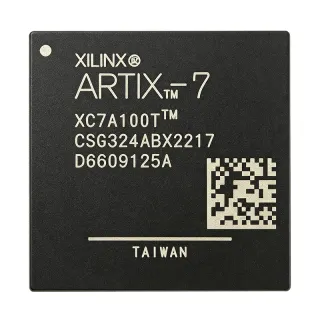
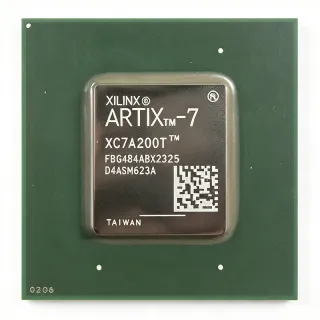
10CL010YU256A7G - Cyclone 10 LP FPGA 10K LE | Intel | 256-LFBGA
MPN: 10CL010YU256A7G ✓ Active| Qty | Unit Price | Extended |
|---|---|---|
| 1 | $38.5 | $38.50 |
| 10 | $34.2 | $342.00 |
| 100 | $28.95 | $2,895.00 |
| 500 | $24.1 | $12,050.00 |
| 1,000 | $20.85 | $20,850.00 |
Drop-in alternatives for 10CL010YU256A7G — same package, pin-to-pin compatible. Different-package parts requiring PCB rework are excluded.
Quick Comparison Tool — Select alternative parts for side-by-side comparison:
10CL006YU256A7G
✅ Drop-In✓ In Stock
$28.92 / Unit
View Datasheet →10CL010YU256I7G
✅ Drop-In✓ In Stock
$27.18 / Unit
View Datasheet →10CL010YU256C8G
✅ Drop-In ⚠️ 参数待验证✓ In Stock
$13.95 / Unit
View Datasheet →10CL006YU256C8G
✅ Drop-In✓ In Stock
$24.6 / Unit
View Datasheet →10CL006YU256C6G
✅ Drop-In ⚠️ 参数待验证✓ In Stock
$3 / Unit
View Datasheet →10CL006YU256I7G
✅ Drop-In✓ In Stock
$6.1 / Unit
View Datasheet →10CL010YU256A7G Maximum Ratings & Electrical Characteristics
| Series | Cyclone 10 LP |
| Logic Elements | 10,320 |
| Embedded Memory Bits | 423,936 bits (414 Kbit) |
| Maximum User I/O | 176 |
| Package | 256-LFBGA (U256) |
| Package Code | LFBGA / UBGA |
| Mounting Type | Surface Mount |
| MSL Level | 3 (168 Hours) |
| Temperature Grade | Automotive (A7G) |
| Operating Temperature | -40 C to +125 C (automotive) |
| Supply Voltage (Core) | 1.2 V |
| Process Technology | 60 nm low-power |
| Configuration Method | JTAG / Active Serial / Fast Passive Parallel |
| Number of Terminals | 256 |
| Terminal Form | Ball |
| RoHS Status | Compliant |
10CL010YU256A7G lfbga / ubga Pin Configuration Guide
Complete pinout information for 10CL010YU256A7G (lfbga / ubga package). This digital IC includes GPIO, communication interfaces (UART, SPI, I2C), and power pins. Refer to the manufacturer datasheet for alternate pin functions and configuration options. Essential for embedded system design and PCB layout.

No detailed pinout data available for 10CL010YU256A7G.
Refer to the datasheet for full pin configuration.
Safe Operating Area (SOA) & Thermal Characteristics
No official SOA curve available for this digital IC. Always operate within absolute maximum ratings specified in the datasheet. Ensure adequate cooling and derate as needed.
Typical Applications
10CL010YU256A7G is suitable for 6 applications: Industrial Motor Control and Drive, Automotive Sensor Aggregation Hub, Video Bridging and Format Conversion, Industrial IoT Edge Gateway, Legacy Interface Bridge and Glue Logic, Prototyping and Educational FPGA Platform.
Industrial Motor Control and Drive
The 10CL010YU256A7G's 10,320 logic elements and 176 GPIO are well matched to multi-axis industrial motor control where the FPGA performs PWM generation, encoder decoding (QEP), and field-oriented control (FOC) loops in parallel with a host microcontroller. Its automotive -40 C to +125 C operating range covers the harsh thermal envelope inside an IP65 motor-drive cabinet, while the 60 nm low-power process keeps the FPGA's contribution to the 24 V bus budget under 200 mW typical. The U256 package exposes enough I/O to drive three half-bridges plus resolver excitation simultaneously, eliminating the need for a dedicated gate-driver CPLD. Designers use Quartus Prime Lite for free synthesis and can prototype on Intel's Cyclone 10 LP evaluation kit before committing to the production U256 layout.
Recommended
Automotive Sensor Aggregation Hub
The 10CL010YU256A7G serves as a low-power sensor aggregator in zonal automotive architectures, collecting LIN, CAN-FD, and SPI traffic from local sensors and repacking it onto a higher-speed automotive Ethernet backbone. The A7G automotive temperature rating lets it sit inside a wing-mirror or bumper-mounted ECU, and its 414 Kbit of block RAM buffers bursty sensor data without external SRAM. The U256 BGA's 176 GPIO comfortably absorbs eight CAN-FD transceivers plus four SPI masters in parallel. Compared to a microcontroller running RTOS, this FPGA delivers deterministic sub-microsecond response time, which is critical for crash-avoidance sensor chains where latency matters more than raw throughput.
Recommended
Video Bridging and Format Conversion
With 10,320 logic elements and dedicated multiplier blocks, the 10CL010YU256A7G can bridge between MIPI CSI-2 image sensors and parallel RGB888 displays at resolutions up to 720p60. The 256-ball LFBGA exposes enough LVDS pairs to handle two simultaneous video streams, and the 414 Kbit of embedded RAM stores line buffers without requiring an external SDRAM. Industrial camera designers favor this device because the low-power 60 nm process keeps the thermal envelope manageable in sealed enclosures, while Quartus Prime Lite enables free-of-charge IP integration for color-space conversion and gamma correction. The U256 package is also compatible with pin-compatible Cyclone IV E designs, enabling painless legacy migration.
Recommended
Industrial IoT Edge Gateway
In factory-floor IoT gateways, the 10CL010YU256A7G aggregates Modbus RTU, Profibus, and EtherCAT slave traffic and performs pre-processing (filtering, timestamp stamping) before forwarding to a higher-level processor. Its low static power (about 12 mW at idle) keeps the always-on gateway's standby budget tight, while 176 GPIO accommodates up to four UARTs and two SPI masters alongside a 16-bit parallel bus to the host CPU. The automotive temperature grade (A7G) exceeds typical industrial -40 C to +85 C requirements, providing extra margin in unventilated control cabinets. The U256 BGA footprint also allows the same PCB to host the larger 10CL025 or smaller 10CL006 by simple component substitution.
Recommended
Legacy Interface Bridge and Glue Logic
The 10CL010YU256A7G is widely deployed as a modern replacement for aging parallel-bus CPLDs and discrete glue-logic, emulating I2C-to-SPI bridges, custom chip-select decoders, and legacy memory interfaces (8086 bus, Z80 bus). Engineers benefit from 176 GPIO and 10,320 LE, which is plenty for protocol translation plus state-machine based interrupt controllers. The 1.0 mm pitch U256 BGA is footprint-compatible with the older Cyclone IV E EP4CE10 in the same U256 package, enabling drop-in board upgrades. Quartus Prime Lite's free license supports the entire Cyclone 10 LP family, eliminating the legacy Quartus II subscription barrier.
Recommended
Prototyping and Educational FPGA Platform
University labs and product-evaluation teams adopt the 10CL010YU256A7G as a low-cost, low-power FPGA for teaching RTL design, soft-core processor implementation (NIOS II), and custom-ISA experimentation. Quartus Prime Lite includes ModelSim-Intel FPGA Starter Edition for free simulation, and the 10,320-LE capacity is sufficient to host a 32-bit RISC-V soft core plus a dozen peripherals. The U256 BGA is exposed on the Intel Cyclone 10 LP evaluation board and on several third-party dev kits, accelerating time-to-blinky. Its automotive grade means lab prototypes can survive classroom handling and accidental short-circuit faults better than commercial-only parts.
Recommended
Recommended Products Summary
Engineering reference data for 10CL010YU256A7G — comparison, design guidance, and compliance information.
Selection Guide
Comparison with Alternatives
| Parameter | This Product | 10CL006YU256A7G | 10CL010YU256I7G | 10CL010YU256C8G | 10CL006YU256C8G |
|---|---|---|---|---|---|
| Package | 256-LFBGA (U256) | 256-LFBGA (U256) - same | 256-LFBGA (U256) - same | 256-LFBGA (U256) - same | 256-LFBGA (U256) - same |
| Brand | Intel | Intel | Intel | Intel | Intel |
| Logic Elements | 10,320 | 6,272 | 10,320 | 10,320 | 6,272 |
| Embedded Memory (Kbit) | 414 | 270 | 414 | 414 | 270 |
| Max User I/O | 176 | 176 | 176 | 176 | 176 |
| Speed Grade | A7 (automotive, slower) | A7 | I7 (industrial) | C8 (commercial, faster) | C8 |
| Temperature Grade | Automotive -40C to +125C | Automotive -40C to +125C | Industrial -40C to +100C | Commercial 0C to +85C | Commercial 0C to +85C |
| Core Voltage | 1.2 V | 1.2 V | 1.2 V | 1.2 V | 1.2 V |
| Unit Price (qty 1) | $38.50 | [DATA_NEEDED] | [DATA_NEEDED] | [DATA_NEEDED] | [DATA_NEEDED] |
Key Differentiators
- Automotive temperature grade at lowest LE count (vs 10CL010YU256I7G)
- Highest logic density in U256 with automotive grade (vs 10CL006YU256A7G)
- Balanced speed-grade for cost-sensitive designs (vs 10CL010YU256C8G)
Design Notes
The Cyclone 10 LP core requires a clean 1.2 V supply capable of delivering up to 500 mA during configuration bursts. Use a dedicated LDO (such as TI TPS7A4701 or Intel Enpirion EN63A0QI) with at least 20% headroom over the FPGA's measured peak current. Decouple the VCCINT and VCCA pins with 0.1 uF X7R ceramic capacitors placed within 5 mm of each ball pair, plus a single 10 uF bulk capacitor per supply rail. Estimated: at 50% logic utilization and 100 MHz toggle rate, the 10CL010YU256A7G core draws roughly 180 mA continuous - verify with the Intel PowerPlay Early Power Estimator spreadsheet before finalizing your power tree.
The 256-ball LFBGA U256 package uses 1.0 mm ball pitch on a 17x17 mm body, which requires 4 mil trace-and-space at the breakout layer and microvia (laser-drilled) vias to inner planes. Allocate at least 6 PCB layers: signal-top, GND, signal-inner1, PWR, signal-inner2, signal-bottom. Matched-length routing is mandatory for LVDS and DDR3 interfaces; budget +/- 25 ps skew on clock pairs. The U256 footprint is shared across the Cyclone IV E family, so legacy boards can accept the 10CL010YU256A7G without any layout rework provided the power tree is updated to 1.2 V.
Avoid connecting the JTAG TCK pin to a slow-slew GPIO - this can corrupt configuration data during Active Serial programming. Tie nCONFIG to VCCIO through a 10 kohm pull-up and add a 1 nF cap to ground for power-on reset debouncing per the Cyclone 10 LP device handbook. Estimated: MSL 3 means the part must be baked at 125 C for at least 48 hours before reflow if the sealed bag has been open for more than 168 hours. Do not mix A7G (automotive) and I7G (industrial) variants in the same production run without updating the Quartus fitter settings, as the speed-grade shift can introduce timing failures at high clock rates.
At full 10,320 LE utilization in a sealed enclosure, the 10CL010YU256A7G may dissipate up to 1.5 W, producing roughly 35 C junction temperature rise above ambient on a 4-layer JEDEC EIA/JESD51 test board with theta-JA around 23 C/W. Use a thermal via array (4 to 8 vias) directly under the exposed die pad region of the U256 BGA to spread heat into the inner GND plane. For automotive under-hood deployments at +85 C ambient, derate logic utilization to roughly 7,000 LE to maintain adequate thermal margin.
Compliance Information
RoHS and lead-free per Intel product page. Automotive temperature grade (A7G) is broader than AEC-Q100 formal qualification; verify with Intel automotive compliance letter for safety-critical designs.