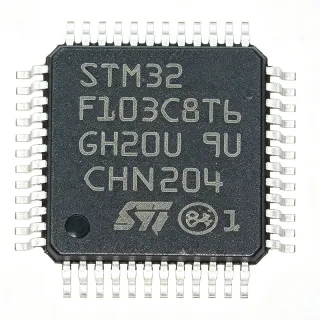
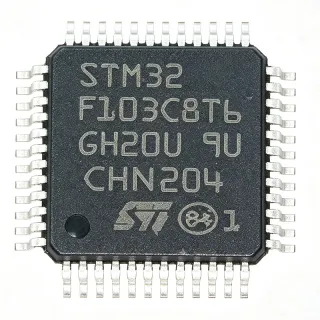
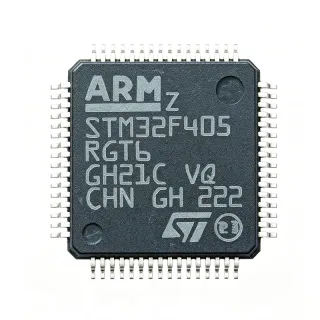
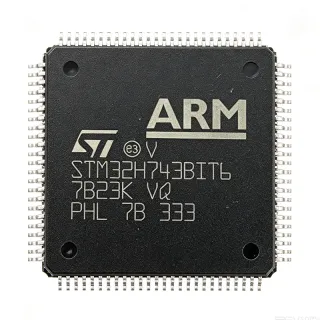
ATSAM4S2BB-MN - 120MHz Cortex-M4 128KB Flash 64-QFN | Microchip
MPN: ATSAM4S2BB-MN ✓ Active| Qty | Unit Price | Extended |
|---|---|---|
| 1 | $4.25 | $4.25 |
| 10 | $3.9 | $39.00 |
| 100 | $3.3 | $330.00 |
| 500 | $2.6 | $1,300.00 |
| 1,000 | $1.48 | $1,480.00 |
Drop-in alternatives for ATSAM4S2BB-MN — same package, pin-to-pin compatible. Different-package parts requiring PCB rework are excluded.
Quick Comparison Tool — Select alternative parts for side-by-side comparison:
ATSAM4S2BA-MU
✅ Drop-In ⚠️ 参数待验证📋 Reference alternative (not in catalog)
ATSAM4S8C-MU
✅ Drop-In ⚠️ 参数待验证📋 Reference alternative (not in catalog)
ATSAM4S16C-MU
✅ Drop-In ⚠️ 参数待验证📋 Reference alternative (not in catalog)
ATSAM4SA16C-MU
✅ Drop-In ⚠️ 参数待验证📋 Reference alternative (not in catalog)
ATSAM3S8C-MU
✅ Drop-In ⚠️ 参数待验证📋 Reference alternative (not in catalog)
ATSAM4S2BB-MN Maximum Ratings & Electrical Characteristics
| Core Processor | ARM Cortex-M4 |
| Core Size | 32-Bit Single-Core |
| Maximum Clock Frequency | 120 MHz |
| Flash Memory | 128 KB (128K x 8) |
| SRAM | 64 KB |
| Supply Voltage Range | 1.62 V to 3.6 V |
| Low-Power Mode Current | 180 uA |
| DSP Instructions | Yes |
| Memory Protection Unit | Yes (MPU) |
| Instruction Set | Thumb-2 |
| Flash ECC | Yes, with Security Bit and Lock Bits |
| Peripherals | UART, SPI, I2C/TWI, USB, 12-bit ADC |
| Package | 64-QFN (9x9 mm) with Exposed Pad |
| Mounting Type | Surface Mount |
| RoHS Status | Compliant (GREEN package per Mouser) |
| Pin Compatibility | SAM3S, SAM4N, SAM7S (64-pin version) |
ATSAM4S2BB-MN Pin Configuration
| Pin 1 | PA0 — General purpose I/O, peripheral function selectable |
| Pin 5 | PA4 — General purpose I/O (UART/SPI mux) |
| Pin 10 | PB0 — General purpose I/O, port B |
| Pin 13 | XIN32 — 32.768 kHz crystal input |
| Pin 14 | XOUT32 — 32.768 kHz crystal output |
| Pin 18 | VDDCORE — Core power supply (internal regulator output) |
| Pin 20 | VDDIO — I/O power supply, 1.62V to 3.6V |
| Pin 23 | GND — Ground (also exposed pad) |
| Pin 45 | NRST — Bidirectional reset with internal pull-up |
| Pin 50 | SWDIO — Serial Wire Debug data I/O |
| Pin 51 | SWCLK — Serial Wire Debug clock |
| Pin 60 | AD0 — ADC channel 0 analog input |
Safe Operating Area (SOA) & Thermal Characteristics
No official SOA curve available for this digital IC. Always operate within absolute maximum ratings specified in the datasheet. Ensure adequate cooling and derate as needed.
Typical Applications
ATSAM4S2BB-MN is suitable for 6 applications: Industrial Control Systems, IoT Endpoint Devices, Medical Devices, Consumer Electronics, Motor and Actuator Control, Data Acquisition Systems.
Industrial Control Systems
The ATSAM4S2BB-MN fits industrial control nodes that need deterministic processing and robust memory. Its 120 MHz Cortex-M4 with DSP instructions handles PID loops and filtering, while Flash ECC and the MPU protect against bit errors and runaway code in electrically noisy factory environments. Typical designs use UART/SPI to talk to PLC I/O modules and the 12-bit ADC for sensor feedback, with the 1.62V-3.6V rail simplifying integration with industrial 3.3V logic.
Recommended
IoT Endpoint Devices
For IoT endpoints, the ATSAM4S2BB-MN offers 180 uA low-power mode current and fast wake-up from the Cortex-M4 core, extending battery life in sensor nodes. The integrated USB Device port enables field configuration, and 128 KB ECC-protected Flash safely stores firmware for over-the-air update staging. Its 64-QFN 9x9 mm footprint keeps the PCB compact, and rich serial peripherals (SPI, I2C, UART) connect radios and sensors with minimal external glue logic.
Recommended
Medical Devices
Portable medical instruments benefit from the ATSAM4S2BB-MN's DSP-accelerated signal processing for filtering biopotential or pressure waveforms, while Flash ECC, lock bits, and the security bit protect patient data and firmware integrity. The 12-bit ADC digitizes analog front-end outputs, and USB supports data transfer to host PCs. The extended industrial temperature range and MPU-based fault containment support the reliability expectations of diagnostic and monitoring equipment.
Recommended
Consumer Electronics
In consumer products, the ATSAM4S2BB-MN balances cost and performance: at roughly $1.48-$4.25 per unit (as of 2026-08-29), it delivers 120 MHz Cortex-M4 processing for HID peripherals, appliance control panels, and accessory devices. The USB Device peripheral removes the need for a separate interface chip, and the QFN exposed pad provides good thermal behavior in enclosed housings. Thumb-2 code density keeps 128 KB Flash sufficient for feature-rich stacks.
Recommended
Motor and Actuator Control
The Cortex-M4 DSP instructions and single-cycle MAC accelerate FOC (field-oriented control) math for BLDC and stepper motors, making the ATSAM4S2BB-MN a practical controller for small actuation systems. Multiple timers and the 12-bit ADC enable PWM generation with current sampling; the 120 MHz clock gives ample headroom for 20 kHz control loops. Flash ECC protects the control firmware against single-bit corruption from motor driver switching noise.
Recommended
Data Acquisition Systems
The ATSAM4S2BB-MN serves as the digital host in compact DAQ nodes: its SPI runs at high clock rates to stream conversions from external precision ADCs, while the 64 KB SRAM buffers sample blocks before UART/USB transfer. The internal 12-bit ADC handles auxiliary channels, and DSP instructions implement decimation filters in firmware. The 1.62V-3.6V supply and low-power modes suit both mains-powered loggers and battery field recorders.
Recommended
Recommended Products Summary
Engineering reference data for ATSAM4S2BB-MN — comparison, design guidance, and compliance information.
Selection Guide
Comparison with Alternatives
| Parameter | This Product | ATSAM4S2BA-MU | ATSAM4S8C-MU | ATSAM4S16C-MU | ATSAM3S8C-MU |
|---|---|---|---|---|---|
| Brand | Microchip Technology | Microchip Technology | Microchip Technology | Microchip Technology | Microchip Technology |
| Package | 64-QFN (9x9 mm) | 64-QFN (9x9 mm) - same | 64-QFN (9x9 mm) - same | 64-QFN (9x9 mm) - same | 64-QFN (9x9 mm) - same |
| Core / Max Speed | Cortex-M4, 120 MHz | Cortex-M4, 120 MHz | Cortex-M4, 120 MHz | Cortex-M4, 120 MHz | Cortex-M3, 64 MHz |
| Flash Memory | 128 KB (ECC) | [DATA_NEEDED] | 512 KB | 1 MB | 512 KB |
| SRAM | 64 KB | [DATA_NEEDED] | 128 KB | 128 KB | 64 KB |
| Supply Voltage | 1.62 V to 3.6 V | 1.62 V to 3.6 V | 1.62 V to 3.6 V | 1.62 V to 3.6 V | 1.62 V to 3.6 V |
| Low-Power Current | 180 uA | [DATA_NEEDED] | [DATA_NEEDED] | [DATA_NEEDED] | [DATA_NEEDED] |
| Migration Path | SAM3S/SAM4N/SAM7S 64-pin compatible | Same family, minor memory variant | Memory upgrade, same footprint | Max memory upgrade, same footprint | Legacy core, firmware port required |
Key Differentiators
- Lowest-cost entry point of the pin-compatible SAM4S QFN-64 family (vs ATSAM4S16C-MU)
- Flash ECC, security bit, and lock bits (vs ATSAM3S8C-MU)
- Backward footprint compatibility (vs ATSAM4S2BA-MU)
Design Notes
Decouple all VDDIO and VDDCORE pins with 100 nF ceramic capacitors placed within 2 mm of each pin, plus one bulk 4.7 uF-10 uF capacitor per supply domain. Solder the QFN exposed pad to a stitched PCB thermal pad with a 3x3 via array to GND for heat dissipation and ground return. Follow the SAM4S datasheet layout guidelines to keep the 32.768 kHz crystal traces short and guarded.
Use the internal voltage regulator (VDDCORE) rather than forcing an external core supply, and allow its recommended output capacitor per the datasheet to ensure stability. Start-up and sleep transitions draw transient current; size the 3.3V rail for at least the wake-up inrush. At 120 MHz with peripherals active, budget for tens of mA; 180 uA applies only in the low-power mode.
The suffix codes matter: -MN is the QFN extended-temperature part while -AN is the QFP variant - they are NOT footprint interchangeable. Before migrating from SAM3S/SAM7S, verify peripheral register differences and port the firmware; pin compatibility does not guarantee software compatibility. Enable the flash security bit only after establishing a working debug flow, since it can lock JTAG access.
Compliance Information
Mouser lists QFN GREEN package with extended temperature rating (MRL B). REACH/halogen-free declarations not found in provided data.