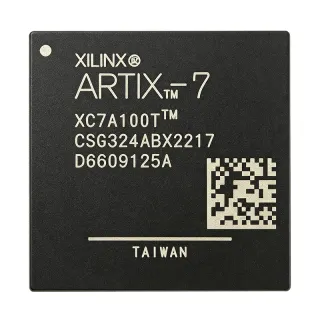
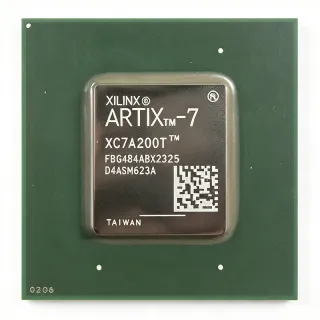
EP1C20F324C6N - Cyclone FPGA 20K LE 324-BGA | Intel / Altera
MPN: EP1C20F324C6N ✗ End of Life| Qty | Unit Price | Extended |
|---|---|---|
| 1 | $38.5 | $38.50 |
| 10 | $34.2 | $342.00 |
| 100 | $28.9 | $2,890.00 |
| 250 | $25.4 | $6,350.00 |
| 1,000 | $21.75 | $21,750.00 |
Drop-in alternatives for EP1C20F324C6N — same package, pin-to-pin compatible. Different-package parts requiring PCB rework are excluded.
Quick Comparison Tool — Select alternative parts for side-by-side comparison:
EP1C20F324C8N
✅ Drop-In✓ In Stock
$42.36 / Unit
View Datasheet →EP1C20F324I7N
✅ Drop-In✓ In Stock
$53.1 / Unit
View Datasheet →EP1C20F324C7N
✅ Drop-In ⚠️ 参数待验证✓ In Stock
$56.04 / Unit
View Datasheet →EP1C20F324C6
✅ Drop-In✓ In Stock
$105 / Unit
View Datasheet →EP1C20F324I7
✅ Drop-In✓ In Stock
$85.2 / Unit
View Datasheet →EP1C20F324C6N Maximum Ratings & Electrical Characteristics
| Series | Cyclone® |
| Family | Cyclone I |
| Logic Elements (LEs) | 20,060 |
| Logic Array Blocks (LABs) | 2,006 |
| Total RAM Bits | 294,912 (36 Kbit) |
| Embedded Multipliers (18×18) | Yes (M4K + DSP blocks per datasheet) |
| User I/Os | 233 |
| Number of CLBs / Logic Cells | 20,060 cells (20060 CLBs per datasheet) |
| Supply Voltage - Core | 1.5 V |
| Maximum Operating Frequency | 405 MHz (per FindIC specification) |
| Process Technology | CMOS, 0.13 µm SRAM-based |
| Package | 324-FBGA (FineLine BGA), 19 × 19 mm, 1.0 mm pitch |
| Mounting Type | Surface Mount (BGA) |
| Speed Grade | C6 |
| Operating Temperature | 0 °C to +85 °C (commercial, "C" prefix) |
| Lead-Free / RoHS | Yes (lead-free, "N" suffix per part number decoder) |
| PLLs | 2 (per Cyclone family datasheet) |
| Configuration | JTAG, Passive Serial, Active Serial (EPCS) |
EP1C20F324C6N 324-fbga (fineline bga), 19 × 19 mm, 1.0 mm pitch Pin Configuration Guide
Complete pinout information for EP1C20F324C6N (324-fbga (fineline bga), 19 × 19 mm, 1.0 mm pitch package). This digital IC includes GPIO, communication interfaces (UART, SPI, I2C), and power pins. Refer to the manufacturer datasheet for alternate pin functions and configuration options. Essential for embedded system design and PCB layout.

No detailed pinout data available for EP1C20F324C6N.
Refer to the datasheet for full pin configuration.
Safe Operating Area (SOA) & Thermal Characteristics
No official SOA curve available for this digital IC. Always operate within absolute maximum ratings specified in the datasheet. Ensure adequate cooling and derate as needed.
Typical Applications
EP1C20F324C6N is suitable for 6 applications: Industrial Protocol Bridge / Glue Logic, Display Controller / LCD Panel Driver, Motor Control and Industrial Automation, Low-Cost Video Processing Pipeline, Telecom Line Card Glue Logic, Consumer Set-Top Box and Printer Controller.
Industrial Protocol Bridge / Glue Logic
The EP1C20F324C6N is well-suited to industrial protocol bridging and glue-logic roles where moderate logic density and a large user-IO count are required. Its 20,060 logic elements (LEs) and 233 user I/Os in the 324-FBGA package give designers headroom for UART/SPI/I2C bridging, PROFINET or Modbus protocol conversion, and parallel-to-serial multiplexing across multiple industrial buses. The 1.5 V core and bank-isolated I/Os (LVTTL/LVCMOS/PCI/SSTL) simplify interfacing to 3.3 V MCUs and 5 V-tolerant peripherals via series resistors, while the two on-chip PLLs allow clean clock recovery from any reference. Compared with a CPLD, the Cyclone provides 18×18 multipliers and 294 Kbit of block RAM for buffering packet data, but the designer must still manage commercial temperature grade (0–85 °C) or migrate to the I7 variant for cabinet environments.
Recommended
Display Controller / LCD Panel Driver
The EP1C20F324C6N's 20,060 LEs and 233 user I/Os make it a strong fit for mid-resolution LCD and TFT display controllers, where parallel RGB data buses and timing-control signals consume significant pin and logic resources. The 324-FBGA package provides ample I/O for 18/24-bit color interfaces plus control signals, while the 294 Kbit M4K memory can be configured as line buffers or frame-row FIFOs to smooth data flow between the host processor and panel. The two on-chip PLLs synthesize the pixel clock from a low-frequency reference with sub-nanosecond jitter, which is critical for avoiding visual artifacts in LCDs and OLEDs. Designers typically pair the EP1C20F324C6N with an SDRAM or DDR memory controller block (Cyclone I supports external SDRAM but not DDR) and implement color-space conversion in hardware. For higher-resolution panels above XGA, designers should migrate to Cyclone II or later, which adds dedicated DDR memory support.
Recommended
Motor Control and Industrial Automation
In motor-control and industrial-automation applications, the EP1C20F324C6N delivers precise multi-axis PWM generation, encoder feedback decoding, and field-oriented control (FOC) state machines with deterministic latency. The 20,060 LEs comfortably host a single-axis FOC algorithm plus auxiliary protection logic, while the 18×18 embedded multipliers accelerate Park/Clarke transforms and PID loops. The 233 user I/Os of the 324-FBGA package expose enough pins for three-phase PWM outputs, Hall-sensor or QEI encoder inputs, current-sense ADCs, and CAN/SPI communication to a supervisory MCU. The two PLLs synthesize high-resolution PWM carrier frequencies from a single crystal reference. For -40 °C to +100 °C cabinet environments, choose the EP1C20F324I7N industrial-temperature variant; the C6N commercial-grade part is limited to 0–85 °C operation.
Recommended
Low-Cost Video Processing Pipeline
The EP1C20F324C6N can implement entry-level video processing functions such as scaling, de-interlacing, color-space conversion, and on-screen display (OSD) overlay for SDTV and standard-definition video. The 20,060 LEs and 18×18 embedded multipliers handle real-time horizontal/vertical scaling filters and chroma keying, while 294 Kbit of M4K memory serves as line buffers for 4:2:2 chroma data. The 233 user I/Os of the 324-FBGA expose parallel ITU-R BT.656 or D1 video buses plus audio I2S, and the two PLLs synthesize 27 MHz video reference clocks cleanly. Compared with a DSP, the Cyclone provides deterministic parallel processing without software overhead, but the user must implement external SDRAM controllers for frame buffering since the part lacks internal memory large enough for full frames. For HD or full-HD processing migrate to Cyclone IV or Cyclone V.
Recommended
Telecom Line Card Glue Logic
In telecom line cards and access equipment, the EP1C20F324C6N serves as flexible glue logic between network processors, framers, SERDES, and backplane interfaces. Its 20,060 LEs accommodate TDM bus cross-connects, LIU (line-interface-unit) configuration state machines, and per-channel alarm monitoring, while the 324-FBGA's 233 user I/Os expose enough parallel buses for multi-port T1/E1 or low-density Ethernet aggregation. The 18×18 multipliers support V.90 modem equalization or simple DSP functions for line testing. The two PLLs clean up recovered clocks from the network side. Designers typically pair the EP1C20F324C6N with a higher-level processor running protocol stacks, offloading only the deterministic glue and alarm logic to the FPGA. Note that the Cyclone I is commercial-grade; for outdoor cabinets, the I7N industrial variant is required.
Recommended
Consumer Set-Top Box and Printer Controller
The EP1C20F324C6N fits cost-sensitive consumer products such as entry-level set-top boxes, digital photo frames, and mid-range printers that require custom control logic without the expense of an ASIC. The 20,060 LEs handle MPEG transport-stream demultiplexing, IR remote decoding, and front-panel key-scanning in a set-top box, or print-engine sequencing, USB-host glue, and LCD status rendering in a printer. The 233 user I/Os of the 324-FBGA accommodate multiple peripheral buses (USB, I2S, I2C, SPI, parallel NAND), while the two PLLs synthesize audio and video clocks from a single 27 MHz reference. The commercial temperature grade is sufficient for indoor consumer environments. Designers moving to high-volume production may migrate to Cyclone II for lower unit cost, but the EP1C20F324C6N remains a useful prototyping or low-volume-production device.
Recommended
Recommended Products Summary
Engineering reference data for EP1C20F324C6N — comparison, design guidance, and compliance information.
Selection Guide
Comparison with Alternatives
| Parameter | This Product | EP1C20F324C8N | EP1C20F324I7N | EP1C20F324C7N | EP1C20F324C6 | EP1C20F324I7 |
|---|---|---|---|---|---|---|
| Brand | Altera (now Intel) | Altera (now Intel) | Altera (now Intel) | Altera (now Intel) | Altera (now Intel) | Altera (now Intel) |
| Package | 324-FBGA (19x19 mm, 1.0 mm pitch) | 324-FBGA (19x19 mm, 1.0 mm pitch) - same | 324-FBGA (19x19 mm, 1.0 mm pitch) - same | 324-FBGA (19x19 mm, 1.0 mm pitch) - same | 324-FBGA (19x19 mm, 1.0 mm pitch) - same | 324-FBGA (19x19 mm, 1.0 mm pitch) - same |
| Logic Elements | 20,060 | 20,060 | 20,060 | 20,060 | 20,060 | 20,060 |
| Speed Grade | C6 | C8 (slower) | I7 (faster, industrial) | C7 (between C6 and C8) | C6 (identical speed) | I7 (faster, industrial) |
| Operating Temperature | 0 to +85 °C (commercial) | 0 to +85 °C | -40 to +100 °C (industrial) | 0 to +85 °C | 0 to +85 °C | -40 to +100 °C (industrial) |
| Lead-Free / RoHS | Yes (N suffix, lead-free) | Yes (lead-free) | Yes (lead-free) | Yes (lead-free) | No (without N suffix) | No (without N suffix) |
| User I/Os | 233 | 233 | 233 | 233 | 233 | 233 |
| Embedded RAM | 294,912 bits (M4K blocks) | 294,912 bits | 294,912 bits | 294,912 bits | 294,912 bits | 294,912 bits |
| Lifecycle Status | Obsolete | Obsolete | Obsolete | Obsolete | Obsolete | Obsolete |
Key Differentiators
- Industrial temperature grade variant available in the same FBGA-324 footprint (vs EP1C20F324I7N)
- Lead-free RoHS-compliant finish (N suffix) (vs EP1C20F324C6 (without N suffix))
- Faster C6 speed grade available for timing-critical paths (vs EP1C20F324C8N)
Design Notes
The EP1C20F324C6N requires four separate power rails: VCCINT (1.5 V core), VCCIO[1..4] (per-bank I/O voltages, supporting 1.5/1.8/2.5/3.3 V), VCC_PLL (analog 1.5 V for the two PLL blocks), and a common GND. Place 100 nF X7R ceramic decoupling capacitors on every VCC pin within 3 mm trace length, plus 10 µF X5R bulk capacitors per supply rail. Estimated: at typical 30% toggle rate and 50% utilization on the C6N, core current draw can reach 500–800 mA; the PLL analog supply must be filtered with an LC or ferrite-bead network to minimize jitter. Follow Altera's Cyclone Hardware Design Guidelines (AN-224) for sequencing requirements.
The 324-FBGA has 1.0 mm ball pitch, which demands a 4-6-4 via-in-pad or dog-bone fan-out escape pattern on a 6+ layer PCB. Microvia technology (laser-drilled stacked vias) is strongly recommended for the inner-row ball escape. Use ENIG surface finish for reliable BGA assembly; OSP is acceptable for prototypes but less robust for production. Estimated: full-channel escape requires approximately 4 signal layers between the BGA and the inner layers; allocate at least 2 ground planes adjacent to signal layers for controlled impedance of 50 Ω single-ended traces.
Do not assume the EP1C20F324C6N is hot-swappable; it requires proper VCCINT/VCCIO power-on sequencing per the Cyclone datasheet, otherwise the I/Os may drive into a contention state during ramp. Always deassert nCONFIG (drive high) only after all supplies reach valid levels; CONF_DONE will signal successful configuration. Configuration bitstream storage on an EPCS1/EPCS4/EPCS16 active-serial flash must match the C6 speed grade or design will fail timing closure. Common pitfall: using C8 bitstreams on a C6 device will work but C6 bitstreams on a C8 device will fail timing analysis.
Compliance Information
Lead-free / RoHS compliant per part-number "N" suffix. REACH and halogen-free status not stated in the verified web data and set to "unknown". AEC-Q100 not applicable (FPGA used in industrial/consumer applications, not automotive qualified under AEC-Q100).