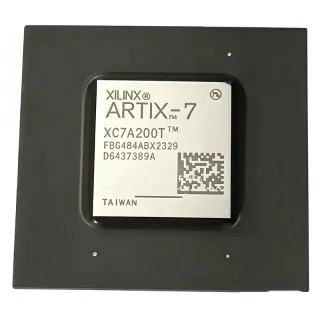
EP1C3XXB - Intel/Altera Cyclone FPGA | FBGA Package
MPN: EP1C3XXB ✓ Active| Qty | Unit Price | Extended |
|---|---|---|
| 1 | $0 | $0.00 |
| 10 | $0 | $0.00 |
| 100 | $0 | $0.00 |
| 500 | $0 | $0.00 |
| 1,000 | $0 | $0.00 |
Drop-in alternatives for EP1C3XXB — same package, pin-to-pin compatible. Different-package parts requiring PCB rework are excluded.
Quick Comparison Tool — Select alternative parts for side-by-side comparison:
EP1C3T100C8N
✅ Drop-In ⚠️ 参数待验证✓ In Stock
$14.2 / Unit
View Datasheet →EP1C3T144I7N
✅ Drop-In ⚠️ 参数待验证✓ In Stock
$54.8 / Unit
View Datasheet →EP1C3XXB Maximum Ratings & Electrical Characteristics
| Manufacturer | Intel (formerly Altera) |
| Series | Cyclone FPGA family |
| Device Density Tier | Cyclone EP1C3 (lowest density) |
| Product Type | FPGA - Field Programmable Gate Array |
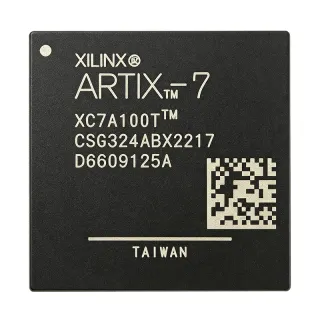
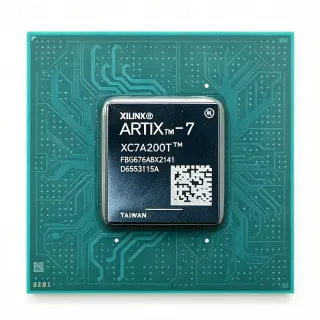
| Package Type | FBGA (Fine-pitch Ball Grid Array) |
| Mounting Type | Surface Mount |
| Design Software | Intel Quartus II / Quartus Prime |
EP1C3XXB [data_needed: bga ball count] Pin Configuration Guide
Complete pinout information for EP1C3XXB ([data_needed: bga ball count] package) with [DATA_NEEDED: BGA ball count] pins. This digital IC includes GPIO, communication interfaces (UART, SPI, I2C), and power pins. Refer to the manufacturer datasheet for alternate pin functions and configuration options. Essential for embedded system design and PCB layout.
![[data_needed: bga ball count] package pinout diagram for EP1C3XXB](/assets/package-diagrams/default.svg?v=1788622528)
No detailed pinout data available for EP1C3XXB.
Refer to the datasheet for full pin configuration.
Estimated pin count: [DATA_NEEDED: BGA ball count] pins (digital package)
Safe Operating Area (SOA) & Thermal Characteristics
No official SOA curve available for this digital IC. Always operate within absolute maximum ratings specified in the datasheet. Ensure adequate cooling and derate as needed.
Typical Applications
EP1C3XXB is suitable for 6 applications: Digital Signal Processing (DSP), Industrial Control and Automation, Communications Protocol Bridging, Video and Image Processing Front-Ends, Embedded Computing and Custom Peripherals, Prototype Development and Education.
Digital Signal Processing (DSP)
The EP1C3XXB, as a member of the Intel Cyclone FPGA family, is suited for low-density digital signal processing tasks where its reprogrammable logic fabric can implement FIR filters, FFT engines, and custom DSP datapaths. Cyclone FPGAs deliver deterministic latency and parallel processing capability that microcontrollers cannot match, while the EP1C3 density tier provides enough logic elements for single-channel audio processing, simple motor control algorithms, or sensor signal conditioning. Engineers typically pair the device with external ADC/DAC converters and use Quartus II MegaWizard Plug-Ins to instantiate DSP IP blocks. The FBGA package requires careful PCB thermal design and signal-integrity-aware layout for high-speed DSP data paths.
Recommended
Industrial Control and Automation
The EP1C3XXB FPGA serves well in industrial control applications requiring custom logic for PLC interfaces, motor drive control, and sensor fusion. Its reprogrammable nature allows field updates for protocol changes or bug fixes without hardware replacement. The Cyclone family's deterministic timing and parallel I/O handling make it suitable for multi-axis stepper motor control, encoder interfacing, and high-speed digital I/O expansion. Industrial users benefit from long-lifecycle FPGA availability for equipment with 10-20 year service lifetimes. The FBGA package and surface-mount construction suit modern compact industrial controller designs.
Recommended
Communications Protocol Bridging
The EP1C3XXB can implement custom protocol bridges between industrial communication standards such as UART, SPI, I2C, CAN, RS-485, and proprietary fieldbus variants. Cyclone FPGAs excel at multi-protocol bridging because they can simultaneously run several hardware state machines in parallel, each handling a different protocol stream. The EP1C3 density tier supports bridging applications with 2-3 concurrent protocol channels. Engineers use Cyclone FPGAs to extend the life of legacy equipment by adding modern protocol interfaces without replacing installed microcontroller firmware.
Recommended
Video and Image Processing Front-Ends
The EP1C3XXB in an FBGA package suits compact video processing front-ends where it can perform real-time pixel-level operations such as color space conversion, scaling, deinterlacing, or simple edge detection. While the EP1C3 density tier is limited for full HD video pipelines, it handles CIF-resolution (352x288) or VGA (640x480) processing comfortably. The BGA package's high pin density supports wide video buses (16-24 bit parallel) required for video ADC/DAC interfacing. Cyclone FPGAs remain popular for low-cost camera modules and machine-vision pre-processing subsystems.
Recommended
Embedded Computing and Custom Peripherals
The EP1C3XXB functions as a custom peripheral companion to microprocessors in embedded systems, offloading real-time tasks such as PWM generation, quadrature decoding, or high-speed parallel data capture. By offloading these functions to an FPGA, the host CPU is freed for application-level work. The Cyclone family's LVDS and high-speed I/O support enables interfacing to high-bandwidth sensors and ADCs. The FBGA package keeps the footprint small enough to add FPGA-based peripherals to space-constrained embedded boards.
Recommended
Prototype Development and Education
The EP1C3XXB serves as a low-cost entry point for FPGA learning, digital logic education, and prototype development. The Cyclone family is well-supported by Quartus II tutorials, university course materials, and open-source reference designs. Students and engineers can implement simple processors, state machines, and communication interfaces to learn HDL design and FPGA tool flows. The FBGA package is more challenging for hand-prototyping than TQFP variants, so educational users often select TQFP-packaged Cyclone variants for breadboard-compatible development.
Recommended
Recommended Products Summary
Engineering reference data for EP1C3XXB — comparison, design guidance, and compliance information.
Selection Guide
Comparison with Alternatives
| Parameter | This Product | EP1C3T100C8N | EP1C3T144I7N |
|---|---|---|---|
| Package | FBGA (specific ball count unknown) | TQFP-100 (different package) | TQFP-144 (different package) |
| Brand | Intel | Intel | Intel |
| Logic Elements | [DATA_NEEDED] | 2,910 LEs | 2,910 LEs |
| Total RAM Bits | [DATA_NEEDED] | 59,904 bits | 59,904 bits |
| Maximum User I/O | [DATA_NEEDED] | 65 user I/O | 104 user I/O |
| Operating Temperature | [DATA_NEEDED] | 0C to +85C (commercial) | -40C to +100C (industrial) |
| Design Software | Quartus II / Quartus Prime | Quartus II / Quartus Prime | Quartus II / Quartus Prime |
| Series Generation | Cyclone (original) | Cyclone (original) | Cyclone (original) |
Key Differentiators
- Lowest-density Cyclone FPGA tier for cost-sensitive applications (vs EP1C6-series Cyclone FPGAs)
- Compact FBGA package for high-density PCB designs (vs EP1C3T100 / EP1C3T144 TQFP variants)
Design Notes
The EP1C3XXB uses an FBGA (Fine-pitch Ball Grid Array) package per distributor listings, which requires careful PCB layout: escape routing for inner balls, microvia or via-in-pad technology for high-density designs, and matched-length routing for high-speed differential pairs. Confirm exact ball count and pinout from the manufacturer datasheet before finalizing PCB layout. BGA packages cannot be hand-soldered, requiring reflow assembly with X-ray inspection for solder joint verification.
Verify the exact Cyclone device variant before design finalization. The 'XXB' suffix in EP1C3XXB does not match standard Cyclone part numbering conventions (which typically use codes like T144, Q240, F256 for package and I7/I8 for speed grade). Confirm with the supplier whether EP1C3XXB is a custom part marking, a packaging variant, or a third-party relabel. For new designs, prefer standard EP1C3T144 or EP1C6Q240 part numbers with full datasheet coverage.
BGA packages concentrate heat dissipation through the ball grid into the PCB. For the EP1C3XXB, design the PCB with adequate thermal vias under the package and sufficient copper pour area on inner layers. FPGA power consumption scales with logic utilization, clock frequency, and toggle rate. At typical Cyclone utilization (50-70%), expect 0.5-1.5W core power. Use the Quartus PowerPlay analyzer to estimate junction temperature for your specific design.
Compliance Information
Compliance information not available in verified web data. As an Intel/Altera legacy Cyclone-family FPGA, RoHS compliance depends on the specific date code and variant - confirm with the manufacturer or distributor for the date code being purchased.