Microchip Technology

ATMEGA16A-AU - 16KB Flash AVR MCU 16MHz TQFP-44 | Microchip

MPN: ATMEGA16A-AU βœ“ Active
In Stock Ships in 1-3 business days
2.7 V to 5.5 V Vdss 44-TQFP (10 x 10 mm, 1 mm height) Package 16 MHz Speed 16 KB (8K x 16), self-programmable Memory
From $2.05 USD / Unit
MOQ: 1 |
Price updated: 2026-09-16
Volume Pricing
Qty Unit Price Extended
1 $3.2 $3.20
10 $2.88 $28.80
100 $2.55 $255.00
500 $2.3 $1,150.00
1,000 $2.05 $2,050.00
ℹ️ All prices are in USD

ATMEGA16A-AU Overview

The Microchip ATMEGA16A-AU is a low-power, high-performance 8-bit AVR RISC microcontroller with 16KB of In-System Programmable Flash, 1024 bytes of SRAM, 512 bytes of EEPROM, and a maximum clock frequency of 16 MHz, housed in a 44-pin TQFP (10x10 mm) surface-mount package. It operates from a 2.7V to 5.5V supply.

A microcontroller (MCU) is a single-chip computer that integrates a processor core, program memory, data memory, and peripherals such as timers, communication interfaces, and analog-to-digital converters. Within the semiconductor hierarchy, the ATmega16A belongs to the AVR family of enhanced RISC microcontrollers, a product category under Microchip's 8-bit MCU portfolio used for embedded control in industrial, consumer, and automotive-adjacent systems.

Key features include 133 powerful instructions with mostly single-cycle execution, delivering throughput approaching 1 MIPS per MHz. The device integrates an 8-channel 10-bit ADC, a JTAG interface for on-chip debugging and boundary scan, and self-programming Flash that supports field firmware updates. Three flexible timers (two 8-bit and one 16-bit with PWM outputs), a full-duplex USART, SPI, and TWI (I2C-compatible) interfaces round out the peripheral set.

Architecturally, the AVR core uses a Harvard structure with separate program and data buses, allowing an instruction to be fetched while the previous one executes. This single-cycle instruction fetch/execute pipeline is the reason the family achieves near 1 MIPS/MHz efficiency without pipelining complexity. The ATmega16A is a process-shrunk refresh of the original ATmega16; per Microchip application note AVR522, it is a functionally identical, drop-in replacement for the ATmega16, though some electrical characteristics differ slightly due to the new manufacturing process.

Typical applications include industrial automation and motor control, consumer appliances, battery-powered instrumentation, and embedded hobby/education platforms. The 10-bit ADC suits sensor acquisition, while JTAG debugging shortens development cycles.

Design considerations: keep the 16 MHz maximum clock in mind when budgeting processing headroom, and use the internal RC oscillator (up to 8 MHz) to save a crystal in cost-sensitive designs.

This page adds value beyond the manufacturer datasheet by synthesizing drop-in alternatives, comparison tables, design notes, and sourcing guidance in one place.

Drop-in alternatives for ATMEGA16A-AU β€” same package, pin-to-pin compatible. Different-package parts requiring PCB rework are excluded.

Variants in this series

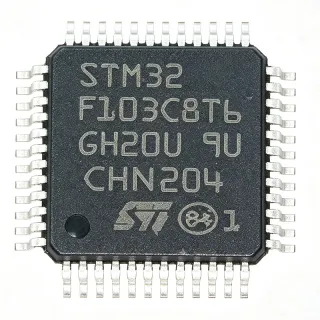
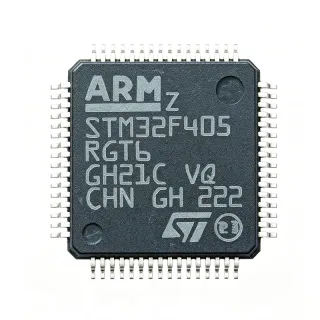
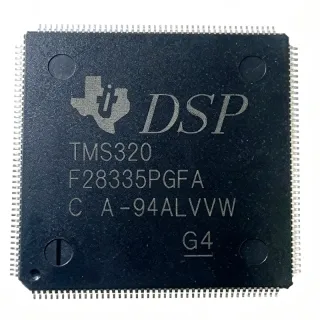
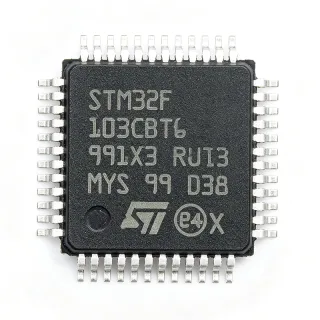
Same-series models that are drop-in compatible with ATMEGA16A-AU (same form factor and footprint) β€” differing in Flash Memory, Flash Program Memory, Operating Temperature, SRAM, Package.

Microchip Technology
Flash Program Memory: 16 KB (8K x 16) In-System Programmable
Operating Temperature: -40C to +85C (industrial, I grade)
SRAM: 1 KB
Compare with ATMEGA16A-AU β†’
Microchip Technology
Flash Program Memory: 16 KB (8K x 16)
SRAM: 1 KB
Package: 44-TQFP (10 x 10 mm)
Compare with ATMEGA16A-AU β†’
Microchip Technology
Flash Memory: 16 KB (8K x 16) in-system programmable
Operating Temperature: -40C to +85C
SRAM: 1 KB
Compare with ATMEGA16A-AU β†’
Microchip Technology
Flash Memory: 16 KB (8K x 16)
SRAM: 1 KB
Package: 44-TQFP (10x10 mm)
Compare with ATMEGA16A-AU β†’
Microchip Technology
Flash Memory: 16 KB (8K x 16) ISP, read-while-write
Operating Temperature: -40C to +85C (extended, A suffix)
SRAM: 1 KB
Compare with ATMEGA16A-AU β†’
Microchip Technology
Flash Memory: 16 KB in-system programmable (read-while-write)
SRAM: 1 KB
Compare with ATMEGA16A-AU β†’
Microchip Technology
Flash Program Memory: 16KB (8K x 16)
Operating Temperature: -40C to +85C (industrial)
SRAM: 1KB
Compare with ATMEGA16A-AU β†’

Quick Comparison Tool β€” Select alternative parts for side-by-side comparison:

ATMEGA16-16AU

βœ… Drop-In
Microchip Technology
πŸ“¦ 44-TQFP (10x10 mm)
8-bit AVR RISC Β· 16 MHz Β· 16 KB (8K x 16) in-system programmable Β· 1 KB Β· 512 B Β· 2.7 V to 5.5 V (4.5 V to 5.5 V for 16 MHz operation) Β· 16 MIPS at 16 MHz Β· 133 instructions, most single-cycle

βœ“ In Stock

$4.41 / Unit

View Datasheet β†’

ATMEGA32A-AU

βœ… Drop-In ⚠️ 参数待ιͺŒθ―
πŸ“¦ 44-TQFP (10x10 mm)
32KB Flash vs 16KB (+100%), same pinout and peripheral set, more EEPROM (1KB vs 512B)

πŸ“‹ Reference alternative (not in catalog)

ATMEGA164A-AU

βœ… Drop-In ⚠️ 参数待ιͺŒθ―
πŸ“¦ 44-TQFP (10x10 mm)
16KB Flash same size, two USARTs vs one, newer core revision, pin-compatible TQFP-44

πŸ“‹ Reference alternative (not in catalog)

ATMEGA8535-16AU

βœ… Drop-In ⚠️ 参数待ιͺŒθ―
πŸ“¦ 44-TQFP (10x10 mm)
8KB Flash vs 16KB (-50%), same pinout and peripherals, legacy AVR generation

πŸ“‹ Reference alternative (not in catalog)

ATMEGA162-16AU

βœ… Drop-In ⚠️ 参数待ιͺŒθ―
Microchip Technology
πŸ“¦ 44-TQFP (10x10 mm)
8-bit AVR RISC Β· 16 MHz Β· 16 MIPS at 16 MHz (approx. 1 MIPS per MHz) Β· 16 KB (8K x 16) Β· 1 KB Β· 512 B Β· 2.7 V to 5.5 V Β· 133 powerful instructions, most single-cycle

βœ“ In Stock

$2.45 / Unit

View Datasheet β†’

ATMEGA16A-AU Maximum Ratings & Electrical Characteristics

Core Architecture 8-bit AVR enhanced RISC
Flash Program Memory 16 KB (8K x 16), self-programmable
SRAM 1024 bytes
EEPROM 512 bytes
Maximum Clock Frequency 16 MHz
Performance Approx. 1 MIPS per MHz
Instruction Set 133 instructions, most single-cycle
Supply Voltage 2.7 V to 5.5 V
ADC 8-channel, 10-bit
Timers Two 8-bit + one 16-bit with PWM
Communication Interfaces USART, SPI, TWI (I2C-compatible)
Debug Interface JTAG (on-chip debug and boundary scan)
Programmable I/O 32 programmable I/O lines
Package 44-TQFP (10 x 10 mm, 1 mm height)
Mounting Type Surface Mount
In-System Programming Yes (ISP via SPI)
Life Cycle Stage ACTIVE
RoHS Status Compliant

ATMEGA16A-AU 44-tqfp (10 x 10 mm, 1 mm height) Pin Configuration Guide

Pin configuration for ATMEGA16A-AU (44-tqfp (10 x 10 mm, 1 mm height) package). This digital IC includes GPIO, communication interfaces (UART, SPI, I2C), and power pins. Refer to the manufacturer datasheet for alternate pin functions and configuration options. Essential for embedded system design and PCB layout.

44-tqfp (10 x 10 mm, 1 mm height) package pinout diagram for ATMEGA16A-AU

No detailed pinout data available for ATMEGA16A-AU.

Refer to the datasheet for full pin configuration.

Typical Applications

ATMEGA16A-AU is suitable for 6 applications: Industrial Automation and Control, Sensor Acquisition and Instrumentation, Consumer Appliances, Education and Embedded Prototyping, Networking and Communication Nodes, Security and Surveillance Peripherals.

🏭

Industrial Automation and Control

The ATMEGA16A-AU fits factory-floor control nodes where a rugged 5V-tolerant 8-bit MCU is preferred over 3.3V 32-bit parts. Its 2.7V-5.5V supply range tolerates noisy industrial rails, the four PWM channels (OC0, OC1A, OC1B, OC2) drive actuators and motor drivers directly, and the 8-channel 10-bit ADC samples potentiometers, current shunts, and temperature sensors. JTAG on-chip debugging shortens commissioning of control logic, while the TWI and SPI buses link the MCU to IO expanders and EEPROMs. In a typical relay-control node the part runs at 8-16 MHz, giving roughly 8-16 MIPS of headroom for PID loops at kHz rates. Its wide availability and active lifecycle status also support long-term industrial service commitments.

πŸ”§

Sensor Acquisition and Instrumentation

For bench instruments and data loggers, the ATMEGA16A-AU pairs an 8-channel 10-bit ADC with 1024 bytes of SRAM, enough for sample buffers and averaging filters at modest rates. The AVCC/AREF pin pair permits a separate quiet analog supply and precision reference, improving ADC accuracy in noisy digital environments. The USART streams measurement data to a PC or wireless module at up to 115200 baud, and the 512-byte EEPROM calibrates coefficients across power cycles without external memory. Sampling a thermistor bridge every 100 ms, the MCU spends most time in sleep mode, extending battery life. JTAG debugging lets engineers breakpoint acquisition firmware during calibration - a practical advantage over parts with debug-wire-only interfaces.

⚑

Consumer Appliances

Appliance control boards - coffee makers, fans, small pumps - value the ATmega16A's low BOM cost, single-chip integration, and 5V direct-drive capability that eliminates level shifting to discrete drivers. Two 8-bit timers and one 16-bit timer generate simultaneous PWM for heater power control and fan speed, while the internal 8 MHz RC oscillator removes the crystal and its two capacitors from the BOM in cost-optimized builds. The 32 I/O lines drive 7-segment displays, buttons, and relays without port expanders. The self-programming Flash enables field firmware updates over the USART for post-production feature changes. RoHS-compliant, lead-free TQFP-44 packaging meets global consumer-product environmental requirements.

🧩

Education and Embedded Prototyping

The ATmega16A remains a mainstay of university embedded-systems courses because its architecture is simple enough to teach register-level programming while offering real peripherals: timers, ADC, SPI, TWI, and USART. The JTAG interface supports hardware breakpoints and single-stepping with inexpensive debuggers, which AVR-based teaching platforms exploit for visualization of register state. DIP-friendly breakout boards adapt the TQFP-44 for breadboard use, and ISP programming requires only six wires from a USBasp-class programmer. Students learn Harvard RISC pipeline concepts directly, executing 133 instructions with near 1 MIPS/MHz efficiency. Community cores such as MightyCore also allow Arduino-style development when a gentler ramp-in is desired.

🌐

Networking and Communication Nodes

In protocol-bridge and telemetry nodes, the ATmega16A's USART handles host links up to 115200 baud while the hardware SPI bus runs card or transceiver interfaces at up to fosc/2 (8 MHz at 16 MHz). Typical designs pair the MCU with an SD card or serial radio module, using the 1024-byte SRAM for packet buffering and CRC checking in software. The TWI interface addresses RTC and sensor chips on the same two-wire bus, reducing wiring in distributed nodes. At 16 MHz the core executes about 16 MIPS, enough for software UART bit-banging of a second channel when needed. Power-down mode between transmission windows suits battery-powered gateways and metering repeaters.

πŸŽ₯

Security and Surveillance Peripherals

Access-control panels, keypad readers, and alarm sensors use the ATmega16A's external interrupts INT0, INT1, and INT2 to wake from power-down on tamper or key events, drawing standby current only in sleep. The 8-channel ADC reads analog door sensors and battery monitors, while 32 I/O lines drive relays, LEDs, and a 4x4 keypad matrix without glue logic. The EEPROM retains access codes and event counters across outages, and the watchdog timer - standard on this family - resets hung firmware in security-critical operation. The 2.7V-5.5V supply range tolerates battery backup sags. Firmware in self-programmable Flash supports field credential updates without replacing the microcontroller.

Recommended Products Summary

ATMEGA168PA-MU Microchip Technology Used in: Industrial Automation and Control L293D Motor driver for PWM outputs Used in: Industrial Automation and Control MAX232 RS-232 level shifting for USART Used in: Sensor Acquisition and Instrumentation LM35 Analog temperature sensor for ADC Used in: Sensor Acquisition and Instrumentation ATMEGA168V-10PU Microchip Technology Used in: Consumer Appliances MOC3021 Optocoupler triac driver for AC loads Used in: Consumer Appliances ATMEGA32A-AU Upgrade path with 32KB Flash, same pinout Used in: Education and Embedded Prototyping USBASP programmer ISP programming tool Used in: Education and Embedded Prototyping ENC28J60 Ethernet controller over SPI Used in: Networking and Communication Nodes DS1307 I2C real-time clock for timestamping Used in: Networking and Communication Nodes ATMEGA168P-20AU Microchip Technology Used in: Security and Surveillance Peripherals ULN2003A Relay driver array for I/O ports Used in: Security and Surveillance Peripherals
What are the key specifications of the ATMEGA16A-AU that engineers should know?
The ATMEGA16A-AU is an 8-bit AVR RISC microcontroller with 16KB self-programming Flash, 1024 bytes SRAM, 512 bytes EEPROM, and a 16 MHz maximum clock, operating from 2.7V to 5.5V. It integrates an 8-channel 10-bit ADC, JTAG on-chip debug, USART, SPI, and TWI interfaces, 32 programmable I/O lines, and comes in a 44-pin TQFP (10x10 mm) package. According to the Microchip ATmega16A datasheet (Atmel-8154), it delivers roughly 1 MIPS per MHz across 133 mostly single-cycle instructions.
What is the maximum clock frequency of the ATMEGA16A-AU?
The ATMEGA16A-AU runs at a maximum frequency of 16 MHz, delivering throughput approaching 1 MIPS per MHz, or about 16 MIPS at full speed. The internal RC oscillator supports 1, 2, 4, and 8 MHz options, while an external crystal is required for the full 16 MHz. According to the Microchip ATmega16A datasheet, a 16 MHz crystal requires suitable load capacitors and the CKOPT fuse enabled for full-amplitude oscillation across the 2.7V to 5.5V supply range.
Where can I download the ATMEGA16A-AU datasheet PDF?
The official ATMEGA16A-AU datasheet PDF is available from Microchip Technology at ww1.microchip.com/downloads/en/DeviceDoc/Atmel-8154-8-bit-AVR-ATmega16A_Datasheet.pdf. This document (Atmel-8154) covers electrical characteristics, pinout, register descriptions, and typical applications. Datasheet aggregator sites such as alldatasheet.com and datasheets.com also host copies, but Microchip's own site guarantees the latest revision. Always verify the revision letter against the manufacturer page before finalizing a design.
What is the difference between ATMEGA16A-AU and ATMEGA16-16AU?
The ATmega16A is a die-level process refresh of the original ATmega16 with identical functionality and the same TQFP-44 pinout, making ATMEGA16A-AU a direct replacement for ATMEGA16-16AU. According to Microchip application note AVR522, both devices pass the same qualification and production tests, but some electrical characteristics differ because the manufacturing process is not the same. Designers should review the updated datasheet sections on DC characteristics and clock sources when migrating between the two.
What is the best drop-in replacement for ATMEGA16A-AU?
The best drop-in replacement for the ATMEGA16A-AU is the ATMEGA16-16AU, which per Microchip application note AVR522 is functionally identical and pin-compatible in the same 44-TQFP package. Within the AVR family, the ATMEGA32A-AU, ATMEGA164A-AU, and ATMEGA8535-16AU also share the 44-TQFP footprint with upward-compatible pinouts, though Flash size and peripheral sets differ. For reverse migration (ATmega16A replacing the older ATmega16), no PCB or code changes are required.
Can the ATMEGA16A-AU replace the older ATMEGA16-16AU in an existing design?
Yes. Microchip application note AVR522 explicitly states that the ATmega16A is a functionally identical, drop-in replacement for the ATmega16, subject to the same qualification and production testing. Because the manufacturing process changed, a few electrical characteristics differ slightly, so engineers should compare the DC characteristics and clock oscillator sections of the two datasheets. Firmware, programmer settings, and the TQFP-44 footprint remain unchanged, which makes board-level migration essentially zero-effort.
ATMEGA16A-AU vs ATMEGA328P - which is better for Arduino-style projects?
The ATmega328P is generally the better choice for Arduino-style projects because it has native Arduino IDE support, while the ATmega16A requires third-party cores such as MightyCore and manual fuse configuration. However, the ATmega16A offers JTAG on-chip debugging, which the ATmega328P lacks, and both provide 16KB-class Flash options. For new hobbyist work with community library support, choose ATMEGA328P; for legacy AVR designs, production continuity, or JTAG-based debugging, the ATMEGA16A-AU remains a solid, active-lifecycle option.
Is the ATMEGA16A-AU suitable for motor control applications?
Yes, the ATMEGA16A-AU is well suited to basic motor control. It provides three timers - two 8-bit and one 16-bit - with four PWM channels (OC0, OC1A, OC1B, OC2) that can drive H-bridges or DC motor drivers, plus an 8-channel 10-bit ADC for current and position feedback. Its 16 MHz core delivers roughly 16 MIPS for control-loop math. For complex FOC or sensorless algorithms requiring DSP-class throughput, a 32-bit MCU would be more appropriate, but for PWM-based brushed or stepper control the ATmega16A is proven and cost-effective.
What is the price of ATMEGA16A-AU?
Pricing for the ATMEGA16A-AU typically falls in the low single-digit USD range at quantity one from major distributors such as DigiKey and Mouser, with per-unit cost dropping noticeably at 100-piece and 1000-piece breaks. Prices shown on this page are as of 2026-09-17 and are estimates; distributor stock levels and contract pricing vary. For volume requirements, request a quote from Microchipdirect or an authorized distributor, where reel-level pricing on the AUR (tape-and-reel) variant is usually most competitive.
Where to buy ATMEGA16A-AU online?
The ATMEGA16A-AU can be purchased online from authorized distributors including DigiKey (listed via Rochester Electronics as well as Microchip), Mouser, and Microchipdirect. As of 2026-09-17, DigiKey lists the part in its microcontroller catalog with datasheet links and live inventory. Because legacy AVR demand can create allocation, check stock across multiple distributors and consider the tape-and-reel ATMEGA16A-AUR variant for volume orders. Avoid non-authorized brokers for production buys to reduce counterfeit risk.
What is the lead time and stock situation for ATMEGA16A-AU?
As of 2026-09-17, distributor pages indicate buy-now, ships-today availability through DigiKey Marketplace (via Rochester Electronics), suggesting no extended lead time for small quantities. Typical stock-dependent lead times range from in-stock same-day shipping to several weeks for factory orders. Because this is a mature but active part, Microchip continues regular manufacturing; for production programs, maintain 6-12 months of safety stock or qualify the ATMEGA32A-AU or ATMEGA164A-AU as second sources within the same TQFP-44 footprint.
Where can I find the ATMEGA16A-AU pinout for the TQFP-44 package?
The complete 44-pin TQFP pinout for the ATMEGA16A-AU is in the Pin Configurations section of the Microchip ATmega16A datasheet (Atmel-8154), downloadable from ww1.microchip.com. The diagram shows Port A on pins 1-8 (ADC), Port B on pins 11-18 (SPI/OC0), Port D on pins 21-28 (USART/INT/PWM), Port C on the remaining I/O pins (including JTAG on PC2-PC5), plus VCC, GND, AVCC, AREF, and XTAL pins. Cross-check the diagram against your PCB footprint before layout release.
How much current does the ATMEGA16A-AU consume, and is it good for battery designs?
The ATMEGA16A-AU is a low-power CMOS design and its active and idle power-down current figures are specified in the datasheet DC characteristics table as a function of voltage and frequency; exact values depend on your clock configuration. Key power-saving tools include the Idle, Power-down, and Power-save sleep modes and the on-chip 8 MHz RC oscillator that eliminates crystal current. Per the Microchip product page, the device is designed for low-power embedded control. For battery designs, run at the lowest clock frequency that meets loop deadlines - current scales roughly linearly with frequency.
Is ATMEGA16A-AU RoHS compliant and lead-free?
Yes, the ATMEGA16A-AU is RoHS compliant and lead-free; the -AU suffix on Microchip/Atmel part numbers denotes the green, RoHS-compliant TQFP package. The part is categorized as an active product on the Microchip product page, and Microchip maintains RoHS/REACH declarations through its product compliance documentation portal. For formal REACH and conflict-minerals statements required by your quality system, download the current certificates from Microchip's environment compliance pages rather than relying on third-party aggregator listings.
What is the best Microchip (non-AVR-16) equivalent for ATMEGA16A-AU with the same footprint?
Within Microchip's own AVR portfolio, the best same-footprint equivalents for the ATMEGA16A-AU are the ATMEGA32A-AU (same TQFP-44 pinout with 32KB Flash) and the ATMEGA164A-AU (same footprint, 16KB Flash, newer picoPower-class core with two USARTs). Both are pin-compatible TQFP-44 parts, so existing boards can accept them with minor fuse and register adjustments. Per Microchip's cross-reference tool, no non-Microchip vendor offers a true pin-to-pin drop-in for this package; ST and NXP MCUs require PCB rework and are not drop-in options.
Is the ATMEGA16A-AU the same as ATMEGA16A-MU?
No, they are the same die in different packages. The ATMEGA16A-AU uses a 44-pin TQFP measuring 10x10 mm with a 1 mm height, while the ATMEGA16A-MU uses a 44-pad MLF/QFN package with a lower profile (about 0.88 mm) and an exposed pad. They are electrically equivalent but not footprint-compatible - the MLF pad pattern cannot accept a TQFP land pattern. Choose the AU for hand assembly, inspection, and standard reflow with leads; choose the MU for height-constrained or thermally demanding designs.

Engineering reference data for ATMEGA16A-AU β€” comparison, design guidance, and compliance information.

Selection Guide

Choose the ATMEGA16A-AU when you need a proven 16KB AVR with JTAG debugging, 5V-tolerant I/O, and a stable active lifecycle in the standard 44-TQFP footprint. Choose ATMEGA16-16AU only to match an existing legacy BOM qualification; for new designs the A die is preferred. Move to ATMEGA32A-AU when code size exceeds 16KB or you need 2KB SRAM - the pinout is identical. Choose ATMEGA164A-AU when you need two hardware USARTs, a wider 1.8V supply range, or 20 MHz operation, accepting the loss of classic JTAG boundary scan. Avoid ATMEGA8535-16AU for new designs (8KB Flash, legacy status) unless replacing it one-for-one. Trade-offs to weigh honestly: the ATmega16A has no native Arduino ecosystem (unlike ATmega328P) and only one USART, so budget for MightyCore or bare-metal development tooling.

Comparison with Alternatives

Parameter This Product ATMEGA16-16AU ATMEGA32A-AU ATMEGA164A-AU ATMEGA8535-16AU
Brand Microchip Technology Microchip Technology (Atmel) Microchip Technology (Atmel) Microchip Technology (Atmel) Microchip Technology (Atmel)
Package 44-TQFP (10x10 mm) 44-TQFP (10x10 mm) - same 44-TQFP (10x10 mm) - same 44-TQFP (10x10 mm) - same 44-TQFP (10x10 mm) - same
Flash Memory 16 KB 16 KB 32 KB 16 KB 8 KB
SRAM 1024 B 1024 B 2048 B 1024 B 512 B
EEPROM 512 B 512 B 1024 B 512 B 512 B
Max Clock Frequency 16 MHz 16 MHz 16 MHz 20 MHz 16 MHz
Supply Voltage 2.7 V - 5.5 V 2.7 V - 5.5 V 2.7 V - 5.5 V 1.8 V - 5.5 V 2.7 V - 5.5 V
Debug Interface JTAG JTAG JTAG debugWIRE / JTAG JTAG
USART Count 1 1 1 2 1

Key Differentiators

  • JTAG on-chip debugging with boundary scan (vs ATMEGA164A-AU)
  • True drop-in for the original ATmega16 (vs ATMEGA16-16AU)
  • Cost/feature balance vs larger die (vs ATMEGA32A-AU)

Design Notes

Connect AVCC (analog supply pin) to VCC through a low-pass RC network (for example 10 ohm resistor plus 100 nF capacitor) even when ADC is only occasionally used - the converter will not meet 10-bit accuracy without clean analog power. Decouple each VCC pin with 100 nF ceramic capacitors placed within 5 mm of the pins. Estimated: at 5V and 16 MHz, active current is typically in the low tens of milliamps per the datasheet DC characteristics; size your regulator accordingly and confirm exact values in the ATmega16A datasheet tables.

Keep the crystal within 10-15 mm of XTAL1/XTAL2 with short traces and ground guard, loading capacitors sized per crystal spec (commonly 22 pF for 16 MHz crystals with the CKOPT fuse programmed for full swing). Route the JTAG header (TDI, TDO, TMS, TCK on PC2-PC5, plus VCC/GND/nTRST) as a standard 2x5 footprint in production designs even if unused - rework-free debug access pays for itself. Keep ADC input traces away from PWM and crystal nets to limit capacitive crosstalk into the sample-and-hold.

Three fuse mistakes cause most field failures: (1) disabling SPIEN via ISP, which permanently locks out further SPI programming; (2) selecting an external clock source fuse combination without the corresponding hardware, bricking the device until a clock signal is injected on XTAL1; (3) leaving JTAG enabled when those port C pins are needed as GPIO - clear the JTAGEN fuse or write the JTD bit twice within four cycles in software. Also note OC2 resides on PD7 and OC0 on PB3; verify timer-to-pin mapping before routing, as it differs from ATmega8-class parts.

Compliance Information

RoHS
Compliant
REACH
Compliant
AEC-Q100
Not Applicable
Lead Free
Yes
Halogen Free
Unknown
Conflict Minerals
Unknown

RoHS compliant per Microchip product page (green package, -AU suffix). REACH/compliance certificates available from Microchip's environmental compliance portal. Not an automotive-qualified part.
Data verified on: 2026-09-17 β€” data verified and curated by XAIPART's component engineering team

Related Searches

ATMEGA16A-AU ATMEGA16A-AU datasheet PDF Microchip ATMEGA16A-AU microcontroller ATmega16A 16KB flash 16MHz TQFP-44 MCU ATMEGA16A-AU pinout TQFP-44 ATMEGA16A-AU drop-in replacement ATmega16 ATMEGA16A-AU vs ATMEGA32A-AU buy ATMEGA16A-AU price ATmega16A motor control PWM ATMEGA16A-AU JTAG debugging is ATMEGA16A-AU RoHS compliant AVR 8-bit microcontroller 2.7V 5.5V

Related Components & Terms

Microchip Technology Atmel ATMEGA16A-AU ATMEGA16-16AU ATMEGA32A-AU ATMEGA164A-AU ATMEGA8535-16AU ATmega328P AVR 8-bit microcontroller RISC architecture JTAG TQFP-44 surface mount In-System Programming (ISP) RoHS REACH 10-bit ADC USART SPI TWI (I2C) PWM Harvard architecture industrial automation embedded systems education
Quick Quote RFQ
Fill in complete details β€” our sales team will respond within 24 hours
Part Number Manufacturer Package QTY Target Price Extended
Total: $0.00 USD
βœ“
Quote submitted!

We will respond to your email within 24 hours

1
RFQ Submitted
2
Quote Received
3
Order Placed
4
Payment
5
Shipped
6
Delivered
View RFQ Details