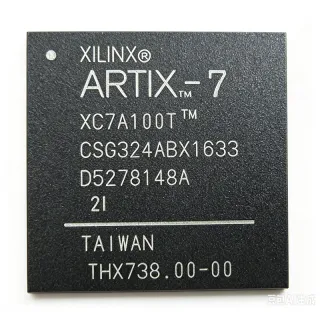
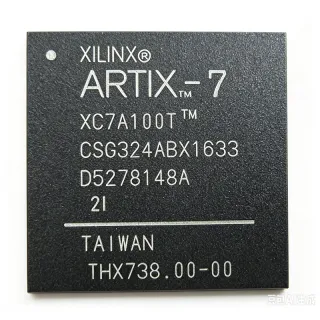
EP20K30EFC324-3 - APEX 20KE 30K LUT FPGA, 324-BGA | Altera
MPN: EP20K30EFC324-3 ✗ End of Life| Qty | Unit Price | Extended |
|---|---|---|
| 1 | $285 | $285.00 |
| 10 | $256 | $2,560.00 |
| 100 | $227 | $22,700.00 |
| 500 | $199 | $99,500.00 |
| 1,000 | $175 | $175,000.00 |
EP20K30EFC324-3 Overview
An FPGA (Field-Programmable Gate Array) is a programmable logic device that combines configurable logic blocks (LUTs), programmable interconnect, and embedded memory. The APEX 20KE family in particular integrates look-up table logic for register-intensive functions, product-term logic for arithmetic paths, and embedded memory blocks, sitting in the broader hierarchy: FPGA -> programmable logic device (PLD) -> logic IC -> integrated circuit. APEX 20KE was Altera's first SOPC-integrating PLD family, widely used as a precursor to the modern Cyclone/Stratix families.
Key features include 128 macrocells, 24,576 total RAM bits, 120 user I/O pins (per published catalog data), LVDS I/O support, in-system programmability via JTAG, and MultiCore architecture for combining LUT-based and product-term logic on the same die. The 324-FBGA package provides a compact 19 mm x 19 mm footprint suitable for high-density boards, with a peak reflow compliance suitable for standard SMT assembly.
The device is implemented on a 1.8 V, 0.18 micrometer CMOS process, which balances low power consumption with sufficient drive strength for LVDS signaling. The integrated memory blocks permit FIFOs, dual-port RAM, and CAM functions without external SRAM, simplifying SOPC integration. I/O banks support a mix of single-ended and LVDS I/O standards, enabling high-speed chip-to-chip links. The MultiCore architecture allows LUT logic and product-term logic to be mixed freely, which is helpful for datapath/control hybrid designs.
Typical applications include telecommunications line cards, industrial control and automation, ASIC prototyping, glue logic replacement, video/Imaging pipeline front-ends, and legacy SOPC designs where the APEX 20KE was the original Altera solution. Its LVDS support also makes it suitable for backplane interfacing and high-speed serial-to-parallel conversion.
When designing with this part, ensure JTAG chain integrity, follow Altera's recommended decoupling scheme on each power pin, and confirm Quartus version compatibility for the APEX 20KE device family. Note that this device is in mature lifecycle status - new designs should consider Cyclone or MAX families.
Drop-in alternatives for EP20K30EFC324-3 — same package, pin-to-pin compatible. Different-package parts requiring PCB rework are excluded.
Variants in this series
Same-series models that are drop-in compatible with EP20K30EFC324-3 (same form factor and footprint) — differing in Process Technology, Family, Package, Series, Speed Grade.
Quick Comparison Tool — Select alternative parts for side-by-side comparison:
EP20K100EFC324-3
✅ Drop-In📋 Reference alternative (not in catalog)
EP20K100EFC324-2X
✅ Drop-In✓ In Stock
$99.5 / Unit
View Datasheet →EP20K100EFC324-2X
✅ Drop-In✓ In Stock
$99.5 / Unit
View Datasheet →EP20K100EFC324-1N
✅ Drop-In✓ In Stock
$108 / Unit
View Datasheet →EP20K30EFC324-2X
✅ Drop-In✓ In Stock
$21 / Unit
View Datasheet →EP20K30EFC324-1X
✅ Drop-In✓ In Stock
$3.3 / Unit
View Datasheet →EP20K30EFC324-1
✅ Drop-In✓ In Stock
$99.5 / Unit
View Datasheet →EP20K30EFC324-3 Maximum Ratings & Electrical Characteristics
| Series | APEX-20KE |
| Family | APEX 20KE (MultiCore architecture) |
| Core Supply Voltage | 1.71 V to 1.89 V (1.8 V nominal) |
| Typical Gate Count | 30,000 gates |
| Macrocells | 128 |
| Total RAM Bits | 24,576 |
| Logic Elements (approx.) | 1,200 |
| User I/O | 120 |
| Speed Grade | -3 |
| Package | 324-FBGA (19 mm x 19 mm) |
| Mounting Type | Surface Mount |
| Operating Temperature (max) | 85 C |
| MSL Level | 3 |
| Peak Reflow Temperature | 220 C |
| LVDS I/O Support | Yes |
| Programming Interface | JTAG (in-system programmable) |
| RoHS Status | unknown |
| Process Technology | 1.8 V, 0.18 micrometer CMOS |
EP20K30EFC324-3 324-fbga (19 mm x 19 mm) Pin Configuration Guide
Pin configuration for EP20K30EFC324-3 (324-fbga (19 mm x 19 mm) package). This digital IC includes GPIO, communication interfaces (UART, SPI, I2C), and power pins. Refer to the manufacturer datasheet for alternate pin functions and configuration options. Essential for embedded system design and PCB layout.

No detailed pinout data available for EP20K30EFC324-3.
Refer to the datasheet for full pin configuration.
Typical Applications
EP20K30EFC324-3 is suitable for 6 applications: Telecommunications Line Cards, Industrial Control and Automation, ASIC Prototyping, Glue Logic Replacement, Video and Imaging Pipeline Front-Ends, Legacy SOPC Designs and Sustainment.
Telecommunications Line Cards
The EP20K30EFC324-3 fits telecommunications line cards because its MultiCore architecture integrates LUT logic for register-intensive datapaths, product-term logic for arithmetic processing, and 24,576 bits of embedded RAM for FIFO and lookup-table storage on a single die. With 120 user I/Os and LVDS I/O support, the device can connect directly to backplane serial links without external transceivers, simplifying T1/E1 and SONET/SDH framer interfacing. The 1.8 V core and 324-FBGA compact footprint allow high-density line card layouts. The APEX 20KE was widely deployed in this segment in the early 2000s, and the EP20K30EFC324-3 specifically targets mid-density line card designs where 30K gates is sufficient headroom.
Recommended
Industrial Control and Automation
In industrial control and automation, the EP20K30EFC324-3 is suitable for programmable logic controllers (PLCs), motor controllers, and process automation front-ends. The 128 macrocells combined with LUT logic support both deterministic product-term logic (ideal for safety interlocks and IEC 61131 state machines) and high-throughput datapath functions (encoder counters, PWM generators). Its 85 C operating temperature range qualifies for industrial environments, and the 324-FBGA package withstands typical factory vibration profiles when properly underfilled. The JTAG in-system programmability simplifies firmware updates in field-deployed equipment. The EP20K30EFC324-3 was a workhorse for industrial OEMs throughout the 2000s.
Recommended
ASIC Prototyping
For ASIC prototyping, the EP20K30EFC324-3 provides enough logic capacity to map small to medium ASIC designs with reasonably accurate timing prediction. The 1,200 logic elements and 24,576 RAM bits are sufficient for prototyping datapath controllers, DSP filter blocks, and bus interface bridges. Quartus II software supports Verilog and VHDL synthesis with timing-driven optimization, allowing designers to validate architecture before committing to mask tooling. The APEX 20KE family was Altera's recommended prototyping vehicle in the early 2000s, with the EP20K30EFC324-3 covering mid-complexity designs. Modern migrations typically move to Cyclone IV/V devices for active toolchain support.
Recommended
Glue Logic Replacement
The EP20K30EFC324-3 excels at replacing multiple discrete logic ICs (74-series glue logic, address latches, bus arbiters) with a single programmable device, simplifying PCB layout and reducing BOM cost. Its 120 user I/Os accommodate wide bus aggregation, while the MultiCore architecture allows mixing of LUT and product-term logic to match any legacy discrete implementation. The 1.8 V core with separate VCCIO banks permits interfacing to 3.3 V, 2.5 V, and 1.8 V peripherals in the same design. This consolidation approach was a primary use case for APEX 20KE FPGAs in telecommunications and computing infrastructure during the 2000-2010 decade.
Recommended
Video and Imaging Pipeline Front-Ends
For video and imaging pipeline front-ends, the EP20K30EFC324-3's embedded RAM blocks enable line buffers and small frame buffers without external memory, simplifying PCB design for cameras and image processors. The LVDS I/O support accommodates high-speed camera link interfaces at typical video clock rates, and the LUT logic handles Bayer demosaicing, color space conversion, and other preprocessing functions in real time. The 1,200 logic elements are sufficient for mid-resolution preprocessing pipelines (VGA to 1MP). For higher-resolution work, the EP20K100EFC324-3 drop-in alternative provides additional logic headroom within the same 324-FBGA footprint.
Recommended
Legacy SOPC Designs and Sustainment
The EP20K30EFC324-3 is the original Altera SOPC (System-on-a-Programmable-Chip) integration vehicle, widely used in embedded computing platforms, peripheral controllers, and legacy networking equipment. Because the APEX 20KE family is obsolete, the primary application today is legacy board sustainment - repairing field-deployed equipment, manufacturing replacement units for existing product lines, and supporting defense/aerospace platforms with long lifecycle requirements. Authorized aftermarket distributors like Rochester Electronics hold wafer-level and assembled stock for this purpose. When new designs are needed, the same 324-FBGA footprint allows upgrade to EP20K100EFC324-3 (same family) or migration to Cyclone series (new toolchain, possibly different footprint).
Recommended
Recommended Products Summary
Engineering reference data for EP20K30EFC324-3 — comparison, design guidance, and compliance information.
Selection Guide
Comparison with Alternatives
| Parameter | This Product | EP20K100EFC324-3 | EP20K100EFC324-2X | EP20K100EFC324-2 | EP20K30EFC324-2X |
|---|---|---|---|---|---|
| Package | 324-FBGA | 324-FBGA - same | 324-FBGA - same | 324-FBGA - same | 324-FBGA - same |
| Brand | Altera | Altera - same | Altera - same | Altera - same | Altera - same |
| Typical Gates | 30,000 | 100,000 | 100,000 | 100,000 | 30,000 |
| Speed Grade | -3 | -3 | -2X (slower) | -2 (slower) | -2X (slower) |
| Macrocells | 128 | 416 | 416 | 416 | 128 |
| Total RAM Bits | 24,576 | 53,248 | 53,248 | 53,248 | 24,576 |
| Core Voltage | 1.8 V (1.71-1.89 V) | 1.8 V (1.71-1.89 V) - same | 1.8 V (1.71-1.89 V) - same | 1.8 V (1.71-1.89 V) - same | 1.8 V (1.71-1.89 V) - same |
| Lifecycle Status | Obsolete | Obsolete | Obsolete | Obsolete | Obsolete |
Key Differentiators
- Higher logic density with identical footprint (vs EP20K100EFC324-3)
- Fastest -3 speed grade at same density (vs EP20K30EFC324-2X)
- Same-package sustainment alternative (vs EP20K100EFC324-2)
Design Notes
Power up the EP20K30EFC324-3 in the recommended sequence: VCCINT (1.8 V core) before or simultaneously with VCCIO banks. According to the APEX 20KE handbook, hot-plug events can latch up I/O if VCCIO is applied before VCCINT, so use a sequencing controller or a power-good signal from the core regulator to gate the I/O rails. Decouple each VCCIO bank with 0.1 microfarad ceramic plus 10 microfarad bulk per bank; place VCCINT decoupling (0.1 microfarad + 10 microfarad) within 5 mm of the BGA balls. Estimated quiescent current is 100-300 mA at 1.8 V depending on clock activity; verify with the actual bitstream before sizing the regulator.
The 324-FBGA package uses 0.8 mm ball pitch. Per Altera's PCB layout guidelines, use via-in-pad with 0.3 mm drill and 0.5 mm pad for reliable assembly; non-solder-mask-defined (NSMD) pads improve joint reliability. Place decoupling capacitors on the opposite PCB side directly under BGA balls with short, wide traces to minimize inductance. Maintain 50 ohm microstrip/stripline impedance for high-speed LVDS pairs routed between the FPGA and adjacent connectors. Route JTAG signals (TCK, TMS, TDI, TDO) with controlled impedance and avoid stubs.
The Quartus II software supporting APEX 20KE is the legacy 32-bit version 13.0sp1, which does not run on modern 64-bit Windows without a compatibility layer. According to Altera/Intel migration notes, do not assume that an APEX 20KE design compiled in older Quartus versions will synthesize identically in modern Quartus Prime - always validate timing closure after tool migration. Beware counterfeit APEX 20KE devices from unauthorized brokers: always purchase from Rochester Electronics, original franchised distributors, or verify X-ray and decapsulation authenticity for high-reliability applications.
Compliance Information
Compliance information not published on the verified distributor listings as of 2026-09-08. APEX 20KE family predates current RoHS/REACH disclosure requirements on legacy parts. AEC-Q100 not applicable for FPGA in this category. Contact Rochester Electronics for original Altera compliance documentation.