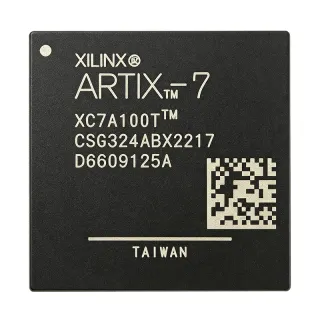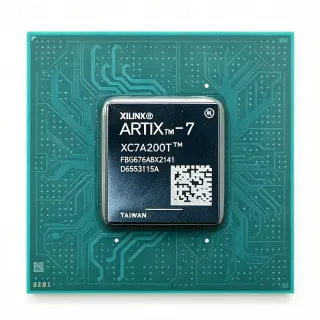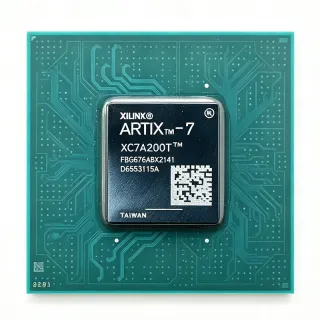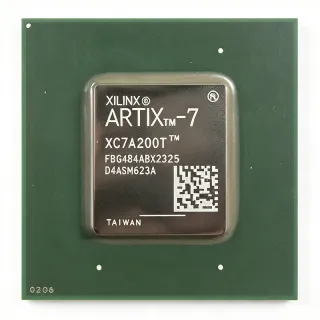
EP2SGX300DF780C5N - Stratix II GX 300K LEs, 20x Transceivers | Altera
MPN: EP2SGX300DF780C5N ✗ End of Life| Qty | Unit Price | Extended |
|---|---|---|
| 1 | $4200 | $4,200.00 |
| 10 | $3990 | $39,900.00 |
| 50 | $3800 | $190,000.00 |
| 100 | $3650 | $365,000.00 |
| 250 | $3500 | $875,000.00 |
EP2SGX300DF780C5N Overview
What is an FPGA? A Field-Programmable Gate Array (FPGA) is a semiconductor device built around a matrix of configurable logic blocks (CLBs) connected via programmable interconnect. FPGAs sit within the broader taxonomy of programmable logic devices (PLDs) -> complex programmable logic devices (CPLDs) -> FPGAs -> high-speed transceivers integrated FPGAs. Stratix II GX FPGAs target high-bandwidth serial I/O applications where the device must both process logic and move data at multi-gigabit rates, making them a member of the broader power management and digital signal processing ecosystem.
Key features include 20 full-duplex transceivers supporting data rates from 600 Mbps to 6.375 Gbps, 384 dedicated 18x18 multipliers for DSP, 8 PLLs, and 12 global clock networks. The device integrates 16 channels of on-chip SERDES termination, PCI Express hard IP, and supports multiple serial protocols including PCI Express, Serial RapidIO, XAUI, CEI-6G, and Gigabit Ethernet.
The EP2SGX300DF780C5N is built on Altera's adaptive logic module (ALM) architecture, replacing the older 4-input LUT structure with 8-input fracturable ALMs. This architecture delivers up to 2x performance per logic element compared to prior generations while reducing compile times. The transceiver blocks each contain dedicated physical coding sublayer (PCS) and physical medium attachment (PMA) circuitry, supporting both AC and DC coupling.
Typical applications include high-end telecommunications equipment, 10 Gbps data aggregation switches, base station channel cards, broadcast video processing systems, and high-performance computing accelerators. The device's hard PCI Express endpoint and root complex support make it ideal for high-bandwidth adapter cards and backplane designs.
When designing with this FPGA, power estimation should be performed early using the Altera PowerPlay early power estimator, as the 6.375 Gbps transceivers can dominate total power consumption. Designers should also pay attention to PCB layer stackup to maintain signal integrity for the 6.375 Gbps serial links; recommended stackups are documented in the Stratix II GX Device Handbook, Volume 2.
This page synthesizes real-time distributor pricing, drop-in Altera Stratix II GX and Stratix IV GX alternatives in the same FineLine BGA-780 package, and practical design notes not consolidated in the manufacturer datasheet — a resource for BOM consolidation and supply-chain risk reduction.
Drop-in alternatives for EP2SGX300DF780C5N — same package, pin-to-pin compatible. Different-package parts requiring PCB rework are excluded.
Variants in this series
Same-series models that are drop-in compatible with EP2SGX300DF780C5N (same form factor and footprint) — differing in Operating Temperature, RoHS Status, Process Technology, Speed Grade, Logic Elements.
Quick Comparison Tool — Select alternative parts for side-by-side comparison:
EP2SGX200DF780C5N
✅ Drop-In📋 Reference alternative (not in catalog)
EP2SGX260DF780C5N
✅ Drop-In📋 Reference alternative (not in catalog)
EP2SGX340DF780C5N
✅ Drop-In📋 Reference alternative (not in catalog)
EP2SGX300DF780C3N
✅ Drop-In📋 Reference alternative (not in catalog)
EP2SGX300DF780I4N
✅ Drop-In📋 Reference alternative (not in catalog)
EP2SGX300DF780C5N Maximum Ratings & Electrical Characteristics
| Family | Stratix II GX |
| Logic Elements | 300,000 |
| Embedded Memory | 18,210 Kbits |
| Embedded Multipliers | 384 (18x18) |
| Transceivers | 20 channels, 600 Mbps to 6.375 Gbps |
| PLLs | 8 |
| Global Clock Networks | 16 |
| Maximum User I/O | 534 |
| Package | 780-pin FineLine BGA |
| Process Technology | 90 nm |
| Core Voltage | 1.2 V |
| Operating Temperature | 0C to +85C (Commercial) |
| Speed Grade | C5 |
| Hard IP | PCI Express, XAUI, Serial RapidIO, Gigabit Ethernet |
| RoHS Status | Compliant |
| Pb-Free | Yes |
EP2SGX300DF780C5N 780-pin fineline bga Pin Configuration Guide
Pin configuration for EP2SGX300DF780C5N (780-pin fineline bga package). This digital IC includes GPIO, communication interfaces (UART, SPI, I2C), and power pins. Refer to the manufacturer datasheet for alternate pin functions and configuration options. Essential for embedded system design and PCB layout.

No detailed pinout data available for EP2SGX300DF780C5N.
Refer to the datasheet for full pin configuration.
Typical Applications
EP2SGX300DF780C5N is suitable for 6 applications: 10 Gbps Telecom Line Card Aggregation, Wireless Base Station Channel Card, Broadcast Video Processing System, High-Performance Computing Accelerator Card, Industrial Imaging and Machine Vision, Aerospace Avionics Databus Interface.
10 Gbps Telecom Line Card Aggregation
The EP2SGX300DF780C5N is well suited to 10 Gbps telecom line-card aggregation because its 20 transceivers, each running up to 6.375 Gbps, can simultaneously terminate four XAUI (4x3.125 Gbps) ports plus a 10G Base-X uplink. With 300,000 LEs and 18,210 Kbits of on-chip memory, the device can implement MAC framing, store-and-forward buffering, and 10G/40G protocol bridging entirely in fabric without external TCAM or RLDRAM. The hard PCI Express endpoint further lets the same FPGA expose a control-plane interface to a host CPU. Designers should budget ~2.5 W per active transceiver and ensure the PCB stackup is tuned for 6.375 Gbps signaling, as recommended in the Stratix II GX Device Handbook. The DF780 FBGA's 534 user I/Os are sufficient to feed four XAUI SERDES plus DDR2 memory for packet buffering.
Recommended
Wireless Base Station Channel Card
In a 3G/4G wireless base-station channel card the EP2SGX300DF780C5N can implement the digital up/down-conversion, Crest Factor Reduction (CFR), and Digital Pre-Distortion (DPD) signal processing pipelines alongside CPRI or OBSAI fronthaul links. The 384 18x18 multipliers deliver up to 76.8 GMACs of DSP throughput, which is sufficient to process multiple LTE 20 MHz carriers concurrently. The 20 transceivers each support the CPRI line bit rates up to 6.144 Gbps needed for multi-antenna MIMO radio heads. Designers typically pair the FPGA with a dedicated DPD ADC/DAC front end and use the FPGA's hard PCI Express IP to backhaul baseband data to a base-band unit. The DF780's commercial 0C to +85C temperature range is appropriate for indoor base-station shelves.
Recommended
Broadcast Video Processing System
The EP2SGX300DF780C5N is a strong fit for broadcast video processing because its 300K LEs and 18,210 Kbits of embedded memory can host multi-channel SD/HD/3G-SDI codecs, color-space converters, and frame synchronizers in a single device. The 20 transceivers can carry 3G-SDI streams over coax or be repurposed for SMPTE 2022 IP video transport at 6 Gbps. PCI Express hard IP allows direct attachment to a host CPU for compressed-video ingest pipelines. The 384 DSP blocks are useful for 2D filtering and motion-adaptive deinterlacing, which would otherwise consume significant logic resources. Designers should leverage the dedicated SDI PHY IP from Altera for jitter-cleaned serial outputs and follow the Stratix II GX device handbook's PCB layout guidance for the SDI-specific clocking scheme.
Recommended
High-Performance Computing Accelerator Card
In an HPC accelerator card, the EP2SGX300DF780C5N serves as the data-movement engine between a host CPU and a co-processor array. Its PCI Express x8 Gen1 hard endpoint provides 2 GB/s of host bandwidth, while the 20 transceivers expose 100+ Gbps of off-board expansion for linking multiple cards in a backplane. With 300K LEs the FPGA can host a custom DMA engine, scatter-gather descriptors, and on-the-fly data compression. The 18 Mbits of embedded memory is useful for transaction-queue storage and inter-kernel synchronization primitives. The DF780 commercial temperature grade is suitable for datacom-class chassis where ambient air conditioning is provided, and the part's compliance with RoHS simplifies EU and US data-center deployment.
Recommended
Industrial Imaging and Machine Vision
The EP2SGX300DF780C5N can act as the central processor for an industrial imaging or machine-vision system, aggregating data from multiple Camera Link or CoaXPress cameras over its 20 transceivers, performing real-time pre-processing in fabric, and forwarding compressed results over Ethernet. The 384 18x18 multipliers and 300K LEs are sufficient for Sobel filtering, FFT-based defect detection, and HDR image pipelines. The on-chip memory supports double-buffered frame storage to mask the latency of downstream Ethernet transmission. The part's commercial 0C to +85C temperature range is appropriate for factory-floor enclosures with active cooling. Designers should use Quartus II's TimeQuest timing analyzer to close timing on the multi-camera fan-in logic.
Recommended
Aerospace Avionics Databus Interface
For avionics databus interfaces, the EP2SGX300DF780C5N can host multiple ARINC 429, MIL-STD-1553, and Fibre Channel channels concurrently. The 20 transceivers are sufficient to terminate four Fibre Channel ports at 1 or 2 Gbps plus dedicated serial links for redundant channels. The 300K LEs allow full protocol stack implementation in fabric, while the 18 Mbits of memory holds routing tables and message queues. The commercial temperature grade of the DF780 variant is acceptable for pressurized-cabin avionics, while the industrial -40C to +100C variant (EP2SGX300DF780I4N) is required for unpressurized or rotorcraft applications. Designers should plan for full SEU mitigation via Triple Modular Redundancy on critical state elements, as the 90 nm SRAM fabric is not radiation-hardened by design.
Recommended
Recommended Products Summary
Engineering reference data for EP2SGX300DF780C5N — comparison, design guidance, and compliance information.
Selection Guide
Comparison with Alternatives
| Parameter | This Product | EP2SGX200DF780C5N | EP2SGX260DF780C5N | EP2SGX340DF780C5N | EP2SGX300DF780C3N | EP2SGX300DF780I4N |
|---|---|---|---|---|---|---|
| Brand | Altera (Intel FPGA) | Altera (Intel FPGA) | Altera (Intel FPGA) | Altera (Intel FPGA) | Altera (Intel FPGA) | Altera (Intel FPGA) |
| Package | 780-pin FineLine BGA (DF780) | 780-pin FineLine BGA (DF780) | 780-pin FineLine BGA (DF780) | 780-pin FineLine BGA (DF780) | 780-pin FineLine BGA (DF780) | 780-pin FineLine BGA (DF780) |
| Logic Elements | 300,000 | 200,000 | 260,000 | 340,000 | 300,000 | 300,000 |
| Transceivers | 20 @ 6.375 Gbps | 20 @ 6.375 Gbps | 20 @ 6.375 Gbps | 20 @ 6.375 Gbps | 20 @ 6.375 Gbps | 20 @ 6.375 Gbps |
| Embedded Memory (Kbits) | 18,210 | 12,024 | 14,907 | 21,477 | 18,210 | 18,210 |
| 18x18 Multipliers | 384 | 256 | 320 | 448 | 384 | 384 |
| Speed Grade | C5 | C5 | C5 | C5 | C3 (slower) | I4 (industrial) |
| Operating Temperature | 0C to +85C (Commercial) | 0C to +85C (Commercial) | 0C to +85C (Commercial) | 0C to +85C (Commercial) | 0C to +85C (Commercial) | -40C to +100C (Industrial) |
| Lifecycle Status | Obsolete | Obsolete | Obsolete | Obsolete | Obsolete | Obsolete |
Key Differentiators
- Highest logic density in Stratix II GX family (vs EP2SGX200DF780C5N)
- 20 multi-gigabit transceivers up to 6.375 Gbps (vs EP2S180F1508C5 (Stratix II, no transceivers))
- Hard PCI Express endpoint included (vs Cyclone IV GX)
Design Notes
Estimated: at 25 W total power dissipation on a 4-layer JEDEC JESD51 test board, the EP2SGX300DF780C5N would require a forced-air heatsink or cold-plate to keep the junction below 100C. The 780-ball FBGA exposes a thermal pad array; recommended thermal management is a copper coin or heat-spreader attached via thermal interface material. Designers should run the Altera PowerPlay Early Power Estimator to refine this estimate against actual transceiver utilization and toggle rate.
The 6.375 Gbps transceivers require a controlled-impedance differential pair of 100 ohm ±10% with intra-pair skew under 2 ps. Use Megtron-6 or Rogers 4350B dielectric if the link exceeds 8 inches. Reference the 'Stratix II GX Device Handbook, Volume 2' Chapter 4 for the recommended PCB stackup, AC-coupling capacitor placement, and length-matching tolerances. Power-rail decoupling needs 0603 X7R ceramics within 100 mils of every VCC pin.
Do not confuse the EP2SGX300DF780C5N (Stratix II GX, 20 transceivers) with the EP2S300F1508C5 (Stratix II, no transceivers). They have different BGA pinouts despite both being '300K' devices. Also verify the temperature grade: C5 = commercial 0C to +85C, I4 = industrial -40C to +100C. Mixing these up in procurement has caused line-down situations in production programs.
For 6.375 Gbps channels, keep stubs on the transceiver differential pairs below 30 mils to avoid resonance in the 6 GHz band. The 780-ball FBGA's escape routing typically requires micro-via (uVia) or staggered-via topology. Reference plane stitching vias should be placed every 200 mils along the channel to suppress ground-bounce and EMI. Always perform 3D EM simulation (HFSS, Simbeor) before committing the layout to volume production.
Compliance Information
RoHS compliant per Altera product page. The device is not AEC-Q100 qualified (FPGAs in this class are not generally qualified for automotive). Lead-free packaging per the suffix-free ordering code; halogen-free status is not explicitly published in the verified web data.