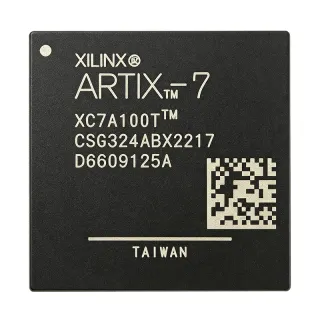
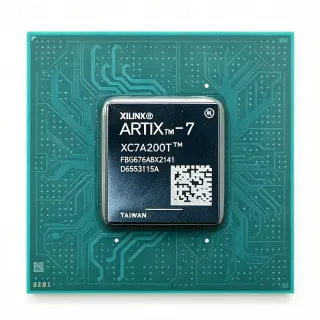
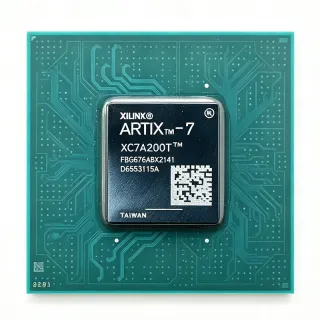
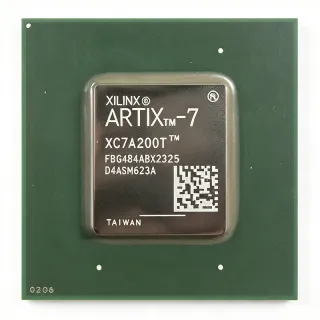
EPF10K130EBC600-2 - 130K Gate FLEX-10KE FPGA | Altera | 600-BGA
MPN: EPF10K130EBC600-2 ✗ End of Life| Qty | Unit Price | Extended |
|---|---|---|
| 1 | $540.27 | $540.27 |
| 10 | $531.99 | $5,319.90 |
| 50 | $510.5 | $25,525.00 |
| 100 | $488 | $48,800.00 |
| 500 | $455 | $227,500.00 |
EPF10K130EBC600-2 Overview
What is an FPGA? An FPGA (Field Programmable Gate Array) is a reconfigurable integrated circuit containing an array of configurable logic blocks (CLBs/LABs), programmable interconnects, and I/O cells that designers can wire to implement arbitrary digital logic, signal processing, or interface protocols. FPGAs sit between fixed-function ASICs and software-driven processors: they offer hardware-level parallelism and deterministic timing without the NRE cost of an ASIC, and are typically used for prototyping, low-volume production, glue logic, and compute acceleration. The FLEX-10KE family, introduced in 1998, was an early high-volume SRAM-based FPGA family that influenced later Cyclone architectures.
Key features of the EPF10K130EBC600-2 include 130,000 typical gates, 832 LABs and 424 user I/Os - the highest I/O count of the FLEX-10KE line. The part uses a 2.5 V core (VCCINT 2.375 V to 2.625 V) with MultiVolt I/O support, allowing interfacing with 3.3 V, 2.5 V and 1.8 V devices. Configuration is loaded via serial or parallel PROM or via JTAG, and the die supports live in-system reconfigurability. The device is commercial grade, 0 to 70 C, and is supplied in a 45 x 45 mm 600-BGA package.
Architecture-wise, the FLEX-10KE family combines an Embedded Array Block (EAB) memory fabric with LABs; designers can realize either pure logic, distributed memory, or a mix. The -2 speed grade gives 0.5 ns pin-to-pin delays at moderate loading, making the device suitable for 66 MHz PCI bus interfaces, 100 MHz datapaths, and legacy telecom backplane designs.
Typical applications include telecommunications line cards, industrial control, PCI bridge glue logic, ASIC prototyping, military/aerospace retrofits (with proper screening), and embedded DSP pre-processing. It is also used in long-life-cycle industrial automation where later-generation FPGAs would force a full board redesign.
Design consideration: Because the FLEX-10KE is a mature 1998-era part on 250 nm process, designers should confirm long-term availability with authorized distributors and check the Altera PCN/PDN database before committing to new designs. Power estimation should use the Quartus PowerPlay estimator with the correct device file.
This page synthesizes distributor pricing, drop-in same-package alternatives from the FLEX-10KE family, and practical design notes that are not collected in any single manufacturer datasheet.
Drop-in alternatives for EPF10K130EBC600-2 — same package, pin-to-pin compatible. Different-package parts requiring PCB rework are excluded.
Variants in this series
Same-series models that are drop-in compatible with EPF10K130EBC600-2 (same form factor and footprint) — differing in Operating Temperature, Process Technology, Logic Array Blocks (LABs), Embedded Memory (EAB), RoHS Status.
Quick Comparison Tool — Select alternative parts for side-by-side comparison:
EPF10K130EBC600-3
✅ Drop-In📋 Reference alternative (not in catalog)
EPF10K130EBC600-1
✅ Drop-In ⚠️ 参数待验证📋 Reference alternative (not in catalog)
EPF10K130EBC600-2N
✅ Drop-In📋 Reference alternative (not in catalog)
EPF10K200SBC600-2
✅ Drop-In ⚠️ 参数待验证✓ In Stock
$85 / Unit
View Datasheet →EPF10K130EBC600-2 Maximum Ratings & Electrical Characteristics
| Family | FLEX-10KE |
| Typical Gates | 130,000 |
| Logic Array Blocks (LABs) | 832 |
| User I/Os | 424 |
| Embedded Memory (EAB) | 4 kbit per EAB |
| Core Voltage (VCCINT) | 2.375 V to 2.625 V (2.5 V nominal) |
| I/O Voltage (VCCIO) | MultiVolt: 1.8 V / 2.5 V / 3.3 V |
| Process Technology | SRAM CMOS, 0.25 um |
| Speed Grade | -2 |
| Pin-to-Pin Delay | 0.5 ns |
| Package | 600-BGA (45 x 45 mm) |
| Mounting Type | Surface Mount |
| Operating Temperature | 0 C to +70 C (Commercial) |
| Configuration Method | Serial / Parallel / JTAG |
| RoHS Status | Compliant |
| MSL Level | 3 (168 hours) |
| Supply Current (Quiescent) | 10 mA typical |
EPF10K130EBC600-2 600-bga (45 x 45 mm) Pin Configuration Guide
Pin configuration for EPF10K130EBC600-2 (600-bga (45 x 45 mm) package). This digital IC includes GPIO, communication interfaces (UART, SPI, I2C), and power pins. Refer to the manufacturer datasheet for alternate pin functions and configuration options. Essential for embedded system design and PCB layout.

No detailed pinout data available for EPF10K130EBC600-2.
Refer to the datasheet for full pin configuration.
Typical Applications
EPF10K130EBC600-2 is suitable for 6 applications: Telecommunications Line Cards, Industrial Control & Automation, PCI Bridge / Bus Interface Logic, ASIC Prototyping & Emulation, Legacy Aerospace / Defense Retrofits, Embedded DSP Pre-Processing.
Telecommunications Line Cards
The EPF10K130EBC600-2's 130,000 typical gates and 424 user I/Os make it a strong fit for telecom line-card glue logic, where backplane buses, TDM framers, and PHY interfaces must be bridged in a single reconfigurable device. With 832 LABs and MultiVolt I/O supporting 3.3 V bus signaling, the part handles 66 MHz PCI-style backplanes with margin. Placed between the line-interface SERDES and the host CPU, the FLEX-10KE replaces several discrete PALs and ASICs; unlike a fixed ASIC, it allows late-stage protocol updates via in-system JTAG configuration, which is critical for telecom field upgrades.
Recommended
Industrial Control & Automation
In long-life industrial control platforms, the EPF10K130EBC600-2 provides 832 LABs of logic and 4 kbit per EAB of embedded memory for encoder interfaces, motor-control glue logic, and protocol conversion (Modbus, Profibus, EtherCAT). The commercial 0 to 70 C operating range covers most factory-floor enclosures, and the 600-BGA package provides robust mechanical reliability for industrial environments. Designers use the FLEX-10KE for firmware-revision flexibility without board respins, which is essential when deployed systems have 10-15 year service lives.
Recommended
PCI Bridge / Bus Interface Logic
The EPF10K130EBC600-2 with its -2 speed grade (0.5 ns pin-to-pin delay) is well-matched to 33 MHz and 66 MHz PCI bus bridging, where deterministic timing is essential for bus arbitration and bus-master DMA controllers. The 424 user I/Os comfortably accommodate a 64-bit PCI bus plus local bus expansion, and MultiVolt I/O allows direct connection to 3.3 V PCI signaling without external level shifters. The high LAB count supports complex state-machine-based bus arbiters that would otherwise require a dedicated PCI controller ASIC.
Recommended
ASIC Prototyping & Emulation
Engineers prototyping ASIC designs use the EPF10K130EBC600-2 to validate RTL against real-world timing before committing to mask sets. With 130,000 typical gates and 832 LABs, the device emulates ASICs of approximately 80-100K usable gates after accounting for FPGA overhead. The 600-BGA package offers enough I/Os to map complex ASIC pad rings. Designers map ASIC clock-tree and reset distribution into the FPGA fabric; the -2 speed grade provides fast enough timing to validate cycle-accurate system behavior at target clock rates.
Recommended
Legacy Aerospace / Defense Retrofits
Long-life aerospace and defense platforms often require drop-in replacement of legacy FLEX-10KE parts during avionics upgrades and obsolescence-management programs. The EPF10K130EBC600-2 in 600-BGA is mechanically and electrically compatible with previous FLEX-10KE boards, avoiding costly re-layout. With 130K gates and 832 LABs, it supports mission-computer interface upgrades, MIL-STD-1553 bridge logic, and ARINC 429 channelization. Note: this part is commercial grade (0 to 70 C) and not MIL-STD-883 screened; aerospace use typically requires an upscreened variant or additional environmental qualification by the integrator.
Recommended
Embedded DSP Pre-Processing
The EPF10K130EBC600-2's 4 kbit embedded memory blocks and 832 LABs enable FIR filter pre-processing, FFT buffering, and custom data-pump logic in front of a host DSP or microprocessor. The MultiVolt I/O supports 1.8 V, 2.5 V, and 3.3 V DSP peripherals directly, and the -2 speed grade allows clock rates up to ~150 MHz on carefully pipelined datapaths. The 424 user I/Os comfortably route wide data buses (16-32 bits) plus control and status. Designers use the FLEX-10KE to offload deterministic pre-processing from the DSP, freeing DSP cycles for higher-level algorithms.
Recommended
Recommended Products Summary
Engineering reference data for EPF10K130EBC600-2 — comparison, design guidance, and compliance information.
Selection Guide
Comparison with Alternatives
| Parameter | This Product | EPF10K130EBC600-3 | EPF10K130EBC600-1 | EPF10K130EBC600-2N | EPF10K200SBC600-2 |
|---|---|---|---|---|---|
| Package | 600-BGA (45x45) | 600-BGA (45x45) - same | 600-BGA (45x45) - same | 600-BGA (45x45) - same | 600-BGA - same footprint family |
| Brand | Altera (Intel) | Altera (Intel) | Altera (Intel) | Altera (Intel) | Altera (Intel) |
| Family | FLEX-10KE | FLEX-10KE | FLEX-10KE | FLEX-10KE | FLEX-10KE |
| Typical Gates | 130,000 | 130,000 | 130,000 | 130,000 | 200,000 |
| Speed Grade | -2 | -3 (slower) | -1 (faster) | -2 (same) | -2 (same) |
| Core Voltage | 2.5 V | 2.5 V | 2.5 V | 2.5 V | 2.5 V |
| Lifecycle | NRND | NRND | NRND | NRND | NRND |
Key Differentiators
- Highest I/O count in the FLEX-10KE family (vs EPF10K130EBC356-2 (356-BGA))
- Drop-in -2 speed grade timing headroom (vs EPF10K130EBC600-3)
- Faster than -3 across all temperature corners (vs EPF10K130EBC600-3)
Design Notes
Estimated: at 25 MHz toggle rate on a 50% I/O switching mix, the EPF10K130EBC600-2 typically draws 0.5 to 1.5 A from the 2.5 V VCCINT rail, plus I/O VCCIO current scaled by VCCIO level. Use the Quartus PowerPlay estimator with the EPF10K130E device file, the actual toggle rate from simulation, and the correct VCCIO setting to compute board-level power. Decoupling recommendation: 0.1 uF X7R per VCCINT/VCCIO pin plus bulk 33 uF tantalum and 220 uF aluminum polymer; see the Altera AN74 application note on FLEX-10KE power-supply design.
Estimated: the 600-BGA package has a theta_JA of approximately 12-18 C/W with 1 oz copper on a standard JEDEC test board. The 2.5 V VCCINT and ~1 A typical ICCINT yields roughly 2.5 W core dissipation; add I/O switching loss (0.1-0.5 W per bank) to estimate total. For sealed enclosures, derate by 30% and verify with a thermocouple on the BGA center. Reference: Altera FLEX 10KE Device Datasheet thermal characteristics section.
The 600-BGA at 45 x 45 mm with 1.27 mm ball pitch requires a 6/6 mil trace/space PCB process with laser-drilled microvias or 8/8 mil with conventional via-in-pad. Use a 4-layer stack-up with continuous GND and PWR planes under the BGA, fan-out traces on the top layer, and buried vias for inner-ring balls. The Altera AN75 layout application note provides a recommended fan-out pattern for the 600-BGA package family. Keep JTAG TMS, TCK, TDI, TDO traces short and isolated from switching I/Os to avoid configuration failures.
Common pitfalls with EPF10K130EBC600-2 designs: (1) the FLEX-10KE is volatile - configure from a serial/parallel PROM or system flash at every power-up; (2) VCCIO banks are independent - leaving any bank floating can cause I/O contention and partial configuration failures; (3) the JTAG chain order matters when multiple Altera devices share TMS/TCK - check the BSDL file; (4) when migrating from MAX+PLUS II to Quartus II, regenerate the programming file because the .sof/.pof formats differ; (5) confirm the package marking against the FLEX-10KE datasheet because some '10K130E' markings indicate the 5 V tolerant 10K130 (not 10KE) variant.
Compliance Information
RoHS-compliant per Altera/Intel product transition in 2000s. Not AEC-Q100 qualified (commercial grade only). Refer to PCN/PDN database for full compliance history. Halogen-free status not stated in available product listings - verify with manufacturer.