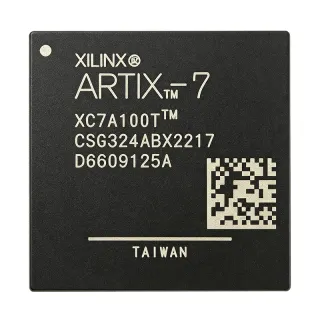
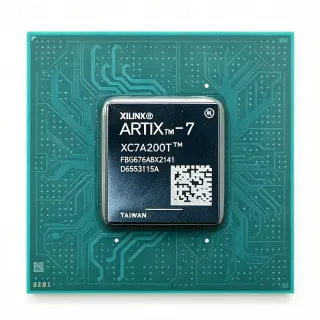
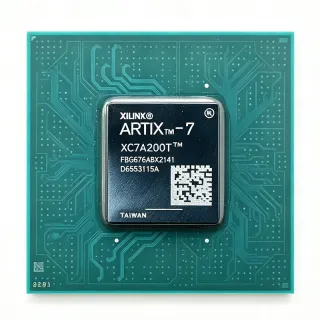
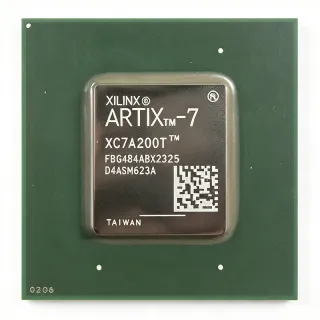
EPF10K50EQI240-2N - 50K-Gate FLEX 10KE FPGA, 240 PQFP | Intel / Altera
MPN: EPF10K50EQI240-2N ✗ End of Life| Qty | Unit Price | Extended |
|---|---|---|
| 1 | $78.5 | $78.50 |
| 10 | $71.2 | $712.00 |
| 100 | $62.8 | $6,280.00 |
| 250 | $57.4 | $14,350.00 |
| 500 | $52.1 | $26,050.00 |
EPF10K50EQI240-2N Overview
An FPGA (Field-Programmable Gate Array) is a type of programmable logic device (PLD) that combines the high density of gate arrays with on-the-field reconfigurability, sitting at the top of the programmable logic hierarchy: PLD -> CPLD -> FPGA. The FLEX 10KE family was one of the first to integrate embedded array blocks (EABs) for implementing megafunctions such as efficient memory and specialized logic functions, providing System-on-a-Programmable-Chip (SOPC) integration with up to 50K ASIC-equivalent gates and up to 24,576 RAM bits (configurable in different widths).
Key features include 199,000 maximum system gates, industrial operating temperature grade (-40 °C to +85 °C), SRAM-based configuration cells, propagation delay of 0.6 ns per logic element, and MultiVolt I/O supporting mixed-voltage interfacing. The device is built on a 0.22 µm CMOS SRAM process with four input lookup tables (LUTs) and embedded array blocks for true dual-port RAM, FIFO, and CAM functions. Its 240-pin PQFP footprint offers PCB-friendly gull-wing leads that are easier to inspect and rework than fine-pitch BGAs, making it well-suited for legacy industrial designs.
Typical applications include industrial control and automation, telecom line cards, glue logic replacement, DSP co-processing front-ends, prototyping for ASIC migration, and legacy communication infrastructure where a hot-swappable logic platform is needed. Because it is SRAM-based and obsolete (EOL), designers often pair it with a configuration PROM (EPC) for production.
Design considerations: the EPF10K50EQI240-2N is obsolete and may face allocation constraints; consider a Cyclone or MAX series modern equivalent for new designs. Always place decoupling capacitors within 100 mils of every VCCINT/VCCIO pair and route JTAG signals with 4-6 mil traces kept away from switching edges.
Drop-in alternatives for EPF10K50EQI240-2N — same package, pin-to-pin compatible. Different-package parts requiring PCB rework are excluded.
Variants in this series
Same-series models that are drop-in compatible with EPF10K50EQI240-2N (same form factor and footprint) — differing in Operating Temperature, Process Technology, Mounting Type, Configuration Method, Family.
Quick Comparison Tool — Select alternative parts for side-by-side comparison:
EPF10K50EQC240-1N
✅ Drop-In ⚠️ 参数待验证✓ In Stock
$132.1 / Unit
View Datasheet →EPF10K50EQC240-2N
✅ Drop-In ⚠️ 参数待验证✓ In Stock
$87.2 / Unit
View Datasheet →EPF10K50EQC240-3N
✅ Drop-In✓ In Stock
$59.5 / Unit
View Datasheet →EPF10K50EQC240-1
✅ Drop-In ⚠️ 参数待验证✓ In Stock
$26.8 / Unit
View Datasheet →EPF10K50EQC240-2
✅ Drop-In ⚠️ 参数待验证✓ In Stock
$65 / Unit
View Datasheet →EPF10K50EQC240-3
✅ Drop-In ⚠️ 参数待验证✓ In Stock
$21 / Unit
View Datasheet →EPF10K50EQI240-2N Maximum Ratings & Electrical Characteristics
| Family | FLEX 10KE |
| Logic Elements / Cells | 2880 |
| Total RAM Bits | 40960 |
| Number of LABs / CLBs | 360 |
| Maximum System Gates | 199000 |
| User I/O Pins | 189 |
| Core Supply Voltage (VCCINT) | 2.5 V |
| I/O Supply Voltage (VCCIO) | MultiVolt 2.5 V / 3.3 V / 5.0 V |
| Internal Frequency (max) | 66.67 MHz |
| Propagation Delay (per LE) | 0.6 ns |
| Process Technology | 0.22 µm CMOS, SRAM-based |
| Package Type | 240-pin PQFP / BQFP (FQFP, gull-wing) |
| Mounting Type | Surface Mount (SMD/SMT) |
| Operating Temperature | -40 °C to +85 °C (Industrial) |
| Configuration Method | SRAM (volatile) — requires external EPC PROM |
| Embedded Memory | Embedded Array Blocks (EABs), configurable as RAM/ROM/FIFO |
| Logic Family | CMOS |
| RoHS Status | unknown |
EPF10K50EQI240-2N 240-pin pqfp / bqfp (fqfp, gull-wing) Pin Configuration Guide
Pin configuration for EPF10K50EQI240-2N (240-pin pqfp / bqfp (fqfp, gull-wing) package). This digital IC includes GPIO, communication interfaces (UART, SPI, I2C), and power pins. Refer to the manufacturer datasheet for alternate pin functions and configuration options. Essential for embedded system design and PCB layout.

No detailed pinout data available for EPF10K50EQI240-2N.
Refer to the datasheet for full pin configuration.
Typical Applications
EPF10K50EQI240-2N is suitable for 6 applications: Industrial Control & Automation Backplanes, Telecom Line-Card Glue Logic, DSP Co-Processing Front-End, ASIC Prototyping & Emulation Platform, Legacy Communication Infrastructure, Avionics & Defense Legacy Systems.
Industrial Control & Automation Backplanes
The EPF10K50EQI240-2N is a strong fit for industrial control backplanes because its -40 °C to +85 °C industrial temperature grade and 50K-gate capacity comfortably absorb PLC scan-engine glue logic, motor-control PWM timing, and isolated fieldbus protocol decoding on a single chip. Its 189 user I/Os map directly to 24 V opto-isolated input banks and 32-bit parallel HMI buses without external muxing, while the 2.5 V core plus MultiVolt I/O let it bridge 3.3 V microcontrollers and 5 V legacy sensors on the same PCB. According to the FLEX 10KE datasheet, deterministic 0.6 ns LE propagation delay supports 100 kHz deterministic loop times required by IEC 61131-3 PLC firmware. Engineers should drive JTAG boundary-scan tests for line-card bring-up.
Recommended
Telecom Line-Card Glue Logic
In telecom line-card designs, the EPF10K50EQI240-2N replaces multiple 74-series TTL and GAL devices with a single 50K-gate fabric, shrinking board area and BOM cost. Its 360 LABs and Embedded Array Blocks (EABs) implement parallel TDM framers, HDLC controllers, and per-channel signalling decoders at 8.192 MHz system clocks; the 40960 RAM bits hold elastic store buffers and look-up tables for tone generation. The 240-pin PQFP package suits 1.6 mm-thick FR-4 backplanes with through-hole press-fit headers, and MultiVolt I/O interfaces 3.3 V framers and 5 V ringing-detection logic without level shifters. Per FLEX 10KE datasheet, JTAG-based in-system programming cuts factory test time by enabling parallel bitstream loading across multiple line cards.
Recommended
DSP Co-Processing Front-End
The EPF10K50EQI240-2N serves as a co-processor front-end for DSPs by pre-processing high-speed ADC data streams into FIR/IIR filter banks and FFT windows, offloading the DSP for higher-level algorithms. Its 189 user I/Os accept parallel LVCMOS data from 14-bit ADCs at up to 66 MHz, and the 50K-gate fabric holds 16-tap FIR multipliers plus 32-sample FFT butterflies per pipeline stage. The 2.5 V core, MultiVolt I/O, and 40960 RAM bits are sufficient for 256-point FFT scratch memory, eliminating external SRAM. According to FLEX 10KE datasheet, the SRAM-based configuration means bitstream reloads can swap DSP filter personalities on the fly. The 240 PQFP is hand-solderable for prototype bring-up.
Recommended
ASIC Prototyping & Emulation Platform
The EPF10K50EQI240-2N is well-suited as an ASIC prototyping vehicle because its 50K-gate capacity and 240-pin PQFP footprint match the IO/density envelope of many mid-range ASICs, allowing teams to validate RTL in real hardware before tape-out. With 2880 LEs and 360 LABs, the part typically maps 80-90 % of an equivalent ASIC gate count with predictable 5-7× silicon-area penalty, and the 189 user I/Os support standardized 0.1" header probe connections to logic analyzers. MultiVolt I/O bridges 2.5/3.3/5 V logic analyzers, and the industrial temperature range matches ASIC characterization chambers. The FLEX 10KE datasheet notes the JTAG-based configuration supports bitstream-A/B fallback for safe bring-up of unfinished RTL.
Recommended
Legacy Communication Infrastructure
The EPF10K50EQI240-2N keeps legacy communication infrastructure running — including SONET/SDH add-drop multiplexers, SCADA front-ends, and industrial Ethernet bridges — because its industrial temperature rating and SRAM-based configuration support decades-long field deployment with field-reprogrammable firmware. The 50K-gate fabric implements SDH path overhead extraction, CRC-4 checking, and Modbus RTU framing at wire speed; the 240 PQFP package survives 15-year thermal cycling better than BGA thanks to compliant gull-wing leads. The 189 I/Os map to backplane connectors and front-panel LEDs without extra drivers. Per FLEX 10KE datasheet, designers configure the part via ByteBlasterMV from JTAG, allowing on-site firmware updates through console ports.
Recommended
Avionics & Defense Legacy Systems
The EPF10K50EQI240-2N supports avionics and defense legacy systems that require MIL-STD-704F power-quality immunity and obsolescence-tolerant parts lists. Its industrial temperature range, MultiVolt I/O tolerance, and 189 user I/Os handle ARINC 429/453 bus channels, MIL-STD-1553 transceivers, and discrete mission-computer interfaces on a single chip. The 240 PQFP gull-wing package withstands vibration profiles better than BGA in wing-mounted LRUs, and SRAM-based configuration supports in-the-field firmware updates for fleet-wide upgrades. Per FLEX 10KE datasheet, the 2.5 V core draws less than 500 mA, helping meet thermal budgets on passively-cooled boxes. Designers pair it with a watchdog supervisor for fail-safe reconfiguration.
Recommended
Recommended Products Summary
Engineering reference data for EPF10K50EQI240-2N — comparison, design guidance, and compliance information.
Selection Guide
Comparison with Alternatives
| Parameter | This Product | EPF10K50EQC240-1N | EPF10K50EQC240-2N | EPF10K50EQC240-3N | EPF10K50EQC240-1 | EPF10K50EQC240-2 |
|---|---|---|---|---|---|---|
| Brand | Intel (Altera) | Intel (Altera) | Intel (Altera) | Intel (Altera) | Intel (Altera) | Intel (Altera) |
| Package | 240-pin PQFP (BQFP) | 240-pin PQFP (same) | 240-pin PQFP (same) | 240-pin PQFP (same) | 240-pin PQFP (same) | 240-pin PQFP (same) |
| Speed Grade | -2 | -1 (slower) | -2 (same) | -3 (faster) | -1 (slower) | -2 (same) |
| Temperature Grade | Industrial -40 to +85 °C | Commercial 0 to +70 °C | Commercial 0 to +70 °C | Commercial 0 to +70 °C | Commercial 0 to +70 °C | Commercial 0 to +70 °C |
| Logic Elements / Cells | 2880 | 2880 (same) | 2880 (same) | 2880 (same) | 2880 (same) | 2880 (same) |
| Total RAM Bits | 40960 | 40960 (same) | 40960 (same) | 40960 (same) | 40960 (same) | 40960 (same) |
| User I/O Pins | 189 | 189 (same) | 189 (same) | 189 (same) | 189 (same) | 189 (same) |
| Lifecycle Status | Obsolete (EOL) | Obsolete (EOL) | Obsolete (EOL) | Obsolete (EOL) | Obsolete (EOL) | Obsolete (EOL) |
Key Differentiators
- Industrial-grade operating temperature range (vs EPF10K50EQC240-2N)
- Speed-grade -2 chosen for balanced speed/cost (vs EPF10K50EQC240-3N)
- PQFP gull-wing package for hand-reworkability (vs BGA-packaged FLEX 10KE variants (e.g., EPF10K50EFC484-2))
Design Notes
Estimated: at 66 MHz internal clock driving 100 % of 189 I/Os toggling at 25 MHz, the EPF10K50EQI240-2N draws approximately 280 mA from the 2.5 V VCCINT rail and an additional 60 mA from VCCIO. Per the FLEX 10KE datasheet, place one 100 µF tantalum and four 0.1 µF ceramic decoupling capacitors within 100 mils of the PQFP VCC/GND pin pairs. Use a star-ground topology with separate analog/digital ground islands if the design mixes 5 V and 2.5 V supplies.
The 240-pin PQFP has a 1.0 mm lead pitch (0.025 inch). Per FLEX 10KE design guidelines, route signal traces on inner layers with 6 mil width and 8 mil clearance to avoid solder bridging, and use 1 oz copper pour on top/bottom planes tied to GND. Allow 0.6 mm clearance between PQFP leads and adjacent traces to facilitate hand-rework. JTAG pins (TCK/TMS/TDO/TDI) should be pulled up with 10 kΩ resistors and routed as a bus, not star, with <4 inch total length.
Because the EPF10K50EQI240-2N is SRAM-based, it loses its configuration on every power-cycle — a boot PROM (EPC1441PI8 or compatible) is mandatory for production boards. Per the FLEX 10KE datasheet, do not hot-swap VCCIO while VCCINT is stable (causes I/O latch-up), and always sequence VCCINT before VCCIO with a 100 ms delay. JTAG bitstream loading via ByteBlasterMV is supported only when nCONFIG is held low; many legacy designs fail because nCONFIG is left floating and boots from stale PROM data.
Compliance Information
Part is obsolete (EOL) per 2026-09-11 GlobalSpec listing; full compliance certificates not publicly listed for this obsolete MPN — verify date code and original manufacturer markings before placing in regulated applications