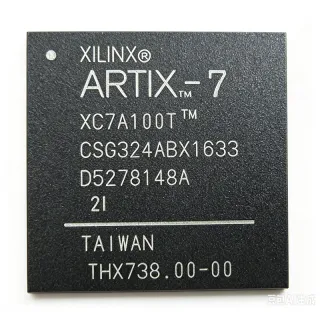
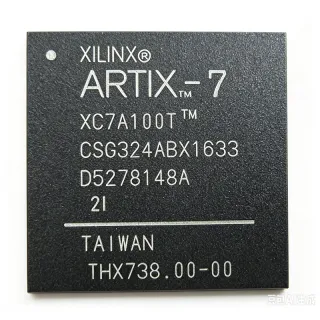
EPF6024ATCL44-3 - FLEX 6000 FPGA, 24K Gates, TQFP-44 | Altera
MPN: EPF6024ATCL44-3 ✗ End of Life| Qty | Unit Price | Extended |
|---|---|---|
| 1 | $18.5 | $18.50 |
| 10 | $16.2 | $162.00 |
| 100 | $13.85 | $1,385.00 |
| 500 | $11.4 | $5,700.00 |
| 1,000 | $9.95 | $9,950.00 |
EPF6024ATCL44-3 Overview
A field-programmable gate array (FPGA) is a reconfigurable integrated circuit containing an array of programmable logic blocks (LABs), interconnect switches, and I/O elements that engineers can configure to implement custom digital logic. FPGAs sit in the hierarchy between mask-programmable gate arrays and CPLDs, offering higher logic density than CPLDs while remaining in-system reprogrammable. The FLEX 6000 family sits below the FLEX 10K and APEX families in Altera's portfolio, optimizing for low unit cost in glue-logic, bus-interface, and state-machine roles rather than for embedded memory or DSP blocks.
Key features of the EPF6024ATCL44-3 include 24K typical gates (16K usable logic elements), a -3 speed grade suitable for commercial timing budgets, JTAG-based in-system programmability via the ByteBlaster or BitBlaster, and reconfigurable SRAM configuration memory that allows unlimited design revisions during development. The OptiFLEX architecture uses continuous, distributed routing combined with segmented routing in the LAB regions to balance die area with timing predictability.
At the architecture level, the FLEX 6000 fabric consists of logic array blocks arranged in rows and columns with continuous horizontal and vertical routing channels, each LAB containing ten logic elements (LEs), and each LE built around a 4-input look-up table (LUT), a programmable flip-flop, and a fast carry chain for arithmetic. Configuration data is loaded from an external serial EPROM or through the JTAG port, after which the SRAM cells control all interconnect, LUT, and I/O configurations.
Typical applications for the EPF6024ATCL44-3 include industrial control glue logic, bus-interface bridging (for example, PCI-to-ISA bridges or local-bus glue), peripheral I/O expansion, and state-machine controllers in telecom, instrumentation, and embedded systems. Designers historically chose the FLEX 6000 family when a PAL/PLD ran out of resources but a full FLEX 10K was over-budget, and the 44-pin TQFP package suits space-constrained boards where 100-pin or larger QFPs would be excessive.
When designing with this part, plan for an external configuration EPROM (such as the EPC2 or EPC16) because the SRAM cells are volatile - power cycling requires reconfiguration. Confirm availability before starting a new design, since the FLEX 6000 family is no longer recommended for new designs and many variants are NRND; the Altera Quartus II tool supports older families but newer Intel Quartus versions may not. A conservative design rule is to allow 25% logic utilization headroom for routing congestion.
This page consolidates pricing, drop-in compatible FLEX 6000 variants, package-compatibility notes, and lifecycle guidance that is not directly presented on the Altera datasheet.
Drop-in alternatives for EPF6024ATCL44-3 — same package, pin-to-pin compatible. Different-package parts requiring PCB rework are excluded.
Variants in this series
Same-series models that are drop-in compatible with EPF6024ATCL44-3 (same form factor and footprint) — differing in Operating Temperature, Package, Typical Gates, Device Logic Elements, Process Technology.
Quick Comparison Tool — Select alternative parts for side-by-side comparison:
EPF6024ATC44-1
✅ Drop-In✓ In Stock
$52 / Unit
View Datasheet →EPF6024ATC44-3
✅ Drop-In📋 Reference alternative (not in catalog)
EPF6024ATC441-1
✅ Drop-In✓ In Stock
$65 / Unit
View Datasheet →EPF6024ATCL44-3 Maximum Ratings & Electrical Characteristics
| Family | FLEX 6000 |
| Typical Gates | 24,000 |
| Architecture | OptiFLEX, SRAM-based |
| Speed Grade | -3 |
| Package | TQFP-44 (CL44) |
| Mounting Type | Surface Mount |
| Operating Temperature | 0 C to 70 C (TJ) |
| Configuration Memory | Volatile SRAM (reprogrammable) |
| Programming Interface | JTAG (ByteBlaster-compatible) |
| RoHS Status | RoHS Compliant (per distributor listing) |
| Lead-Free | Yes (per distributor listing) |
EPF6024ATCL44-3 Pin Configuration
| Pin 1 | GND — Ground |
| Pin 2 | I/O — User I/O |
| Pin 3 | I/O — User I/O |
| Pin 4 | I/O — User I/O |
| Pin 5 | I/O — User I/O |
| Pin 6 | I/O — User I/O |
| Pin 7 | VCCIO — I/O supply voltage |
| Pin 8 | I/O — User I/O |
| Pin 9 | I/O — User I/O |
| Pin 10 | I/O — User I/O |
| Pin 11 | I/O — User I/O |
| Pin 12 | GND — Ground |
| Pin 13 | I/O — User I/O |
| Pin 14 | I/O — User I/O |
| Pin 15 | TDI — JTAG Test Data In |
| Pin 16 | TMS — JTAG Test Mode Select |
| Pin 17 | TCK — JTAG Test Clock |
| Pin 18 | I/O — User I/O |
| Pin 19 | I/O — User I/O |
| Pin 20 | I/O — User I/O |
| Pin 21 | VCCINT — Core supply voltage |
| Pin 22 | I/O — User I/O |
| Pin 23 | I/O — User I/O |
| Pin 24 | I/O — User I/O |
| Pin 25 | I/O — User I/O |
| Pin 26 | GND — Ground |
| Pin 27 | I/O — User I/O |
| Pin 28 | I/O — User I/O |
| Pin 29 | I/O — User I/O |
| Pin 30 | I/O — User I/O |
| Pin 31 | I/O — User I/O |
| Pin 32 | VCCIO — I/O supply voltage |
| Pin 33 | I/O — User I/O |
| Pin 34 | nSTATUS — Configuration status (open-drain) |
| Pin 35 | nCONFIG — Configuration control (active low) |
| Pin 36 | DCLK — Configuration clock |
| Pin 37 | CONF_DONE — Configuration done (open-drain) |
| Pin 38 | I/O — User I/O |
| Pin 39 | I/O — User I/O |
| Pin 40 | I/O — User I/O |
| Pin 41 | I/O — User I/O |
| Pin 42 | I/O — User I/O |
| Pin 43 | TDO — JTAG Test Data Out |
| Pin 44 | I/O — User I/O |
Typical Applications
EPF6024ATCL44-3 is suitable for 6 applications: Industrial Control Glue Logic, Bus Interface Bridging, Peripheral I/O Expansion, State Machine Controllers, Legacy Telecom Line Cards, Test and Measurement Instrumentation.
Industrial Control Glue Logic
The EPF6024ATCL44-3 fits industrial control glue logic because its 24,000-gate OptiFLEX fabric provides enough logic density to consolidate discrete 74-series logic, PLDs, and small state machines into a single reconfigurable device. With 24K typical gates in a compact TQFP-44 package, it replaces multiple TTL/CMOS packages on legacy PLC, motor-control, and instrumentation boards. Designers configure state machines, watchdog timers, bus-arbitration logic, and address decoding via JTAG and an EPC2 configuration EPROM, allowing in-field firmware revision via board swap rather than rework. The FLEX 6000 fabric's fast carry chain supports 16-bit counter/adder functions comfortably. The 0-70 C commercial temperature range is acceptable inside enclosed industrial cabinets, though outdoor installations should specify the EPF6024AIT industrial-temperature variant.
Recommended
Bus Interface Bridging
The EPF6024ATCL44-3 implements bus-interface bridges between legacy and modern peripherals - for example, ISA-to-local-bus bridges, PCI-to-ISA bridges, or PC/104-to-CustomBus glue - because its 24K-gate fabric comfortably fits a 32-bit address decoder, FIFO controller, and bus-state machine. The TQFP-44 pinout delivers enough user I/O for 16-24 bit bus pins plus control signals, with JTAG pins left free for factory programming. ByteBlaster JTAG programming allows design teams to iterate bridge logic between prototypes without re-spinning a board. Volatile SRAM configuration requires a small EPC2 or EPC1064 configuration EPROM, which adds minimal BOM cost versus a masked gate array. Designers should verify timing closure at the target bus frequency using the Quartus II timing analyzer.
Recommended
Peripheral I/O Expansion
The EPF6024ATCL44-3 is well suited to peripheral I/O expansion roles in test equipment, telecom line cards, and embedded SBCs where additional GPIO, SPI/I2C masters, UART channels, or PWM outputs must be added to a host processor with insufficient native I/O. The 24K-gate fabric supports up to approximately 20-30 user I/O in the TQFP-44 package after accounting for JTAG and configuration pins, enough for most peripheral-expansion tasks. Each LE provides a 4-input LUT plus flip-flop, allowing each user pin to drive a custom protocol engine. JTAG-based in-system programming enables rapid I/O-protocol updates without unsoldering the part, ideal for evolving standards.
Recommended
State Machine Controllers
The EPF6024ATCL44-3 implements complex multi-state controllers for embedded systems, replacing discrete HC/HCT logic with one reconfigurable device. The OptiFLEX architecture provides a 4-input LUT plus register per logic element, enabling deeply nested state machines with tens of states that would be cumbersome in 22V10 or ispMACH CPLDs. The 24K-gate capacity supports a typical design of 4-6 cooperating state machines, including encoder/decoder logic, watchdog controllers, and protocol sequencers. Designers capture state machines in VHDL/Verilog, synthesize with Quartus II, and validate timing with the built-in timing analyzer. Field re-programming via JTAG allows late-stage state-machine fixes without PCB rework.
Recommended
Legacy Telecom Line Cards
The EPF6024ATCL44-3 sees continued service in legacy telecom line-card and channel-bank designs because its TQFP-44 package, 24K-gate fabric, and JTAG in-system programming fit the form-factor constraints of older 19-inch rack equipment. Designers use it for TDM bus framing, HDLC controllers, alarm-status aggregation, and line-test pattern generators. The 0-70 C commercial temperature range is sufficient for temperature-controlled central-office environments. The FLEX 6000 series' long service history (introduced late 1990s) means spare-parts inventories are well understood by telecom field-service organizations. For green-field telecom designs, however, Altera (Intel) recommends migrating to MAX V CPLDs or Cyclone IV FPGAs.
Recommended
Test and Measurement Instrumentation
The EPF6024ATCL44-3 is used in test and measurement instruments for custom stimulus generation, timing-and-control sequencing, and front-panel display logic, where its reconfigurable fabric allows vendors to ship one hardware platform with multiple personality bitstreams. Typical designs include arbitrary waveform generator sequencers, logic-analyzer trigger engines, and protocol-aware BERT testers. The TQFP-44 footprint supports compact bench-instrument form factors, and JTAG allows end-of-line test firmware updates during production calibration. Designers can leverage the FLEX 6000 fast carry chain for high-resolution counters and the LUT-based structure for parallel-pattern decoding. The ByteBlaster-compatible JTAG interface allows production-line programming in seconds.
Recommended
Recommended Products Summary
Engineering reference data for EPF6024ATCL44-3 — comparison, design guidance, and compliance information.
Selection Guide
Comparison with Alternatives
| Parameter | This Product | EPF6024ATC44-1 | EPF6024ATC44-3 | EPF6024ATC441-1 |
|---|---|---|---|---|
| Brand | Altera | Altera | Altera | Altera |
| Package | TQFP-44 (CL44) | TQFP-44 | TQFP-44 | TQFP-44 |
| Typical Gates | 24,000 | 24,000 | 24,000 | 24,000 |
| Speed Grade | -3 | -1 (slower) | -3 | -1 (slower) |
| Family | FLEX 6000 | FLEX 6000 | FLEX 6000 | FLEX 6000 |
| Architecture | OptiFLEX SRAM | OptiFLEX SRAM | OptiFLEX SRAM | OptiFLEX SRAM |
| Configuration | Volatile SRAM (EPC2/EPC1064 EPROM) | Volatile SRAM | Volatile SRAM | Volatile SRAM |
| Operating Temperature | 0 C to 70 C | 0 C to 70 C | 0 C to 70 C | 0 C to 70 C |
| Lifecycle Status | NRND | NRND | NRND | NRND |
| Compatible Tools | Quartus II / MAX+PLUS II | Quartus II / MAX+PLUS II | Quartus II / MAX+PLUS II | Quartus II / MAX+PLUS II |
Key Differentiators
- Smallest-footprint FLEX 6000 EPF6024 variant (vs EPF6024ATC100-3)
- Commercial -3 speed grade baseline (vs EPF6024ATC44-1)
- Reconfigurable SRAM fabric vs OTP CPLDs (vs EPM240 (MAX II CPLD))
Design Notes
The EPF6024ATCL44-3 requires two separate supply rails - VCCINT (core, typically 5.0 V or 3.3 V depending on revision) and VCCIO (I/O bank, 5.0 V/3.3 V/2.5 V tolerant depending on configuration). Both rails must ramp together during power-up or the device may enter an indeterminate configuration state. Decoupling: place a 100 nF ceramic cap within 5 mm of each VCC pin and a 10-22 uF bulk tantalum or ceramic on each rail near the device. Estimated core current at full utilization is approximately 50-150 mA depending on toggle rate - refer to the FLEX 6000 datasheet power tables for exact figures. Estimated: assume 100 MHz internal toggle, 50% utilization.
Because FLEX 6000 configuration memory is volatile SRAM, the EPF6024ATCL44-3 must be paired with a configuration EPROM (EPC2, EPC1064, or compatible) or a microprocessor-driven configuration scheme - it will NOT retain its design without power. Many design failures result from omitting the configuration EPROM or mis-wiring the nCONFIG/nSTATUS/CONF_DONE handshake. The nSTATUS pin is open-drain and requires a 10 kohm pull-up to VCCIO; CONF_DONE also requires a pull-up. Always sequence power-up before initiating JTAG programming, and hold nCONFIG low during power ramp for a clean configuration start.
The TQFP-44 package has 0.8 mm pitch leads with an exposed thermal pad on the underside (not bonded) - keep the PCB land pattern to standard TQFP-44 IPC-7351 dimensions with 0.3-0.4 mm wide pads and 1.6-2.0 mm pad length. Estimated: ground plane on the inner PCB layer beneath the device is recommended for return-path integrity but not necessary for thermal dissipation at the part's typical 0.5-1 W power level. Reserve a JTAG header footprint (2x5 0.1-inch header with TMS, TDI, TDO, TCK, GND, VCC) for programming and debug access. Place the configuration EPROM within 50 mm of the FPGA's DCLK pin to meet FLEX 6000 setup/hold timing.
Compliance Information
RoHS compliance per Alibaba distributor listing; REACH, halogen-free, and conflict-minerals status not explicitly stated in the verified web data. Not AEC-Q100 qualified (commercial/industrial FPGA, not automotive-grade).