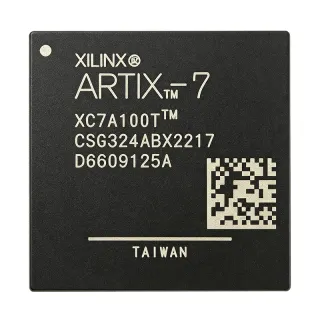
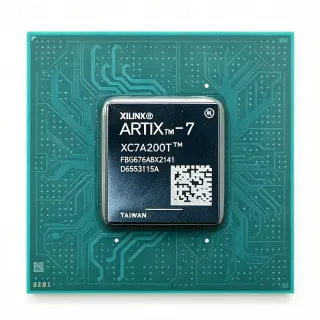
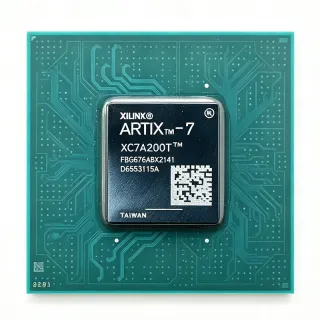
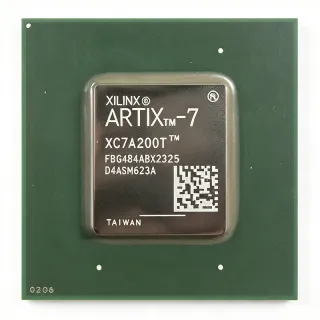
EPF10K20RC208-4N - FLEX 10K FPGA, 20K Gates, 208-RQFP | Intel
MPN: EPF10K20RC208-4N ✗ End of Life| Qty | Unit Price | Extended |
|---|---|---|
| 1 | $38.5 | $38.50 |
| 10 | $34.2 | $342.00 |
| 100 | $28.75 | $2,875.00 |
| 500 | $23.4 | $11,700.00 |
| 1,000 | $19.95 | $19,950.00 |
EPF10K20RC208-4N Overview
A FPGA (Field-Programmable Gate Array) is a semiconductor integrated circuit that can be configured by the customer or designer after manufacturing. FPGAs sit within the broader taxonomy of programmable logic devices (PLDs) and are widely used for digital logic prototyping, glue logic, signal processing, and hardware acceleration. The FLEX 10K family specifically introduced Look-Up Table (LUT)-based logic combined with embedded array blocks (EABs) that implement RAM, ROM, and FIFO functions, bridging the gap between earlier PLDs and modern SRAM-based FPGAs.
Key features include 147 user I/Os, 12 EABs for memory implementation, SRAM-based configuration cells, in-system programmability via the ByteBlaster or JTAG interfaces, and support for multi-volt I/O standards including 5.0 V, 3.3 V, and 2.5 V with proper configuration. The 'N' suffix indicates lead-free / Pb-free construction consistent with RoHS requirements. The exposed thermal pad on the 208-BFQFP package aids heat dissipation in moderate-power designs.
From an architectural standpoint, the EPF10K20RC208-4N uses 0.42 µm CMOS process technology with four-input LUTs, dedicated carry chains for arithmetic, and a continuous interconnect fabric routed across LABs. Configuration data is stored in SRAM cells, allowing unlimited re-programmability, which is essential for design iteration and field upgrades. The 208-RQFP footprint is the largest QFP variant in this family, maximizing I/O access for parallel interfaces.
Typical applications include telecommunications line cards, industrial control glue logic, data-acquisition pre-processing, PCI bridge prototypes, and legacy system emulation where large gate counts and abundant I/O are required. Newer Cyclone or MAX series parts generally supersede this device in new designs, but it remains valuable for maintenance of installed systems.
When designing with this device, consider using the Quartus II (legacy) or MAX+PLUS II development environment for synthesis, place-and-route, and bitstream generation. The exposed pad must be soldered to a copper pour for thermal relief and to maintain the mechanical integrity of the fine-pitch RQFP package.
Drop-in alternatives for EPF10K20RC208-4N — same package, pin-to-pin compatible. Different-package parts requiring PCB rework are excluded.
Variants in this series
Same-series models that are drop-in compatible with EPF10K20RC208-4N (same form factor and footprint) — differing in Configuration Method, Typical Gates, Operating Temperature, Series, Speed Grade.
Quick Comparison Tool — Select alternative parts for side-by-side comparison:
EPF10K20RC208-4
✅ Drop-In✓ In Stock
$19.85 / Unit
View Datasheet →EPF10K20RC208-3N
✅ Drop-In✓ In Stock
$21.95 / Unit
View Datasheet →EPF10K20RC208-3
✅ Drop-In✓ In Stock
$21.5 / Unit
View Datasheet →EPF10K30RC208-4N
✅ Drop-In✓ In Stock
$24.9 / Unit
View Datasheet →EPF10K20RC208-4N Maximum Ratings & Electrical Characteristics
| Series | FLEX 10K |
| Family | Embedded Programmable Logic Device (EPLD) |
| Typical Gates | 20,000 |
| Logic Cells | 1,152 |
| Logic Array Blocks (LABs) | 144 |
| Embedded Array Blocks (EABs) | 12 |
| Embedded Memory | 12,288 bits |
| User I/O Pins | 147 |
| Number of Pins | 208 |
| Package | 208-BFQFP (RQFP) with exposed pad, 28 x 28 mm |
| Mounting Type | Surface Mount |
| Speed Grade | -4 (0.6 ns typical propagation delay) |
| Operating Temperature | 0 °C to +70 °C (commercial) |
| Supply Voltage | 4.75 V to 5.25 V (5 V nominal) |
| Technology | 0.42 µm CMOS, SRAM-based configuration |
| Configuration Interface | JTAG / ByteBlaster |
| RoHS Status | Compliant (Pb-free, 'N' suffix) |
| Lead-Free | Yes |
EPF10K20RC208-4N 208-bfqfp (rqfp) with exposed pad, 28 x 28 mm Pin Configuration Guide
Pin configuration for EPF10K20RC208-4N (208-bfqfp (rqfp) with exposed pad, 28 x 28 mm package). This digital IC includes GPIO, communication interfaces (UART, SPI, I2C), and power pins. Refer to the manufacturer datasheet for alternate pin functions and configuration options. Essential for embedded system design and PCB layout.

No detailed pinout data available for EPF10K20RC208-4N.
Refer to the datasheet for full pin configuration.
Typical Applications
EPF10K20RC208-4N is suitable for 6 applications: Legacy Telecom Line Card Glue Logic, Industrial Control State Machines, Data Acquisition Pre-Processing, Legacy PCI Bridge Prototype, Custom Peripheral Controllers for Embedded Systems, Maintenance of Installed FLEX 10K Systems.
Legacy Telecom Line Card Glue Logic
The EPF10K20RC208-4N fits legacy 5 V telecom line-card designs because its 1,152 logic cells and 147 user I/Os can absorb the bus-bridging, framing, and control-plane glue logic that earlier Altera FLEX 10K designs performed. With 12.288 kbits of embedded memory distributed across 12 EABs, it can implement small FIFO buffers for HDLC-style packet queues without external SRAM. The 208-RQFP footprint exposes enough I/O to drive parallel PCM/E1 framers, TDM buses, and a microprocessor bus simultaneously. Compared with newer Cyclone IV/V parts, the 5 V tolerance and the existing Quartus II bitstream reuse are decisive advantages when keeping installed base hardware alive.
Recommended
Industrial Control State Machines
Industrial PLC and motion-controller subsystems use the EPF10K20RC208-4N to host deterministic state machines, encoder/decoder logic, and safety interlocks. The 0.6 ns per-element propagation delay of speed grade -4 supports sub-100 MHz control loops, while the 147 I/Os comfortably fan out to stepper drivers, opto-isolated digital I/O, and RS-485 transceivers on the same board. The 0 to 70 °C commercial temperature range is adequate for factory-floor enclosures with air cooling. Designers appreciate that legacy PLC firmware can be ported without migrating the toolchain, shortening validation cycles for long-lifecycle industrial SKUs.
Recommended
Data Acquisition Pre-Processing
Multi-channel data-acquisition boards use the EPF10K20RC208-4N to perform front-end preprocessing - decimation, channel multiplexing, gain control, and trigger sequencing - before delivering a serial stream to a host DSP or FPGA. The 12 EABs of the device hold coefficient tables or small cache memories, and 147 user I/Os can interface with parallel ADC/DAC data buses up to 16 bits wide. The exposed thermal pad and 28x28 mm RQFP package spread heat evenly across a 4-layer FR-4 board, supporting sustained throughput in instrumentation chassis. System designers value the deterministic -4 speed grade for predictable latency on the trigger path.
Recommended
Legacy PCI Bridge Prototype
Pre-PCIe prototyping platforms and embedded PC/104 designs frequently embed the EPF10K20RC208-4N as a 5 V-PCI bus bridge or a custom peripheral controller. With 1,152 logic cells, designers can implement 32-bit PCI target/initiator state machines, FIFOs, and configuration-space registers without external logic. The 147 I/Os split comfortably between a 32-bit PCI bus, a local 32-bit processor bus, and auxiliary GPIO. Existing Quartus II reference designs provide validated PCI cores, dramatically cutting development time for retro-computing and industrial PC builders.
Recommended
Custom Peripheral Controllers for Embedded Systems
Embedded computing platforms - including medical imaging carts, point-of-sale terminals, and test benches - use the EPF10K20RC208-4N as a custom I/O controller that aggregates sensors, keypads, displays, and communication interfaces into a unified bus for an ARM or MIPS host processor. The 12 kbits of EAB memory can hold LCD framebuffers or look-up tables, while 147 I/Os drive SPI, I2C, GPIO, and parallel LCD interfaces simultaneously. The mature Quartus II toolchain and the FLEX 10K reference designs shorten firmware development for low-volume, high-reliability products where re-validation cost dominates BOM savings.
Recommended
Maintenance of Installed FLEX 10K Systems
A significant number of deployed base stations, factory controllers, and test instruments still run FLEX 10K designs that cannot be re-platformed without a costly re-certification. The EPF10K20RC208-4N supports this installed base as a like-for-like service replacement, ensuring the same bitstream, pinout, and timing margins as the original. Service stockists typically keep this part on the shelf for 5+ years of after-market support. Choosing the Pb-free -4N variant helps repair operations transition to lead-free assembly lines while keeping the bitstream identical to the original design.
Recommended
Recommended Products Summary
Engineering reference data for EPF10K20RC208-4N — comparison, design guidance, and compliance information.
Selection Guide
Comparison with Alternatives
| Parameter | This Product | EPF10K20RC208-4 | EPF10K20RC208-3N | EPF10K20RC208-3 | EPF10K30RC208-4N |
|---|---|---|---|---|---|
| Brand | Intel | Intel | Intel | Intel | Intel |
| Package | 208-RQFP (BFQFP) 28x28 mm | 208-RQFP (BFQFP) 28x28 mm - same | 208-RQFP (BFQFP) 28x28 mm - same | 208-RQFP (BFQFP) 28x28 mm - same | 208-RQFP (BFQFP) 28x28 mm - same package, different pinout |
| Typical Gates | 20,000 | 20,000 | 20,000 | 20,000 | 30,000 |
| Speed Grade | -4 (~0.6 ns) | -4 (~0.6 ns) | -3 (~0.9 ns, ~30% slower) | -3 (~0.9 ns) | -4 (~0.6 ns) |
| Lead-Free / RoHS | Yes (Pb-free, 'N' suffix) | No (lead-bearing) | Yes (Pb-free) | No (lead-bearing) | Yes (Pb-free) |
| Logic Cells | 1,152 | 1,152 | 1,152 | 1,152 | 1,728 |
| User I/Os | 147 | 147 | 147 | 147 | 147 |
| Supply Voltage | 4.75 V to 5.25 V | 4.75 V to 5.25 V | 4.75 V to 5.25 V | 4.75 V to 5.25 V | 4.75 V to 5.25 V |
| Operating Temperature | 0 °C to +70 °C | 0 °C to +70 °C | 0 °C to +70 °C | 0 °C to +70 °C | 0 °C to +70 °C |
Key Differentiators
- Lead-free / Pb-free construction with identical electrical performance (vs EPF10K20RC208-4)
- Fastest -4 speed grade available in this package density (vs EPF10K20RC208-3N)
- Mature Quartus II toolchain with abundant reference designs (vs EPF10K30RC208-4N)
Design Notes
The 208-RQFP (BFQFP) package has a thermal pad that MUST be soldered to a copper pour of at least 1 square inch on the top layer of the PCB for reliable operation. Without this pad connection, the device can overheat during sustained logic activity above 50 MHz. Use thermal vias (0.3 mm drill, 1 mm pitch) under the pad to conduct heat to inner copper planes. Estimate junction temperature rise as Tj = Ta + (Pdiss × θJA); for a typical 1 W dissipation the rise is ~30 °C above ambient in still air.
Place at least one 0.1 µF X7R decoupling capacitor within 5 mm of every VCC and VCCIO pin, with a single 47 µF bulk tantalum or polymer capacitor at the board entry. The exposed pad provides the primary GND path - stitch multiple GND vias directly under the pad at 1 mm pitch to minimize ground bounce on high-speed edges. FLEX 10K devices are sensitive to VCCIO ringing; a 10 µF bulk capacitor adjacent to the device is recommended for switching I/O-heavy designs.
Configure the device with Quartus II 13.0sp1 or MAX+PLUS II; bitstreams generated by Quartus Prime (newer) are not compatible with FLEX 10K silicon. During layout, leave 4 mm of trace space around the package edges for rework. Maintain 0.2 mm clearance between any trace and the exposed pad copper to avoid solder shorts during reflow. JTAG chain length must be kept below 10 ns TAP to ensure reliable programming at the ByteBlasterMV speed.
Do NOT migrate Quartus Prime projects directly into FLEX 10K - the architecture is fundamentally different from Cyclone and the toolchain will not produce a valid bitstream. Always re-enter the design in MAX+PLUS II or Quartus II 13.0sp1. Do NOT assume the EPF10K30RC208-4N is drop-in - its pinout differs at the I/O bank boundaries. Do NOT exceed the 5.25 V VCC max even briefly; the SRAM configuration cells are vulnerable to over-voltage and may corrupt the bitstream.
Compliance Information
RoHS compliance inferred from 'N' suffix per Altera/Intel ordering nomenclature; REACH and halogen status not confirmed by verified web data. Not AEC-Q100 qualified - not intended for automotive applications.