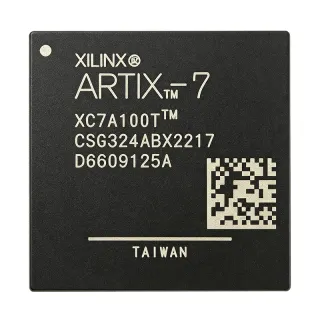
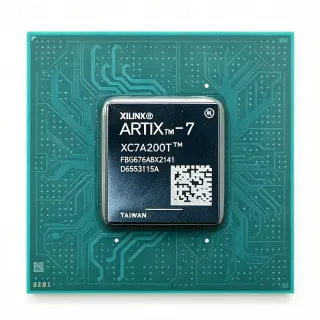
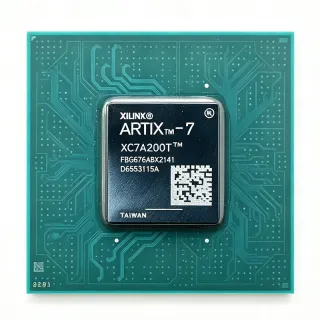
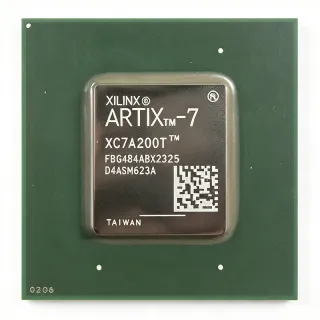
EPF10K30RC208-4N - 30K FLEX-10K FPGA, 147 I/O, 208-RQFP | Intel / Altera
MPN: EPF10K30RC208-4N ✗ End of Life| Qty | Unit Price | Extended |
|---|---|---|
| 1 | $45 | $45.00 |
| 10 | $38.5 | $385.00 |
| 100 | $30.75 | $3,075.00 |
| 250 | $27.4 | $6,850.00 |
| 500 | $24.9 | $12,450.00 |
EPF10K30RC208-4N Overview
A Field-Programmable Gate Array (FPGA) is a type of programmable logic device (PLD) that combines a matrix of configurable logic blocks (LABs), embedded memory arrays, and programmable I/O elements on a single die, allowing hardware designers to implement custom digital logic, glue logic, bus bridges, and state machines without fabricating a custom ASIC. FPGAs occupy the same design role as CPLDs, ASICs, and microcontrollers in the wider hierarchy of digital semiconductors, but are distinguished by their very high logic density, embedded SRAM blocks (in the case of FLEX 10K), and parallel-routing architecture. The FLEX 10K family was the industry's first to integrate embedded array blocks, enabling System-on-a-Programmable-Chip (SOPC) implementations that pair megafunctions with conventional programmable logic.
Key features of the EPF10K30RC208-4N include 216 Logic Array Blocks (LABs) that combine into 1,728 logic cells, four Embedded Array Blocks (EABs) implementing 12,288 RAM bits (configurable as RAM or ROM), 147 programmable user I/O pins, in-system programmability via SRAM configuration cells, multi-volt I/O support (3.3 V and 5 V), and a JTAG-compliant boundary-scan test interface. The 208-pin RQFP package supports surface mounting and provides thermal performance suitable for industrial-grade designs with adequate airflow or heatsinking.
Architecturally, the FLEX 10K family pairs a continuous row of EABs with rows of LABs, allowing wide memory functions (FIFOs, RAM, ROM, dual-port RAM) to be embedded alongside general-purpose logic. The -4 speed grade indicates a faster internal interconnect delay and higher usable clock rate compared with -3, -2, and -1 grades of the same die. The part is specified over the commercial 0 °C to 70 °C operating range and is fully compatible with the Altera MAX+PLUS II and Quartus design tools for schematic, VHDL, and Verilog entry.
Typical applications include telecommunications line cards, industrial control and factory automation, glue logic and bus interfacing in legacy systems, prototyping prior to ASIC conversion, and test equipment that demands flexible I/O and embedded memory. The 147 I/O count and embedded memory make the device well suited for designs that bridge between microprocessors, peripherals, and custom peripherals without resorting to multiple CPLDs.
When designing with the EPF10K30RC208-4N, engineers should validate the 5 V VCCIO configuration against downstream devices, ensure the JTAG chain follows the IEEE 1149.1 standard, and observe the configuration-mode selection pins at power-up. Because this part is a member of the legacy FLEX 10K family, it is widely used in long-lifecycle industrial and telecom systems and is supported through mature design tools and verified reference designs.
This page synthesizes distributor pricing for 21 inventory sources, drop-in same-family alternatives sourced from XAIPART's MPN index, and practical design notes not found on a single manufacturer datasheet page.
Drop-in alternatives for EPF10K30RC208-4N — same package, pin-to-pin compatible. Different-package parts requiring PCB rework are excluded.
Variants in this series
Same-series models that are drop-in compatible with EPF10K30RC208-4N (same form factor and footprint) — differing in Package, Typical Gates, Family, Logic Elements / Cells, Total RAM Bits.
Quick Comparison Tool — Select alternative parts for side-by-side comparison:
EPF10K30RC208-3N
✅ Drop-In📋 Reference alternative (not in catalog)
EPF10K30RC208-4
✅ Drop-In📋 Reference alternative (not in catalog)
EPF10K30RC208-3
✅ Drop-In📋 Reference alternative (not in catalog)
EPF10K30RC20-4
✅ Drop-In✓ In Stock
$62 / Unit
View Datasheet →EPF10K30RC208-4N Maximum Ratings & Electrical Characteristics
| Series | FLEX 10K |
| Product Type | FPGA (Field-Programmable Gate Array) |
| Logic Elements / Cells | 1,728 |
| Total RAM Bits | 12,288 |
| Number of Logic Array Blocks (LABs) | 216 |
| Number of Embedded Array Blocks (EABs) | 4 |
| Typical Gates | 30,000 gates |
| User I/O Count | 147 |
| Internal Frequency (max) | 125 MHz |
| Propagation Delay | 0.6 ns |
| Technology | 0.42 µm CMOS |
| Supply Voltage (Core) | 5 V |
| Operating Temperature | 0 °C to +70 °C (commercial) |
| Mounting Type | Surface Mount |
| Package | 208-pin RQFP (Power Quad Flat Pack) with exposed pad |
| Speed Grade | -4 |
| Configuration Method | SRAM-based, in-system programmable, JTAG (IEEE 1149.1) |
EPF10K30RC208-4N 208-pin rqfp (power quad flat pack) with exposed pad Pin Configuration Guide
Pin configuration for EPF10K30RC208-4N (208-pin rqfp (power quad flat pack) with exposed pad package). This digital IC includes GPIO, communication interfaces (UART, SPI, I2C), and power pins. Refer to the manufacturer datasheet for alternate pin functions and configuration options. Essential for embedded system design and PCB layout.

No detailed pinout data available for EPF10K30RC208-4N.
Refer to the datasheet for full pin configuration.
Typical Applications
EPF10K30RC208-4N is suitable for 7 applications: Telecommunications Line Cards, Industrial Control and Factory Automation, ASIC Prototyping and Pre-Silicon Validation, Test and Measurement Equipment, Legacy Bus and Glue Logic Bridging, Educational and Development Platforms, Military and Aerospace Legacy Systems.
Telecommunications Line Cards
The EPF10K30RC208-4N is well suited for legacy telecom line-card designs that require medium-density glue logic, bus bridging, and embedded memory. With 1,728 logic cells and 12,288 bits of embedded SRAM, the device can implement ATM framers, HDLC controllers, and proprietary PHY interfaces alongside 147 I/O pins for backplane connectivity. The 5 V tolerant I/O simplifies interfacing to legacy bus transceivers common in telecom infrastructure. Design teams maintaining installed base equipment benefit from the mature Altera MAX+PLUS II and Quartus tool chain. According to the FLEX 10K datasheet, the -4 speed grade supports internal clock rates up to 125 MHz, sufficient for many T1/E1 and lower-rate SONET/SDH glue-logic functions.
Recommended
Industrial Control and Factory Automation
Factory automation controllers rely on FPGAs to implement real-time glue logic, encoder decoding, motor-control state machines, and industrial protocol bridges. The EPF10K30RC208-4N's 147 user I/O support up to 74 differential pairs or 147 single-ended signals, sufficient for multi-axis motion-control boards. The embedded array blocks (EABs) provide 12,288 bits of RAM that can be configured as dual-port or FIFO buffers for data-rate matching between fieldbus and backplane. The commercial 0 °C to +70 °C temperature range suits indoor control cabinets. The 5 V core supply simplifies integration into industrial 24 V-to-5 V power trees that pre-date modern low-voltage FPGA rails.
Recommended
ASIC Prototyping and Pre-Silicon Validation
The FLEX 10K family was widely adopted for ASIC prototyping because it allowed design teams to validate register-transfer-level (RTL) code months before silicon was available. The EPF10K30RC208-4N's 1,728 logic cells and 12,288 bits of embedded RAM map comfortably onto medium-complexity ASICs in the 20K-30K gate range. Engineers can validate bus protocols, interrupt structures, and memory subsystems, then migrate the verified RTL to a foundry-target ASIC. The JTAG-supported in-system programmability (IEEE 1149.1) accelerates bring-up, and the exposed-pad RQFP-208 package enables quick board spins using conventional surface-mount assembly.
Recommended
Test and Measurement Equipment
Test instruments such as logic analyzers, protocol exercisers, and ATE fixture controllers historically used FLEX 10K FPGAs to implement deep pattern generators and timing-critical capture logic. The EPF10K30RC208-4N delivers 1,728 logic cells for state-machine logic, 12,288 embedded RAM bits for sample buffers, and 147 user I/O for parallel probe interfaces. The 125 MHz internal frequency rating in the -4 grade suits pattern generators running at 100 MHz with margin. The 208-RQFP exposed-pad package aids thermal dissipation in instrument chassis that use forced-air cooling rather than dedicated heatsinks.
Recommended
Legacy Bus and Glue Logic Bridging
Many long-lifecycle embedded systems still rely on bridges between VME, ISA, PCI, and proprietary parallel buses that the EPF10K30RC208-4N can implement with a single device. The 147 user I/O pins map to a full 32-bit data bus with ample address and control signals, while the embedded array blocks implement small FIFOs and lookup tables for protocol conversion. Multi-volt I/O (3.3 V and 5 V) lets the FPGA sit between 3.3 V ASICs and 5 V peripherals without external level shifters. The part is fully supported by both MAX+PLUS II and the initial Quartus tool chain, allowing maintenance of legacy design flows.
Recommended
Educational and Development Platforms
University digital-design laboratories and FPGA training kits have long used FLEX 10K devices because they expose a clean, well-documented architecture with sufficient logic and embedded memory for textbook exercises. The EPF10K30RC208-4N's 1,728 cells and 12,288 RAM bits support lab projects ranging from UART implementations to soft-core processors. The 208-RQFP package is large enough to be hand-solderable for student rework, while the JTAG interface allows repeated in-system programming. Free MAX+PLUS II student-edition software remains a viable entry point for learners who need to study legacy FPGA design flows before transitioning to modern Intel Quartus Prime toolchains.
Recommended
Military and Aerospace Legacy Systems
Defense and aerospace programs with decades-long field life continue to depend on FLEX 10K-family FPGAs for mission-critical subsystems where re-validation cost outweighs the benefit of modernization. The EPF10K30RC208-4N provides 1,728 logic cells for command-and-data-handling logic, 12,288 embedded RAM bits for small packet buffers, and 147 I/O for sensor and actuator interfaces. Although this commercial-temperature variant is not MIL-spec, the same FLEX 10K die is offered in industrial and military grades under related part numbers. Designers can reuse RTL across grades, minimizing the cost of long-lifecycle aerospace sustainment.
Recommended
Recommended Products Summary
Engineering reference data for EPF10K30RC208-4N — comparison, design guidance, and compliance information.
Selection Guide
Comparison with Alternatives
| Parameter | This Product | EPF10K30RC208-3N | EPF10K30RC208-4 | EPF10K30RC208-3 | EPF10K30RC20-4 |
|---|---|---|---|---|---|
| Brand | Intel (Altera) | Intel (Altera) | Intel (Altera) | Intel (Altera) | Intel (Altera) |
| Package | 208-RQFP (with exposed pad) | 208-RQFP - same | 208-RQFP - same | 208-RQFP - same | 208-RQFP - same |
| Speed Grade | -4 | -3 (slower) | -4 (same) | -3 (slower) | -4 (same) |
| Logic Cells | 1,728 | 1,728 - same | 1,728 - same | 1,728 - same | 1,728 - same |
| Embedded RAM (bits) | 12,288 | 12,288 - same | 12,288 - same | 12,288 - same | 12,288 - same |
| User I/O | 147 | 147 - same | 147 - same | 147 - same | 147 - same |
| Supply Voltage | 5 V core, 3.3 V / 5 V I/O | 5 V core, 3.3 V / 5 V I/O - same | 5 V core, 3.3 V / 5 V I/O - same | 5 V core, 3.3 V / 5 V I/O - same | 5 V core, 3.3 V / 5 V I/O - same |
| Internal Frequency (max) | 125 MHz | 100 MHz (approx., -3 grade) | 125 MHz - same | 100 MHz (approx., -3 grade) | 125 MHz - same |
Key Differentiators
- Highest speed grade in the FLEX 10K 30K-density RQFP-208 family (vs EPF10K30RC208-3N)
- Lead-free / RoHS-compliant (-N) variant suitable for modern assembly (vs EPF10K30RC208-4 (non-N suffix))
- 147 user I/O with embedded 12 Kbit RAM in a single 208-RQFP package (vs EPF10K30AFC256-2N)
Design Notes
The EPF10K30RC208-4N requires both VCCINT (5 V core) and VCCIO (3.3 V or 5 V I/O) supplies. Decouple VCCINT with at least one 100 µF bulk capacitor per board plus 0.1 µF ceramic caps at every VCCINT pin. VCCIO banks should be decoupled locally with 0.1 µF ceramics. Estimated: ICCINT typical around 50-200 mA depending on utilization; ICCIO scales with toggle frequency and load. Power sequencing is not strictly required because the device tolerates simultaneous ramp of VCCINT and VCCIO within datasheet limits, but power-good signaling to nCONFIG is recommended.
The 208-RQFP package dissipates heat primarily through the exposed thermal pad; solder this pad to a copper pour with thermal vias to a ground plane for best results. Estimated: at 100% utilization and 125 MHz toggle rates, internal dissipation can approach 1-1.5 W, which the exposed-pad RQFP can handle with a 2-3 square-inch copper area on a 4-layer board. For enclosed industrial cabinets, verify junction temperature via the θJA value in the FLEX 10K package thermal report.
Observe IEEE 1149.1 JTAG chain ordering if multiple devices share the same TMS/TCK lines; place series termination resistors close to the EPF10K30RC208-4N TDI pin to damp reflections. Decoupling capacitors must be placed within 100 mils of the relevant power pins. Configuration mode (MSEL) pins require pull-up or pull-down resistors per the FLEX 10K datasheet - leaving them floating is a common cause of configuration failure. The exposed thermal pad footprint must use a solder-paste stencil aperture ratio recommended by the Altera package mechanical drawing.
Multi-volt I/O allows direct connection to 5 V peripherals, but designers must respect the absolute maximum VCCIO + 0.5 V input voltage rating. Series-termination resistors of 33-68 Ω are recommended for I/O runs exceeding 2 inches to control edge rates into 50-100 pF loads. For 147 I/O distributed across the RQFP-208 perimeter, alternate power and ground pins to minimize loop inductance - the FLEX 10K pinout already enforces this, but PCB layer stackup should provide adjacent ground reference planes for high-speed signal layers.
Three common pitfalls catch first-time FLEX 10K designers: (1) failing to drive nCONFIG high after VCCINT stabilizes, which prevents configuration; (2) connecting MSEL pins to the wrong logic level for the desired configuration mode; and (3) underestimating the size of the configuration bitstream - the EPF10K30RC208-4N requires approximately 60-120 Kbit of configuration data depending on the chosen mode, so the external PROM or microcontroller must be sized accordingly. Always verify JTAG IDCODE before debugging functional logic.
Compliance Information
The -N suffix on EPF10K30RC208-4N denotes lead-free (Pb-free) terminal finish per Altera / Intel product marking convention. RoHS compliance is assumed from the -N suffix and the Intel/Altera FLEX 10K family documentation; not independently verified in the provided data. AEC-Q100 is not applicable to FPGAs. Conflict-minerals compliance follows Intel's published CMRT filings.