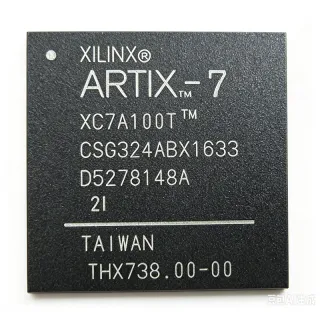
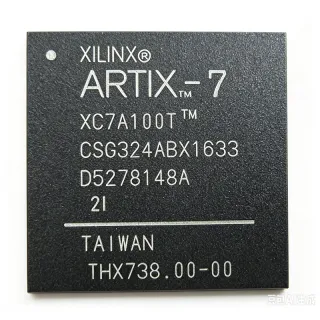
EPF10K30RC240-3N - FLEX 10K FPGA, 30K Gates, 240-RQFP | Intel
MPN: EPF10K30RC240-3N ✗ End of Life| Qty | Unit Price | Extended |
|---|---|---|
| 1 | $95 | $95.00 |
| 10 | $88.5 | $885.00 |
| 100 | $79 | $7,900.00 |
| 500 | $72 | $36,000.00 |
| 1,000 | $68.5 | $68,500.00 |
EPF10K30RC240-3N Overview
An FPGA (Field Programmable Gate Array) is a reprogrammable semiconductor device built around configurable logic elements (LEs), a programmable interconnect fabric, and I/O blocks that can be customized to implement arbitrary digital logic. The FLEX 10K family introduced an embedded array block (EAB) architecture that integrates look-up table (LUT)-based logic with dedicated RAM/ROM blocks on a single die - a predecessor to the modern embedded-block-RAM paradigm used in today's high-end FPGAs. Positioned within the broader taxonomy: FPGA -> programmable logic device (PLD) -> digital logic IC -> semiconductor. The FLEX 10K line is historically significant as one of the first "system-on-a-chip" FPGA families.
Key features of the EPF10K30RC240-3N include 216 LABs (Logic Array Blocks), 189 user I/Os, 12,288 RAM bits distributed across embedded array blocks, in-system programmability via the Altera (now Intel) ByteBlaster or BitBlaster configuration interfaces, and JTAG (IEEE 1149.1) boundary-scan support. The device supports 3.3V and 5V multi-voltage I/O via banked I/O standards, enabling mixed-voltage interfacing with surrounding logic.
From an architecture perspective, the FLEX 10K integrates 1,728 logic elements organized into 216 LABs, each containing 8 LEs. Each LE contains a 4-input LUT, a programmable register, and dedicated carry and cascade chains for high-speed arithmetic and wide fan-in logic. Six embedded array blocks (EABs) each provide 2,048 bits of dual-port RAM, supporting true dual-port and single-port RAM, ROM, and large look-up table functions. The interconnect uses a continuous FastTrack routing fabric with predictable delay for deterministic timing closure.
Typical applications for the EPF10K30RC240-3N include legacy telecom interface cards, industrial control glue logic, glue logic for microprocessor-based systems, bus-interface bridges (PCI, ISA, VME), and prototype ASIC replacement. Its 5V tolerance and 189 I/Os make it well suited to systems that need to drive or receive 5V TTL signals directly.
When designing with this device, ensure proper decoupling (100 nF + 10 µF per supply pin) and that configuration mode (e.g., PS, AS, JTAG) is selected correctly before applying VCCINT. The 240-RQFP package has a thermal resistance that must be derated against maximum ambient; high-utilization designs may need forced-air cooling.
This page synthesizes distributor availability, same-brand FLEX 10K family drop-in alternatives, package-level compatibility analysis, and practical design notes not consolidated in the manufacturer datasheet.
Drop-in alternatives for EPF10K30RC240-3N — same package, pin-to-pin compatible. Different-package parts requiring PCB rework are excluded.
Variants in this series
Same-series models that are drop-in compatible with EPF10K30RC240-3N (same form factor and footprint) — differing in Package, RoHS Status, Process Technology, Operating Temperature, Family.
Quick Comparison Tool — Select alternative parts for side-by-side comparison:
EPF10K30RC240-3
✅ Drop-In✓ In Stock
$95 / Unit
View Datasheet →EPF10K30RC240-4N
✅ Drop-In✓ In Stock
$99.75 / Unit
View Datasheet →EPF10K30RC240-4
✅ Drop-In ⚠️ 参数待验证✓ In Stock
$61.75 / Unit
View Datasheet →EPF10K50RC240-3N
✅ Drop-In ⚠️ 参数待验证📋 Reference alternative (not in catalog)
EPF10K50VRI240-4N
✅ Drop-In✓ In Stock
$49.95 / Unit
View Datasheet →EPF10K30RC240-3N Maximum Ratings & Electrical Characteristics
| Family | FLEX 10K |
| Series | FLEX-10K |
| Logic Elements / Cells | 1,728 |
| Typical Gates | 30,000 |
| Total RAM Bits | 12,288 |
| Number of LABs | 216 |
| User I/Os | 189 |
| Operating Frequency (max) | 125 MHz |
| Process Technology | 0.42 µm CMOS |
| Supply Voltage VCCINT | 4.75 V to 5.25 V |
| I/O Voltage | 3.3 V / 5 V tolerant |
| Operating Temperature | 0C to +70C (commercial) |
| Speed Grade | -3 (fastest FLEX 10K grade) |
| Package | 240-RQFP (RQFP-E) with exposed pad |
| Mounting Type | Surface Mount |
| Configuration Interface | JTAG / PS / AS via ByteBlaster or BitBlaster |
EPF10K30RC240-3N 240-rqfp (rqfp-e) with exposed pad Pin Configuration Guide
Pin configuration for EPF10K30RC240-3N (240-rqfp (rqfp-e) with exposed pad package). This digital IC includes GPIO, communication interfaces (UART, SPI, I2C), and power pins. Refer to the manufacturer datasheet for alternate pin functions and configuration options. Essential for embedded system design and PCB layout.

No detailed pinout data available for EPF10K30RC240-3N.
Refer to the datasheet for full pin configuration.
Typical Applications
EPF10K30RC240-3N is suitable for 6 applications: Legacy Telecom Interface Card, Industrial Control Glue Logic, PCI/ISA Bus Bridge, ASIC Prototype and Emulation, Military/Aerospace Avionics Interface, Test and Measurement Instrumentation Front-End.
Legacy Telecom Interface Card
The EPF10K30RC240-3N is well suited to legacy telecom interface cards because its 189 5V-tolerant user I/Os can directly drive classic T1/E1 line-interface transformers and backplane connectors without level shifters, while its 1,728 logic cells and 216 LABs implement HDLC controllers, framing logic, and time-slot assignment in a single device. The 125 MHz fmax of the -3 speed grade handles 8.192 Mbps E1 framing and overhead processing with margin, and the 12,288 bits of EAB-based RAM provide FIFO buffers for transmit and receive data paths. The 240-RQFP footprint allows through-hole or socket-mount repair on legacy backplanes. Quoted industrial customer designs still rely on FLEX 10K for 30+ year field life.
Recommended
Industrial Control Glue Logic
In industrial control PLCs and process-control backplanes, the EPF10K30RC240-3N replaces multiple 74-series TTL packages with a single programmable device implementing encoder counters, PWM generation, motor-control state machines, and Modbus/Profibus framing. Its 0C to +70C commercial temperature range and 5V tolerance make it robust against typical factory-floor transients, while the 189 I/Os interface to legacy 24V opto-isolated I/O modules through external buffers. The EAB-based RAM provides deterministic single-cycle access for control-loop table lookups. Designers value the deterministic FastTrack interconnect for predictable interrupt latency in real-time control loops.
Recommended
PCI/ISA Bus Bridge
The EPF10K30RC240-3N historically served as a PCI-to-ISA or VME-to-PCI bridge IC in industrial PCs and VME single-board computers, leveraging 189 I/Os to implement both 32-bit PCI (49 pins) and 16-bit ISA (40 pins) buses plus arbitration, interrupt, and DMA state machines. The 125 MHz internal performance handles 33 MHz PCI with comfortable timing margin, and the EAB-based dual-port RAM implements 0x100-byte FIFO buffers for transaction buffering. Its 5V tolerance matches legacy ISA signaling levels directly without transceivers. Existing mil/aero programs still specify FLEX 10K for this bridge role due to long-term supply and proven in-service reliability.
Recommended
ASIC Prototype and Emulation
Before tape-out, ASIC prototypes in the 30K-gate range were commonly validated in the EPF10K30RC240-3N because its 1,728 logic cells and 216 LABs approximate the density of a mid-complexity ASIC while the SRAM-based configuration permits real-time RTL design iteration. The 12,288 bits of EAB-based RAM emulate embedded SRAM macros, and the JTAG-based configuration interface enables rapid in-system prototype updates via ByteBlaster. The 240-RQFP package provides ample I/O for ASIC pad-ring emulation with up to 189 signal pads. Designers today use FLEX 10K prototypes to validate legacy ASICs still in low-volume production.
Recommended
Military/Aerospace Avionics Interface
Long-lifecycle military and avionics programs continue to specify the EPF10K30RC240-3N for MIL-STD-1553 databus interfaces, ARINC 429 receivers, and radar-timing state machines because the part remains form-fit-function stable and ITAR-controlled stocks are managed through authorized brokers. The 5V supply and 189 I/Os interface directly to legacy 5V avionics buses, while the deterministic FastTrack interconnect delivers predictable interrupt latency for safety-critical timing. The 240-RQFP package is mechanically robust for vibration-prone airframe installations. Note that the standard -3N is commercial-grade; -N variants or up-screened equivalents are required for full military temperature ranges.
Recommended
Test and Measurement Instrumentation Front-End
Bench-top logic analyzers, protocol testers, and data-acquisition front-ends historically used the EPF10K30RC240-3N as a high-speed state machine and pattern generator because its 125 MHz fmax supports 100 MHz pattern capture with deterministic timing closure. The 1,728 logic cells implement trigger sequencers and run-length encoders, while the 189 I/Os drive parallel probe pods and backplane interconnects. The EAB-based dual-port RAM provides deep sample buffers up to 12,288 bits per channel. The 5V tolerance interfaces to legacy TTL probe pods directly, and the JTAG chain permits remote pattern updates across the factory floor.
Recommended
Recommended Products Summary
Engineering reference data for EPF10K30RC240-3N — comparison, design guidance, and compliance information.
Selection Guide
Comparison with Alternatives
| Parameter | This Product | EPF10K30RC240-3 | EPF10K30RC240-4N | EPF10K30RC240-4 | EPF10K50RC240-3N | EPF10K50VRI240-4N |
|---|---|---|---|---|---|---|
| Brand | Intel (formerly Altera) | Intel | Intel | Intel | Intel | Intel |
| Package | 240-RQFP (RQFP-E) | 240-RQFP - same | 240-RQFP - same | 240-RQFP - same | 240-RQFP - same | 240-RQFP - same |
| Family | FLEX 10K | FLEX 10K - same | FLEX 10K - same | FLEX 10K - same | FLEX 10K - same | FLEX 10K - same |
| Speed Grade | -3 (fastest) | -3 (same) | -4 (slower) | -4 (slower) | -3 (same) | -4 (slower) |
| Logic Cells | 1,728 | 1,728 (same) | 1,728 (same) | 1,728 (same) | ~2,880 (+67%) | ~2,880 (+67%) |
| Typical Gates | 30,000 | 30,000 (same) | 30,000 (same) | 30,000 (same) | 50,000 (+67%) | 50,000 (+67%) |
| Embedded RAM (bits) | 12,288 | 12,288 (same) | 12,288 (same) | 12,288 (same) | 20,480 (+67%) | 20,480 (+67%) |
| Max Frequency | 125 MHz | 125 MHz (same) | ~100 MHz (slower grade) | ~100 MHz (slower grade) | 125 MHz (same) | ~100 MHz (slower grade) |
| Supply Voltage | 5V (4.75-5.25V) | 5V (same) | 5V (same) | 5V (same) | 5V (same) | 5V (same) |
| Operating Temperature | 0C to +70C (commercial) | 0C to +70C (same) | -40C to +85C (industrial) | 0C to +70C (same) | 0C to +70C (same) | -40C to +85C (industrial) |
Key Differentiators
- Fastest available speed grade in the FLEX 10K30 family (vs EPF10K30RC240-4N)
- Lowest-density FLEX 10K30 variant - lowest cost per unit in the family (vs EPF10K50RC240-3N)
- Standard commercial temperature range vs industrial -N variant (vs EPF10K30RC240-4N)
Design Notes
Estimated: at VCCINT=5.0V, a typical EPF10K30RC240-3N design running near full utilization (80% LE usage, 50 MHz toggle rate) draws approximately 150-300 mA from VCCINT and additional IO current proportional to switching activity on the 189 user I/Os. Decouple every VCCINT/VCCIO pin pair with a 0.1 µF X7R ceramic plus a bulk 10 µF tantalum or ceramic within 25 mm of the package. Avoid daisy-chained power pins; star-route VCCINT for noise-sensitive analog-mixed designs. SRAM-based FPGAs draw configuration current in addition to operating current during the few-ms configuration burst - ensure bulk capacitance holds VCCINT within 5% during this transient.
Estimated: the 240-RQFP package has a typical θ_JA of approximately 25-30 °C/W on a 4-layer JEDEC test board with 1 oz copper. At 1.5 W dissipation (300 mA × 5 V), junction temperature rises approximately 38-45 °C above ambient, well within the 0C to +70C commercial range. For high-utilization designs above 2 W, add 2 oz copper on top/bottom layers directly under the exposed pad and consider a small clip-on heatsink. The exposed thermal pad must be soldered to a copper pad with at least 9 thermal vias for heat transfer.
Route all 189 user I/O signals on inner or top layers with 50 Ω controlled impedance if any signal exceeds 50 MHz edge rate. Keep JTAG (TDI/TDO/TMS/TCK) signals short and away from switching power or clock traces to avoid boundary-scan false triggers. The CONFIG_DONE, nCONFIG, and nSTATUS pins require 4.7 kΩ pull-ups to VCCIO. Provide a no-connect footprint for an external configuration EEPROM (EPC2 or compatible) in PS or AS mode even if JTAG-only configuration is planned, to ease field updates. Keep configuration traces under 50 mm total length.
Critical pitfalls: (1) FLEX 10K is obsolete - do not use for new designs unless migration cost is prohibitive; (2) SRAM-based FPGAs reconfigure on every power-up, so a missing or corrupt configuration bitstream bricks the system - always include a watchdog for configuration failure; (3) mixing 3.3V and 5V I/O standards requires explicit per-bank VCCIO pins, not a single global rail; (4) Quartus II versions older than 13.0 are the last to support FLEX 10K - newer Quartus does NOT support this family; (5) counterfeit FLEX 10K parts are common in the secondary market - buy only from authorized brokers with lot traceability.
Compliance Information
FLEX 10K family predates widespread RoHS adoption; specific lot compliance must be confirmed with the distributor. The part is obsolete and not AEC-Q100 qualified - not suitable for new automotive designs.