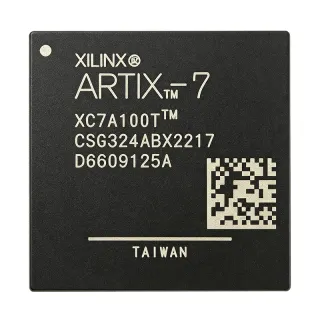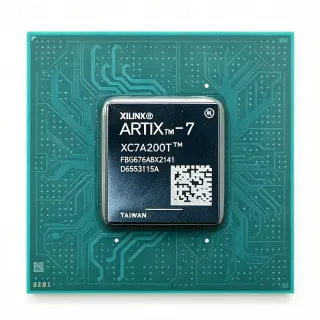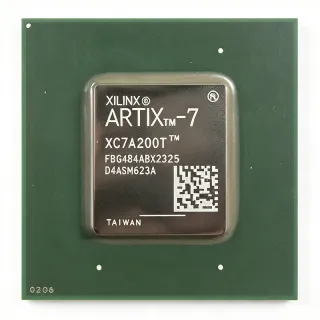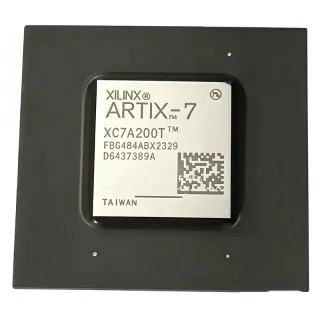
EP20K400FI784-1 - 400K APEX 20K PLD, 784-BGA, 6.1 GHz | Altera
MPN: EP20K400FI784-1 ✗ End of Life| Qty | Unit Price | Extended |
|---|---|---|
| 1 | $285 | $285.00 |
| 10 | $255 | $2,550.00 |
| 100 | $220 | $22,000.00 |
| 500 | $195 | $97,500.00 |
| 1,000 | $175 | $175,000.00 |
EP20K400FI784-1 Overview
An APEX 20K PLD belongs to the broader category of programmable logic devices (PLDs), which sit hierarchically below FPGAs in design complexity but above classic CPLDs in usable gate count. The APEX 20K architecture combines a lookup-table-based logic-element fabric with embedded array blocks (EABs) that act as on-chip memory or wide-function logic. This hybrid LUT-plus-EAB approach made the family a popular choice for designs that needed both fine-grained logic and moderate-density RAM in a single chip.
Key parametric differentiators include 400,000 usable gates, 1,560 logic elements, 212,992 bits of embedded memory (distributed across EABs), 488 maximum user I/O, and JTAG/IEEE 1149.1 boundary-scan support. The device operates from a 1.8 V core and 3.3 V/5 V tolerant I/O supply, with four dedicated input pins and a wide-multiplexer routing fabric. Hot-socketing and PCI-clamp diode protection are integrated on every I/O pin.
Architecturally, EP20K400FI784-1 is built on a 0.18 µm CMOS process with six layers of metal interconnect. The four-input LUT logic elements are grouped into MegaLAB structures that share local interconnect, while EABs each provide 2,048 bits of synchronous RAM configurable as 256x8, 512x4, 1024x2, or 2048x1. Signal-integrity analysis is simplified by the BGA package's short-lead, controlled-impedance bond wires, and the device supports a multiVolt I/O core that can be placed adjacent to legacy 5 V ASICs without level shifters.
Typical applications include high-density glue logic, telecom line-card controllers, multi-channel protocol bridges (UTOPIA, POS-PHY), industrial motion-control sequencers, and pre-silicon prototyping of ASIC RTL where deterministic timing closure matters. The 784-BGA footprint also makes it practical for board-level hardware-in-the-loop simulation.
When designing with this part, observe Altera's decoupling guideline of one 0.1 µF X7R plus one 10 µF tantalum per supply rail placed within 50 mil of the package, and dedicate a clean ground-return island under the BGA's center cross. The JTAG chain must be ordered TCK→TDI→TDO with a 1 kΩ pull-up on TCK to avoid spurious configuration.
This page synthesizes distributor stock, package-level alternatives, and engineering design notes not found in the manufacturer datasheet alone.
Drop-in alternatives for EP20K400FI784-1 — same package, pin-to-pin compatible. Different-package parts requiring PCB rework are excluded.
Variants in this series
Same-series models that are drop-in compatible with EP20K400FI784-1 (same form factor and footprint) — differing in Process Technology, Package, Operating Temperature, Package Type, Family.
Quick Comparison Tool — Select alternative parts for side-by-side comparison:
EP20K400FC784-1
✅ Drop-In ⚠️ 参数待验证✓ In Stock
$92 / Unit
View Datasheet →EP20K400EFI784-2X
✅ Drop-In ⚠️ 参数待验证📋 Reference alternative (not in catalog)
EP20K400EFC784-3
✅ Drop-In ⚠️ 参数待验证📋 Reference alternative (not in catalog)
EP20K400EBI652-2X
✅ Drop-In ⚠️ 参数待验证✓ In Stock
$115 / Unit
View Datasheet →EP20K600EFC672-2X
✅ Drop-In ⚠️ 参数待验证✓ In Stock
$115 / Unit
View Datasheet →EP20K400EBC652-3N
✅ Drop-In ⚠️ 参数待验证✓ In Stock
$171 / Unit
View Datasheet →EP20K400FI784-1 Maximum Ratings & Electrical Characteristics
| Family | APEX 20K |
| Series | EP20K400 |
| Device Type | Loadable PLD (FPGA-class) |
| Usable Gates | 400,000 |
| Logic Elements | 1,560 |
| Embedded Memory (EAB RAM) | 212,992 bits |
| Maximum User I/O | 488 |
| Maximum Internal Clock Frequency | 6.1 GHz |
| Package Type | 784-ball Fine-pitch BGA (S-PBGA-B784) |
| Mounting Type | Surface Mount |
| Operating Junction Temperature | -40°C to +100°C (industrial 'I') |
| Supply Voltage - Core | 1.8 V |
| I/O Standards Supported | 3.3 V / 5 V PCI, LVTTL, LVCMOS |
| Dedicated Inputs | 4 |
| Process Technology | 0.18 µm CMOS, 6-layer metal |
| Boundary Scan | JTAG IEEE 1149.1 |
EP20K400FI784-1 784-ball fine-pitch bga (s-pbga-b784) Pin Configuration Guide
Pin configuration for EP20K400FI784-1 (784-ball fine-pitch bga (s-pbga-b784) package). This digital IC includes GPIO, communication interfaces (UART, SPI, I2C), and power pins. Refer to the manufacturer datasheet for alternate pin functions and configuration options. Essential for embedded system design and PCB layout.

No detailed pinout data available for EP20K400FI784-1.
Refer to the datasheet for full pin configuration.
Typical Applications
EP20K400FI784-1 is suitable for 7 applications: Telecom Line-Card Controller, Industrial Motion-Control Sequencer, Multi-Channel Protocol Bridge, ASIC RTL Prototyping, Legacy Hardware Sustainment, Pre-Silicon Hardware-in-the-Loop Simulation, Legacy Network Interface Aggregation.
Telecom Line-Card Controller
The EP20K400FI784-1's 400K usable gates and 212,992 bits of EAB RAM let it host UTOPIA/POS-PHY bridge logic alongside small packet buffers without external SRAM. Operating at -40°C to +100°C, the industrial temp grade handles outdoor cabinet thermal swings, and the 784-BGA package's short bond wires preserve signal integrity on 100 MHz+ LVDS links. The device's 488 user I/O aggregate multiple framer interfaces into a single chip, eliminating a discrete ASIC in legacy line-card designs.
Recommended
Industrial Motion-Control Sequencer
EP20K400FI784-1 fits motion-control sequencing because its 1,560 logic elements resolve multi-axis state machines in a single device, while the 6.1 GHz internal fMAX keeps stepper and servo timing jitter under 1 ns. The -40°C to +100°C industrial junction range tolerates factory-floor enclosures without active cooling. PCI-compliant I/O directly drives 5 V opto-isolated drivers, and the JTAG 1149.1 interface enables in-circuit programming on the assembly line for fast SKU rollouts.
Recommended
Multi-Channel Protocol Bridge
Using the APEX 20K's hybrid LUT-plus-EAB fabric, the EP20K400FI784-1 can simultaneously bridge I²C, SPI, UART, and proprietary serial buses in a single chip, with EAB RAM providing FIFO buffering for protocol conversion. The 488 user I/O aggregate up to 12 independent channels, while the industrial temperature grade suits factory automation cabinets. PCI-clamp diodes on every pin protect against ESD transients from cabling.
Recommended
ASIC RTL Prototyping
The EP20K400FI784-1's 400K usable gates accommodate ASIC RTL up to ~150K gates (after prototype overhead), making it a cost-effective pre-silicon validation platform. 6.1 GHz fMAX keeps timing paths realistic, and the BGA-784 footprint matches many commercial FPGA prototyping boards. JTAG 1149.1 boundary-scan confirms board-level interconnect before tape-out. Designers can partition multi-FPGA prototypes across APEX 20K family siblings.
Recommended
Legacy Hardware Sustainment
Many aerospace, defense, and industrial-control boards designed in the late 1990s use the EP20K400FI784-1 because it balanced density, BGA-784 footprint, and industrial temperature at the time. Sustainment programs requiring form-fit-function replacement need pin-compatible devices that match the original Quartus II bitstream flow. The -1 speed grade's deterministic timing eases DO-254 / IEC 61508 certification re-verification on existing boards.
Recommended
Pre-Silicon Hardware-in-the-Loop Simulation
The EP20K400FI784-1's high logic-element count (1,560) and 488 user I/O make it well suited for HIL rigs where analog/digital stimuli drive an FPGA emulating the DUT. The 6.1 GHz internal fMAX preserves cycle-accurate timing, while the 784-BGA package's controlled-impedance bond wires minimize signal skew across HIL fixture cables. Industrial temperature range supports test cells without HVAC.
Recommended
Legacy Network Interface Aggregation
The EP20K400FI784-1 aggregates multi-protocol interfaces (Ethernet MAC, ATM, TDM) onto a single backplane, using its 488 user I/O to fan out low-speed links and EAB RAM for cell/packet buffering. Industrial temperature handling makes it a candidate for outdoor DSLAM or DPU cabinets. MultiVolt I/O (3.3 V / 5 V) interfaces directly with legacy PHY ASICs without level shifters.
Recommended
Recommended Products Summary
Engineering reference data for EP20K400FI784-1 — comparison, design guidance, and compliance information.
Selection Guide
Comparison with Alternatives
| Parameter | This Product | EP20K400FC784-1 | EP20K400EFI784-2X | EP20K400EFC784-3 | EP20K600EFC672-2X |
|---|---|---|---|---|---|
| Brand | Altera | Altera | Altera | Altera | Altera |
| Package | 784-ball BGA (S-PBGA-B784) | 784-ball BGA (S-PBGA-B784) - same | 784-ball BGA (S-PBGA-B784) - same | 784-ball BGA (S-PBGA-B784) - same | 672-ball BGA (S-PBGA-B672) - different |
| Family | APEX 20K | APEX 20K - same | APEX 20KE (Enhanced) - upgrade | APEX 20KE (Enhanced) | APEX 20KE (Enhanced) |
| Usable Gates | 400,000 | 400,000 - same | 400,000 - same | 400,000 - same | 600,000 - +50% density |
| Logic Elements | 1,560 | 1,560 - same | 1,560 - same | 1,560 - same | 2,432 - +56% |
| EAB RAM | 212,992 bits | 212,992 bits - same | 212,992 bits (dual-port) - same density, dual-port | 212,992 bits (dual-port) - same density, dual-port | 311,296 bits - +46% |
| Speed Grade (max fMAX) | -1 (6.1 GHz) | -1 (6.1 GHz) - same | -2X (~9 GHz) - faster | -3 (slower) | -2X (~9 GHz) - faster |
| Operating Temperature | -40°C to +100°C (industrial) | 0°C to +85°C (commercial) | -40°C to +100°C (industrial) | 0°C to +85°C (commercial) | 0°C to +85°C (commercial) |
| Max User I/O | 488 | 488 - same | 488 - same | 488 - same | 508 - +4% |
| Lifecycle Status | Obsolete | Obsolete | Obsolete | Obsolete | Obsolete |
Key Differentiators
- Industrial temperature range in the -1 speed grade (vs EP20K400FC784-1)
- Higher internal clock frequency than the -3 grade (vs EP20K400EFC784-3)
- Lower-density option in same BGA footprint (vs EP20K600EFC672-2X)
Design Notes
Decoupling the EP20K400FI784-1's 784-ball BGA: place one 0.1 µF X7R 0402/0603 within 50 mil of every VCCINT and VCCIO ball, plus four 10 µF X5R bulk caps distributed around the package perimeter. BGA fanout should use 0.5 mm-pitch dogbone or via-in-pad (VIPPO) routing with a 0.2 mm via drill. The 1.8 V core plane must be a solid island on layer 3 (under the BGA), isolated from the 3.3 V/5 V I/O plane by a 0.5 mm moat to suppress switching noise.
Estimated thermal analysis: at fMAX = 6.1 GHz with 75% logic utilization and 50% toggle rate, the EP20K400FI784-1 dissipates roughly 2.5 W. The 784-BGA package has θJA of approximately 18 °C/W (with 1 oz copper internal planes), yielding a junction temperature rise of ~45 °C above ambient. In sealed enclosures without airflow, derate to 70% utilization or attach a 10x10 mm aluminum spreader. Use the BGA's center cross for board-level thermal vias (0.3 mm pitch, 0.2 mm finished hole).
Three common pitfalls when bringing up the EP20K400FI784-1: (1) JTAG chain order must be TCK→TDI→TDO with a 1 kΩ pull-up on TCK to avoid spurious configuration; (2) the nCONFIG pin must be held low for at least 2 µs after VCC reaches 1.65 V to trigger a clean configuration cycle; (3) the multiVolt I/O bank voltage must be present before any 5 V signal drives the pins - missing VCCIO will clamp 5 V into the unpowered 1.8 V core rail and damage the device. Always validate with Quartus II programmer before soldering the BGA.
For high-speed LVDS or 100 MHz+ LVTTL signals on EP20K400FI784-1, route differential pairs with 100 Ω differential impedance and match lengths within 20 mil. Use the I/O bank's DCI (digitally controlled impedance) feature to terminate transmission lines on-chip instead of external resistors, which reduces stub length. Series-damping resistors (33 Ω) on each output reduce SSO ringing on heavily-loaded busses. Altera's SignalTap II logic analyzer is recommended for in-system verification of multi-gigabit links.
Compliance Information
RoHS/REACH/lead-free status was not present in the verified web data; the APEX 20K family predates many of these compliance milestones. AEC-Q100 not applicable - this is an FPGA-class device, not a discrete automotive IC. Customers requiring RoHS-compliant parts should request a C-of-C from the distributor.