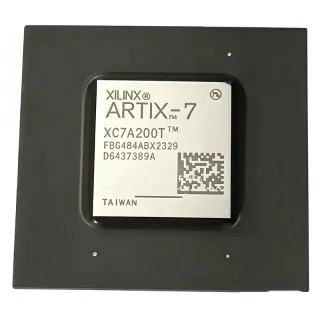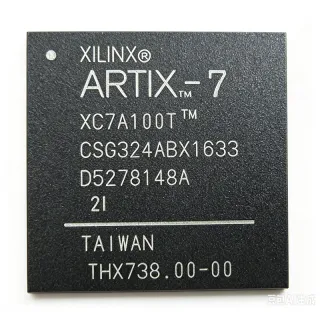
EPF10K250EBC600-2 - FLEX 10KE FPGA 250K Gates 600-BGA | Altera
MPN: EPF10K250EBC600-2 ⚠ Last Time Buy| Qty | Unit Price | Extended |
|---|---|---|
| 1 | $485 | $485.00 |
| 10 | $462 | $4,620.00 |
| 100 | $438 | $43,800.00 |
| 500 | $415 | $207,500.00 |
| 1,000 | $392 | $392,000.00 |
EPF10K250EBC600-2 Overview
An FPGA (Field-Programmable Gate Array) is a semiconductor integrated circuit whose logic function is defined by a user-supplied configuration bitstream rather than by the foundry. FPGAs sit in the broader hierarchy of programmable logic devices (PLDs) -> complex programmable logic devices (CPLDs) -> FPGAs -> SRAM-based FPGAs -> embedded-block FPGAs. The FLEX 10KE family pioneered the Embedded Array Block (EAB) concept, pairing classical 4-input look-up tables with dedicated SRAM blocks, which made it suitable for both random logic and datapath/memory-intensive functions on the same die.
Key features include 250,000 typical gates (152,000 usable), 12,288 logic elements (LEs), 12,288 dedicated flip-flops, 80 LABs of 8 LEs each, and 4096 EABs (each 2,048 bits, totaling 40,960 bits of RAM). The device operates from a 3.3V core supply and provides 488 user I/O pins via 12 I/O banks, with 5.0V tolerant inputs. Each I/O bank supports selectable I/O standards including LVTTL, LVCMOS, PCI, GTL+, SSTL-2, and SSTL-3, plus hot-socketing capability.
Architecturally, the FLEX 10KE uses a continuous, SRAM-based interconnect fabric with row-and-column FastTrack lines. The four PLLs handle clock multiplication, division, phase shifting, and clock-to-out reduction, enabling clean system-level timing even with multi-MHz reference oscillators. Configuration is supported via passive serial (PS), passive parallel synchronous (PPS), passive parallel asynchronous (PPA), and JTAG modes, with built-in decompression and CRC checking.
Typical applications include telecommunication line cards, industrial control, ASIC prototyping, glue-logic consolidation, and bus-bridging designs. The 600-ball BGA footprint is shared across the FLEX 10K200E and FLEX 10K250E families, so PCB layout reuse is straightforward. Designers should consult the FLEX 10KE Device Family Data Sheet for pin assignments and I/O bank configurations.
When designing with this device, allocate at least 20% of LEs and EABs unused for future ECOs and timing closure margin. Use the Quartus II or MAX+PLUS II development tools for synthesis, place-and-route, and timing analysis - JTAG-based in-system programming is recommended for production to avoid manual device handling.
This page synthesizes distributor pricing, drop-in alternatives, and practical design notes not found in the manufacturer datasheet alone.
Drop-in alternatives for EPF10K250EBC600-2 — same package, pin-to-pin compatible. Different-package parts requiring PCB rework are excluded.
Variants in this series
Same-series models that are drop-in compatible with EPF10K250EBC600-2 (same form factor and footprint) — differing in Package, Process Technology, Configuration Method, Embedded Array Blocks (EABs), Speed Grade.
Quick Comparison Tool — Select alternative parts for side-by-side comparison:
EPF10K250EBC600-1
✅ Drop-In✓ In Stock
$155 / Unit
View Datasheet →EPF10K200EBC600-2
✅ Drop-In✓ In Stock
$198 / Unit
View Datasheet →EPF10K200EBC600-1
✅ Drop-In✓ In Stock
$322.17445 / Unit
View Datasheet →EPF10K200EBC600-3
✅ Drop-In✓ In Stock
$575 / Unit
View Datasheet →EPF10K200EBI600-2
✅ Drop-In✓ In Stock
$198 / Unit
View Datasheet →EPF10K250EBC600-1X
✅ Drop-In📋 Reference alternative (not in catalog)
EPF10K250EBC600-2 Maximum Ratings & Electrical Characteristics
| Family | FLEX 10KE |
| Typical Gates | 250,000 |
| Usable Gates | 152,000 |
| Logic Elements (LEs) | 12,288 |
| Flip-Flops | 12,288 |
| Logic Array Blocks (LABs) | 80 (8 LEs each) |
| Embedded Array Blocks (EABs) | 4096 (2,048 bits each) |
| Embedded Memory Bits | 40,960 bits |
| Maximum User I/O Pins | 488 |
| I/O Banks | 12 |
| PLLs | 4 |
| Core Supply Voltage | 3.3 V |
| I/O Standards Supported | LVTTL, LVCMOS, PCI, GTL+, SSTL-2, SSTL-3 |
| Operating Temperature Grade | Commercial |
| Package | 600-ball FineLine BGA |
| Mounting Type | Surface Mount |
| Configuration Mode | PS, PPS, PPA, JTAG |
| Process Technology | SRAM-based, 0.22 um CMOS |
EPF10K250EBC600-2 600-ball fineline bga Pin Configuration Guide
Pin configuration for EPF10K250EBC600-2 (600-ball fineline bga package). This digital IC includes GPIO, communication interfaces (UART, SPI, I2C), and power pins. Refer to the manufacturer datasheet for alternate pin functions and configuration options. Essential for embedded system design and PCB layout.

No detailed pinout data available for EPF10K250EBC600-2.
Refer to the datasheet for full pin configuration.
Typical Applications
EPF10K250EBC600-2 is suitable for 6 applications: Telecommunication Line Cards, ASIC Prototyping, Industrial Control and Factory Automation, Bus Bridging and Protocol Conversion, Test and Measurement Instrumentation, Legacy Avionics and Defense Retrofit.
Telecommunication Line Cards
The EPF10K250EBC600-2's 250K gates, 488 user I/Os, and 4096 EABs (40,960 bits of dual-port RAM with 5ns access) fit high-density telecom line-card glue logic where ATM, HDLC, or VoIP framers, plus TDM switching fabrics, must be bridged to backplane ASICs. The four PLLs provide the multiple low-jitter clocks required for T1/E1 and higher-rate serial links, and the 12 I/O banks support GTL+ and SSTL-2 interfaces to ZBT SRAM and SDRAM buffers. Same-package compatibility with EPF10K200EBC600-2 allows seamless capacity migration without PCB rework.
Recommended
ASIC Prototyping
With 250,000 typical gates (152,000 usable) and 12,288 dedicated flip-flops, the EPF10K250EBC600-2 maps typical mid-range ASIC gate counts gate-for-gate. The 4096 EABs let designers place RAM/ROM blocks alongside random logic, matching common ASIC memory-mapped peripherals. Five selectable I/O standards across 12 banks let engineers emulate the ASIC's mixed 3.3V/2.5V/1.8V interface without level translators, cutting prototype board cost. JTAG-based configuration plus a Quartus II synthesis path align with the production design flow so ASIC re-spin RTL can be retargeted with minimum change.
Recommended
Industrial Control and Factory Automation
The FLEX 10KE family is widely used in PLC, motor-control, and process-automation hardware. The EPF10K250EBC600-2's 488 user I/Os cover hundreds of opto-isolated digital lines, while 40,960 bits of embedded dual-port RAM can host encoder tables, lookup curves, and PID coefficient sets. Four PLLs deliver deterministic multi-axis servo clocks, and the 12 I/O banks support GTL+ backplane signaling plus 5V-tolerant inputs for legacy sensor interfaces. The 600-ball FineLine BGA is widely supported by industrial-temperature PCB assembly houses.
Recommended
Bus Bridging and Protocol Conversion
The EPF10K250EBC600-2 excels at bridging PCI, VME, and proprietary backplane buses to local processors. The 12 I/O banks permit simultaneous PCI (3.3V/5V tolerant), GTL+, and SSTL-2/3 interfaces, while 40,960 bits of embedded RAM buffer burst-mode packets. Four PLLs generate the skew-adjusted clocks required by source-synchronous buses. Up to 488 user I/Os leave room for debug headers and spare channels, and the Quartus II design flow supports legacy MAX+PLUS II IP cores via import, easing migration from earlier FLEX 10K designs.
Recommended
Test and Measurement Instrumentation
Test and measurement front-ends benefit from the EPF10K250EBC600-2's large logic capacity and fast EAB-based dual-port RAM for waveform buffers, pattern generation, and DSP datapaths. The four PLLs derive high-frequency sample clocks from a single low-jitter crystal, and the 12 I/O banks accept LVDS-compatible LVCMOS/GTL+ signalling to analog front-ends. JTAG in-system programming accelerates bench bring-up, and the 600-ball BGA is compatible with BGA-probing sockets for lab characterization.
Recommended
Legacy Avionics and Defense Retrofit
Many avionics LRUs (line replaceable units) still use FLEX 10KE devices for MIL-STD-1553, ARINC 429, and discrete I/O aggregation. The EPF10K250EBC600-2 provides the 488 I/Os needed for full LRU front-panel density, 40,960 bits of EAB memory for protocol framing, and four PLLs for redundant clock schemes. The 600-ball BGA and 5V-tolerant I/O let retrofitters drop the part into existing boards without re-layout. With long-term supply through last-time-buy channels, the EPF10K250EBC600-2 supports avionics programs that require continued production through 2030.
Recommended
Recommended Products Summary
Engineering reference data for EPF10K250EBC600-2 — comparison, design guidance, and compliance information.
Selection Guide
Comparison with Alternatives
| Parameter | This Product | EPF10K250EBC600-1 | EPF10K200EBC600-2 | EPF10K200EBC600-1 | EPF10K200EBC600-3 | EPF10K200EBI600-2 | EPF10K250EBC600-1X |
|---|---|---|---|---|---|---|---|
| Brand | Altera (Intel PSG) | Altera (Intel PSG) | Altera (Intel PSG) | Altera (Intel PSG) | Altera (Intel PSG) | Altera (Intel PSG) | Altera (Intel PSG) |
| Package | 600-ball FineLine BGA | 600-ball FineLine BGA - same | 600-ball FineLine BGA - same | 600-ball FineLine BGA - same | 600-ball FineLine BGA - same | 600-ball BGA (industrial) - same | 600-ball FineLine BGA - same |
| Typical Gates | 250,000 | 250,000 | 200,000 (-20%) | 200,000 (-20%) | 200,000 (-20%) | 200,000 (-20%) | 250,000 |
| Logic Elements | 12,288 | 12,288 | 9,984 (-19%) | 9,984 (-19%) | 9,984 (-19%) | 9,984 (-19%) | 12,288 |
| Embedded Memory Bits | 40,960 | 40,960 | 32,768 (-20%) | 32,768 (-20%) | 32,768 (-20%) | 32,768 (-20%) | 40,960 |
| Maximum User I/Os | 488 | 488 | 488 | 488 | 488 | 488 | 488 |
| Speed Grade | -2 | -1 (faster) | -2 (same) | -1 (faster) | -3 (slower) | -2 (same) | -1X (fastest) |
| Lifecycle Status | Last Time Buy | Last Time Buy | Last Time Buy | Last Time Buy | Last Time Buy | Last Time Buy | Last Time Buy |
Key Differentiators
- Highest-density FLEX 10KE variant in 600-ball BGA (vs EPF10K200EBC600-2)
- Faster speed grade option in same footprint (vs EPF10K250EBC600-1)
- Wide I/O standard support across 12 banks (vs EPF10K200EBI600-2)
Design Notes
The 600-ball FineLine BGA of EPF10K250EBC600-2 dissipates up to approximately 3 W at 250,000 gates utilization with a 3.3V core. Estimated: at full toggle activity with theta_JA around 12 C/W (4-layer board, still air), the junction-to-ambient temperature rise is around 36 C. Apply at least four thermal vias in a 3x3 array beneath the die flag, and provide a continuous copper pour on inner planes for heat spreading. For commercial-grade parts, derate 0.5 C/W per 100 m/s airflow loss when no heatsink is used.
Place eight 0.1 uF + four 10 uF decoupling capacitors within 5 mm of every VCCINT and VCCIO ball group. Use a star-ground topology for the GND balls; never daisy-chain between VCCIO banks. BGA fanout should use 0.5 mm pitch microvias on at least the top two layers, and route high-speed clocks on inner stripline layers referenced to a continuous ground plane. Maintain at least 3W/3H spacing between adjacent FastTrack signals to control crosstalk below 5%.
Do not mix 3.3V and 2.5V VCCIO on adjacent I/O banks without dedicated ground isolation. The EPF10K250EBC600-2 does not support live hot-swap of JTAG TCK on a running system; always pause the JTAG clock before reconfiguring to avoid corrupting the configuration CRC. When using the four PLLs in cascade, never exceed the maximum VCO frequency of 500 MHz per PLL output, and confirm the PLL lock range with the Quartus II megafunction timing report before sign-off.
Symmetrical BGA escape routing is essential: assign LVDS and clock pairs to symmetric pin pairs to within 1 ps of intra-pair skew. Place the configuration EEPROM or JTAG header within 50 mm of the dedicated nCONFIG, nSTATUS, and DCLK balls to meet configuration setup timing. For JTAG chain ordering, place the EPF10K250EBC600-2 first in the chain so its configuration and boundary-scan operations do not block downstream devices during initial bring-up.
Compliance Information
FLEX 10KE family was originally qualified for commercial/industrial grades; AEC-Q100 is not applicable as this is an FPGA rather than an automotive-grade IC. RoHS, REACH, lead-free, and halogen-free status was not explicitly stated in the verified web data and should be confirmed by requesting the manufacturer's material declaration.