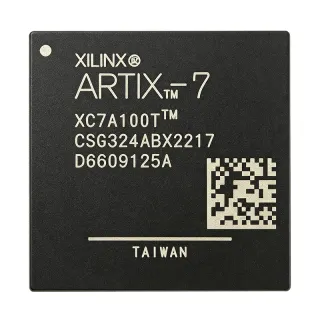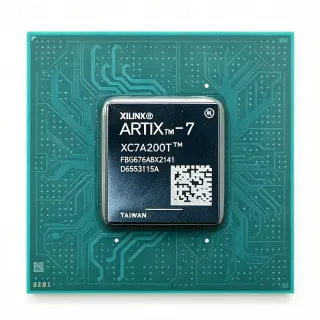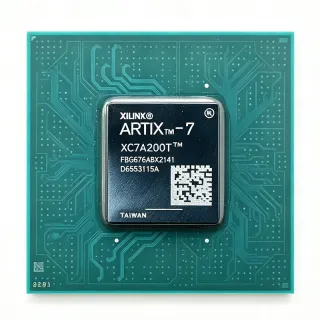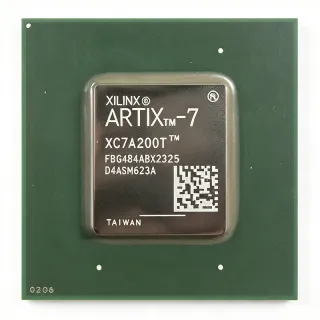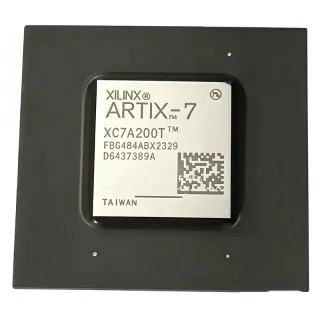
EPF10K200EBC600-3 - 200K Gate FLEX 10KE FPGA, 600-BGA | Intel / Altera
MPN: EPF10K200EBC600-3 ✗ End of Life| Qty | Unit Price | Extended |
|---|---|---|
| 1 | $789.1 | $789.10 |
| 10 | $750 | $7,500.00 |
| 100 | $685 | $68,500.00 |
| 500 | $620 | $310,000.00 |
| 1,000 | $575 | $575,000.00 |
EPF10K200EBC600-3 Overview
An FPGA (Field-Programmable Gate Array) is a semiconductor device containing an array of configurable logic blocks (CLBs), programmable interconnect, and I/O cells that can be reconfigured by the end user after manufacture. FPGAs sit at the top of the programmable logic hierarchy (PLD -> CPLD -> FPGA -> SoC FPGA), occupying the high-density, high-performance end of the spectrum. The FLEX 10KE family is part of the System-on-a-Programmable-Chip (SOPC) generation, embedding dedicated memory structures into the logic fabric to enable single-chip implementations of complex glue logic, bus interfaces, and signal-processing pipelines.
Key differentiating features include 24 Kbits of embedded memory distributed across EABs, four phase-locked loops (PLLs) for clock conditioning, multi-volt I/O supporting 1.8 V/2.5 V/3.3 V/5 V mixed-voltage interfaces, JTAG boundary-scan (IEEE 1149.1) for in-system programming, and Altera's proprietary continuous interconnect structure. The -3 speed grade delivers logic performance of approximately 166 MHz for registered I/O and is well-suited to medium-speed ASIC prototyping, custom peripheral interfacing, and telecom/datacom glue logic.
Typical application domains include ASIC prototyping and emulation, custom bus bridges (PCI to local bus, VME to PCI), telecommunications backplane controllers, industrial machine controllers, and legacy industrial control systems where the FLEX 10KE generation remains a long-life, second-sourced platform. The 600-BGA package and standard surface-mount footprint simplify board-level integration and rework.
When designing with this device, ensure the PCB pad pattern follows the 45 x 45 mm FineLine BGA land geometry and that decoupling capacitance (typically 0.1 microfarad ceramic plus 10 microfarad bulk per power rail) is placed directly beneath the package within the breakout via field. Use the Altera Quartus II design software (legacy MAX+PLUS II also supported) for place-and-route and bitstream generation. Designers migrating to newer Intel Cyclone or MAX 10 families should review the FLEX 10KE to Cyclone IV migration guide and account for differences in I/O standard support, EAB architecture, and PLL count.
This page synthesizes distributor pricing, lifecycle status, drop-in same-package alternatives from the FLEX 10KE family, and practical board-level design notes not found in a single manufacturer datasheet.
Drop-in alternatives for EPF10K200EBC600-3 — same package, pin-to-pin compatible. Different-package parts requiring PCB rework are excluded.
Variants in this series
Same-series models that are drop-in compatible with EPF10K200EBC600-3 (same form factor and footprint) — differing in Package, Process Technology, Operating Temperature, Configuration Method, Logic Elements.
Quick Comparison Tool — Select alternative parts for side-by-side comparison:
EPF10K200EBC600-2
✅ Drop-In✓ In Stock
$198 / Unit
View Datasheet →EPF10K200EBC600-1
✅ Drop-In✓ In Stock
$322.17445 / Unit
View Datasheet →EPF10K200SBC600-1
✅ Drop-In✓ In Stock
$425 / Unit
View Datasheet →EPF10K200EBC600-3 Maximum Ratings & Electrical Characteristics
| Family | FLEX 10KE |
| Series | FLEX-10KE |
| System Gates | 200,000 |
| Logic Elements / Cells | 9,984 |
| Logic Array Blocks (LABs) | 1248 |
| Embedded Memory (EABs) | 24,576 bits |
| Maximum User I/O | 470 |
| Number of PLLs | 4 |
| Core Voltage | 2.5 V (2.375 V to 2.625 V) |
| Process Technology | 0.22 micrometer SRAM |
| Speed Grade | -3 (commercial) |
| Package | 600-ball FineLine BGA, 45 x 45 mm |
| Mounting Type | Surface Mount |
| Operating Temperature | 0C to +70C (commercial) |
| JTAG Support | Yes (IEEE 1149.1 boundary-scan) |
EPF10K200EBC600-3 600-ball fineline bga, 45 x 45 mm Pin Configuration Guide
Pin configuration for EPF10K200EBC600-3 (600-ball fineline bga, 45 x 45 mm package). This digital IC includes GPIO, communication interfaces (UART, SPI, I2C), and power pins. Refer to the manufacturer datasheet for alternate pin functions and configuration options. Essential for embedded system design and PCB layout.

No detailed pinout data available for EPF10K200EBC600-3.
Refer to the datasheet for full pin configuration.
Typical Applications
EPF10K200EBC600-3 is suitable for 6 applications: ASIC Prototyping and Emulation, PCI Bus Bridge and Custom Peripheral Interface, Telecommunications Backplane Controller, Industrial Machine Controller and PLC Interface, Legacy Medical Imaging Signal Pipeline, Military and Aerospace Avionics Interface (Legacy).
ASIC Prototyping and Emulation
The EPF10K200EBC600-3's 200K gate density and 470 user I/Os make it well-suited for ASIC prototyping where designers emulate a target ASIC's logic on an FPGA before tapeout. With 9,984 logic elements and 1248 LABs, the device can map medium-complexity ASICs of approximately 130K-150K usable gates. The four PLLs and JTAG support simplify bring-up: PLLs regenerate clocks matching the target ASIC, while JTAG enables boundary-scan emulation of the ASIC's test logic. The Quartus II synthesis flow accepts Verilog HDL, VHDL, and EDIF 2.0/3.0 design entries from standard EDA tools, allowing direct reuse of the ASIC's RTL without re-coding.
Recommended
PCI Bus Bridge and Custom Peripheral Interface
The 470 user I/Os and 5 V-tolerant multi-volt I/O banks make the EPF10K200EBC600-3 a flexible PCI bridge between legacy 5 V buses (PCI, VME, ISA) and modern local-bus peripherals. With 24 Kbits of EAB memory, designers can implement FIFOs and DMA buffers directly in the FPGA fabric, eliminating external bridge ASICs. The Quartus PCI Compiler megafunction provides pre-verified PCI target and master interfaces compliant with the 33 MHz PCI 2.2 specification, reducing development time from months to weeks for custom adapter cards.
Recommended
Telecommunications Backplane Controller
In telecom backplane applications, the EPF10K200EBC600-3 serves as a custom TDM switch fabric, mapper, or line-card controller where commercial off-the-shelf ASSPs do not exist. Its four PLLs are critical for clock-and-data recovery across multiple E1/T1/J1 trunks, and the high I/O count supports parallel LVDS bus connections to backplane SERDES devices. The device's 0.22 micrometer process and 2.5 V core balance power consumption against logic density for fanless line cards, while commercial 0C to 70C temperature grade suits central-office equipment (CO) deployments.
Recommended
Industrial Machine Controller and PLC Interface
The EPF10K200EBC600-3 is widely deployed in legacy industrial machine controllers and custom PLC interfaces where its 200K gate capacity is sufficient for ladder-logic interpretation, motor-control state machines, and fieldbus protocol handlers (Modbus, Profibus, CANopen). The 600-BGA package and industrial 0C to 70C operating range suit DIN-rail and panel-mount enclosures. Designers appreciate the deterministic LUT-based timing for safety-critical stop circuits; the four PLLs synchronize to encoder feedback and to the fieldbus clock domain. Migration paths from FLEX 10KE to MAX 10 or Cyclone IV are well documented for redesign cycles.
Recommended
Legacy Medical Imaging Signal Pipeline
In installed-base medical imaging systems (ultrasound front-end, MRI receiver, X-ray detector readout), the EPF10K200EBC600-3 implements the channel-multiplexing and beamforming pipeline between the analog front-end ADCs and the host DSP. The 24 Kbits of EAB memory provides delay-line buffers for phased-array beamforming, and the four PLLs generate the multi-channel sample clocks with deterministic skew. Because these systems are long-life medical devices (15-20 year field service), the obsolete FLEX 10KE remains in active production via authorized legacy distributors like Rochester Electronics.
Recommended
Military and Aerospace Avionics Interface (Legacy)
Long-life avionics upgrades and field-retrofit programs continue to specify the EPF10K200EBC600-3 for mission-computer I/O expansion, 1553 bus bridges, and ARINC 429 interface cards where re-certification cost outweighs the benefit of redesign. The 600-BGA package is supported by major avionics PCB suppliers with mature assembly processes. Note that this part is commercial temperature grade (0C to 70C); MIL-STD-883 or -1553 avionics applications typically require the EPF10K200EBI356 or EFC672 variants with industrial temperature grade.
Recommended
Recommended Products Summary
Engineering reference data for EPF10K200EBC600-3 — comparison, design guidance, and compliance information.
Selection Guide
Comparison with Alternatives
| Parameter | This Product | EPF10K200EBC600-2 | EPF10K200EBC600-1 | EPF10K200SBC600-1 |
|---|---|---|---|---|
| Brand | Intel (Altera) | Intel (Altera) | Intel (Altera) | Intel (Altera) |
| Package | 600-BGA FineLine (45x45 mm) | 600-BGA FineLine (45x45 mm) - same | 600-BGA FineLine (45x45 mm) - same | 600-BGA FineLine (45x45 mm) - same |
| Family | FLEX 10KE | FLEX 10KE | FLEX 10KE | FLEX 10KS (slower variant) |
| Speed Grade | -3 (fastest) | -2 (approx 25% slower) | -1 (approx 50% slower) | -1 (FLEX 10KS) |
| Maximum User I/O | 470 | 470 | 470 | 470 |
| System Gates | 200,000 | 200,000 | 200,000 | 200,000 |
| Logic Elements | 9,984 | 9,984 | 9,984 | 9,984 |
| Core Voltage | 2.5 V (2.375 V to 2.625 V) | 2.5 V (same) | 2.5 V (same) | 2.5 V (same) |
Key Differentiators
- Fastest speed grade in the FLEX 10KE family for the 600-BGA package (vs EPF10K200EBC600-2)
- Full FLEX 10KE feature set including four PLLs and dedicated EAB memory (vs EPF10K200SBC600-1)
- Highest I/O count in the 600-BGA package (vs EPF10K100EBC356-2)
Design Notes
The 600-ball FineLine BGA requires a 45 x 45 mm PCB land pattern with 1.27 mm ball pitch. Place at least 8 via-in-pad or tented vias under the package thermal ball array for ground connection and thermal dissipation. Use 0.1 microfarad X7R ceramic decoupling capacitors within 3 mm of every VCC and VCCIO ball, with bulk 10 microfarad tantalum or polymer capacitors on each power plane. The breakout routing layer stackup should be 4+ layers minimum with a continuous ground plane beneath the BGA to control return-current paths.
Configure all four MSEL pins (MSEL0..MSEL3) for the desired configuration mode: AS (Active Serial, with EPC16 or EPCS configuration PROM), PS (Passive Serial, with external host CPU/microcontroller), JTAG-only, or multi-device daisy-chain. For multi-FPGA boards, the nCE and nCEO pins of each device must be daisy-chained; configure the first device's nCE hard-tied low. Maintain JTAG chain integrity by buffering TCK, TMS, TDI, and TDO signals to support the maximum chain length of the IEEE 1149.1 specification.
Do not apply I/O voltages to VCCIO before the core 2.5 V supply has ramped up, or the device may latch-up through the ESD diodes. The POR (power-on-reset) circuit requires VCC to reach at least 2.0 V within 100 ms; verify with an oscilloscope on production boards. After configuration, do not drive JTAG TDI/TMS during user-mode operation unless re-entering configuration mode; otherwise the device may misinterpret the JTAG state machine and reset unexpectedly.
Estimated: At maximum toggle rate (~166 MHz, ~50% switching activity, 2.5 V VCC) the EPF10K200EBC600-3 dissipates approximately 3-5 W. The 600-BGA package has a theta_JA of approximately 10-12 C/W with a 4-layer JEDEC test board. Designers should provide at least 25 x 25 mm of uninterrupted ground copper pour beneath the BGA thermal balls; for closed industrial enclosures, consider a 10 x 10 mm heatsink attached with thermal epoxy.
Compliance Information
RoHS and lead-free status not stated in publicly available datasheet (marked [DATA_NEEDED]). Original FLEX 10KE production (2002-2010 era) typically shipped as lead-bearing BGA. For RoHS-compliant requirements, request a certificate of compliance from the authorized legacy distributor (Rochester Electronics) at quote time.