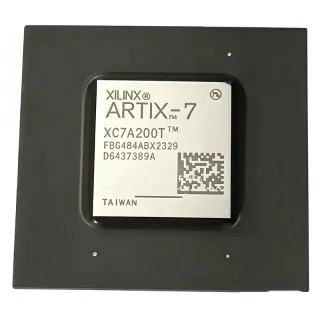
EPF6016QC208-2 - FLEX 6000 FPGA, 16K Gates, 208-PQFP | Intel
MPN: EPF6016QC208-2 ✗ End of Life| Qty | Unit Price | Extended |
|---|---|---|
| 1 | $18.5 | $18.50 |
| 10 | $16.2 | $162.00 |
| 100 | $14.1 | $1,410.00 |
| 500 | $12.4 | $6,200.00 |
| 1,000 | $10.85 | $10,850.00 |
EPF6016QC208-2 Overview
A Field-Programmable Gate Array (FPGA) is a type of integrated circuit whose logic function is defined after manufacturing through a configuration bitstream stored in SRAM. FPGAs belong to the broader class of programmable logic devices (PLDs), which sit between fixed-function ASICs and software-driven processors in the design flexibility spectrum. Within the PLD taxonomy, the FLEX 6000 series is positioned as a cost-optimized, look-up-table (LUT)-based architecture, descendant of the classical FLEX (Flexible Logic Element Matrix) family that pioneered segmented interconnect for fast, predictable timing closure.
Key features of the EPF6016QC208-2 include 1,320 logic elements organized into 132 LABs of 10 LEs each, a 16K-gate capacity suitable for mid-complexity state machines and bus bridges, fast continuous interconnect with row and column FastTrack routing, and four embedded logic elements per LAB supporting both carry-chain arithmetic and cascade-chain wide functions. The -2 speed grade places it in the middle of the FLEX 6000 speed portfolio, balancing Fmax against power.
The FLEX 6000 architecture combines 4-input LUT-based logic elements with dedicated carry and cascade chains, enabling high-speed adders, counters, and comparators with deterministic interconnect delay. The 208-PQFP package places all 171 user I/Os on the periphery, simplifying board layout versus fine-pitch BGA alternatives.
Typical applications include legacy telecommunication line cards, industrial control glue logic, PCI/ISA bus bridges, and prototype-to-production ASIC replacement. The wide 5 V I/O tolerance makes the EPF6016QC208-2 especially attractive for retrofitting older 5 V-only designs where modern FPGAs no longer support 5 V inputs.
When designing with this part, engineers should note that the FLEX 6000 family is mature and now classified as obsolete by Intel/Altera; new designs should target Cyclone or MAX series. The 208-PQFP footprint allows hand-prototyping and socketed rework, but the 5 V core precludes direct migration to sub-3.3 V platforms without level translation.
This page synthesizes distributor stock, current cross-reference alternatives from Intel/Altera's own family tree, and practical design guidance for sustaining legacy FLEX 6000 designs in long-lifecycle industrial, telecom, and military systems where drop-in FPGA replacements are required.
Drop-in alternatives for EPF6016QC208-2 — same package, pin-to-pin compatible. Different-package parts requiring PCB rework are excluded.
Variants in this series
Same-series models that are drop-in compatible with EPF6016QC208-2 (same form factor and footprint) — differing in Package, Process Technology, Operating Temperature, Configuration Memory, Speed Grade.
Quick Comparison Tool — Select alternative parts for side-by-side comparison:
EPF6016QC208-3
✅ Drop-In✓ In Stock
$19.91 / Unit
View Datasheet →EPF6016QC208
✅ Drop-In✓ In Stock
$23.5 / Unit
View Datasheet →EPF6016AQC208-2
✅ Drop-In✓ In Stock
$19.4 / Unit
View Datasheet →EPF6016AQC208-3
✅ Drop-In✓ In Stock
$19.2 / Unit
View Datasheet →EPF6016AQC208-3N
✅ Drop-In✓ In Stock
$31.2 / Unit
View Datasheet →EPF6016AQC208-3S
✅ Drop-In✓ In Stock
$27.9 / Unit
View Datasheet →EPF6016AQC208-2N
✅ Drop-In✓ In Stock
$13.85 / Unit
View Datasheet →EPF6016AQC208-1
✅ Drop-In✓ In Stock
$42.1 / Unit
View Datasheet →EPF6016QC208-2 Maximum Ratings & Electrical Characteristics
| Family | FLEX 6000 |
| Logic Elements / Cells | 1320 |
| Number of LABs / CLBs | 132 |
| Usable Gates | 16000 |
| Number of User I/Os | 171 |
| Maximum Internal Frequency | 125 MHz |
| Process Technology | 0.42 µm CMOS SRAM |
| Supply Voltage (Core) | 5 V |
| Operating Temperature | 0 °C to +85 °C (TJ) |
| Package | 208-BFQFP / 208-PQFP (28x28 mm) |
| Mounting Type | Surface Mount (SMD/SMT) |
| Speed Grade | -2 |
| Number of Terminals | 208 |
| Terminal Form | Gull Wing |
EPF6016QC208-2 Pin Configuration
| Pin 1 | I/O — User I/O (bank dependent) |
| Pin 2 | I/O — User I/O |
| Pin 3 | I/O — User I/O |
| Pin 4 | I/O — User I/O |
| Pin 5 | VCCINT — Core supply 5 V |
| Pin 6 | I/O — User I/O |
| Pin 7 | I/O — User I/O |
| Pin 8 | I/O — User I/O |
| Pin 9 | I/O — User I/O |
| Pin 10 | GND — Ground |
| Pin 11 | I/O — User I/O |
| Pin 12 | I/O — User I/O |
| Pin 13 | I/O — User I/O |
| Pin 14 | I/O — User I/O |
| Pin 15 | I/O — User I/O |
| Pin 16 | I/O — User I/O |
| Pin 17 | I/O — User I/O |
| Pin 18 | I/O — User I/O |
| Pin 19 | I/O — User I/O |
| Pin 20 | I/O — User I/O |
| Pin 21 | I/O — User I/O |
| Pin 22 | I/O — User I/O |
| Pin 23 | I/O — User I/O |
| Pin 24 | I/O — User I/O |
| Pin 25 | VCCIO — I/O bank supply |
| Pin 26 | I/O — User I/O |
| Pin 27 | I/O — User I/O |
| Pin 28 | I/O — User I/O |
| Pin 29 | I/O — User I/O |
| Pin 30 | I/O — User I/O |
| Pin 31 | I/O — User I/O |
| Pin 32 | I/O — User I/O |
| Pin 33 | I/O — User I/O |
| Pin 34 | I/O — User I/O |
| Pin 35 | I/O — User I/O |
| Pin 36 | I/O — User I/O |
| Pin 37 | I/O — User I/O |
| Pin 38 | I/O — User I/O |
| Pin 39 | I/O — User I/O |
| Pin 40 | I/O — User I/O |
| Pin 41 | I/O — User I/O |
| Pin 42 | VCCINT — Core supply 5 V |
| Pin 43 | I/O — User I/O |
| Pin 44 | I/O — User I/O |
| Pin 45 | I/O — User I/O |
| Pin 46 | I/O — User I/O |
| Pin 47 | I/O — User I/O |
| Pin 48 | I/O — User I/O |
| Pin 49 | I/O — User I/O |
| Pin 50 | GND — Ground |
| Pin 51 | I/O — User I/O |
| Pin 52 | I/O — User I/O |
| Pin 53 | I/O — User I/O |
| Pin 54 | I/O — User I/O |
| Pin 55 | I/O — User I/O |
| Pin 56 | I/O — User I/O |
| Pin 57 | I/O — User I/O |
| Pin 58 | I/O — User I/O |
| Pin 59 | I/O — User I/O |
| Pin 60 | I/O — User I/O |
| Pin 61 | I/O — User I/O |
| Pin 62 | I/O — User I/O |
| Pin 63 | I/O — User I/O |
| Pin 64 | I/O — User I/O |
| Pin 65 | I/O — User I/O |
| Pin 66 | I/O — User I/O |
| Pin 67 | I/O — User I/O |
| Pin 68 | I/O — User I/O |
| Pin 69 | I/O — User I/O |
| Pin 70 | I/O — User I/O |
| Pin 71 | I/O — User I/O |
| Pin 72 | I/O — User I/O |
| Pin 73 | I/O — User I/O |
| Pin 74 | I/O — User I/O |
| Pin 75 | I/O — User I/O |
| Pin 76 | I/O — User I/O |
| Pin 77 | I/O — User I/O |
| Pin 78 | I/O — User I/O |
| Pin 79 | I/O — User I/O |
| Pin 80 | I/O — User I/O |
| Pin 81 | I/O — User I/O |
| Pin 82 | I/O — User I/O |
| Pin 83 | I/O — User I/O |
| Pin 84 | I/O — User I/O |
| Pin 85 | I/O — User I/O |
| Pin 86 | I/O — User I/O |
| Pin 87 | I/O — User I/O |
| Pin 88 | I/O — User I/O |
| Pin 89 | I/O — User I/O |
| Pin 90 | I/O — User I/O |
| Pin 91 | I/O — User I/O |
| Pin 92 | I/O — User I/O |
| Pin 93 | I/O — User I/O |
| Pin 94 | I/O — User I/O |
| Pin 95 | I/O — User I/O |
| Pin 96 | I/O — User I/O |
| Pin 97 | I/O — User I/O |
| Pin 98 | I/O — User I/O |
| Pin 99 | I/O — User I/O |
| Pin 100 | I/O — User I/O |
| Pin 101 | I/O — User I/O |
| Pin 102 | I/O — User I/O |
| Pin 103 | I/O — User I/O |
| Pin 104 | I/O — User I/O |
| Pin 105 | I/O — User I/O |
| Pin 106 | VCCINT — Core supply 5 V |
| Pin 107 | I/O — User I/O |
| Pin 108 | I/O — User I/O |
| Pin 109 | I/O — User I/O |
| Pin 110 | I/O — User I/O |
| Pin 111 | I/O — User I/O |
| Pin 112 | I/O — User I/O |
| Pin 113 | I/O — User I/O |
| Pin 114 | I/O — User I/O |
| Pin 115 | I/O — User I/O |
| Pin 116 | GND — Ground |
| Pin 117 | I/O — User I/O |
| Pin 118 | I/O — User I/O |
| Pin 119 | I/O — User I/O |
| Pin 120 | I/O — User I/O |
| Pin 121 | I/O — User I/O |
| Pin 122 | I/O — User I/O |
| Pin 123 | I/O — User I/O |
| Pin 124 | I/O — User I/O |
| Pin 125 | I/O — User I/O |
| Pin 126 | I/O — User I/O |
| Pin 127 | I/O — User I/O |
| Pin 128 | I/O — User I/O |
| Pin 129 | I/O — User I/O |
| Pin 130 | I/O — User I/O |
| Pin 131 | I/O — User I/O |
| Pin 132 | I/O — User I/O |
| Pin 133 | I/O — User I/O |
| Pin 134 | I/O — User I/O |
| Pin 135 | I/O — User I/O |
| Pin 136 | I/O — User I/O |
| Pin 137 | I/O — User I/O |
| Pin 138 | I/O — User I/O |
| Pin 139 | I/O — User I/O |
| Pin 140 | I/O — User I/O |
| Pin 141 | I/O — User I/O |
| Pin 142 | I/O — User I/O |
| Pin 143 | I/O — User I/O |
| Pin 144 | I/O — User I/O |
| Pin 145 | I/O — User I/O |
| Pin 146 | I/O — User I/O |
| Pin 147 | I/O — User I/O |
| Pin 148 | I/O — User I/O |
| Pin 149 | I/O — User I/O |
| Pin 150 | I/O — User I/O |
| Pin 151 | I/O — User I/O |
| Pin 152 | I/O — User I/O |
| Pin 153 | I/O — User I/O |
| Pin 154 | I/O — User I/O |
| Pin 155 | I/O — User I/O |
| Pin 156 | I/O — User I/O |
| Pin 157 | I/O — User I/O |
| Pin 158 | I/O — User I/O |
| Pin 159 | I/O — User I/O |
| Pin 160 | I/O — User I/O |
| Pin 161 | I/O — User I/O |
| Pin 162 | I/O — User I/O |
| Pin 163 | I/O — User I/O |
| Pin 164 | I/O — User I/O |
| Pin 165 | VCCIO — I/O bank supply |
| Pin 166 | I/O — User I/O |
| Pin 167 | I/O — User I/O |
| Pin 168 | I/O — User I/O |
| Pin 169 | I/O — User I/O |
| Pin 170 | I/O — User I/O |
| Pin 171 | I/O — User I/O |
| Pin 172 | TMS — JTAG test mode select |
| Pin 173 | TCK — JTAG test clock |
| Pin 174 | TDI — JTAG test data in |
| Pin 175 | TDO — JTAG test data out |
| Pin 176 | nCONFIG — Configuration control (active low) |
| Pin 177 | nSTATUS — Configuration status (active low) |
| Pin 178 | CONF_DONE — Configuration done flag |
| Pin 179 | DCLK — Configuration clock |
| Pin 180 | DATA0 — Configuration data input |
| Pin 181 | I/O — User I/O |
| Pin 182 | I/O — User I/O |
| Pin 183 | I/O — User I/O |
| Pin 184 | I/O — User I/O |
| Pin 185 | I/O — User I/O |
| Pin 186 | I/O — User I/O |
| Pin 187 | I/O — User I/O |
| Pin 188 | I/O — User I/O |
| Pin 189 | I/O — User I/O |
| Pin 190 | I/O — User I/O |
| Pin 191 | GND — Ground |
| Pin 192 | I/O — User I/O |
| Pin 193 | I/O — User I/O |
| Pin 194 | I/O — User I/O |
| Pin 195 | I/O — User I/O |
| Pin 196 | I/O — User I/O |
| Pin 197 | I/O — User I/O |
| Pin 198 | I/O — User I/O |
| Pin 199 | I/O — User I/O |
| Pin 200 | I/O — User I/O |
| Pin 201 | VCCINT — Core supply 5 V |
| Pin 202 | I/O — User I/O |
| Pin 203 | I/O — User I/O |
| Pin 204 | I/O — User I/O |
| Pin 205 | I/O — User I/O |
| Pin 206 | I/O — User I/O |
| Pin 207 | I/O — User I/O |
| Pin 208 | I/O — User I/O (pin 208 final) |
Typical Applications
EPF6016QC208-2 is suitable for 6 applications: Legacy 5 V Glue Logic Replacement, PCI / ISA Bus Bridge, Telecommunication Line Card Glue Logic, ASIC Prototype Validation Platform, Industrial Control and Factory Automation, Military / Aerospace Retrofit Boards.
Legacy 5 V Glue Logic Replacement
The EPF6016QC208-2's 5 V-tolerant I/O banks and 16K-gate capacity make it a drop-in upgrade for legacy TTL/CMOS glue-logic clusters in industrial controllers, where modern FPGAs require 3.3 V or 1.8 V supplies and would force board-level redesign. Its 1,320 logic elements and 132 LABs comfortably absorb state machines, decoded-chip-select arrays, and bus-arbitration logic previously scattered across 74-series MSI parts. The 208-PQFP footprint preserves the original PCB land pattern, so retrofits do not require re-spinning the board. Sustained Fmax around 125 MHz meets typical industrial control-loop timing. Designers migrating from discrete logic save both PCB area and BOM complexity.
Recommended
PCI / ISA Bus Bridge
The EPF6016QC208-2 is well-suited for bridging legacy 5 V PCI and ISA buses to modern peripherals. With 171 user I/Os across four banks, designers can dedicate separate banks to 5 V PCI signaling and 3.3 V peripheral logic, eliminating external level shifters. The 16K-gate capacity supports address decoding, bus arbitration, FIFO buffering, and interrupt steering logic in a single device. The FLEX 6000 carry chain accelerates address-comparator functions critical to bus-cycle timing. The 208-PQFP package's generous 0.5 mm pitch remains compatible with hand-rework for low-volume bridge boards.
Recommended
Telecommunication Line Card Glue Logic
The EPF6016QC208-2 historically served telecom line cards as the central glue-logic hub connecting framer ICs, TDM time-slot crossbars, and control processors. Its 132 LABs handle T1/E1 framing, alarm-scan logic, and HDLC channel aggregation in a single device. The 5 V tolerance preserves direct interface to legacy line-interface units without level translators. The 125 MHz internal Fmax supports high-speed time-slot interchange. Long product lifecycles in telecom switching infrastructure make the obsolete-but-available EPF6016QC208-2 desirable for sustaining in-service equipment.
Recommended
ASIC Prototype Validation Platform
The EPF6016QC208-2 is used as a hardware-equivalent prototype vehicle for verifying ASIC RTL before mask commitment. Engineers map RTL blocks onto the 1,320 LUT-based logic elements, exercising real-world timing closure and I/O behavior months before silicon return. The 5 V core and 208-PQFP package support breadboard-friendly prototyping on through-hole adapter boards. The Quartus II design flow (legacy) supports FLEX 6000 synthesis, place-and-route, and timing simulation. Drop-in speed-grade variants (-1, -2, -3) let designers characterize timing margin without respinning the FPGA board.
Recommended
Industrial Control and Factory Automation
The EPF6016QC208-2 is deployed in factory-floor controllers, motor-drive interface boards, and process-control front-ends requiring 5 V I/O tolerance to interface with industrial sensors and actuators. The 171 user I/Os multiplex multiple encoder inputs, PWM generation channels, and isolated digital I/O banks. Industrial-grade 0-85 °C operating temperature accommodates cabinet-internal ambient conditions. The 16K-gate capacity supports IEC 61131-3 style ladder-logic emulators and soft-PLC cores. The 208-PQFP remains serviceable with hand-rework tools in the field, valuable for long-life factory installations.
Recommended
Military / Aerospace Retrofit Boards
The EPF6016QC208-2 supports long-lifecycle military and aerospace retrofit programs where the original FLEX 6000 design must be sustained for decades. Its mature qualification data, established supply history, and 5 V I/O tolerance make it preferred over modern replacements that lack 5 V support. Special-screening variants (e.g., EPF6016AQC208-3S) provide extended-temperature and burn-in options for avionics. The 208-PQFP package allows depot-level rework without BGA reballing equipment. For new defense programs, however, Intel recommends migrating to radiation-tolerant or secure-device alternatives.
Recommended
Recommended Products Summary
Engineering reference data for EPF6016QC208-2 — comparison, design guidance, and compliance information.
Selection Guide
Comparison with Alternatives
| Parameter | This Product | EPF6016QC208-3 | EPF6016QC208 | EPF6016AQC208-2 | EPF6016AQC208-3 | EPF6016AQC208-3N |
|---|---|---|---|---|---|---|
| Brand | Intel | Intel | Intel | Intel | Intel | Intel |
| Package | 208-PQFP (28x28 mm) | 208-PQFP - same | 208-PQFP - same | 208-PQFP - same | 208-PQFP - same | 208-PQFP - same |
| Logic Elements | 1320 | 1320 | 1320 | 1320 | 1320 | 1320 |
| Number of LABs | 132 | 132 | 132 | 132 | 132 | 132 |
| Usable Gates | 16000 | 16000 | 16000 | 16000 | 16000 | 16000 |
| User I/O Count | 171 | 171 | 171 | 171 | 171 | 171 |
| Core Voltage | 5 V | 5 V | 5 V | 5 V | 5 V | 5 V |
| Speed Grade | -2 (mid) | -3 (slower) | unspecified | -2 (FLEX 6000A) | -3 (FLEX 6000A) | -3 (FLEX 6000A, lead-free) |
| Architecture Revision | FLEX 6000 (original) | FLEX 6000 (original) | FLEX 6000 (original) | FLEX 6000A (improved) | FLEX 6000A (improved) | FLEX 6000A (improved) |
Key Differentiators
- FLEX 6000A architecture upgrade path with no footprint change (vs EPF6016AQC208-2)
- Lower-power speed grade option for thermal-constrained retrofits (vs EPF6016QC208-3)
- RoHS-aligned lead-free variant with full footprint compatibility (vs EPF6016AQC208-2N)
Design Notes
The EPF6016QC208-2 requires a stable 5 V ±5% VCCINT supply and per-bank VCCIO (3.3 V or 5 V depending on I/O standard). Place 100 µF bulk + 0.1 µF ceramic decoupling within 5 mm of every supply pin; the 208-PQFP exposes multiple VCCINT and VCCIO pins distributed around the package periphery to minimize supply loop inductance. Sequence power-up such that VCCINT reaches 4.5 V before JTAG or configuration logic accesses the device.
Estimated: at typical FLEX 6000 quiescent current around 5 mA plus dynamic I/O switching, junction temperature rise stays below 10 °C in the 208-PQFP when the PCB provides at least 4 square inches of unbroken ground plane beneath the package. The plastic PQFP has theta_JA around 35-40 C/W. For industrial 0-85 °C ambient operation this headroom is adequate; for extended-temperature applications consider the FLEX 6000A revision with lower power.
The 208-PQFP uses 0.5 mm pitch gull-wing leads with a 28x28 mm body. Allocate a 30x30 mm land pattern area with 0.27 mm wide pads and 0.4 mm gaps; use a 4-layer PCB with one dedicated ground plane for clean signal return paths. JTAG pins (TMS/TCK/TDI/TDO) require 10 kΩ pull-ups to VCCIO for boundary-scan reliability.
Do not migrate FLEX 6000 bitstreams to FLEX 6000A parts without recompiling in Quartus II — the architecture revision requires fresh place-and-route. Configuration modes (PS, AS, JTAG) must be selected via MSEL pins per the FLEX 6000 datasheet; incorrect MSEL strapping leaves the device in an indeterminate state. Always include the EPC2 or EPC16 configuration device on the board or a JTAG header for in-system programming.
Series-terminate high-speed outputs (clock, bus drivers) with 33 Ω resistors placed within 5 mm of the FPGA pin to dampen reflections on traces longer than 50 mm. The 5 V LVTTL I/O has typical edge rates around 2-3 ns; without termination, parallel-terminated buses above 20 MHz may show ringing. Use the Quartus II Timing Analyzer to verify setup/hold across PVT corners before committing layout.
Compliance Information
EPF6016QC208-2 is an obsolete FLEX 6000 family part predating formal RoHS transition. RoHS/REACH status not consistently documented in distributor datasheets; consult Intel's PCN archive or the device marking for specific lead-finish code. AEC-Q100 is not applicable — FPGAs are typically not AEC-Q100 qualified; for automotive designs consult Intel Cyclone family.