LMQ61460AASQRJRRQ1 - 36V 6A Automotive Buck Converter | TI
MPN: LMQ61460AASQRJRRQ1 ✓ Active| Qty | Unit Price | Extended |
|---|---|---|
| 1 | $3.17 | $3.17 |
| 10 | $2.85 | $28.50 |
| 100 | $2.54 | $254.00 |
| 500 | $2.28 | $1,140.00 |
| 1,000 | $2.05 | $2,050.00 |
LMQ61460AASQRJRRQ1 Overview
A synchronous buck converter is a type of switching voltage regulator that uses two integrated MOSFETs (high-side and low-side) plus an inductor to efficiently step a higher DC voltage down to a lower one. Within the power-management hierarchy, it sits between a controller (which needs external FETs) and a fully integrated power module, offering high power density in a small footprint.
Key differentiating features include the MINT (Mitigated Interference and Noise Technology) architecture for inherently low EMI, integrated input bypass capacitors that shrink the solution size and reduce input loop parasitics, soft recovery from dropout that eliminates output overshoot when the input collapses, and a wide output range up to 34.2 V with 6 A continuous output current.
Technically, the device integrates the power MOSFETs and key bypass capacitance, minimizing the hot loop area - the dominant radiated-EMI source in buck designs. The AAS suffix denotes the higher switching-frequency option, allowing smaller inductors, while the spread-spectrum-capable MINT operation eases CISPR 25 conduction and radiation compliance in automotive environments.
Typical applications include automotive body electronics and ADAS camera or radar modules, 12 V and 24 V industrial bus point-of-load conversion, and USB/infotainment front-end supplies stepping 12 V or 24 V down to 5 V or 3.3 V rails.
Design consideration: at 36 V input and 6 A load, verify inductor saturation current and thermal performance; the exposed pad of the VQFN-HR package must be soldered to a substantial copper pour for heat dissipation.
This page synthesizes verified distributor pricing, drop-in alternatives, and practical design guidance beyond what the manufacturer datasheet provides.
Drop-in alternatives for LMQ61460AASQRJRRQ1 — same package, pin-to-pin compatible. Different-package parts requiring PCB rework are excluded.
Variants in this series
Same-series models that are drop-in compatible with LMQ61460AASQRJRRQ1 (same form factor and footprint) — differing in Maximum Output Current, Operating Temperature, Output Type, Output Voltage Range, Package.
Quick Comparison Tool — Select alternative parts for side-by-side comparison:
LM61460AASQRJRRQ1
✅ Drop-In📋 Reference alternative (not in catalog)
LMQ61460AFSQRJRRQ1
✅ Drop-In📋 Reference alternative (not in catalog)
LM61460AFSQRJRRQ1
✅ Drop-In ⚠️ 参数待验证📋 Reference alternative (not in catalog)
LMQ61460AASQRJRR
✅ Drop-In ⚠️ 参数待验证📋 Reference alternative (not in catalog)
LMQ61460AFSQRJRR
✅ Drop-In ⚠️ 参数待验证📋 Reference alternative (not in catalog)
LMQ61460AASQRJRRQ1 Maximum Ratings & Electrical Characteristics
| Topology | Synchronous Step-Down (Buck) Converter |
| Input Voltage Range | 3 V to 36 V |
| Input Transient Tolerance | 42 V for 400 ms (load dump) |
| Maximum Output Current | 6 A |
| Output Voltage Range | 1 V to 34.2 V (adjustable) |
| Number of Outputs | 1 |
| Output Type | Adjustable (Positive) |
| MOSFETs | Integrated high-side and low-side |
| EMI Technology | MINT (Mitigated Interference and Noise Technology) |
| Integrated Capacitors | Yes (integrated bypass capacitors) |
| Dropout Behavior | Soft recovery from dropout, no output overshoot |
| Grade | Automotive (AEC-Q100) |
| Operating Temperature | -40C to +150C |
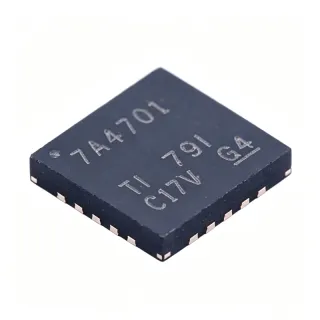
| Package | VQFN-HR (RJR), 14 pins |
| Mounting Type | Surface Mount |
| RoHS Status | Compliant |
| Switching Frequency Option | AAS frequency variant (see datasheet for exact value) |
LMQ61460AASQRJRRQ1 vqfn-hr (rjr), 14 pins Pin Configuration Guide
Pin configuration for LMQ61460AASQRJRRQ1 (vqfn-hr (rjr), 14 pins package). This power device features gate, drain, and source terminals. For non-polarized packages, refer to the manufacturer datasheet for exact pin 1 orientation and footprint details. Common applications include power supply design, motor driving, and load switching.

No detailed pinout data available for LMQ61460AASQRJRRQ1.
Refer to the datasheet for full pin configuration.
Typical Applications
LMQ61460AASQRJRRQ1 is suitable for 6 applications: Automotive ADAS Camera and Radar Modules, Automotive Body Electronics and Lighting, Industrial 24V PLC and Automation Point-of-Load, Infotainment and Display Power, USB Charging Ports and Front-End Regulation, Telematics and Gateway Modules.
Automotive ADAS Camera and Radar Modules
The LMQ61460AASQRJRRQ1 fits ADAS camera and radar power trees because its 42 V / 400 ms load-dump tolerance removes the need for a separate surge suppressor in front of the regulator, and its MINT low-EMI architecture keeps switching noise out of the sensitive image-sensor and radar front-end analog rails. In a typical design the converter steps the 12 V battery rail down to a 5 V intermediate rail feeding downstream low-noise LDOs for the sensor core. Integrated bypass capacitors shrink the input hot loop, directly reducing radiated emissions measured per CISPR 25, which is critical because radar modules often sit near the antenna. The -40C to +150C AEC-Q100 rating covers engine-bay-adjacent mounting, and the 6 A capability supports multi-sensor fusion hubs on a single rail.
Recommended
Automotive Body Electronics and Lighting
Body control modules, LED headlight drivers, and door-zone electronics all convert the vehicle 12 V battery rail to 5 V or 3.3 V logic, and the LMQ61460AASQRJRRQ1 is engineered exactly for this environment. Its 36 V continuous input rating plus 42 V transient tolerance handles jump-start (24 V) and load-dump events, while soft recovery from dropout prevents output overshoot when the battery voltage sags during cranking - a common reset source in body ECUs. MINT technology mitigates conducted emissions in the AM and FM broadcast bands, reducing filter cost. With up to 6 A available, one converter can power the microcontroller, the LED driver supply rail, and network transceivers simultaneously, cutting BOM count. The 14-pin VQFN-HR package fits the dense, thermally constrained PCBs typical of body-electronics modules.
Recommended
Industrial 24V PLC and Automation Point-of-Load
Industrial 24 V buses routinely see surges well above nominal, and the LMQ61460AASQRJRRQ1's 36 V continuous / 42 V transient input rating provides native headroom that many 24 V-rated converters lack. It steps 24 V down to 5 V or 3.3 V for PLC microcontrollers, I/O isolation supplies, and sensor interfaces at up to 6 A - enough for a complete control card on a single buck stage. The MINT architecture's low conducted and radiated emissions help meet industrial EMC standards without bulky input filters, and the high switching-frequency AAS option permits a compact inductor for dense I/O modules. Its adjustable output down to 1 V also powers modern low-voltage FPGAs and ASICs directly. The -40C ambient floor suits unheated factory-floor and outdoor cabinets.
Recommended
Infotainment and Display Power
Infotainment head units and cluster displays require several amps of clean 5 V rail derived from the vehicle battery, with strict EMI limits to avoid AM-radio and touch-controller interference. The LMQ61460AASQRJRRQ1's 6 A output directly powers display back-end SoCs and audio amplifiers, while MINT technology and the integrated input capacitors suppress switching harmonics that would otherwise appear as audible noise or screen artifacts. Spread operating across the AAS frequency option lets designers place switching harmonics away from sensitive receive bands. Soft recovery from dropout maintains a clean output through engine cranking voltage dips, preventing display resets. AEC-Q100 qualification and the -40C to +150C range meet automotive console and near-display environmental requirements without derating.
Recommended
USB Charging Ports and Front-End Regulation
USB-A and USB-C charging ports in vehicles and industrial equipment need a robust 5 V front-end supply capable of multi-amp loads from a 12 V or 24 V source. The LMQ61460AASQRJRRQ1 delivers 6 A at a tightly regulated adjustable output, covering single high-current ports or dual-port configurations with load sharing. Its 42 V transient tolerance survives automotive and warehouse-vehicle power events, and MINT low-EMI operation prevents switching noise from coupling into nearby radio and navigation receivers. Integrated bypass capacitors reduce the external BOM, important for cost-sensitive charging modules. Soft dropout recovery prevents output overshoot when the input returns after a stall or battery-sag event, protecting downstream USB charging ICs and connected devices.
Recommended
Telematics and Gateway Modules
Telematics control units and vehicle gateways run cellular modems whose transmit bursts create fast 2 A to 4 A load transients on the 3.8 V to 5 V rail. The LMQ61460AASQRJRRQ1's 6 A capability and fast transient response with integrated capacitors hold the rail within tolerance during GSM/LTE bursts, avoiding modem brownouts. Its wide 3 V to 36 V input accepts battery, Power-over-Ethernet-derived, and backup sources in one design, and the MINT architecture keeps RF emissions low enough to coexist with the module's own sensitive GPS receive path - a notorious co-location challenge. AEC-Q100 qualification, -40C to +150C operation, and the compact 14-pin VQFN-HR package suit the small, thermally sealed enclosures typical of roof-mounted and windshield-mounted telematics hardware.
Recommended
Recommended Products Summary
Engineering reference data for LMQ61460AASQRJRRQ1 — comparison, design guidance, and compliance information.
Selection Guide
Comparison with Alternatives
| Parameter | This Product | LM61460AASQRJRRQ1 | LMQ61460AFSQRJRRQ1 | LM61460AFSQRJRRQ1 | LMQ61460AASQRJRR |
|---|---|---|---|---|---|
| Brand | Texas Instruments | Texas Instruments | Texas Instruments | Texas Instruments | Texas Instruments |
| Package | VQFN-HR (RJR) 14-pin | VQFN-HR (RJR) 14-pin - same | VQFN-HR (RJR) 14-pin - same | VQFN-HR (RJR) 14-pin - same | VQFN-HR (RJR) 14-pin - same |
| Input Voltage Range | 3 V to 36 V (42 V / 400 ms transient) | 3 V to 36 V (42 V / 400 ms) | 3 V to 36 V (42 V / 400 ms) | 3 V to 36 V (42 V / 400 ms) | 3 V to 36 V (42 V / 400 ms) |
| Output Current | 6 A | 6 A | 6 A | 6 A | 6 A |
| Switching Frequency Option | AAS (higher frequency option) | AAS (higher) | AFS (lower) | AFS (lower) | AAS (higher) |
| MINT Low-EMI Technology | Yes | No (standard family) | Yes | No (standard family) | Yes |
| Integrated Bypass Capacitors | Yes | No | Yes | No | Yes |
| Automotive Grade (AEC-Q100) | Yes (-Q1, -40C to +150C) | Yes (-Q1) | Yes (-Q1) | Yes (-Q1) | No (standard grade) |
Key Differentiators
- MINT low-EMI technology with integrated bypass capacitors (vs LM61460AASQRJRRQ1)
- Higher switching-frequency option for smaller magnetics (vs LMQ61460AFSQRJRRQ1)
- Automotive qualification with load-dump robustness (vs LMQ61460AASQRJRR)
Design Notes
Although the LMQ61460AASQRJRRQ1 integrates the input bypass capacitors and shrinks the hot loop, external input capacitance is still required per the datasheet for bulk energy and damping. Place the external input ceramic capacitors within 2-3 mm of PVIN, use solid ground planes on layer 2, and keep the SW node copper area small to limit radiated emissions. Follow the LMQ61460-Q1 datasheet Rev. D layout section, which provides a reference layout optimized for CISPR 25 testing.
Estimated: at VIN = 24 V, VOUT = 5 V, and 6 A load, output power is 30 W; at roughly 90% efficiency the device dissipates about 3.3 W. The VQFN-HR exposed pad must be soldered to a via-stitched copper pour of at least 4-6 square cm to keep junction temperature within the -40C to +150C AEC-Q100 range. Verify junction temperature at maximum ambient with the thermal metrics in the datasheet, and reduce load or frequency option if Tj exceeds your derating target.
Select the inductor saturation current at least 20-30% above the 6 A peak current limit, not just the DC load, or the converter will hit current limit during transients and load steps. When operating near dropout at high VIN-to-VOUT ratios during cranking, rely on the device's soft recovery rather than forcing a restart. If migrating from LM61460AASQRJRRQ1, re-check the EMI test results: the LMQ61460's integrated capacitors change the input impedance and typically improve margins, but filters tuned to the old layout may need re-evaluation.
Compliance Information
AEC-Q100 automotive qualification and ACTIVE lifecycle status confirmed via TI product page and Spirit Electronics listing (LMQ61460-Q1 family, RJR VQFN-HR package). RoHS status not explicitly stated in provided snippets - confirm on TI.com quality pages before finalizing.