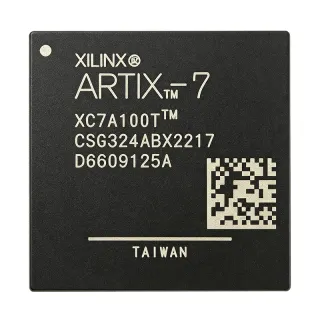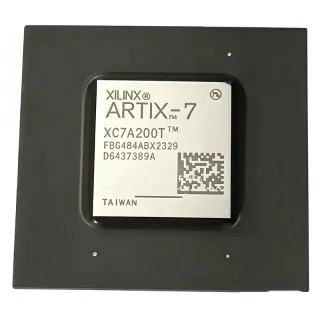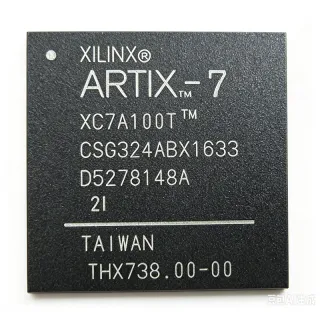
EPF10K200EGC599-2 - FLEX 10KE FPGA 200K Gates 599-BCPGA | Altera
MPN: EPF10K200EGC599-2 ✗ End of Life| Qty | Unit Price | Extended |
|---|---|---|
| 1 | $300.42 | $300.42 |
| 10 | $275.5 | $2,755.00 |
| 100 | $240 | $24,000.00 |
| 500 | $210 | $105,000.00 |
| 1,000 | $185 | $185,000.00 |
EPF10K200EGC599-2 Overview
An FPGA (Field-Programmable Gate Array) is a class of integrated circuit built from a matrix of configurable logic blocks (CLBs), embedded memory arrays, and programmable interconnect, all wired through SRAM configuration cells. FPGAs occupy a distinct position in the semiconductor hierarchy: programmable logic device (PLD) -> CPLD/FPGA -> complex programmable logic -> ASIC prototyping and DSP acceleration. The FLEX 10KE was Altera's first embedded-array family with dedicated dual-port RAM blocks, foreshadowing today's SoC FPGAs.
Key features of the EPF10K200EGC599-2 include 9984 logic elements, 12 embedded array blocks (EABs) for memory/megafunction implementation, 470 user I/O pins for high-bandwidth peripheral interfacing, and JTAG-based in-system programmability via the IEEE 1149.1 boundary-scan interface. The ceramic pin-grid array package provides a robust mechanical and thermal envelope suited to industrial and military applications where plastic BGA/PQFP variants are unsuitable. A 0.6 ns pin-to-pin logic delay characterizes the -2 speed grade performance envelope.
The FLEX 10KE architecture combines a fine-grained logic element fabric for glue logic and state machines with coarse-grained EABs that natively implement dual-port RAM, ROM, multipliers, and DSP functions. This two-tier architecture was specifically engineered for SOPC designs that need to integrate processor cores, peripherals, and custom datapath logic in a single silicon device, eliminating the need for separate ASICs and reducing board area, cost, and EMI susceptibility.
Typical applications for the EPF10K200EGC599-2 include telecommunications line cards and DSLAM equipment, industrial machine control and motor drive logic, military/aerospace signal processing where the ceramic CPGA package is preferred, legacy ASIC prototyping, and high-I/O-count data acquisition systems. The 470 user I/O count makes the part especially suitable for parallel bus bridging, FIFO interfacing, and glue-logic aggregation between microprocessors and peripherals.
When designing with the EPF10K200EGC599-2, engineers must use Altera MAX+PLUS II or Quartus design software (legacy versions) to compile, simulate, and program the device, since modern Quartus releases have dropped FLEX 10KE support. Configuration is typically via an EPC1 or EPC2 serial configuration device, ByteBlaster download cable, or JTAG. Designers should plan for the 2.5 V core supply and provide adequate decoupling near each power pin.
This page synthesizes distributor stock levels, cross-brand availability, and practical design notes that are not aggregated in the original Altera FLEX 10KE datasheet, helping engineers locate supply and choose between speed-grade and package variants.
Drop-in alternatives for EPF10K200EGC599-2 — same package, pin-to-pin compatible. Different-package parts requiring PCB rework are excluded.
Variants in this series
Same-series models that are drop-in compatible with EPF10K200EGC599-2 (same form factor and footprint) — differing in Mounting Type, Package, RoHS Status, Logic Elements, Operating Temperature.
Quick Comparison Tool — Select alternative parts for side-by-side comparison:
EPF10K200EGC599-1
✅ Drop-In✓ In Stock
$880 / Unit
View Datasheet →EPF10K200EBC600-1
✅ Drop-In✓ In Stock
$322.17445 / Unit
View Datasheet →EPF10K200EBC600-2
✅ Drop-In✓ In Stock
$198 / Unit
View Datasheet →EPF10K200EBI600-2
✅ Drop-In✓ In Stock
$198 / Unit
View Datasheet →EPF10K200EFC672-2
✅ Drop-In✓ In Stock
$210 / Unit
View Datasheet →EPF10K200EGC599-2 Maximum Ratings & Electrical Characteristics
| Series | FLEX 10KE |
| Family | FLEX 10KE |
| Logic Elements | 9984 |
| Total RAM Bits | 98304 |
| Number of I/O | 470 |
| Number of Logic Gates | 200000 |
| Supply Voltage - Core | 2.375 V to 2.625 V |
| Pin-to-Pin Logic Delay | 0.6 ns |
| Mounting Type | Through Hole |
| Package / Case | 599-BCPGA (62.48 x 62.48 mm) |
| Supplier Device Package | 599-CPGA |
| Operating Temperature Grade | Commercial |
| Technology / Process | CMOS, SRAM-based configuration |
| Programmability Type | SRAM (in-system reconfigurable) |
| Configuration Interface | JTAG (IEEE 1149.1) / EPC serial |
| RoHS Status | Non-compliant (lead-bearing CPGA) |
EPF10K200EGC599-2 599-cpga Pin Configuration Guide
Pin configuration for EPF10K200EGC599-2 (599-cpga package). This digital IC includes GPIO, communication interfaces (UART, SPI, I2C), and power pins. Refer to the manufacturer datasheet for alternate pin functions and configuration options. Essential for embedded system design and PCB layout.

No detailed pinout data available for EPF10K200EGC599-2.
Refer to the datasheet for full pin configuration.
Typical Applications
EPF10K200EGC599-2 is suitable for 6 applications: Telecommunications Line Cards and DSLAM Equipment, Industrial Machine Control and Motor Drive Logic, Military and Aerospace Signal Processing, Legacy ASIC Prototyping and Emulation, High-I/O Parallel Bus Bridging and Aggregation, Data Acquisition System Aggregation.
Telecommunications Line Cards and DSLAM Equipment
The EPF10K200EGC599-2 fits telecommunications line card designs because its 9984 logic elements and 12 embedded array blocks provide ample capacity for framer, mapper, and forward-error-correction datapaths. The 470 user I/O pins are well-matched to UTOPIA / POS-PHY parallel interfaces that connect network processors to PHY devices, and the 2.5V core plus 3.3V I/O support the mixed-voltage environment typical of legacy line cards. Designers place the FPGA between a network processor and multi-port PHYs, using EABs to implement lookup tables and small FIFOs; the 0.6ns pin-to-pin delay of the -2 speed grade easily meets 50 MHz UTOPIA Level-2 timing margins at typical fanout.
Recommended
Industrial Machine Control and Motor Drive Logic
The EPF10K200EGC599-2 is well-suited to industrial machine controllers because the ceramic CPGA-599 package tolerates higher ambient temperatures and mechanical vibration than plastic BGA alternatives. With 9984 logic elements the device can host multi-axis PWM generators, encoder quadrature decoders, and safety interlocks simultaneously. Industrial designers route the FPGA between a 32-bit microcontroller and three-phase inverter gate drivers, leveraging the 470 user I/O to scan keypad, drive HMI displays, and monitor over-current comparators. The 0.6ns logic delay of the -2 speed grade is fast enough for 100 kHz current-loop update rates required by high-performance servo drives.
Recommended
Military and Aerospace Signal Processing
The ceramic CPGA-599 package and through-hole mounting make the EPF10K200EGC599-2 a strong fit for military and aerospace signal-processing boards where plastic packages are disqualified by the user environment. The 9984 logic elements can implement multi-channel FIR filters, FFT butterflies, or Reed-Solomon codecs at moderate sample rates, while the 470 user I/O pins accommodate parallel ADC/DAC buses and discrete radar/sonar timing signals. Defense integrators pair the FPGA with radiation-tolerant ADCs, using EABs to implement windowing memory and coefficient tables; the through-hole ceramic PGA also provides superior mechanical integrity under shock and vibration per MIL-STD-810 testing profiles.
Recommended
Legacy ASIC Prototyping and Emulation
Designers use the EPF10K200EGC599-2 to prototype ASIC RTL before tape-out because the 9984 logic elements and 12 EABs provide enough capacity to map medium-complexity ASICs (roughly 200K gates). The 470 user I/O pins permit a 1:1 mapping of prototype signals to ASIC pads, simplifying verification. Engineering teams place the FLEX 10KE on a prototyping board alongside a JTAG-driven MAX+PLUS II download cable, recompiling RTL in minutes compared to ASIC mask cycles. The 0.6ns logic delay of the -2 speed grade is sufficient for functional prototyping at ASIC target clock rates of 50-100 MHz, though timing closure is approximate rather than sign-off quality.
Recommended
High-I/O Parallel Bus Bridging and Aggregation
The 470 user I/O pins of the EPF10K200EGC599-2 are particularly well-matched to bus-bridging applications such as 32-bit PCI to local-bus aggregation, asynchronous SRAM to DDR interface translation, or multi-channel UART aggregation. The FLEX 10KE EABs can implement FIFO memories of moderate depth to absorb bus-latency mismatches. Bridge designers route microprocessors, memory, and peripheral buses through the FPGA, using the -2 speed grade to meet 33 MHz PCI timing requirements. The ceramic CPGA package also provides robust pin-to-pin contact integrity required for industrial backplane applications where connector reliability is critical.
Recommended
Data Acquisition System Aggregation
The EPF10K200EGC599-2 is an excellent FPGA for high-channel-count data acquisition front-ends because its 470 user I/O can simultaneously interface 8 to 16 parallel ADCs and route samples to a downstream processor. The 12 EABs provide 98 Kbits of dual-port memory for sample buffering, and the 9984 logic elements can host digital filtering, decimation, and channel calibration. Acquisition system designers place the FPGA between a parallel ADC array and a DSP or CPU, using the -2 speed grade to maintain timing margins on 40 MHz ADC parallel interfaces. The ceramic CPGA package also supports through-hole retention for industrial vibration profiles typical of factory-floor instrumentation.
Recommended
Recommended Products Summary
Engineering reference data for EPF10K200EGC599-2 — comparison, design guidance, and compliance information.
Selection Guide
Comparison with Alternatives
| Parameter | This Product | EPF10K200EGC599-1 | EPF10K200EBC600-2 | EPF10K200EBI600-2 | EPF10K200EFC672-2 |
|---|---|---|---|---|---|
| Brand | Altera (Intel) | Altera (Intel) | Altera (Intel) | Altera (Intel) | Altera (Intel) |
| Package | 599-BCPGA (62.48 x 62.48 mm) | 599-BCPGA - same | 600-BGA (BGA not ceramic PGA) | 600-BGA (BGA not ceramic PGA) | 672-FBGA (Fine-pitch BGA) |
| Logic Elements | 9984 | 9984 | 9984 | 9984 | 9984 |
| Total RAM Bits | 98304 | 98304 | 98304 | 98304 | 98304 |
| Number of I/O | 470 | 470 | 470 (different pinout, 600-BGA) | 470 (different pinout, 600-BGA) | 470 (different pinout, 672-FBGA) |
| Speed Grade | -2 (0.6 ns logic delay) | -1 (slower) | -2 (same) | -2 (same) | -2 (same) |
| Core Voltage | 2.375 V to 2.625 V | 2.375 V to 2.625 V | 2.375 V to 2.625 V | 2.375 V to 2.625 V | 2.375 V to 2.625 V |
| Operating Temperature Grade | Commercial | Commercial | Commercial | Industrial | Commercial |
| Lifecycle Status | Obsolete | Obsolete | Obsolete | Obsolete | Obsolete |
Key Differentiators
- Highest-I/O 200K-gate FLEX 10KE in ceramic PGA package (vs EPF10K200EBC600-2)
- Faster -2 speed grade available in CPGA (vs EPF10K200EGC599-1)
- Drop-in footprint match with FLEX 10KE family (vs EPF10K200EFC672-2)
Design Notes
The EPF10K200EGC599-2 requires a 2.5 V core supply (2.375 V to 2.625 V) plus separate VCCIO rails for each I/O bank. Provide at least 10 uF bulk capacitance per voltage rail near the package, with 0.1 uF ceramic bypass capacitors placed within 5 mm of every VCC/GND pin pair. The 599-BCPGA package has many power and ground pins; check the datasheet pinout tables to ensure all are connected, because unused power pins will starve the internal logic and cause intermittent configuration failures.
Route configuration signals (nCONFIG, nSTATUS, CONF_DONE, DCLK, DATA0) away from high-frequency switching nets to prevent coupling-induced configuration failures. JTAG signals (TCK, TMS, TDI, TDO) should be guarded with ground traces to maintain signal integrity during in-system programming. The 599-BCPGA through-hole pin grid allows excellent ground return paths; ensure a continuous ground plane on inner PCB layers for return-current management.
A common mistake is assuming modern Quartus software supports the FLEX 10KE family. Per Altera's legacy support matrix, FLEX 10KE is supported only up to Quartus II 9.0 SP2; newer Quartus versions will refuse to compile FLEX 10KE projects. Keep a copy of Quartus II 9.0 SP2 or MAX+PLUS II 10.0 available for legacy bitstream generation. Also note that the EPF10K200EGC599-2 uses SRAM configuration cells, meaning the bitstream must be reloaded on every power-up via an EPC1/EPC2 configuration PROM or JTAG download.
Compliance Information
The EPF10K200EGC599-2 is a ceramic PGA package (CPGA-599) with lead-bearing terminations, making it non-RoHS compliant per alteraxilinx.com RoHS status. AEC-Q100 is not applicable to FPGAs (designed for automotive microcontrollers). REACH, halogen-free, and conflict-mineral compliance status is not specified in the verified web data; consult Altera/Intel for current declarations.