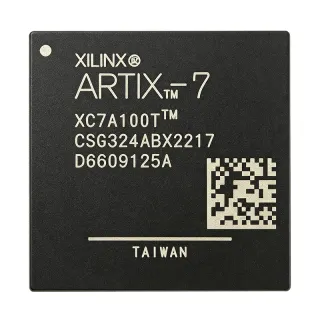
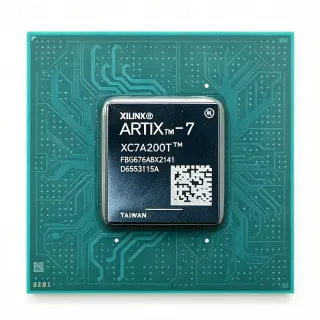
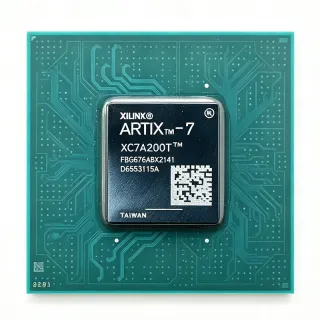
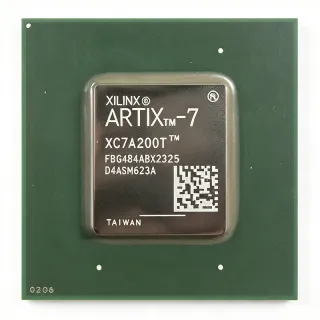
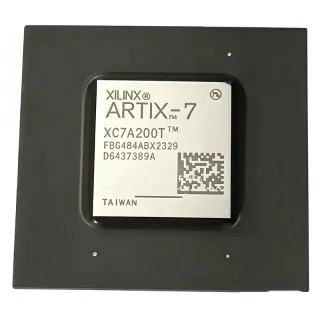
EPF10K200SBI356-2 - 200K Gate FLEX 10KA FPGA 356-BGA | Altera
MPN: EPF10K200SBI356-2 ✗ End of Life| Qty | Unit Price | Extended |
|---|---|---|
| 1 | $145 | $145.00 |
| 10 | $132.5 | $1,325.00 |
| 100 | $118 | $11,800.00 |
| 500 | $105 | $52,500.00 |
| 1,000 | $92.5 | $92,500.00 |
EPF10K200SBI356-2 Overview
A Field Programmable Gate Array (FPGA) is a programmable logic device (PLD) subclass that combines the gate density of gate arrays with the configurability of programmable logic. FPGAs occupy the same functional role in a digital design hierarchy as ASICs, but can be reconfigured in the field via SRAM or flash bitstream. The FLEX 10KA family specifically targets high-density glue-logic, datapath, and bus-interface applications. Within the broader taxonomy: FPGA -> programmable logic device (PLD) -> logic IC -> integrated circuit -> semiconductor. The FLEX 10KA architecture pioneered embedded array block (EAB) integration, allowing on-chip memory and megafunctions without external ROM.
Key features include 24 embedded array blocks (EABs) providing up to 98,304 bits of on-chip memory, a Look-Up Table (LUT)-based logic element, six dedicated low-skew global clock/clear/preset input pins, and JTAG-based in-system programmability (ISP) via the ByteBlaster or MasterBlaster interface. The device supports multi-volt I/O (2.5 V/3.3 V/5.0 V) on selected pins and includes in-circuit reconfigurability for live bitstream updates.
The architecture splits the die into Logic Array Blocks (LABs) of 10 LEs each, totaling 1,248 LABs. The arithmetic mode allows two adjacent three-input LUTs to operate as a 3-bit fast adder with internal carry chain. Dedicated row and column interconnect minimizes routing delay and is optimized for datapath-heavy designs like FIR filters and protocol bridges.
Typical applications include telecommunications line cards, industrial control and factory automation glue logic, PCI bus bridges, video processing front-ends, and embedded DSP prototyping. The combination of high density (200K gates) and BGA packaging makes it well-suited to space-constrained telecom and networking hardware.
Designers should plan board layout to provide solid ground and 2.5 V core plane distribution; use multiple decoupling capacitors near each power pin. The -2 speed grade indicates medium-grade timing closure; verify worst-case Fmax in Quartus before tapeout. Migration to FLEX 10KE or Cyclone is recommended for new designs, as the FLEX 10K family is in long-term support but limited new inventory.
Drop-in alternatives for EPF10K200SBI356-2 — same package, pin-to-pin compatible. Different-package parts requiring PCB rework are excluded.
Variants in this series
Same-series models that are drop-in compatible with EPF10K200SBI356-2 (same form factor and footprint) — differing in Package, Family, Process Technology, Operating Temperature, Configuration Method.
Quick Comparison Tool — Select alternative parts for side-by-side comparison:
EPF10K200SBC356-2
✅ Drop-In✓ In Stock
$178 / Unit
View Datasheet →EPF10K200SBC356-2X
✅ Drop-In✓ In Stock
$295 / Unit
View Datasheet →EPF10K200SBC356-1X
✅ Drop-In✓ In Stock
$138 / Unit
View Datasheet →EPF10K200SBC356-3
✅ Drop-In✓ In Stock
$87.5 / Unit
View Datasheet →EPF10K200SBC356-1
✅ Drop-In✓ In Stock
$580 / Unit
View Datasheet →EPF10K200SBI356-2 Maximum Ratings & Electrical Characteristics
| Family | FLEX 10KS |
| Logic Elements | 9,984 |
| System Gates | 200,000 |
| Logic Array Blocks (LABs) | 1,248 |
| Embedded Array Blocks (EABs) | 24 (98,304 bits RAM) |
| User I/O Pins | 274 |
| Process Technology | 0.22 µm CMOS SRAM |
| Core Voltage | 2.5 V |
| Speed Grade | -2 |
| Package | 356-BGA (SB) 35×35 mm, 1.27 mm pitch |
| Mounting Type | Surface Mount |
| Maximum User I/O | 274 |
| In-System Programmability | Yes (JTAG/ByteBlaster) |
| Configuration Method | SRAM-based, ISP |
EPF10K200SBI356-2 356-bga (sb) 35×35 mm, 1.27 mm pitch Pin Configuration Guide
Pin configuration for EPF10K200SBI356-2 (356-bga (sb) 35×35 mm, 1.27 mm pitch package). This digital IC includes GPIO, communication interfaces (UART, SPI, I2C), and power pins. Refer to the manufacturer datasheet for alternate pin functions and configuration options. Essential for embedded system design and PCB layout.

No detailed pinout data available for EPF10K200SBI356-2.
Refer to the datasheet for full pin configuration.
Typical Applications
EPF10K200SBI356-2 is suitable for 6 applications: Telecommunications Line Cards, PCI Bus Bridge & Glue Logic, Industrial Control & Factory Automation, Video Processing Front-End, Embedded DSP Prototyping & Datapath, Legacy Avionics & Aerospace Retrofit.
Telecommunications Line Cards
The EPF10K200SBI356-2's 200K system gates and 274 user I/O pins suit telecommunications line-card glue logic that bridges backplane serial interfaces, TDM framers, and processor buses. Its 24 EABs deliver 98 Kbits of on-chip memory for FIFO buffers between framing and packet engines, while 5 V-tolerant I/O simplifies legacy TDM/SONET interface connection. Industrial temperature grade supports central-office deployment. Compared with a discrete TTL design, a single FLEX 10KS reduces board area by 50-70% and improves timing margin via integrated global clock distribution.
Recommended
PCI Bus Bridge & Glue Logic
Use the EPF10K200SBI356-2 as a PCI 32-bit/33 MHz bridge between a host processor and a peripheral ASIC or DSP cluster. The device's 1,248 LABs absorb the full 49-pin PCI bus interface plus custom register decodes, while the 24 EABs provide FIFOs for write posting and read prefetch. The -2 speed grade comfortably meets 33 MHz PCI timing with margin for backplane loading. Engineers can implement scatter-gather DMA engines entirely in the FPGA, eliminating an external bridge chip.
Recommended
Industrial Control & Factory Automation
The EPF10K200SBI356-2 industrial temperature variant (-40C to +85C) is qualified for factory-floor PLC, motor drive controller, and SCADA equipment. Its 0.22 µm CMOS process and 2.5 V core provide robust thermal performance, while 5 V-tolerant I/Os interface directly to legacy 24 V opto-isolated sensor inputs. The 200K-gate capacity fits complete motion-control state machines, encoder counters, and CAN/EtherCAT soft-IP cores on one chip. Designers can reprogram the device in-system for firmware updates without replacing hardware.
Recommended
Video Processing Front-End
The EPF10K200SBI356-2 suits video processing front-ends where 200K gates implement ITU-R BT.656/601 capture pipelines, color-space converters, and deinterlacers. The 24 EABs hold line buffers and lookup tables for gamma correction, while 274 I/Os accommodate parallel 16-/24-bit video buses at 27/54/74.25 MHz pixel rates. Multi-voltage I/O allows direct connection to 3.3 V image sensors and 5 V video DACs. Designers replace a video processor ASIC plus support logic with one FLEX 10KS, accelerating time to market.
Recommended
Embedded DSP Prototyping & Datapath
Use the EPF10K200SBI356-2 as an embedded DSP prototyping platform for FIR filters, FFT engines, and forward error correction (FEC) algorithms. The architecture's fast carry chain (one LAB row per adder) and EAB-based multiplier ROMs deliver 30-50 MHz FIR throughput sufficient for audio and baseband DSP. 200K gates fit a complete 256-point radix-2 FFT plus control plane. Engineers verify algorithm RTL on the FLEX 10KS before migrating to ASIC, reducing tapeout risk.
Recommended
Legacy Avionics & Aerospace Retrofit
The EPF10K200SBI356-2 serves avionics retrofit programs needing a high-density, military-temperature-range FPGA in a solderable BGA. The 356-BGA package provides the vibration tolerance required for DO-160 compliant equipment, and the device's deterministic SRAM configuration enables field updates for airframe management and mission computers. Designers integrate MIL-STD-1553, ARINC 429, and discrete I/O conditioning on a single FLEX 10KS, replacing multiple 54LS/54AS glue-logic ICs. The -2 speed grade meets 50 MHz system clock envelopes typical in legacy MIL platforms.
Recommended
Recommended Products Summary
Engineering reference data for EPF10K200SBI356-2 — comparison, design guidance, and compliance information.
Selection Guide
Comparison with Alternatives
| Parameter | This Product | EPF10K200SBC356-2 | EPF10K200SBC356-2X | EPF10K200SBC356-1X | EPF10K200SBC356-3 | EPF10K200SBC356-1 |
|---|---|---|---|---|---|---|
| Package | 356-BGA (SB) 35x35 mm | 356-BGA (SB) 35x35 mm - same | 356-BGA (SB) 35x35 mm - same | 356-BGA (SB) 35x35 mm - same | 356-BGA (SB) 35x35 mm - same | 356-BGA (SB) 35x35 mm - same |
| Brand | Altera | Altera | Altera | Altera | Altera | Altera |
| Family | FLEX 10KS | FLEX 10KS | FLEX 10KS | FLEX 10KS | FLEX 10KS | FLEX 10KS |
| Speed Grade | -2 | -2 (same) | -2 (same) | -1 (faster) | -3 (slower) | -1 (faster) |
| Temperature Grade | Industrial (-40C to +85C) | Commercial (0C to +70C) | Commercial (0C to +70C) | Commercial (0C to +70C) | Commercial (0C to +70C) | Commercial (0C to +70C) |
| Logic Elements | 9,984 | 9,984 | 9,984 | 9,984 | 9,984 | 9,984 |
| System Gates | 200,000 | 200,000 | 200,000 | 200,000 | 200,000 | 200,000 |
| User I/O | 274 | 274 | 274 | 274 | 274 | 274 |
| Core Voltage | 2.5 V | 2.5 V | 2.5 V | 2.5 V | 2.5 V | 2.5 V |
Key Differentiators
- Industrial temperature grade qualification (vs EPF10K200SBC356-2)
- Pin-compatible speed grade flexibility within the FLEX 10KS family (vs EPF10K200SBC356-1X)
- On-chip memory (EAB) capacity (vs EPF10K100EFC256-2X)
- Multi-voltage I/O support including 5 V tolerance (vs Cyclone EP1C20F400C6)
Design Notes
Estimated: at typical FLEX 10KS utilization of 70% logic and 50% EAB RAM at 33 MHz, ICC_core is approximately 350-500 mA from the 2.5 V rail. Decoupling requires one 100 µF bulk cap plus ten 0.1 µF ceramics distributed across the BGA. I/O banks draw an additional 1-3 A depending on toggle rate; separate VCCIO planes per bank are mandatory to prevent switching noise coupling into the core. Use a 4-layer PCB with dedicated ground and 2.5 V planes to maintain stable core voltage during simultaneous-switching events on the 274 I/Os.
Estimated: at maximum utilization (200K gates, 100 MHz toggle, ambient +70C), the FLEX 10KS dissipates 2-3 W. The 356-BGA at 1.27 mm pitch has theta_JA of approximately 12-15 C/W with forced-air cooling (200 LFM), giving a junction rise of 24-45 C above ambient. For sealed industrial enclosures without airflow, derate to 60-70% logic utilization or specify the industrial-temperature EPF10K200SBI356-2 variant and use thermal vias under the BGA thermal balls. Avoid mounting the BGA directly over a 1.6 mm FR-4 void; use 2 oz copper planes.
Route all six global clock/clear/preset inputs using matched-length traces (within ±50 mil) terminated at the device with 33 ohm series resistors if edge rates exceed 1 ns. Use 0.5 oz copper microstrip with controlled impedance (50 ohm single-ended) for clocks. Place the configuration PROM (EPC2, EPC4, or EPC8) within 2 inches of the FLEX 10KS and route DATA0-DATA7 byte-aligned. The 356-BGA escape requires microvia or via-in-pad technology; conventional 0.3 mm vias are too small to escape the 1.27 mm pitch. Plan stackup for 4 mil traces and 8 mil spaces.
Three pitfalls to avoid: (1) Do not assume FLEX 10KS bitstreams are forward-compatible with FLEX 10KE or Cyclone - rerun Quartus compile and generate a fresh .sof/.pof file for each family. (2) The -2 speed grade does not have the same timing margin as the -1 grade; verify worst-case Fmax in Quartus Timing Analyzer for setup/hold on every clock domain. (3) The MSL3 moisture sensitivity of the 356-BGA requires pre-bake (125 C for 24 hours) if the seal is broken more than 168 hours before assembly - failure to bake causes package cracking during reflow.
SSO (Simultaneous Switching Output) noise is the dominant SI issue for FLEX 10KS designs. Limit simultaneous switching to 16 outputs per bank, and use spread-spectrum clocking if EMI compliance (FCC Class B) is required. Place 22 ohm series resistors on outputs driving backplane connectors. For LVDS or LVPECL-compatible I/O, use the dedicated clock input pins only. SSO analysis should be re-run after any logic change that affects output toggle correlation, especially in designs with bus multiplexing.
Compliance Information
Compliance status not stated in verified web data. The EPF10K200SBI356-2 is an older Altera FPGA released before RoHS mandate; some variants (-2X suffix) are likely Pb-free. Recommend reviewing the manufacturer datasheet environmental section or contacting Intel/Altera directly for current compliance certification.