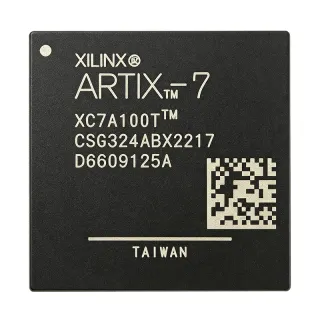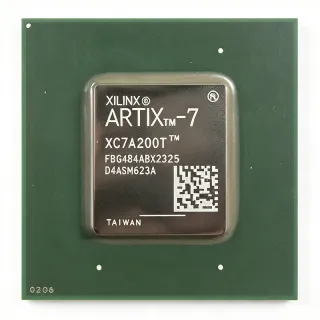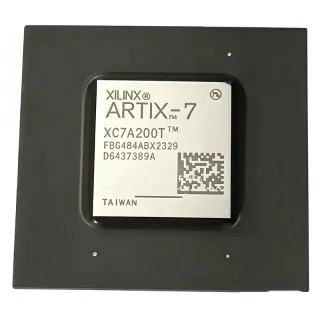
EP4CE75F29C7N - 75K LE Cyclone IV E FPGA, 780-BGA | Altera
MPN: EP4CE75F29C7N ✓ Active| Qty | Unit Price | Extended |
|---|---|---|
| 1 | $254.49 | $254.49 |
| 10 | $229.04 | $2,290.40 |
| 100 | $203.59 | $20,359.00 |
| 500 | $178.15 | $89,075.00 |
| 1,000 | $152.7 | $152,700.00 |
EP4CE75F29C7N Overview
An FPGA (Field-Programmable Gate Array) is a semiconductor device built around an array of configurable logic blocks (CLBs), programmable interconnects, and embedded memory and DSP resources that designers can program after manufacture to implement custom digital logic. Within the broader taxonomy, the EP4CE75F29C7N sits in the low-cost, low-power tier of Altera/Intel FPGAs (Cyclone IV E), positioned between the older Cyclone III family and the newer Cyclone V / Cyclone 10 LP families, and serves as a programmable alternative to ASICs and ASSPs for moderate-density glue-logic, control, and signal-processing tasks.
Key features of the EP4CE75F29C7N include 4 input LUTs per logic element, M9K embedded memory blocks totaling 2.81 Mbits, embedded 18x18 multipliers for DSP, and 20 global clock networks driven by 4 PLLs. The F29 (780-BGA) package exposes all 426 user I/Os and supports high-speed LVDS signaling on most pins. Configuration is supported through JTAG, Active Serial (AS), Passive Serial (PS), and Fast Passive Parallel (FPP) modes, with built-in decompression and encryption features for secure bitstream handling.
Typical applications span industrial motor control, video bridging and display controllers, automotive infotainment prototyping, low-cost software-defined radio (SDR) front-ends, and test & measurement front-end logic. Designers choose the Cyclone IV E family when they need a balance of logic density, embedded DSP and memory, and low static/dynamic power compared to previous-generation Cyclone devices. A typical design enters through the Altera Quartus II or Intel Quartus Prime design suite, which provides IP libraries, synthesis, place-and-route, and timing closure for this part.
Design considerations include providing a clean, low-noise 1.2 V core supply (often via a dedicated LDO), proper decoupling with 0.1 uF and bulk capacitors at every VCC pin group, and a robust JTAG chain for configuration and in-system debug. PCB layout for the 780-BGA package requires microvia or via-in-pad technology for reliable assembly, and thermal dissipation should be considered for sustained high-utilization designs operating near the top of the commercial temperature range.
This page synthesizes distributor pricing, drop-in alternatives from the Cyclone IV E family, and practical design notes not found in the manufacturer datasheet, enabling faster part selection and BOM risk mitigation.
Drop-in alternatives for EP4CE75F29C7N — same package, pin-to-pin compatible. Different-package parts requiring PCB rework are excluded.
Variants in this series
Same-series models that are drop-in compatible with EP4CE75F29C7N (same form factor and footprint) — differing in Package, Speed Grade, Operating Temperature, Configuration Modes, RoHS Status.
Quick Comparison Tool — Select alternative parts for side-by-side comparison:
EP4CE75F29C8N
✅ Drop-In✓ In Stock
$149.75 / Unit
View Datasheet →EP4CE75F29I7N
✅ Drop-In✓ In Stock
$540 / Unit
View Datasheet →EP4CE115F29C7N
✅ Drop-In📋 Reference alternative (not in catalog)
EP4CE55F29C7N
✅ Drop-In✓ In Stock
$138 / Unit
View Datasheet →EP4CE40F29C7N
✅ Drop-In✓ In Stock
$55.85 / Unit
View Datasheet →EP4CE75F29C7N Maximum Ratings & Electrical Characteristics
| Family | Cyclone IV E |
| Logic Elements (LE) | 75,408 |
| Embedded Memory (bits) | 2,810,880 |
| Memory Blocks | M9K (9 Kbit blocks) |
| Maximum User I/O | 426 |
| Embedded 18x18 Multipliers | 200 |
| General-purpose PLLs | 4 |
| Global Clock Networks | 20 |
| Process Technology | 60 nm low-power |
| Core Supply Voltage | 1.2 V |
| Package | 780-ball FineLine BGA (F29), 29x29 mm |
| Speed Grade | C7 (commercial, 7th speed bin) |
| Operating Temperature (Commercial) | 0C to +85C |
| Configuration Modes | JTAG, AS, PS, FPP |
| LVDS Support | Up to 3.125 Gbps (dedicated SERDES blocks) |
| RoHS Status | Compliant |
| Mounting Type | Surface Mount (BGA) |
| MSL Level | 3 (per JEDEC J-STD-020) |
EP4CE75F29C7N 780-ball fineline bga (f29), 29x29 mm Pin Configuration Guide
Pin configuration for EP4CE75F29C7N (780-ball fineline bga (f29), 29x29 mm package). This digital IC includes GPIO, communication interfaces (UART, SPI, I2C), and power pins. Refer to the manufacturer datasheet for alternate pin functions and configuration options. Essential for embedded system design and PCB layout.

No detailed pinout data available for EP4CE75F29C7N.
Refer to the datasheet for full pin configuration.
Typical Applications
EP4CE75F29C7N is suitable for 6 applications: Industrial Motor Control and Drive, Video Bridging and Display Controllers, Automotive Infotainment Prototyping, Software-Defined Radio (SDR) Front-End, Test and Measurement Front-End Logic, Network Equipment Glue Logic and Bridging.
Industrial Motor Control and Drive
The EP4CE75F29C7N's 75,408 logic elements, 200 18x18 hardware multipliers, and 4 PLLs make it a strong fit for industrial motor control and drive systems. Its hardware DSP blocks accelerate Field-Oriented Control (FOC) and Space Vector PWM (SVPWM) math without burdening fabric logic, while the 4 PLLs generate the high-resolution PWM edge-aligned clocks demanded by IGBT/MOSFET gate drivers. The F29 780-ball BGA exposes 426 user I/Os, sufficient for multi-axis control plus encoder and resolver feedback channels. According to Altera reference designs, the Cyclone IV E family is widely deployed in servo drives, industrial pumps, and CNC controllers where deterministic real-time response is required.
Recommended
Video Bridging and Display Controllers
The EP4CE75F29C7N's 2,810,880 bits of M9K embedded memory, 426 user I/Os, and LVDS support up to 3.125 Gbps make it well suited for video bridging, format conversion, and display controllers. The M9K blocks can be configured as line buffers or frame stores for dual-port buffering between cameras, HDMI/DisplayPort transmitters, and LCD panels. The high I/O count enables parallel RGB, BT.656, and OpenLDI LVDS interfaces simultaneously. According to Altera reference designs, Cyclone IV E FPGAs are commonly used to bridge legacy parallel video to modern LVDS displays, perform color-space conversion (RGB to YCbCr), and generate timing controllers for TFT panels.
Recommended
Automotive Infotainment Prototyping
The EP4CE75F29C7N provides automotive-tier hardware prototyping capability for infotainment head units, instrument clusters, and ADAS sensor pre-processing, with the 'C' commercial speed grade suitable for development and validation before migration to the 'A' automotive variant. The 200 hardware multipliers and 2.81 Mbits of embedded memory support real-time audio DSP, image scaling, and CAN/LIN bridging without external co-processors. Its 426 user I/Os accommodate multiple LVDS camera inputs and BT.656 display outputs simultaneously. According to Altera's Cyclone IV documentation, engineers prototype with the EP4CE75 commercial part and re-spin to AEC-Q100 qualified variants for production.
Recommended
Software-Defined Radio (SDR) Front-End
The EP4CE75F29C7N is used as a digital front-end in low-cost SDR platforms, performing channelization, filtering, and digital down/up-conversion between analog converters and host processors. The 200 18x18 multipliers and 4 PLLs enable real-time FIR filtering and DDS-based local oscillators at IF sample rates up to 200 MSPS. Its M9K memory blocks provide data buffering and half-band filter coefficient storage. According to Altera application notes, Cyclone IV E parts are commonly deployed in ham radio transceivers, signal intelligence prototypes, and academic SDR teaching kits where cost and power matter as much as logic density.
Recommended
Test and Measurement Front-End Logic
The EP4CE75F29C7N's combination of high I/O count (426 pins), embedded memory (2.81 Mbits), and 200 hardware multipliers suits test & measurement front-end logic including pattern generation, signal capture, and protocol decoding. Engineers implement state machines, custom protocol bridges, and real-time DSP filters without resorting to a more expensive mid-range FPGA. Its JTAG, AS, PS, and FPP configuration modes support both factory programming and in-system field updates. According to Altera reference designs, Cyclone IV E parts power logic analyzers, protocol analyzers, and bench-top instrumentation front-ends.
Recommended
Network Equipment Glue Logic and Bridging
The EP4CE75F29C7N is commonly deployed in networking equipment as glue logic between Ethernet PHYs, packet processors, and switch ASICs, providing custom packet classification, time stamping, and protocol conversion. Its 426 user I/Os accommodate multiple SGMII/RGMII PHY interfaces, and the 4 PLLs generate the precise clocks required for 1G/2.5G Ethernet and PTP synchronization. Embedded memory supports packet buffering at line rates without external SRAM. According to Altera application notes, Cyclone IV E FPGAs are used in industrial Ethernet switches, network interface cards, and small-cell base stations where low power and flexible I/O are valued.
Recommended
Recommended Products Summary
Engineering reference data for EP4CE75F29C7N — comparison, design guidance, and compliance information.
Selection Guide
Comparison with Alternatives
| Parameter | This Product | EP4CE75F29C8N | EP4CE75F29I7N | EP4CE115F29C7N | EP4CE55F29C7N | EP4CE40F29C7N |
|---|---|---|---|---|---|---|
| Brand | Altera | Altera | Altera | Altera | Altera | Altera |
| Package | 780-ball FBGA (F29) | 780-ball FBGA (F29) - same | 780-ball FBGA (F29) - same | 780-ball FBGA (F29) - same | 780-ball FBGA (F29) - same | 780-ball FBGA (F29) - same |
| Logic Elements | 75,408 | 75,408 (same die) | 75,408 (same die) | 114,480 (+52%) | 55,856 (-26%) | 39,600 (-47%) |
| Embedded Memory (bits) | 2,810,880 | 2,810,880 (same) | 2,810,880 (same) | 3,981,312 (+42%) | 2,340,000 (-17%) | 1,134,000 (-60%) |
| Speed Grade | C7 (commercial) | C8 (faster, commercial) | I7 (industrial temp) | C7 (commercial) | C7 (commercial) | C7 (commercial) |
| Temperature Grade | Commercial 0C to +85C | Commercial 0C to +85C | Industrial -40C to +100C | Commercial 0C to +85C | Commercial 0C to +85C | Commercial 0C to +85C |
| 18x18 Multipliers | 200 | 200 (same) | 200 (same) | 266 (+33%) | 156 (-22%) | 116 (-42%) |
| PLLs | 4 | 4 (same) | 4 (same) | 4 (same) | 4 (same) | 4 (same) |
Key Differentiators
- Faster C8 speed grade option in same package for timing-critical designs (vs EP4CE75F29C8N)
- Industrial temperature variant in same package (vs EP4CE75F29I7N)
- Scalable density within same F29 package family (vs EP4CE115F29C7N)
Design Notes
Provide a clean, low-noise 1.2 V core supply from a dedicated LDO or DC-DC regulator with output filtering. The EP4CE75F29C7N draws substantial transient current during configuration and dynamic logic activity; per the Cyclone IV handbook, place 0.1 uF decoupling capacitors within 100 mils of every VCC/VCCINT pin group, supplemented by 4.7 uF and 10 uF bulk capacitors near each supply pin. Do NOT share the 1.2 V rail with noisy switching regulators without adequate LC filtering, as logic errors and JTAG configuration failures can result.
The 780-ball F29 FineLine BGA uses a 1.0 mm pitch, requiring microvia or via-in-pad PCB technology for reliable assembly. Per JEDEC MSL-3 handling requirements, the device must be baked (typically 125C for 24 hours) and reflowed within 168 hours of moisture-bag opening. Ground and power planes should be placed in inner PCB layers with short, low-inductance stitching vias to BGA ground balls; signal escape routing should use the top two layers to keep the breakout region manageable.
Do NOT confuse F29 (780-ball) with F23 (484-pin) packages - they share no pin compatibility despite similar family naming. Verify in Quartus Pin Planner that selected I/O bank reference voltages match your interface standards (e.g., 1.5 V for DDR3, 2.5 V for LVCMOS). When migrating from a smaller Cyclone IV E (e.g., EP4CE40) to EP4CE75, remember that unused I/O pins must be explicitly terminated or configured as outputs to avoid floating-input oscillation in noisy environments.
Compliance Information
RoHS and lead-free compliant per Altera product page. AEC-Q100 qualification applies only to 'A' speed-grade variants, not the C7 commercial part. MSL-3 moisture sensitivity per JEDEC J-STD-020.