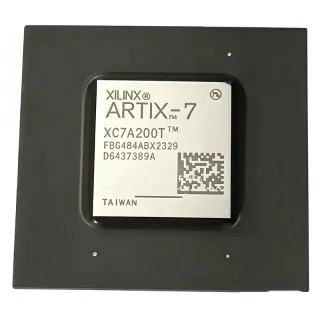
EPF10K100EFC256-2X - FLEX 10KE FPGA, 49,152 Gates, 256-BGA | Altera
MPN: EPF10K100EFC256-2X ✗ End of Life| Qty | Unit Price | Extended |
|---|---|---|
| 1 | $45.96 | $45.96 |
| 10 | $42.5 | $425.00 |
| 100 | $38.2 | $3,820.00 |
| 500 | $33.9 | $16,950.00 |
| 1,000 | $30.5 | $30,500.00 |
EPF10K100EFC256-2X Overview
An FPGA (Field-Programmable Gate Array) is a class of programmable logic device (PLD) that integrates configurable logic blocks, programmable interconnects, and embedded memory arrays on a single semiconductor die. FPGAs sit at the top of the digital logic hierarchy: discrete gates -> PLDs (PAL/GAL) -> CPLDs -> FPGAs -> SoC FPGAs. Within Altera's (now Intel PSG) portfolio, the FLEX 10KE family was an early SRAM-based, look-up-table (LUT) architecture that pioneered embedded system-on-chip integration by mixing logic and memory cells (EABs) on the same die, a design philosophy that paved the way for modern SoC FPGAs like Cyclone and Stratix.
Key features of the EPF10K100EFC256-2X include 4,992 cells organized into 624 LABs, 191 user I/Os routed through 5 I/O banks, multi-voltage I/O support (3.3V PCI-compatible and 2.5V/1.8V levels), and an in-system programmable configuration interface. The 256-FBGA FineLine package provides a compact footprint suitable for high-density boards, while the -2 speed grade represents a balance between timing closure and cost for commercial-temperature designs.
The FLEX 10KE architecture combines a sea-of-LUTs logic fabric with Embedded Array Blocks (EABs) that can be configured as RAM, ROM, or FIFO, enabling designers to implement datapath logic, state machines, and small memory blocks without external components. The SRAM-based configuration cells require a configuration device (such as an EPC2 or EPC16) to load the bitstream at power-up, supporting JTAG-based in-system programming for prototyping and field upgrades.
Typical applications include telecommunications line cards, industrial control systems, glue logic replacement, PCI interface bridging, and legacy system upgrades. The 256-FBGA package and 191 I/O count make this part well suited for mid-complexity designs where board area and signal density matter more than absolute logic capacity.
When designing with the EPF10K100EFC256-2X, ensure the configuration scheme (passive serial, active serial, or JTAG) and configuration device selection are validated against the Quartus design tool's pin-out report. Pay close attention to bank-by-bank I/O voltage compatibility, especially when mixing 3.3V PCI and 2.5V peripherals on the same device.
Drop-in alternatives for EPF10K100EFC256-2X — same package, pin-to-pin compatible. Different-package parts requiring PCB rework are excluded.
Variants in this series
Same-series models that are drop-in compatible with EPF10K100EFC256-2X (same form factor and footprint) — differing in Package, Process Technology, Operating Temperature, Speed Grade, Total RAM Bits.
Quick Comparison Tool — Select alternative parts for side-by-side comparison:
EPF10K100EFC256-2
✅ Drop-In✓ In Stock
$165 / Unit
View Datasheet →EPF10K100EFC256-1X
✅ Drop-In📋 Reference alternative (not in catalog)
EPF10K100EFC256-3
✅ Drop-In✓ In Stock
$23.1 / Unit
View Datasheet →EPF10K100BFC256-3
✅ Drop-In✓ In Stock
$58.2 / Unit
View Datasheet →EPF10K100BFC256-2
✅ Drop-In✓ In Stock
$65 / Unit
View Datasheet →EPF10K100BFC256-1
✅ Drop-In✓ In Stock
$105 / Unit
View Datasheet →EPF10K100EFC256-2X Maximum Ratings & Electrical Characteristics
| Series | FLEX-10KE |
| Family | FLEX 10KE |
| Logic Elements / Cells | 49,152 |
| Number of LABs/CLBs | 624 |
| Number of Logic Elements/Cells | 4,992 |
| Total RAM Bits | 49,152 |
| Number of I/O | 191 |
| Number of Gates | 100,000 |
| Voltage - Supply | 2.375V to 2.625V (core), 3.0V to 3.6V (I/O) |
| Mounting Type | Surface Mount |
| Operating Temperature | 0°C to 70°C |
| Package / Case | 256-FBGA (FineLine BGA, 17x17 mm) |
| Supplier Device Package | 256-BGA |
| Speed Grade | -2 |
| Logic Family | CMOS (SRAM-based) |
| Propagation Delay | 0.6 ns (per EAB) |
| Configuration Interface | JTAG / Passive Serial / Active Serial |
| Lead-Free / RoHS Status | Depends on date code - verify with distributor |
EPF10K100EFC256-2X 256-bga Pin Configuration Guide
Pin configuration for EPF10K100EFC256-2X (256-bga package). This digital IC includes GPIO, communication interfaces (UART, SPI, I2C), and power pins. Refer to the manufacturer datasheet for alternate pin functions and configuration options. Essential for embedded system design and PCB layout.

No detailed pinout data available for EPF10K100EFC256-2X.
Refer to the datasheet for full pin configuration.
Typical Applications
EPF10K100EFC256-2X is suitable for 6 applications: Telecommunications Line-Card Glue Logic, Industrial Control and PLC Backplane Bridging, PCI Interface Bridge and Add-In Cards, Legacy System Maintenance and Field Upgrades, Datacom and Router Mid-Density Datapath, Legacy Prototyping and Educational FPGA Platforms.
Telecommunications Line-Card Glue Logic
The EPF10K100EFC256-2X fits telecommunications line cards because it integrates 49,152 logic elements and 191 I/Os in a single 256-FBGA, replacing multiple 74-series TTL packages and CPLDs with one programmable device. Its 49,152 RAM bits via EABs allow designers to implement small FIFOs, lookup tables, and channel-assignment registers without external SRAM. The 0.6 ns EAB propagation delay supports backplane speeds common in T1/E1 and early SONET framers. Compared to discrete logic, the FLEX 10KE reduces BOM count and improves field-upgradeability via in-system JTAG programming.
Recommended
Industrial Control and PLC Backplane Bridging
In PLC and industrial-control backplanes, the EPF10K100EFC256-2X provides 191 user I/Os across 5 banks, enabling it to bridge multiple industrial protocols (RS-485, CAN, parallel I/O) on the same die. Its 2.5V core and 3.3V I/O tolerance simplify integration with legacy 5V-tolerant peripherals using external resistor dividers. The 256-FBGA FineLine package's 17x17 mm footprint suits compact PLC backplane modules. Designers value the FLEX 10KE family for its long-life cycle and abundant application notes from Altera on industrial control use cases.
Recommended
PCI Interface Bridge and Add-In Cards
The EPF10K100EFC256-2X's 3.3V PCI-compatible I/O banks and 191 available user pins make it well-suited for PCI bridge designs and legacy add-in cards. Its 100,000-gate capacity is sufficient to implement PCI target/master state machines, scatter-gather DMA engines, and small FIFOs without external logic. The FLEX 10KE's EAB-based memory blocks (49,152 RAM bits) double as data-path buffers for bus-mastering designs. Compared to ASIC-based PCI bridges, the FLEX 10KE offers revision flexibility and PCI-66 compatibility with appropriate I/O-bank configuration.
Recommended
Legacy System Maintenance and Field Upgrades
The EPF10K100EFC256-2X is widely deployed in legacy aerospace, defense, and industrial systems where PCB redesign is impractical. Its JTAG-based in-system programmability allows field firmware updates without replacing the board. The 256-FBGA FineLine package and FLEX 10KE architecture have been continuously supported by Altera's licensed aftermarket partner Rochester Electronics, ensuring long-term spares availability. This makes the part ideal for sustaining legacy equipment through 10+ year service contracts where the original FPGA cannot be re-sourced from the OEM.
Recommended
Datacom and Router Mid-Density Datapath
The EPF10K100EFC256-2X serves well in mid-density datacom designs, providing 100K gates for packet-header processing, lookup-table engines, and queue-management logic. Its 49,152-bit EAB-based memory supports small CAM/RAM hybrids used in address-lookup engines. The 256-FBGA package's high-density BGA footprint suits router line cards where board area is at a premium. Designers historically chose FLEX 10KE for early 10/100 Mbps Ethernet switches, where its speed-grade -2 timing margin comfortably met 25 MHz PCI and 100 MHz SPI-3 interfaces.
Recommended
Legacy Prototyping and Educational FPGA Platforms
The EPF10K100EFC256-2X is used in university and engineering training labs where the FLEX 10KE's documented architecture makes it an excellent teaching platform for SRAM-based FPGA fundamentals. Its 100K-gate capacity is large enough to host complete RISC processor cores (e.g., NIOS or custom designs), UART, memory controllers, and simple peripherals in a single device. The 256-FBGA package is mechanically rugged for student lab use. While the part is obsolete, surplus inventory is often repurposed for educational boards and FPGA architecture courses.
Recommended
Recommended Products Summary
Engineering reference data for EPF10K100EFC256-2X — comparison, design guidance, and compliance information.
Selection Guide
Comparison with Alternatives
| Parameter | This Product | EPF10K100EFC256-2 | EPF10K100EFC256-1X | EPF10K100EFC256-3 | EPF10K100BFC256-3 | EPF10K100BFC256-2 |
|---|---|---|---|---|---|---|
| Brand | Altera | Altera | Altera | Altera | Altera | Altera |
| Package | 256-FBGA (17x17 mm) | 256-FBGA (17x17 mm) | 256-FBGA (17x17 mm) | 256-FBGA (17x17 mm) | 256-FBGA (17x17 mm) | 256-FBGA (17x17 mm) |
| Series / Family | FLEX 10KE | FLEX 10KE | FLEX 10KE | FLEX 10KE | FLEX 10K (no EABs) | FLEX 10K (no EABs) |
| Speed Grade | -2 | -2 | -1 (slower) | -3 (faster) | -3 (FLEX 10K) | -2 (FLEX 10K) |
| Logic Elements / Gates | 49,152 gates / 4,992 cells | 49,152 gates / 4,992 cells | 49,152 gates / 4,992 cells | 49,152 gates / 4,992 cells | 49,152 gates / 4,992 cells (no EABs) | 49,152 gates / 4,992 cells (no EABs) |
| User I/O | 191 | 191 | 191 | 191 | 191 | 191 |
| Core Voltage | 2.5V | 2.5V | 2.5V | 2.5V | 2.5V | 2.5V |
| Operating Temperature | 0°C to 70°C (commercial) | 0°C to 70°C (commercial) | 0°C to 70°C (commercial) | 0°C to 70°C (commercial) | 0°C to 70°C (commercial) | 0°C to 70°C (commercial) |
| Lifecycle Status | Obsolete | Obsolete | Obsolete | Obsolete | Obsolete | Obsolete |
| Embedded Array Blocks (EABs) | Yes (49,152 RAM bits) | Yes | Yes | Yes | No (FLEX 10K) | No (FLEX 10K) |
Key Differentiators
- 256-FBGA FineLine package with 191 I/O (vs EPF10K100EQC208-3 (PQFP-208))
- FLEX 10KE Embedded Array Blocks (EABs) (vs EPF10K100BFC256-2 (FLEX 10K))
- Speed grade -2 timing balance (vs EPF10K100EFC256-1X (speed grade -1))
Design Notes
FLEX 10KE devices are SRAM-based and lose configuration on power-down. A non-volatile configuration device (EPC2, EPC4, EPC8, or EPC16) must be present on the board to load the bitstream at every POR. Designers who omit the configuration device will see a blank device with all I/Os tri-stated on every power-up. JTAG-only configuration is acceptable for prototyping but never for production.
The 256-FBGA FineLine BGA package requires careful PCB layout: a 17x17 mm land pattern with 1.0 mm ball pitch. Use NSMD (Non-Solder-Mask-Defined) pads for better joint reliability. Fanout routing should use micro-vias (8-mil/8-mil stackup recommended) to escape the dense ball grid, and a 4-layer PCB with continuous ground plane is mandatory to meet the device's signal-integrity requirements at 100+ MHz internal clock rates.
Decoupling: place 0.1 µF X7R ceramic capacitors adjacent to every VCCINT and VCCIO supply pin, with bulk 33 µF tantalum or 100 µF low-ESR aluminum polymer capacitors near the device. The FLEX 10KE's multiple I/O banks require per-bank VCCIO decoupling to prevent supply-noise-induced jitter. Source: Altera AN75 (FLEX 10KE design guidelines) recommends at least 8 decoupling capacitors per device for 256-FBGA packages.
Verify configuration mode (passive serial vs active serial vs JTAG) against the configuration device selected. Mixing a passive-serial EPC2 with active-serial mode programming will result in configuration failure. Quartus II Device & Pin Options must be set correctly before generating the .pof or .sof bitstream. Source: Altera FLEX 10KE configuration handbook, chapter 3.
Compliance Information
RoHS and lead-free status depend on date code. The 'X' suffix typically denotes lead-free terminal finish per Altera part numbering, but this must be verified with the distributor's RoHS declaration before volume order. AEC-Q100 not applicable - this is a commercial-grade FPGA, not automotive qualified.